Chinese Domain Control Leader Jingwei Hirain: Q3 Appears to Have Turned a Profit, But the Real Concern Is the 116 Million Yuan Non-GAAP Loss
 11/02 2026
 465
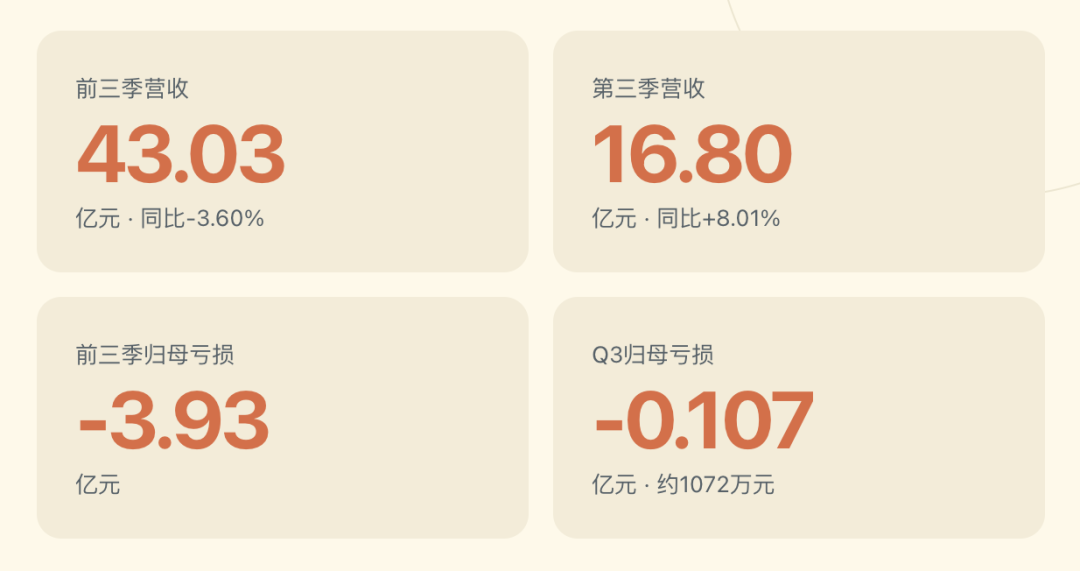
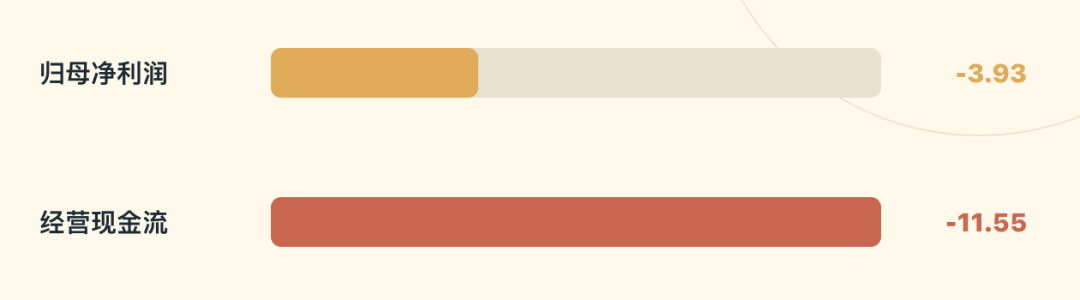
Jingwei Hirain reported revenue of 4.303 billion yuan for the first three quarters of 2026, down 3.60% year over year, with a net loss attributable to shareholders of 393 million yuan.
In the third quarter, revenue reached 1.680 billion yuan, up 8.01% year over year, and the net loss attributable to shareholders narrowed to 10.72 million yuan—just one step away from break-even.
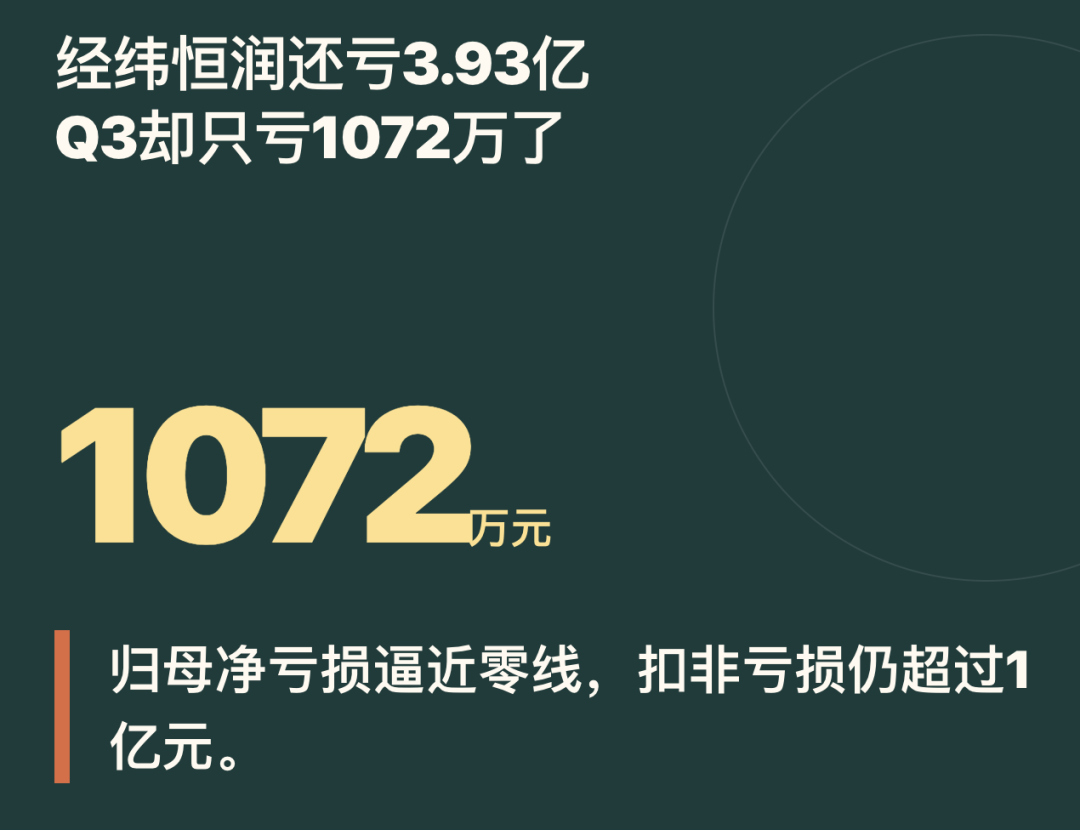
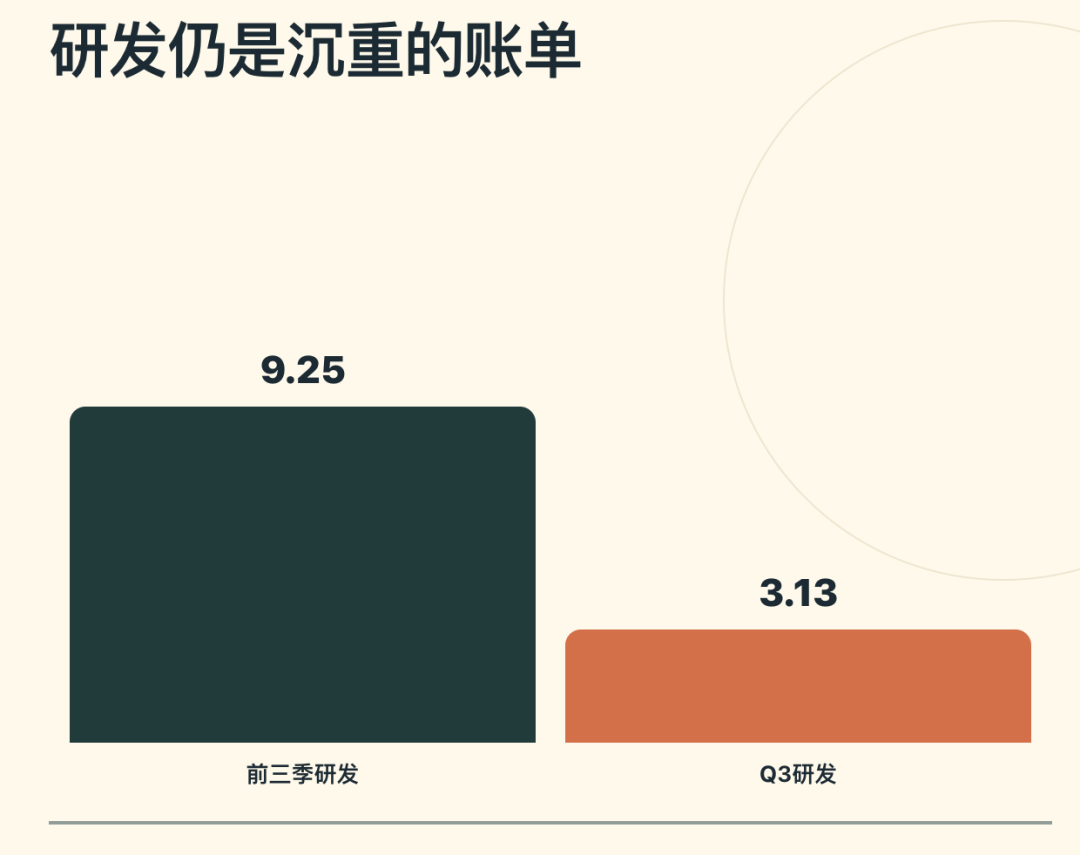
Over the same period, however, the non-GAAP net loss remained at 116 million yuan. Operating cash flow for the first three quarters was an outflow of 1.155 billion yuan, and R&D spending totaled 925 million yuan.
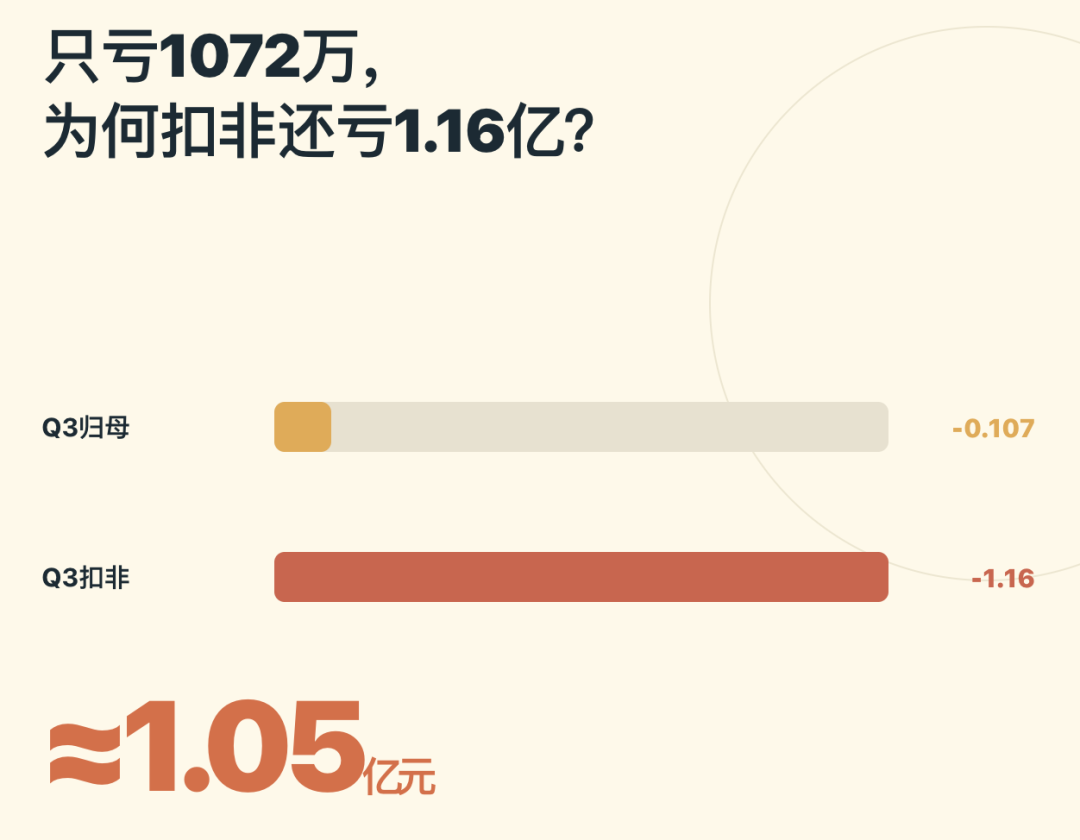
The gap between net profit attributable to shareholders and non-GAAP net profit is roughly 105 million yuan—meaning a relatively large portion of the narrowed loss came from non-recurring items.
Whether Jingwei Hirain has truly emerged from its losses is still far from settled, judging by this report.
Part 1
Where Did Q3 Money Come From—and Where Did It Go?
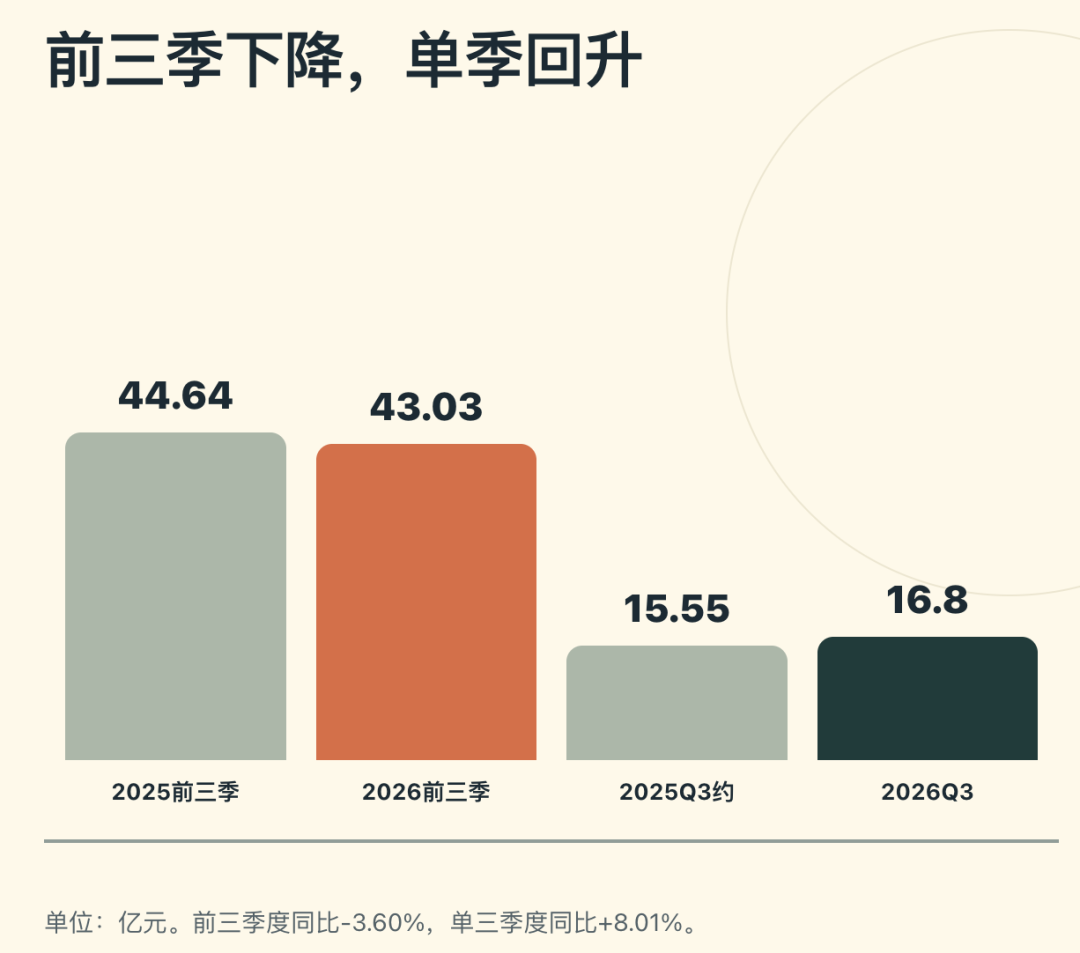
Revenue for the first three quarters was 4.303 billion yuan, compared with about 4.464 billion yuan in the same period last year—a decrease of roughly 161 million yuan.
Third-quarter revenue was 1.680 billion yuan, up 8.01% year over year. Back-calculating, the year-earlier figure was about 1.555 billion yuan, marking an increase of roughly 125 million yuan for the quarter.
The single-quarter sales recovery has not yet reversed the nine-month revenue decline.
Revenue recognition for automotive electronics suppliers is shaped by customer model launches, platform ramp-ups, project delivery and acceptance timelines, and quarterly fluctuations tend to be large—especially when a company simultaneously covers electronic products, R&D services and intelligent driving solutions, where gross margins and delivery cycles differ across businesses.
In the third quarter, the net loss attributable to shareholders was 10.72 million yuan, while the non-GAAP net loss attributable to shareholders was 116 million yuan—a difference of about 105 million yuan.
Net profit attributable to shareholders reflects all accounting gains and losses for the period, whereas non-GAAP net profit excludes non-recurring gains and losses and is better suited to gauging the profitability of the core business itself.
In the first three quarters, gains from changes in fair value amounted to 114 million yuan, compared with a loss of 2.42 million yuan in the same period last year; other income was about 55.92 million yuan, down year over year.
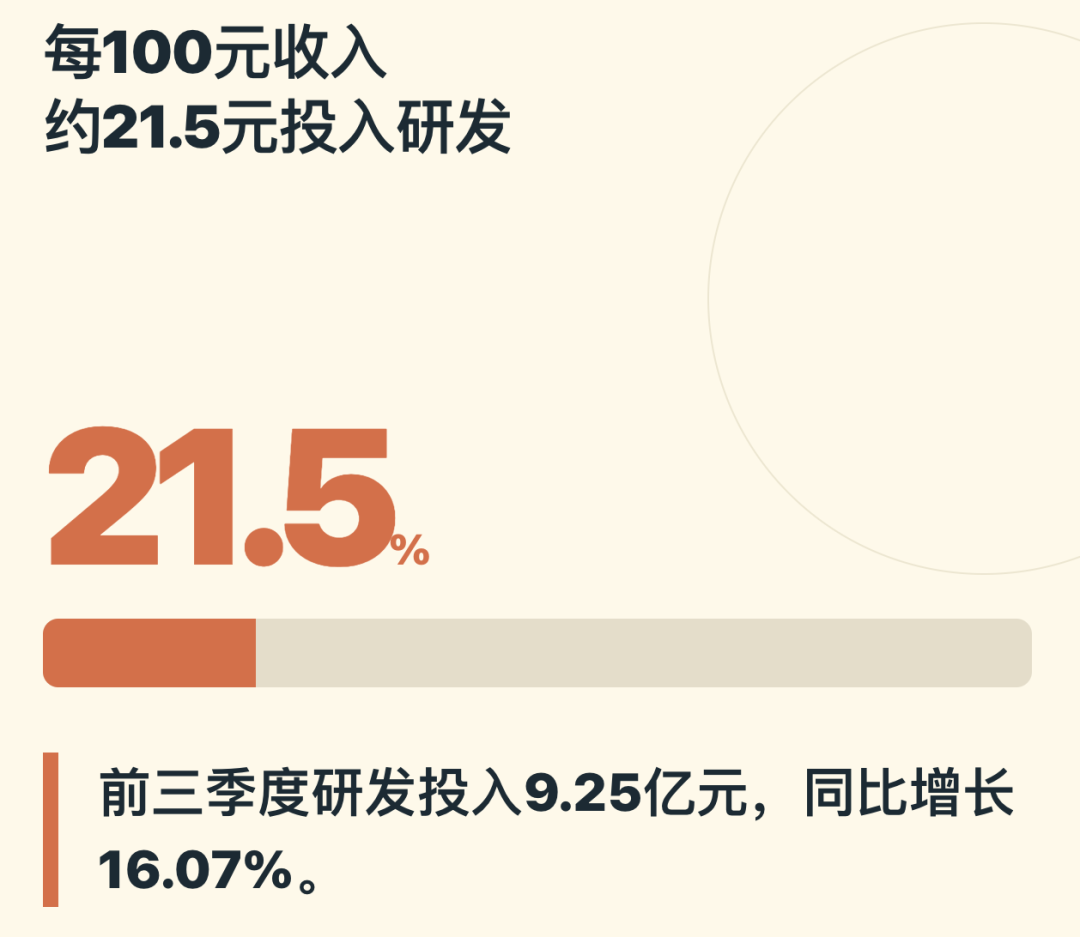
R&D investment for the first three quarters was 925 million yuan, up 16.07% year over year, accounting for 21.50% of revenue—up 3.64 percentage points year over year.
In the third quarter, R&D investment was 313 million yuan, up 21.02% year over year, accounting for 18.62% of quarterly revenue.
Part 2
How Should Jingwei Hirain Be Evaluated?
High R&D investment means the company is continuously paying for next-generation products, software algorithms, controller platforms and engineering capabilities.
At this ratio, it is almost catching up with Huawei—but when revenue is not expanding, even with such heavy R&D spending, how the value created can be recovered from customers remains a big question.
In the automotive electronics industry, R&D investment and mass-production revenue span multiple years. Heavy investment may build product barriers, but it may also compress profit margins when sales fall short of expectations.
For every additional 100 million yuan of future revenue, how much gross profit can be retained and how much more must be spent on R&D and sales expenses—that is currently the elimination round in auto parts.
In the first three quarters, net cash flow from operating activities was negative 1.155 billion yuan. Cash received from sales of goods and provision of services was about 3.935 billion yuan, compared with about 2.673 billion yuan in the same period last year. Collections improved, but overall operating cash flow remained negative.
Cash flow pressure stems from procurement payments, inventory, personnel expenses, project delivery and changes in working capital.
In the first three quarters, net assets attributable to shareholders fell from 4.131 billion yuan at the beginning of the year to 3.657 billion yuan—a decrease of 11.48%.
Jingwei Hirain occupies a relatively difficult position in the automotive electronics supply chain: it not only masters underlying software and hardware development, but also undertakes automotive-grade validation, customer customization and long-term after-sales support. Each new platform won brings several years of revenue, but upfront engineering investment is heavy.

As OEMs' cost-reduction demands increase, suppliers need to let more customers share controller platforms, software modules and production systems in order to amortize R&D expenses.
The integration of intelligent driving, body control, chassis electronics and vehicle electronic architecture expands per-vehicle value while also increasing cross-domain coordination and software maintenance costs.
Jingwei Hirain's opportunity lies in customer model mass production and platform reuse; its risk lies in excessive customization demands, slow project ramp-ups, and prices falling faster than costs.
Summary
For Jingwei Hirain, there are simply too many competitors for product success. With automakers and chip suppliers so closely intertwined today, economies of scale matter enormously. Relying on R&D investment intensity alone is really not enough.
-
![]()
AI Cannot Cure the CEO's Serious Illness
-
![]()
In the Era of Stock Competition, Why Quality Competition Must Look at Both "How Well It's Built" and "How Long It Lasts"
-
![]()
Kuaishou: The Perennial Runner-Up — Can Kling AI Become Its Second Growth Curve?
-
![]()
Over 6,000 Yuan Profit per Car—Is Geely's Per-Vehicle Profit Inflated?
-
![]()
Kling 4.0 Hands-On Test: Creating an Exhibition Walkthrough Video with Zero On-Camera Talent — How Far Is AI from Delivering a "One-Stop Finished Video"?
-
![]()
AI Code Refactoring in Practice: Assess First, Then Tackle Technical Debt
-
![]()
Fold 5 Times and It Leaks — ¥8,000 Repair Bill: Who Set Up Apple's Foldable Screen Scam?
-
![]()
Xiaomi Spends 1.7 Billion Yuan to De-CATL-ize: Is Lei Jun Content to Be a "Worker" for the Ning King?