Is Porsche No Longer Fixated on Sales Volume and Shifting Toward "Value First"?
 11/02 2026
 385
Porsche recently announced its performance for the first three quarters of 2026. Revenue for the period came in at €25.28 billion, down 5.9% year-on-year, while operating profit jumped from just €0.04 billion in the same period last year to €1.74 billion. The operating margin recovered from 0.2% to 6.9%, marking a sharp rebound in profitability.
That said, this does not mean Porsche's operating conditions have already turned the corner. In its financial report, Porsche noted that strategic adjustment expenses fell from roughly €2.7 billion in the first three quarters of last year to about €0.5 billion in the same period this year. A higher proportion of high-margin models, along with improvements in pricing and mix, also contributed to the profit growth.
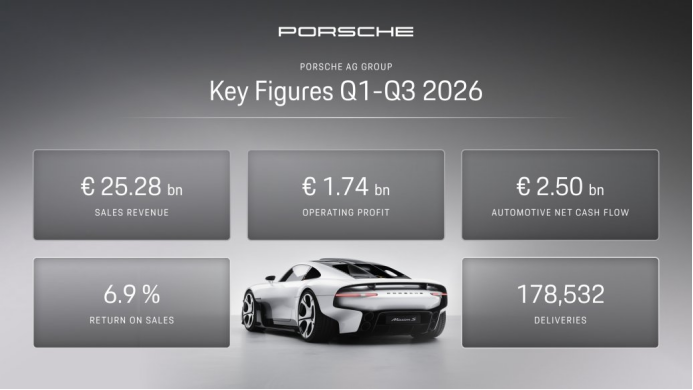
In contrast to the profit rebound, Porsche's sales are still declining. In the first three quarters, Porsche delivered 178,500 vehicles globally, down 16% year-on-year. Of these, 21,500 were delivered in the Chinese market—a steep 33% drop year-on-year, the most pronounced decline among its global markets.
After all, China was once Porsche's largest single market. In 2021, Porsche's deliveries in China approached 96,000 vehicles, but they have been declining for years since. This trend is closely tied to changes in China's high-end car market.
Porsche was once highly sought after in China, thanks to its brand halo and excellent driving performance, with SUV models such as the Cayenne and Macan remaining hot sellers for a long time. Now, as domestic new energy vehicles continue to push into the high-end segment, Porsche faces increasingly fierce competition.
Models such as the AITO M9, Yangwang U8, and Zunjie S800 have appeared one after another, giving high-end consumers more choices. In the first half of this year, domestic brands already accounted for 59% of retail sales in China's passenger car market above 400,000 yuan.
At the same time, when buying luxury cars, consumers no longer value only the brand and handling; smart cockpits, advanced driver assistance, and ride comfort are also becoming increasingly important. As domestic models continue to make strides in these areas, the advantages Porsche built in the past through brand influence and driving performance are facing new challenges. It is no longer as easy as it once was to get consumers to keep paying high premiums.
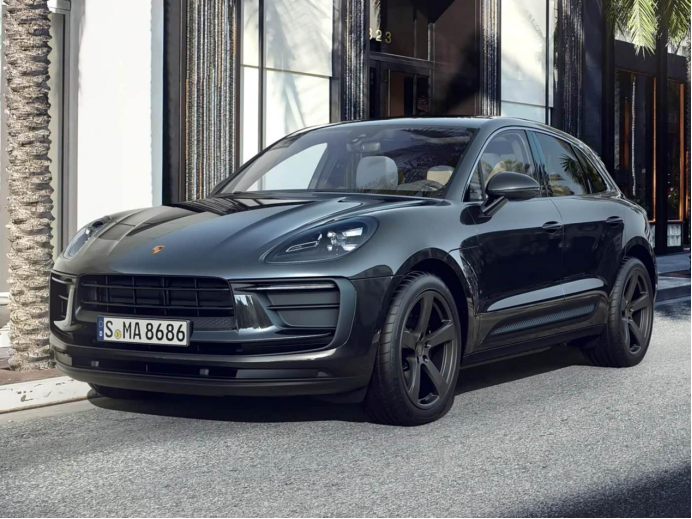
Beyond external competition, Porsche's own electrification push is also facing headwinds. In the first five months of this year, only 110 Taycans were sold in China—an average of just 22 per month, a sluggish market performance. In July, Porsche also stopped accepting new personalized customization orders in China for the Taycan and the all-electric Macan, shifting the focus of its subsequent all-electric products to the all-new all-electric Cayenne.
The problem is that it still takes time for new cars to pick up the slack. Although the all-new all-electric Cayenne was launched in China in April, the first batch of deliveries is expected between the end of the year and the first quarter of next year. This means sales of existing all-electric models remain under pressure, new cars have yet to be delivered, and Porsche's all-electric lineup in China is still in a period of adjustment.
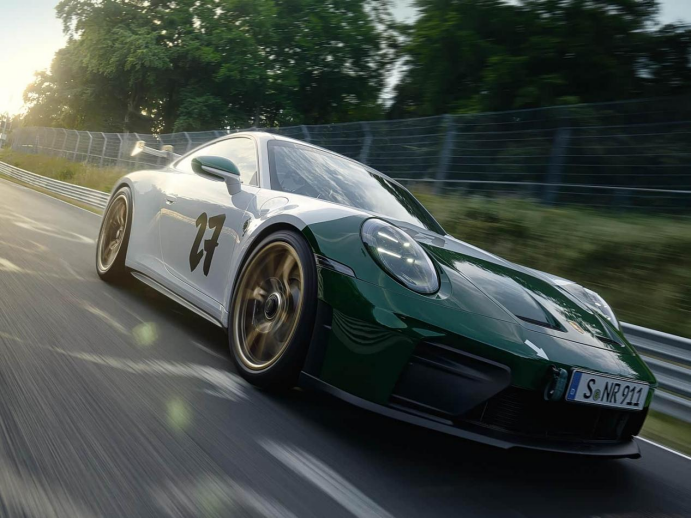
Compared with the pressure on the electrification business, Porsche's fuel-powered sports cars remain competitive. In the first three quarters, the 911 delivered 42,200 vehicles globally, up 12% year-on-year, with strong demand for high-priced derivatives such as the GTS, Turbo, and GT. This has also made Porsche realize that, rather than blindly pursuing sales volume, it would be better to further leverage the advantages of high-end sports cars.
Under its latest strategy, Porsche will adhere to "value over volume," with plans to raise the average price of its top models by about 20% in the medium term and to develop a new supercar positioned above the 911, using a higher per-vehicle price to offset the pressure brought by declining sales.
However, high-priced models alone are not enough to stabilize performance. Porsche is also adjusting its sales network in the Chinese market. Pan Lichi, CEO of Porsche China, revealed that the company plans to further reduce the number of domestic dealers to about 80 by the end of this year to adapt to the current sales scale.

In addition, Porsche is accelerating localized R&D. In November 2025, the Porsche China R&D Center opened in Shanghai, focusing on technology R&D that better fits the needs of the Chinese market. For cockpits, Porsche has also partnered with local company Pateo to jointly develop its first China-exclusive in-vehicle infotainment system, integrating local resources such as Amap and AISpeech.
At the beginning of this year, Pan Lichi revealed that this exclusive in-vehicle entertainment system, developed by the Chinese team together with local suppliers, is planned to be installed in models such as the 911, Cayenne, Panamera, and Taycan. However, officials have not yet disclosed the progress of equipping the relevant models.
Looking ahead, Porsche will continue to expand its product lineup. In 2028, Porsche plans to launch all-new fuel and plug-in hybrid SUVs and sell them alongside the all-electric Macan; the all-electric 718 Boxster and an all-new SUV positioned above the Cayenne are also in the planning, with the specific launch time in China yet to be announced.
From pursuing sales volume to focusing on per-vehicle profit, Porsche is adjusting its business strategy. Although the 911 has performed brilliantly, growth in this series is still unlikely to make up for the overall decline in the Chinese market. In the face of changing consumer demand and the impact of domestic high-end new energy vehicles, the brand premium and traditional sports car advantages that Porsche relied on in the past are facing new challenges.
Whether raising model prices and accelerating local R&D can help Porsche stabilize profits and close its gaps in intelligence remains to be tested by the market. To reverse the decline in China, Porsche ultimately still needs to offer products that truly meet consumer needs. After all, the brand can attract attention, but products are what retain consumers.
(Images are from the Internet and will be deleted if they infringe on rights)
-
![]()
Tech Stocks Plunge: Is Faith in AI Still There? New Energy Weekly Summary
-
![]()
After the Hundred-Billion-Yuan Financing Closed, DeepSeek Unveiled Its Super-Agent Architecture
-
![]()
October New Energy Vehicle Sales Revealed: Leapmotor Up 51% Year-on-Year, While NIO, Li Auto and Harmony Intelligent Mobility All Decline
-
![]()
Apple Chooses Qwen—and There's More to It Than Meets the Eye
-
![]()
The Battle Against DJI: How Ying Shi Lost 100 Billion Yuan in Market Value
-
![]()
Modern China's Predicament: Hard to Break Through by Merely Changing the General Manager
-
![]()
Cutting Corners or Compliance? iPhone Duo Teardown Reveals China-US Structural Differences — Apple Says Component Variations Are Normal
-
![]()
Leapmotor Retains the Crown as Xpeng and Xiaomi Break 50,000: The New Forces Sales Landscape Gets Another Shake-Up