Beijing Hyundai's First Chinese General Manager Exits Within a Year
 11/02 2026
 532
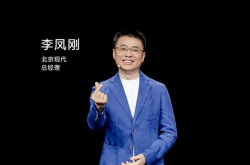
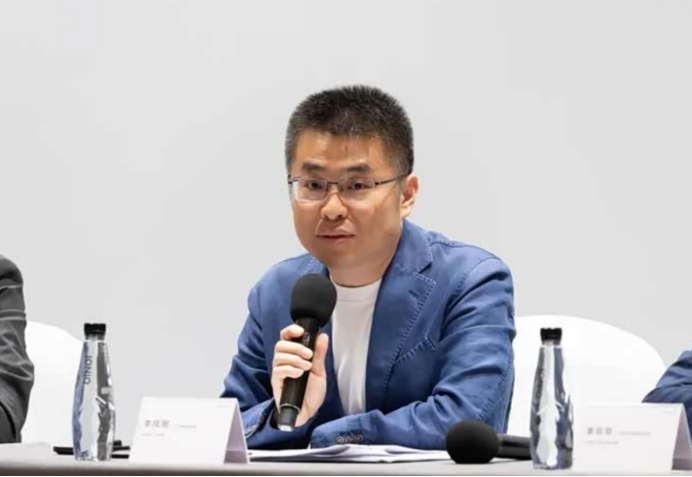
Multiple media outlets have confirmed that Beijing Hyundai General Manager Li Fenggang will officially step down on November 1—just one year minus ten days after taking office on November 10, 2025.
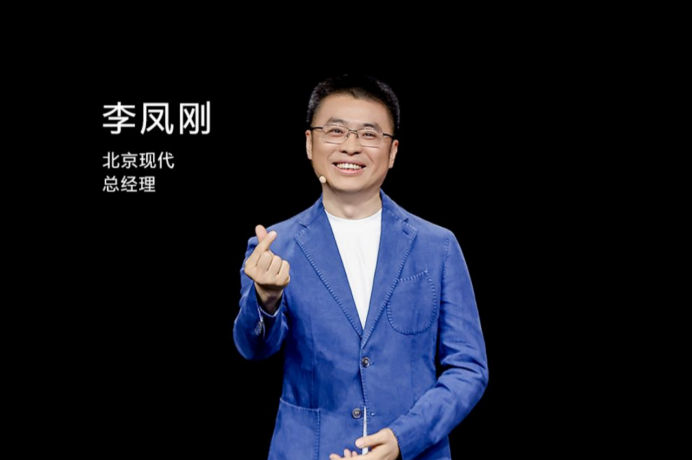
As the first Chinese general manager of this joint venture automaker, established twenty-four years ago, his appointment was once seen as symbolic. Hyundai Motor's global CEO, José Muñoz, championed the idea of "using people who understand the local market better to run the local market," and Li Fenggang was the first embodiment of that philosophy in China.
A year later, however, his departure has become symbolic too—only pointing in a different direction: when strategic disagreements between the two shareholders cannot be bridged, what exactly can a professional manager's expertise change?
To understand the tension behind this brief tenure, one must first see clearly where Beijing Hyundai stands.
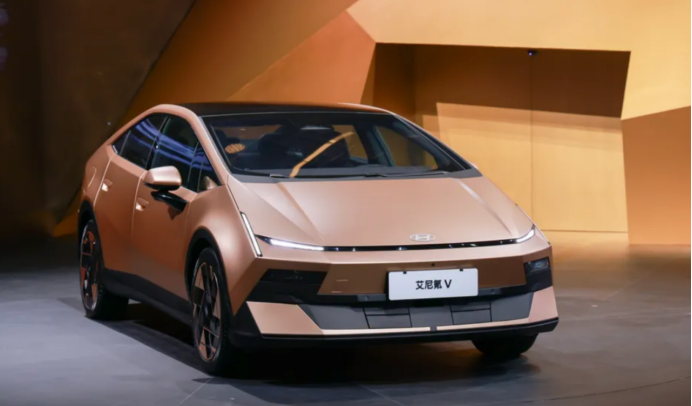
Beijing Hyundai once enjoyed annual sales of one million units, but it has been declining since 2017, with only about 154,000 units sold in 2024. In 2025, driven by the "Smart Start 2030 Plan" and a series of adjustments, annual sales rebounded to 210,000 units, up 14.8% year-on-year, and sales in the Chinese market achieved positive growth for six consecutive months. This formed the backdrop when Li Fenggang took office: a joint venture automaker trying to stop the decline but still far from escaping its difficulties.
There was a certain fit between Li Fenggang's résumé and this mission. A graduate of Tsinghua University in mechanical design, he spent ten years in R&D at FAW-Volkswagen before moving into the Audi sales system, and from 2023 served as executive deputy general manager of FAW Audi. During his time at Audi, he gained prominence for technical topics, discussing automotive-grade chips and door handle safety redundancy, shaping the image of a manager who understands technology.
After transferring to Beijing Hyundai, Li Fenggang said bluntly at the China Auto Forum in July 2026 that "some brands let consumers act as test drivers," once again triggering industry discussion about the "rushed cars" phenomenon. These performances show that he has the ability to secure attention for the brand in the public opinion arena.
But Beijing Hyundai's problems do not lie in the public opinion arena.
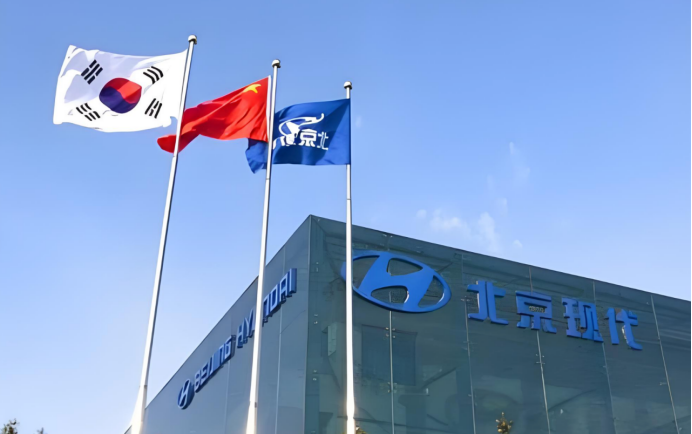
According to multiple media reports, the core reason for Li Fenggang's departure is not personal performance, but a deadlock at the corporate governance level between the Chinese and South Korean shareholders. Beijing Hyundai is a 50:50 joint venture established by BAIC Group and Hyundai Motor, and major decisions require agreement from both sides. Over the past year, however, the board of directors has not conducted substantive deliberations, and the two shareholders hold fundamentally different views on business targets: the Chinese side hopes to support sales with greater subsidies and aim for a target of 260,000 vehicles, while the South Korean side prefers a more conservative 220,000 vehicles and prioritizes reducing losses. One side protects sales, the other protects profit; with different directions, there is no way to exert effort at the execution level.
The transmission of this deadlock to frontline operations is direct. According to reports, because the sales target could not be finalized for a long time, the company was once unable in July this year to issue sales targets and promotional policies to dealers, and supplier payments were also suspended at one point. Although Li Fenggang holds the title of general manager, in the management hierarchy dispatched by the South Korean side, key positions remain mainly held by Korean personnel, and the resource allocation power and decision-making leadership he actually obtained "do not match the title." In other words, the personnel rights, financial rights, and decision-making rights needed for localization reform did not arrive in sync with the appointment of a Chinese general manager.
Judging from sales data, Beijing Hyundai during Li Fenggang's tenure presented a contradictory picture. In May 2026, Beijing Hyundai's monthly sales were 17,065 units, up 67.1% year-on-year, and domestic sales of the three main models Elantra, Sonata, and Tucson L doubled month-on-month. But by June, deliveries fell back to 17,388 vehicles, down 20.0% year-on-year, and cumulative sales in the first half of the year were 94,697 vehicles, down 5.3% year-on-year. This fluctuation was not caused by a sudden change in product strength, but rather reflected that, in the absence of unified business targets, the sales system found it difficult to form a stable rhythm and expectations. The attention Li Fenggang personally could bring could not replace the systemic losses caused by the lack of shareholder consensus.
Beijing Hyundai's predicament is not an isolated case. Against the backdrop of rapidly rising new energy vehicle penetration and price wars continuously squeezing profits, joint venture automakers generally face transformation pressure. But what is special about Beijing Hyundai is that it tried to respond to the localization proposition through the personnel arrangement of the "first Chinese general manager," yet did not simultaneously resolve the fundamental strategic disagreements between the two joint venture parties. Hyundai Motor's global CEO's intention to promote management localization is clear, but if localized managers lack matching authorization and resources, reform can only remain at the level of gesture.
After Li Fenggang's departure, Beijing Hyundai's direction depends on a question more fundamental than his personal stay or go: whether the Chinese and South Korean shareholders can find a common goal again between "protecting sales" and "reducing losses." If the board of directors continues to stall, and if business targets remain unresolved, then no matter who the next general manager is or which side they come from, it will be difficult to drive substantive change in a vacuum lacking consensus. The one-year "localization experiment" leaves a lesson worth examining for all joint venture automakers: personnel localization is only the first step; the localization of decision-making power is the real test.
(Images are from the internet and will be deleted if infringing)
-
![]()
Tech Stocks Plunge: Is Faith in AI Still There? New Energy Weekly Summary
-
![]()
After the Hundred-Billion-Yuan Financing Closed, DeepSeek Unveiled Its Super-Agent Architecture
-
![]()
October New Energy Vehicle Sales Revealed: Leapmotor Up 51% Year-on-Year, While NIO, Li Auto and Harmony Intelligent Mobility All Decline
-
![]()
Apple Chooses Qwen—and There's More to It Than Meets the Eye
-
![]()
The Battle Against DJI: How Ying Shi Lost 100 Billion Yuan in Market Value
-
![]()
Modern China's Predicament: Hard to Break Through by Merely Changing the General Manager
-
![]()
Cutting Corners or Compliance? iPhone Duo Teardown Reveals China-US Structural Differences — Apple Says Component Variations Are Normal
-
![]()
Leapmotor Retains the Crown as Xpeng and Xiaomi Break 50,000: The New Forces Sales Landscape Gets Another Shake-Up