Changan Q3 Report Analysis: Investment Peak Nears Its End as Transformation Dawns | Mingjing Pro
 11/02 2026
 392
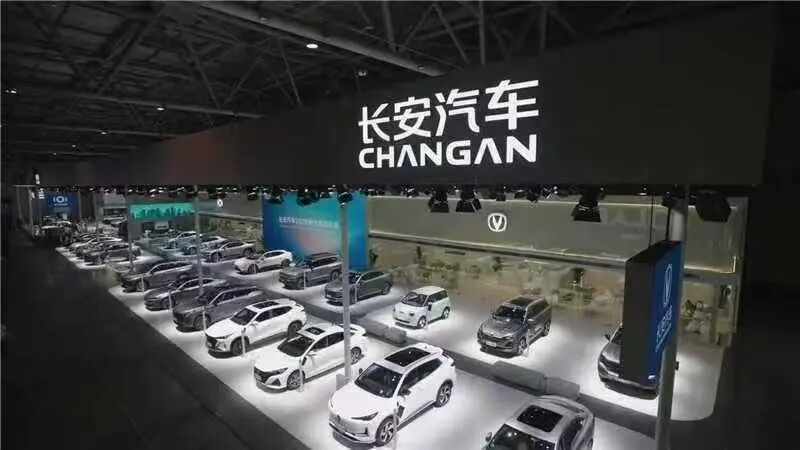
Changan Automobile's Q3 report has sparked considerable discussion. Released on October 30, the report shows revenue of 36.249 billion yuan for the quarter, up 10.1% quarter-on-quarter, while net profit attributable to shareholders came in at -758 million yuan and net profit after deducting non-recurring gains and losses at -952 million yuan. For a company that has long operated steadily, this is a rare situation in Changan's history. The question on many minds is whether this signals a sudden deterioration in performance or something more fundamental. The answer is neither.
From a macroeconomic perspective, demand in the domestic auto market has weakened, and the traditional "Golden September" failed to deliver the market heat of previous years. From January to September this year, China's cumulative automobile sales stood at 23.271 million units, down 4.5% year-on-year, of which passenger vehicle sales were 19.96 million units, down 6.1% year-on-year. In September alone, domestic sales reached 2.588 million units, down 9.5% year-on-year. Competition has also intensified. In Q3, new models were launched in密集 succession across China, and Changan's products faced homogeneous competition from rivals. Against an industry-wide downturn, Changan delivered financial results that exceeded the industry average—a feat that can fairly be described as hard-won.
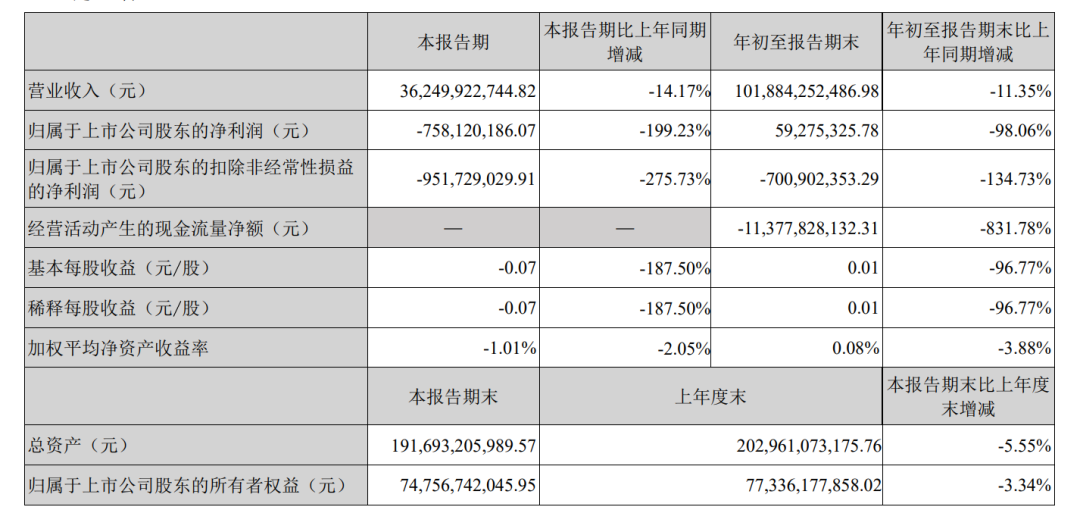
On paper, Changan's financial report does indeed face some pressure, but setting aside one-off factors, its operating condition remains sound. Looking at core indicators in particular, Changan's revenue has maintained growth and its market performance has held steady. The changes affecting profit were mainly increases in costs and expenses. Changan officially explained in the financial report that the core reasons for profit pressure were the impact of R&D expenses, exchange gains and losses, rising raw material prices, proactive structural adjustment, and a substantial increase in overseas strategic resource investment. These are not excuses.
On R&D, Changan's expenses from January to September were 5.261 billion yuan, a slight year-on-year increase. Q3 R&D investment alone was 2.106 billion yuan, a relatively large increase from 1.755 billion yuan last year. Even as the revenue scale changed, Changan's R&D investment intensity did not decline in tandem, and investment related to new energy and intelligentization continued. Changan specifically highlighted its investment in intelligent driving R&D, stating that Tianshu Pilot has smoothly passed the early stage of mass production, the investment peak is about to end, market performance and monetization capability are excellent, and future profits are considerable.
R&D investment, however, was only a small part of the impact. The core lay in three areas: rising raw material prices, exchange rates, and overseas market investment. On exchange rates, the Q3 financial report shows that Changan's financial expenses swung from 2.066 billion yuan (net income) in the same period last year to 647 million yuan in net expenses in the current period, a change of +131.33%, mainly due to increased exchange losses and reduced interest income; the foreign currency translation difference brought a large negative change in other comprehensive income.
In the second quarter of this year, Changan had already addressed the situation regarding exchange rate changes. In this year's interim report, Changan Automobile clearly stated: "After excluding the impact of exchange gains, net profit attributable to shareholders of the listed company increased by 12% year-on-year." It is thus clear that Changan's book profit has been severely distorted by exchange rate fluctuations. Second is the rise in raw material prices.
The rise in automotive raw material prices has been cited by multiple automakers since the second quarter of this year. AITO stated that the total cost per vehicle increased by 15,000–20,000 yuan. NIO Chairman Li Bin previously revealed that the cost per vehicle in the second quarter rose by about 14,000 yuan compared with the end of last year, and was expected to increase by another 2,000–3,000 yuan in the second half of the year. From this perspective, a relatively large portion of Changan's profit was eroded.
In addition, Changan is currently in a period of rapid expansion in overseas markets, and overseas investment is enormous. No specific figures for investment in this segment are available at present, but this year Changan is accelerating its overseas expansion. Its Brazil base, for example, is in a new round of investment for 2026–2028, with a total expenditure of 950 million US dollars and planned capacity of 90,000 units per year.
The Thailand base, which was put into production in 2025, continued to be upgraded this year, with an initial total investment of about 9 billion baht. In 2026, it will continue to invest in production line upgrades, battery pack production lines, and supporting supply chain recruitment; the long-term target capacity is 100,000 units per year. In June this year, the 20,000th complete vehicle rolled off the line, producing the Deepal S05 and Nevo Q05, with supporting local battery pack assembly. In addition, Changan has also made large-scale investments in the European market.
As of the 2026 Paris Motor Show, cumulative investment in Europe reached 1.18 billion euros. Currently, 8 subsidiaries have been established with 800+ employees, and the plan is to expand to 1,200 people within 3 years. Starting in 2026, Changan's Nevo brand will enter Europe, while Avatr and Deepal will expand their European channels. All of these require upfront cost expenditures.
Changan Automobile stated that overseas investment has now entered the peak period of strategic investment. Combined with objective factors such as exchange gains and losses, Changan Automobile has experienced temporary profit fluctuations, but strategic investment is being advanced on a large scale in accordance with the latest regulatory requirements, with faster product launch and stronger monetization. Coupled with sales growth momentum and excellent gross margin, the window period for overseas returns has clearly emerged, and in the future it will bring efficiency improvements far exceeding those in the domestic market.
Changan's interim report shows that, in terms of gross margin, the gross margin of Changan's overseas business was 20.13%, far higher than the domestic 11.67%. From January to September, Changan Automobile's overseas sales were 727,000 units, up 56% year-on-year, and are expected to exceed one million for the full year, with overseas revenue growth impressive.
So how will Changan achieve subsequent performance improvement? First, in addition to the end of the investment peak in overseas expansion and R&D mentioned above, subsequent costs will decrease and it will enter a harvest period. Changan's internal integration and cost reduction will also show effects. For example, Q3 administrative expenses were 2.397 billion yuan, down 27.36% year-on-year, showing certain results in internal management cost reduction; selling expenses also contracted year-on-year to some extent, and amid fierce industry competition, marketing investment and pace have been controlled more meticulously.
In addition, Changan also plans to introduce strategic investors for technologies that require large-scale investment, to reduce its own financial pressure. On the evening of October 30, Changan Automobile also announced that its wholly-owned subsidiary "Chongqing Changan Technology Co., Ltd." plans to increase capital and expand shares through a public listing to introduce strategic investors. However, the problem of rising raw material costs currently shows no sign of easing, and this is also an adverse impact that the automotive industry will face together going forward.
Of course, internally, Changan's associated companies still need to accelerate market expansion. The Q3 report shows that from January to September, Changan's investment income from associates and joint ventures was -220 million yuan; in the same period last year it was +140 million yuan, turning from profit to loss, affecting the profit caliber by a total change of 360 million yuan, and was one of the important drags on Q3 profit decline. In the first half of this year, Changan announced a strategic integration of Deepal and Avatr to coordinate resource allocation in areas such as technology R&D, supply chain management, and market layout, and optimize operating efficiency. This is also a measure to reduce costs and improve profitability.
Judging from the Q3 report, this financial report is one under the superposition of multiple adverse factors and investment peaks in multiple directions. This is an important investment period for forward-looking layout during Changan's transformation period. From various perspectives, the current stage can be said to be the "coldest winter" for the auto industry in the past 20 years. Changan has always been advancing steadily according to its own rhythm, has not fallen behind in any aspect, and its layout is also very complete. Among them, the subsequent breakout points are already quite clear.
Against this background, Changan has demonstrated longer-term growth capability in both performance stability and subsequent breakout potential.
-
![]()
AI Office Track Head-to-Head: After the Battle for Entry Points, the Renewal Period Is the Real Test
-
![]()
Why Is the Eyebox Always "Bright in the Center, Dark at the Edges"? — The Polarization Multiplexing Solution
-
![]()
Why Can't the Smartest Coding Assistant Reply to Your Messages Instantly?
-
![]()
Half of Domestic Tokens Used to Make Wish-Fulfillment Dramas? Large Models Face a Compute Bloat Bubble
-
![]()
Apple Picks Qwen — and There's More to It Than Meets the Eye
-
No Blackening, No Fanning—Xiaomi Auto's Goal of Delivering 550,000 Vehicles This Year Is Easier Said Than Done
-
![]()
Automakers' KPI Collapse
-
![]()
The All-New Xiaomi SU7 Ultra Laps the 'Ring Undisguised — Can Chinese Performance Cars Earn a 'Seat at the Table'?