Chinese Companies Going Global: Don’t Put on a Stern “Strict Father” Face
 11/05 2026
 408
Peanut Talk
Chinese-style fathers have a stock set of catchphrases: I’ve given you money, paid for your education, fed and clothed you, let you live a good life—what more could you possibly have to say?
This rings a bell. Over the past two years, whenever Chinese companies going global have hit setbacks, a similar narrative always surfaces: “I spent money building the factory from the first shovel of earth, shipped over the best cars, and kept prices the lowest—this advantage was squeezed out domestically through cheaper labor and fiercer involution, which amounts to subsidizing you in disguise. I’ve done so much, so why are you still giving me trouble?”
In parent-child relationships, children don’t buy this. The same goes for going global.
What truly works is crouching down and thinking from the other person’s perspective: what are they afraid of, what do they care about, what do they want. When you understand them, they feel you are standing with them, and only then will they truly regard you as one of their own. Parent-child relationships are like this, and so is going global.
Only those who understand this can be good parents. And only then can they succeed in going global.
Chinese automakers going global are about to reach ten million vehicles, and this is only the beginning. To go far and go long, there are no shortcuts. One must firmly take such a path...
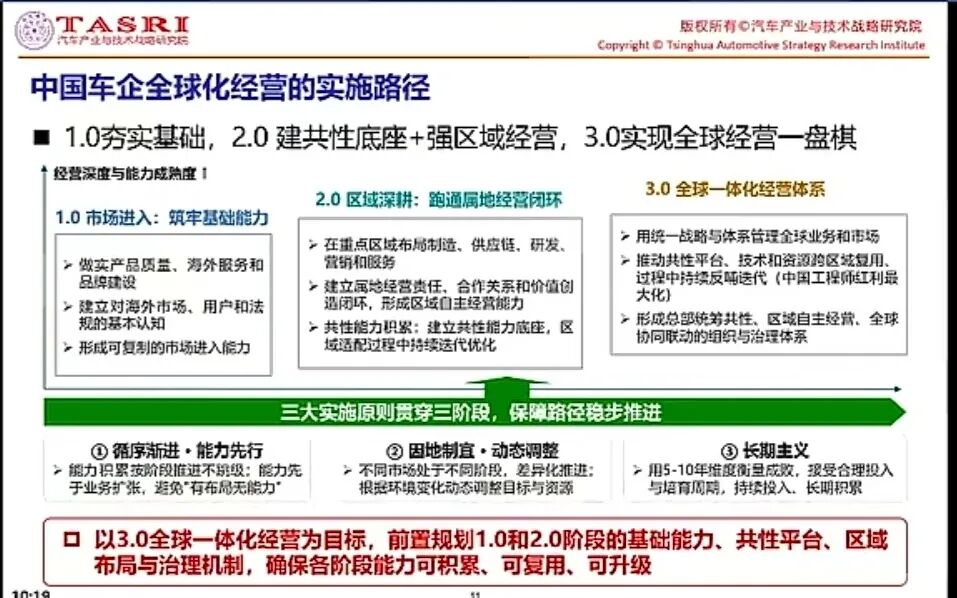
At the end of October in Shanghai, the Global Chinese Automotive Elite Joint Annual Conference was held for the 13th time, with the theme of how Chinese cars can take root in Europe. Chatting with veteran members, they all said the forum topics have changed: in the first few years they talked about how to learn from Europe, later about how to sell cars there, and now about what it really means to truly go there.
The volume has already reached the doorstep. This year Chinese auto exports will likely break 10 million vehicles. Xu Haidong, special deputy secretary-general of the China Association of Automobile Manufacturers, did the math at the conference: fifteen years ago, China exported only 1 million vehicles a year, sold to 196 countries, and at that time Chinese new cars were cheaper than Japanese used cars. Fifteen years, ten times.
The global auto market totals 60 to 70 million vehicles a year. Subtract China’s own 20 to 30 million, and then subtract the United States’ 15 million—that market cannot be entered—and what remains for automakers worldwide to compete over is only around 45 million vehicles. China’s 10 million accounts for nearly a quarter.
Large but not strong. Zhao Fuquan put it bluntly: the level at which Chinese companies fight overseas can be summed up in three words—kindergarten. Cheng Weiwei, functional safety director at Vietnam’s Vinfast, added: don’t treat Europe as a sales target, treat it as a training ground.
The problem is that the approach to answering the questions is still the old one.
Whenever setbacks occur, there is always a sense of grievance: I bring good products, offer good prices, invest real money—why?
Peanut previously wrote in “Behind the New Energy Leader’s Setback in Hungary: Winning Over the Government Does Not Bring Green Lights All the Way”: Hungary was once the “lowland” with the highest concentration of Chinese-funded new energy projects, with a whole chain from batteries to complete vehicles and cumulative investment exceeding 17 billion euros; after a change of government, environmental reviews returned, factories suspended production, and expansion was put on hold. That was not a change of face, but simply the regulatory water level returning to the European norm—Chinese companies had originally taken the ruling party’s shortcut, and now the shortcut no longer works.
Lowlands do not last forever.
So where exactly is the gap?
In Europe, companies are seen as organizations embedded in society. When you go there, people listen to what you say and watch what you do: do you really regard yourself as a corporate citizen? Have you considered labor, employment, community, and local suppliers? Are you here to make a quick buck and leave, or to stay for the long term?
The automobile category is much heavier than ordinary goods. It is industry, employment, an entire supply chain, and even a way of life. What enters along with your products are also your employment practices, management habits, and competitive logic. It is entirely natural for people to weigh you.
In “One Screw Can Force a Car Out of the European Market | The Compliance Lesson for Chinese Automakers Going Global,” I wrote about the “duck test”: if you walk like a duck and quack like a duck, you are a duck. Saying “we are here for win-win cooperation” ten thousand times is not as good as doing one thing local people can see.
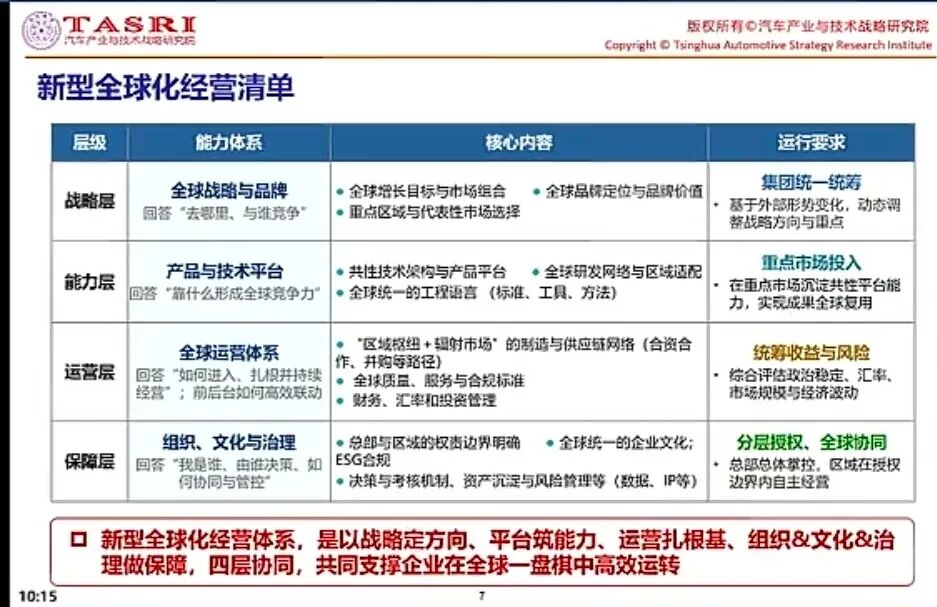
Following this line of thought, what is lacking is actually three layers.
The first layer is institutional learning. Domestically, the habit is to first make a business plan and toss it to legal to see whether it is legal. In Europe, this order is reversed. You must first think: can this business model stand at the root locally? Behind regulations are their value judgments; without understanding why, merely memorizing the clauses is useless.
The second layer is that ledger of the strict father. I invested 4 billion euros—isn’t that enough sincerity? Not enough. Local society will continue to ask: how many jobs have you created? How many locals are in management? Where do suppliers come from? What will be left in this place ten years from now?
Revenue, output, and market share certainly matter, but one more item must be added: what have you left for this place? Only when the local community feels that “this company’s success is also our success” will you have changed from an outsider into one of their own.
The third layer is narrative power. We are too good at telling product stories: advanced technology, low prices, fast supply chains. That is not what the other side is asking at all. They want to hear a social story: now that you are here, what good are you actually to our society?
Chang Jiang of Stellantis Shanghai R&D Center offered an analogy that I have been turning over ever since: we keep thinking about how to sell things there, and if we cannot sell, we build a factory, and building the factory is still for selling. But has anyone cared about the relationship itself? It is like two people discussing marriage: one desperately asks, “Do you actually love me?” while the other is calculating, “How do I get his money?”
The biggest risk in going global is not policy, not unions, not fines, but identity recognition. If your identity is not recognized by consumers, sales are castles in the air; if you are not recognized by regulators, they will find pretexts to fine you; if you are not accepted by the supply chain, the quality system will leak everywhere; if you are not regarded as one of their own by unions and employees, the long term will be a governance disaster.
This sounds abstract, but when it lands on people, it is all concrete pits.
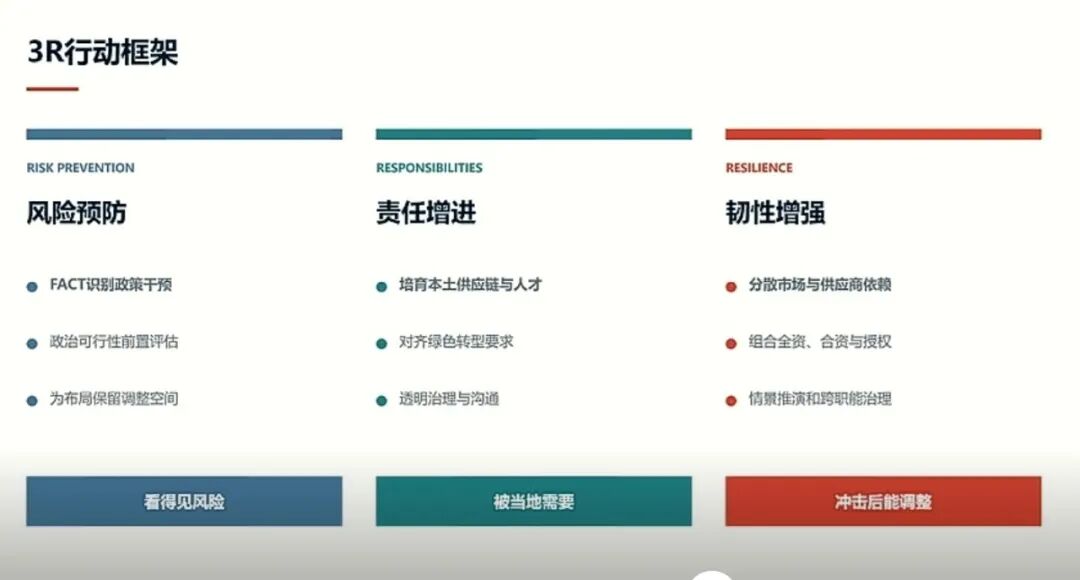
Hu Zhenwei, a partner at IntelliPro, told several stories that all sound familiar. Installing cameras in workshops to see whether employees are at their workstations—routine practice in China, but a serious violation in Europe. Pre-employment medical checks requiring health certificates—which company in China does not do this? Under European law, a doctor can only tell you whether a person is fit for the job, cannot give you the medical report, and you cannot ask for it. These things were done in China for ten years without anyone thinking there was a problem; cross the Baltic Sea and they become fines.
Another example is hiring. A Chinese company acquired a U.S. factory and wanted to find an American-Chinese CEO, thinking it would capture both sides—understanding China and understanding America. Less than a year later it failed: he considered himself American, while local workers still saw him as Chinese, and trust on both sides could not be sustained.
Pits like these cannot be imagined no matter how much you sit in an office in China and think.
At this point, the matter of going global ultimately comes back to two words: people.
Your employees—the Chinese sent abroad, the locals hired—their rights, development, and degree of being respected are the mirror of this company. Further outward, the workers in the supply chain, the communities around the factory, and local partners who have cooperated for decades—their interests and voice are the true foundation of the “ecosystem.” If you treat them as costs, they will treat you as a passerby; if you treat them as partners, then when storms come, someone will stand up to speak for you.
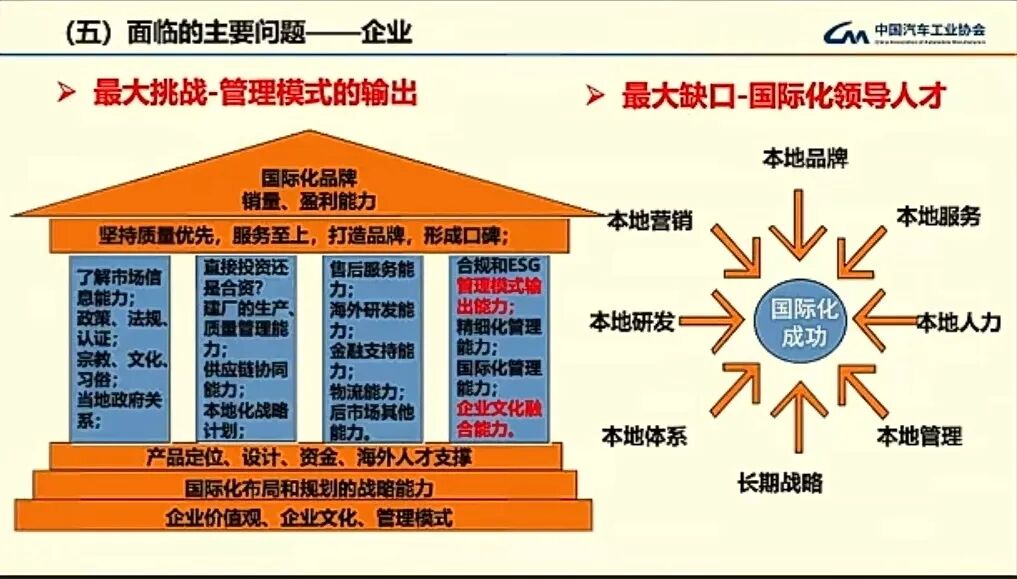
Sang Mengqian, a senior researcher at the Automotive Talent Committee, offered a prescription in three steps: physical integration, that is, building factories and hiring people while paying attention to data privacy and supply chain human rights risks; ecological embedding, that is, bringing R&D and the supply chain locally and deeply nesting into society; chemical integration, such as Haier sponsoring local events overseas first to cultivate relationships with local people.
Peanut once led teams to interview in more than 10 countries around the world. In North Africa, CITIC Dicastal deeply integrated with local communities and gave local people better opportunities for upward social mobility. Since its establishment, no local middle-level manager has left. In Australia, SAIC International sponsored a local cricket tournament, and their executive told me the goal was to make locals regard MG as a local brand. “Questions, Cost-Effectiveness and Rugby: How MG Established a Foothold in Australia”
This is what it means to do the work on people solidly.
The Automotive Talent Committee has been around for 20 years this year. I like dealing with these people. In the industry, when talking about going global, every three sentences come back to sales and market share; they were the earliest and most systematic in putting the word “people” on the table. Talking about engineers, organizations, and cross-cultural management may not sound as sexy as financial reports, but people are the source of everything.
This is not a Chinese exception. Peanut is a contributing writer for Harvard Business Review. This classic publication hailed as the “management bible,” at its centenary, raised two overarching questions: what kind of organization counts as successful? What role does a company actually play in society?
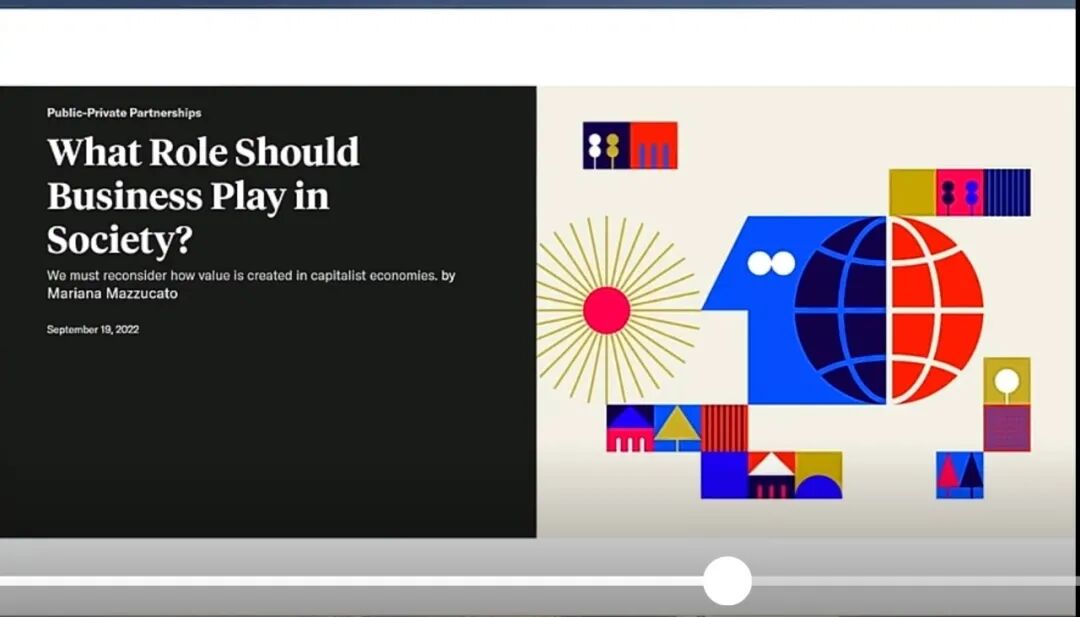
Mariana Mazzucato wrote a long article: profit is only part of why a company exists; do not turn ESG into empty rhetoric—that is “value whitewashing.”
In the past two years, what I myself have been doing is also this—as a Linglong partner of “Friends of Nature,” studying climate change, and as a special expert at the United Nations Development Programme screening cases of China’s sustainable going global.
As Mr. Fu Yuwu said: going global requires intensive cultivation, slower, steadier. Plain, but solid.
Text | Li Xiyin · Peanut
-
![]()
Keboda, the Single-Item Champion in Vehicle Lighting Control, Sees Lighting Control Revenue Drop by 479 Million Yuan in Q3, Net Profit Down 47.17%; Intelligent Driving Domain Controllers Up 72.29%
-
AI Marketing: The 10 Fastest-Growing and Most Profitable Companies
-
![]()
Chinese Companies Going Global: Don’t Put on a Stern “Strict Father” Face
-
![]()
The Sky Has Fallen on the Wait-and-See Crowd! Blogger Reveals Manufacturers Are Stockpiling and Locking Up Production Capacity—No Hope of Phone Price Drops for the Next Three Years
-
![]()
Tech Stocks Plunge Across the Board, but Industry Giants Say "Don't Panic"
-
![]()
Domestic Android Needs a New Benchmark
-
![]()
Aerospace and Aviation Lead Cities: An Analysis of the Industrial Structure of Beijing, Shanghai, Chengdu, Xi'an and Shenyang
-
![]()
Chinese Large Models Are Going Open Source in Droves: AGI Ideal or Ecosystem Positioning?