Chinese Large Models Are Going Open Source in Droves: AGI Ideal or Ecosystem Positioning?
 11/05 2026
 401

"Open Source" vs. "Closed Source"
Image source: Internet (please contact us for removal if this infringes) / Partially AI-generated
After the Wuzhen Summit ended, one number kept coming up in the circle, yet few people directly linked it to "open source."
In spring 2026, among Hugging Face's monthly download data, open-source models developed in China accounted for 41%, while the US stood at 36.5%.
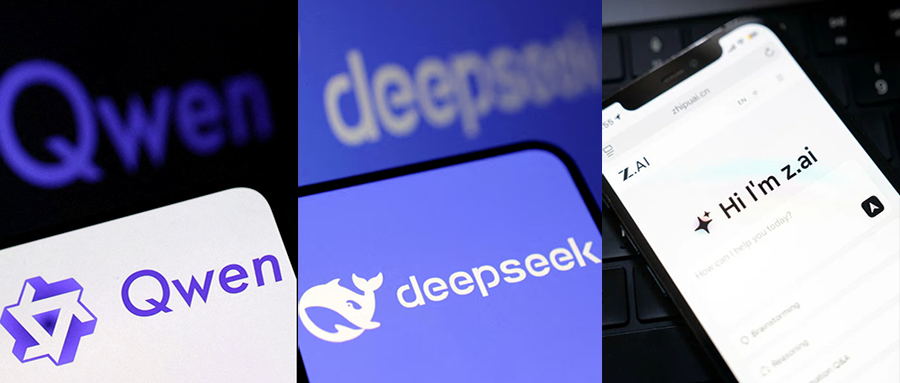
Take Alibaba's Tongyi Qianwen alone: its downloads on Hugging Face in February 2026 reached 153.6 million, exceeding the combined monthly downloads of eight other major publishers, including Meta, DeepSeek, and OpenAI.
Cumulatively, the Qwen series has nearly 1 billion downloads, with over 200,000 derivative models.
Two years ago, almost no one would have bet on this number. Before 2025, the mainstream narrative in the AI circle was that only "closed source + heavy capital" could win.
OpenAI laid out a $1.4 trillion infrastructure blueprint; training GPT-4 reportedly cost about $100 million, and closed source was tacitly assumed to be the only narrow gate to the strongest models.
But at the Wuzhen Summit, DeepSeek research engineer Gao Xi said something very plain: open source is "to make AGI arrive sooner."
Alibaba Qianwen's Liu Dayiheng put it more directly: the existence of open-source models has pushed the cost-effectiveness of models into a higher range, prevented the price monopoly that closed-source models might create, and lowered the threshold for public use.
On one side is the "AGI ideal"; on the other is "preventing price monopoly." Put together, these two statements constitute the best entry point for understanding this round of collective open sourcing by domestic large models.
But if we stop at this level, we miss the truly interesting part.

The $5.6 Million API Bill
Let's turn back the clock to early 2025. When DeepSeek-R1 was released, what unsettled Silicon Valley most was not the benchmark scores, but the training cost figure: about $5.6 million.
During the same period, the cost of Meta's development of the Llama model was estimated by outsiders to be more than ten times that figure.
In the following year, Moonshot AI's Kimi K2 Thinking pushed this line down further: reportedly about $4.6 million in training cost, achieving a 71.3% pass rate on SWE-Bench Verified, slightly higher than GPT-5, and leading on BrowseComp 60.2% to 54.9%.
API pricing is even more intuitive: Kimi K2 Thinking costs $2.5 per million tokens for output, while GPT-5 costs $10—a full order of magnitude apart.
This is not competition over "being a bit cheaper," but a bottom-up overturning of the pricing logic on which closed-source models depend for survival.
The commercial loop of closed-source models is essentially "performance leadership → API premium → revenue feeding back into compute → maintaining leadership."
The premise for this flywheel to spin is that pursuers must use equally expensive compute and equally long cycles to approach the frontier.
When open-source models, with a few million dollars and optimization of MoE architecture and training strategies, catch up with or even surpass on key benchmarks, the gears of the flywheel jam.
One week after DeepSeek-R1 was released in 2025, the DeepSeek App topped the US App Store free chart, and Nvidia's market value evaporated by about 17% at one point. In fact, the capital market understood what this meant earlier than many people.
So "preventing price monopoly" is not a slogan of sentiment. It is the real destructive power of open source at the commercial level: when the marginal distribution cost of model weights approaches zero, the pricing power of closed-source APIs is no longer decided by a single vendor.
But the problem lies precisely here. If open source is only "cheap," it cannot explain another thing: why Meta, the company that once said "open source is the Android of the AI era," turned to closed source at the end of 2025.

Meta's Turnaround
Meta's shift is an excellent comparative sample. The Llama series once garnered over 30 million downloads, and at one point no one could match its ecosystem prosperity.
But prosperity did not translate into revenue: Meta invests over $70 billion in AI annually, while enterprise licensing revenue is less than $1 billion; the results developers fine-tuned based on Llama ultimately flowed in large quantities to Microsoft Cloud and Google Cloud.
To put it bluntly, Meta spent big money open-sourcing the model, and the result was building a highway for cloud vendors.
This case is often used to argue that "open source is unsustainable." But what it truly reveals is a key fork in the open-source business model: the open-source model itself does not directly make money; what makes money are the services, compute, and ecosystem positions built around the open-source model.
Meta's awkwardness lies in that it open-sourced the model but did not control the cloud infrastructure and distribution channels on which the model's deployment depends. So it became a "paving stone for the ecosystem" rather than a "rent collector of the ecosystem."
The choice of Chinese vendors follows a completely different path.
Alibaba's Tongyi Qianwen has open-sourced over 400 models, and Alibaba Cloud is one of the largest public cloud service providers in China, with AI-related product revenue growing by triple digits for multiple consecutive quarters.
DeepSeek open-sources its weights, but its models have completed adaptation on domestic compute chips, and Huawei's Ascend clusters have already undertaken the training and fine-tuning of DeepSeek-R2.
The model is open-sourced, usage rises, and compute consumption and service demand remain within its own system.
This leads to the more hidden and more critical thread behind the collective open sourcing of domestic large models.

Ecosystem Positioning: Open Source Is "Giving Away Models"
If open source is understood merely as "putting the code out there," Meta's lesson is already profound enough. But what domestic vendors are doing is more like using open source to redraw the interface standards between models and compute.
When Zhipu open-sourced GLM-5, it simultaneously completed deep inference adaptation with seven domestic chip platforms: Huawei Ascend, Moore Threads, Cambricon, Kunlunxin, Muxi, Enflame, and Hygon.
The technical significance of this matter is much heavier than it sounds: if an open-source model runs and runs fast on domestic compute clusters, it in fact becomes the software benchmark for the combination of "domestic chips + domestic models."
Subsequent developers, enterprise customers, and even other model teams will all move forward along this already-proven path.
This has similarities to the Android script back then, but it is not entirely the same.
What Android open-sourced was the operating system, and what it locked down was the distribution entrance of the mobile internet.
What domestic large models open-source are weights and inference capabilities, and what they lock down is what compute base to choose when deploying models, what cloud services to connect to, and what engineering standards to follow.
Hugging Face's data corroborates from the side that this positioning effect is happening. China's share of global open-source model downloads has surpassed that of the US, Qwen's derivative models exceed 200,000, and these derivative models in turn turn Qwen's architecture choices, tokenizer design, and fine-tuning paradigms into de facto community conventions.
When a developer wants to fine-tune a Chinese model, his first reaction is to go to Hugging Face to find Qwen's checkpoint, rather than starting from scratch reading a closed-source model's API documentation.
This position of "default option" is the plainest definition of ecosystem positioning.
Of course, positioning does not equal monopoly. The liquidity of the open-source ecosystem is naturally higher than that of closed source; a developer using Qwen today can switch to DeepSeek or Kimi tomorrow.
But it is precisely this state—"anyone can leave, but everyone waits for the bus at this intersection"—that gives the open-source camp as a whole a bargaining power that the closed-source camp finds hard to replicate: closed-source vendors can decide their own API prices, but cannot decide where the price anchor of the entire market lies.
When enough open-source models push cost-effectiveness into a certain range, the pricing space for closed source is passively compressed.
The Moat of Closed Source Has Not Disappeared
If reading this leads to the conclusion that "open source has already won," then the problem has been oversimplified. The moat of the closed-source camp is not on the single dimension of "model capability"; it remains deep in several other places.
The first is the compliance and liability boundary in high-value scenarios. When choosing models, finance, healthcare, and core government systems focus not on how many dollars cheaper each million tokens is, but on who is responsible when something goes wrong, within whose boundary the data flows, and whether the audit chain is complete.
What closed-source models provide is a contract, a responsible entity, and a set of accountable service-level agreements.
When open-source models hand over the weights, they also hand over deployment responsibility, security responsibility, and compliance responsibility to the user.
For small and medium institutions without sufficient engineering capability, this burden is not light.
The second is the intensity of sustained investment in frontier capabilities. Open-source models perform amazingly in catching up and approaching, but "catching up with GPT-5" and "defining the next-generation architecture" are two different things. Closed-source giants are still directing the largest-scale compute toward unproven directions, and these trial-and-error costs are hard to be borne in a dispersed way by the open-source community.
Avocado, which Meta bet on when turning to closed source, plans to integrate the technical highlights of Google Gemma, OpenAI gpt-oss, and Alibaba Tongyi Qianwen. This action itself shows that even a giant turning to closed source cannot fully detach from the technical nourishment of the open-source ecosystem.
The third is the integrated capability of productization and distribution. OpenAI's closed-source API captured considerable revenue in 2025, relying not only on the model itself but also on the developer toolchain, enterprise integration solutions, and brand trust built around the API.
Open-source models can be downloaded by anyone, but not everyone can turn it into a stable, secure, and scalable product.
This engineering gap in between is precisely the living space of the closed-source business model.
So a more accurate judgment is not "open source replaces closed source," but that the two have entered a new state of division of labor.
Open source is responsible for lowering the technical threshold, holding down the price anchor, and occupying the ecosystem entrance; closed source is responsible for deepening services in high-value scenarios and bearing the trial-and-error cost of frontier exploration.
The phrase "open source paves the road, closed source mines the gold" may not sound exciting enough, but it may be closer to reality than "open source unifies the world."

Will AGI Belong to the Open-Source Camp?
Back to the word repeatedly mentioned at the Wuzhen Summit.
DeepSeek's Gao Xi said that if technical barriers are built blindly, they can block competitors in the short term, but while blocking opponents, the barriers may also delay the arrival of AGI.
MiniMax's Feng Wen mentioned that today's open source is not just releasing weights; many teams also simultaneously open their evaluation plans, pitfall records, and improvement ideas.
These actions are indeed accelerating the flow of knowledge, and the speed of knowledge flow is a variable in the AGI process that is hard to quantify but hard to replace.
But "accelerating the arrival of AGI" and "AGI belonging to the open-source camp" are two different propositions.
What open source excels at is expanding participation. It allows more researchers, developers, minority-language communities, and special hardware adapters to enter the table, and these are precisely the people that closed-source top companies have no incentive to serve.
When participation is wide enough, the probability of unexpected breakthroughs rises. This is open source's most substantive contribution to AGI: not that it "owns" AGI, but that it makes the candidate paths to AGI more numerous.
But if AGI arrives, the scale of compute, complexity of data governance, and engineering investment in safety alignment it requires will likely exceed the self-organizing capacity of any single open-source community.
The accumulation of the closed-source camp on this end will not automatically disappear because of the growth in downloads of open-source models.
So rather than asking "who does AGI belong to," it is better to ask a different question: when AGI arrives, where will open source and closed source each stand?
One plausible picture is that open source assumes the role of "base diffusion" and "ecosystem entry point," while closed source takes on "frontier breakthroughs" and "high-value delivery." The boundary between the two will shift as the technology stage changes, rather than one eliminating the other.
What domestic large models are betting on in this round of collective open sourcing is precisely the position of "base diffusion."
It does not promise final victory, but it ensures one thing: no matter from which direction AGI ultimately emerges, the road leading to it will not be dominated by a single language, a single set of rules, and a single pricing power.
That alone is already worth betting on.
-
![]()
Chinese Large Models Are Going Open Source in Droves: AGI Ideal or Ecosystem Positioning?
-
![]()
With 360,000 Units Sold Propping Up Half of XPeng's Business, How Far Is MONA from Independence?
-
![]()
After Falling Below One-Third, What Does the Fuel Vehicle Still Rely On to Stay in the Game?
-
![]()
BMW Profit Margin Nears Zero as Carmaker Launches Strategic "Loss"
-
No Longer Just Writing PPTs! ChatGPT Opens a New Frontier: It Can Help with Grocery Shopping, Create Recipes, and Even Pick Kindergartens
-
![]()
Auto Electronics Leader Posts Consecutive Earnings Growth, Nearly 9.5 Billion Yuan Invested in R&D Over Five Years
-
Awkward Indeed: Chinese Consumers Are Apple's Biggest Fans – iPhone 18 Pro Sales Surge 29%, Revenue Climbs 21%
-
![]()
Silicon Valley Tech Giants Bet on AI Games to Capture the Last Profitable Frontier