Is It Reasonable for the CIIE to Be Dominated by "Chinese Cars"?
 11/09 2026
 367
Introduction
Nine editions of the CIIE have laid bare the transformation of China's auto market—and "Chinese cars" have taken on an entirely new meaning.
In November 2018, the first China International Import Expo opened its doors at the National Exhibition and Convention Center in Shanghai. The auto exhibition area covered nearly 30,000 square meters and hosted about 70 companies from 17 countries and regions. Nearly every major global brand was present, showcasing cutting-edge technologies in intelligent driving, connected vehicles, and new energy vehicles.
On that vast stage, the ambitions on display—embodied by the first-generation Audi e-tron, BMW's L4 autonomous driving 7 Series test vehicle, Toyota's hydrogen fuel cell vehicle Mirai and hydrogen fuel cell bus SORA, and Hyundai's NEXO—were strikingly conspicuous.
That year, more than one million vehicles were imported through customs annually, with annual sales exceeding 45 billion US dollars. For Chinese consumers, the notion that "the moon abroad is rounder than at home" was a true reflection of the auto market at the time.
Today, the CIIE has been held nine times. Over the past years, China's auto market has undergone earth-shaking changes. Although the foreign automakers participating in the CIIE are still the same few, judging solely by the pace of industrial transformation, the attitude of foreign enterprises toward the Chinese market has indeed undergone a qualitative change.
In 2026, the rapid shrinking of the imported car market, the vigorous development of the new energy industry, and the frenzied global expansion of Chinese companies are industrial realities that, though many are unwilling to believe, everyone can see.
Against this backdrop, when foreign automakers once again step onto the CIIE, it is hard to say that this move still carries the same confidence of flexing their muscles to the outside world as it did years ago. Compared with the Chinese delegation at the earlier Paris Motor Show, their arrival is merely paying due respect to this edition of the CIIE. In the eyes of most Chinese users, the technical frameworks and product matrices built around the Chinese market seem rather ordinary.
The protagonists of the times always change. It can only be said that, as Chinese cars gradually replace Western automakers and lead the future development of the entire auto industry, watching the excitement and enhancing a sense of participation is already the only thing foreign automakers can do at present.
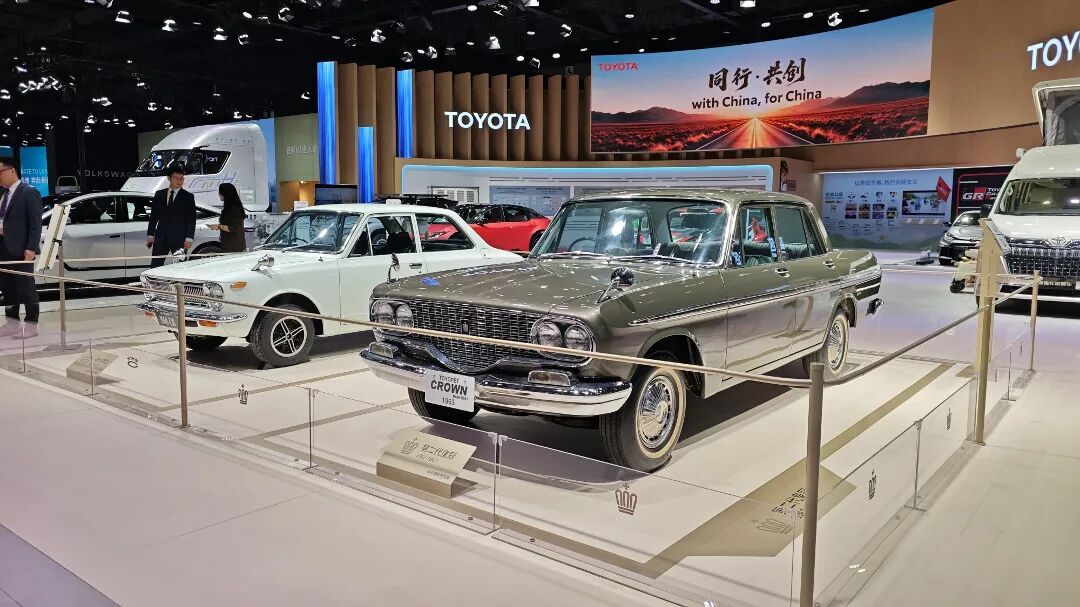
Although since the beginning of this year, companies such as Volkswagen and Toyota have recognized their own weaknesses and offered the latest solutions suited to the Chinese market, as long as the industry's electrification transformation continues and Chinese cars still champion the "involution" culture, future editions of the CIIE can only continue in their current form. Only when everyone can truly catch up with the evolution of China's new energy auto market may new variables emerge.
01 The Times Are Changing—and So Is the CIIE
Looking back, the auto exhibition area of the first CIIE brought together Volkswagen, BMW, Mercedes-Benz, General Motors, Toyota, Honda, Nissan, Hyundai, Kia, Ford, Lincoln, Tesla, Volvo, and Jaguar Land Rover, while the parts side featured Bosch, Denso, Webasto, Mobis, and others.
Behind the unprecedented scale of participation was the whole industry's fervent expectation to see the future of automobiles—and a car-making logic completely different from China's.
At the same time, what the Chinese auto market presented was either the strong behavior of foreign investors collectively increasing investment in China under the influence of the opening up of the joint venture equity ratio, or, backed by new energy policy support, a flood of new car-making forces on their way to chase subsidies.
Compared with events such as Tesla choosing to build a wholly-owned factory in Shanghai and BMW increasing its stake in BMW Brilliance to 75%, looking back now, the reckless cross-industry car-making by marauders like Baoneng and Evergrande looks like nothing but a series of jokes.
It is precisely because of this that the value of the CIIE at that time was self-evident. In it, to say one could not feel the technological suppression of foreign automakers and their foresight into industrial development would definitely be false.
However, times have changed. As the chaos in new energy was gradually corrected by the state, and as BYD and CATL directly drove Chinese cars to overtake on the curve, who could have imagined that the days of foreign automakers would be like riding a roller coaster, racing downward mysteriously.
Over the years, the scale of whole-vehicle companies at the CIIE has shrunk significantly. From the first and second editions, when auto-related companies were the most numerous, to the ninth edition now, where Hyundai has only one booth left, the rapid narrowing of the list reflects a survival predicament that is both real and lamentable.
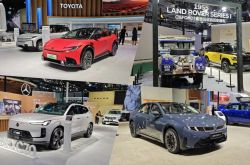
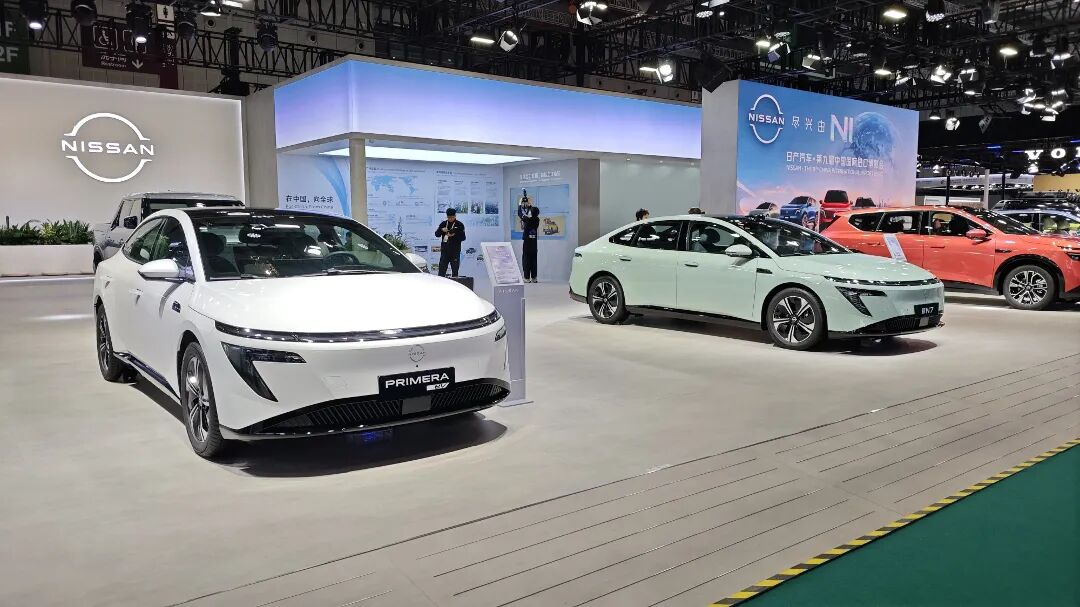
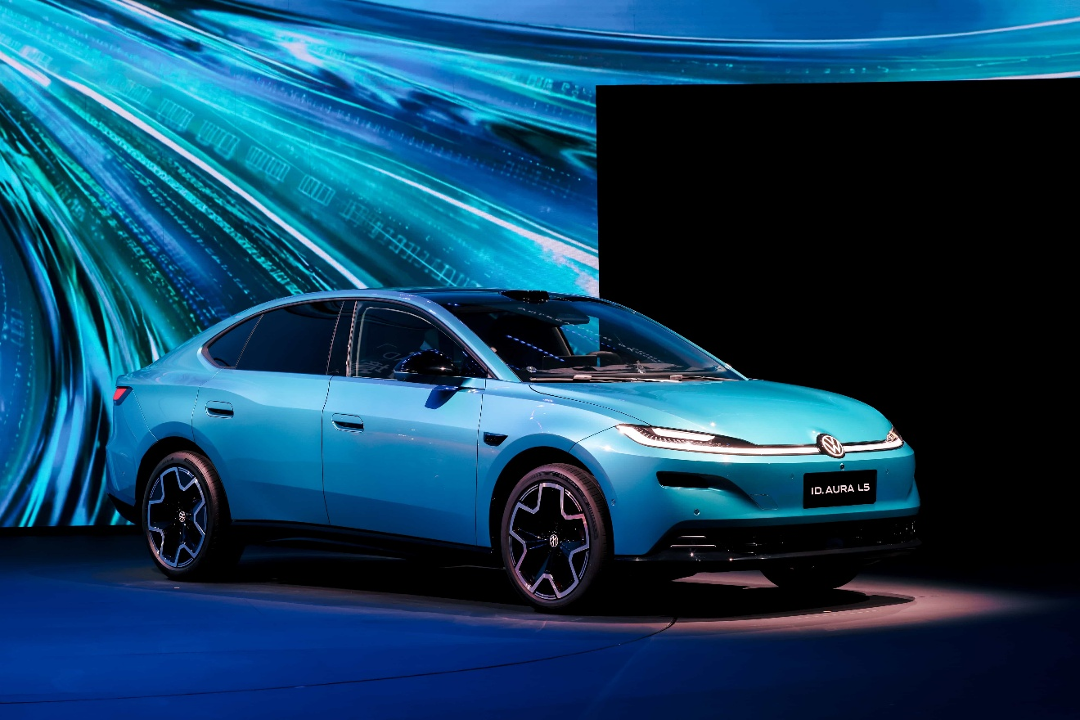
Moreover, the batch of exhibited cars in 2018 were mainly imported fuel vehicles and imported new energy vehicles, with the exhibition logic of "selling cars in"; by this year, Volkswagen's booth features "Chinese" electric cars under ID. AURA and ID. ERA, and Nissan brought N7/NX8, with exhibits changed from choices of imported quality to 100% Chinese specialties.
So what does this change indicate?
Through the CIIE, we can already clearly see that the investment logic of multinational automakers in China has jumped out of the old map of "trading market for technology" and is attempting to complete the mental transformation of "trading Chinese technology for global competitiveness."
Even if companies like Hyundai still insist on using the Chuanghu heavy truck to demonstrate their advanced hydrogen energy technology, this underlying change cannot be ignored. And such a trend, in previous years, could never have appeared at the CIIE under any circumstances.
According to the foreign side's thinking, there is nothing wrong with such a display. On a B2B stage like the CIIE, demonstrating strength means showing the best things one has at this stage. One can't really treat it like a local auto show and turn it into a trade fair, right?
So what are the so-called good things? Compared with past models like the ID. series and Ariya, Volkswagen and Nissan will certainly put a series of new cars developed by the Chinese side on display. And other automakers, if capable, would certainly do the same.
However, most Chinese auto consumers can't help but feel doubtful: "Is that all?"
In recent years, in order to catch up with the progress of China's new energy industry, foreign automakers have time and again offered new solutions in response. From the carelessness of the oil-to-electric era to completely relying on Chinese technology to build cars, although only a few years have passed, their circumstances are already vastly different. The CIIE, as a display stage, has of course witnessed the changes during this period.
How should this be viewed? Perhaps the large-scale appearance of "Chinese cars" does not mean the CIIE is "finished"; it means the CIIE has completed an identity switch—from a stage for Chinese buyers to a window for multinational companies to find technology in China.
02 "Chinese Cars" Have a Brand-New Interpretation
"The CIIE is an open stage that promotes win-win cooperation between China and the world, and also an accelerator for foreign enterprises to create value in China."
How should this sentence be understood? Today, the old trick of trading market for technology is certainly no longer applicable, but what if the subject and predicate are swapped? From "in China, for China" to "in China, for the world," most automakers have already seen the signs.
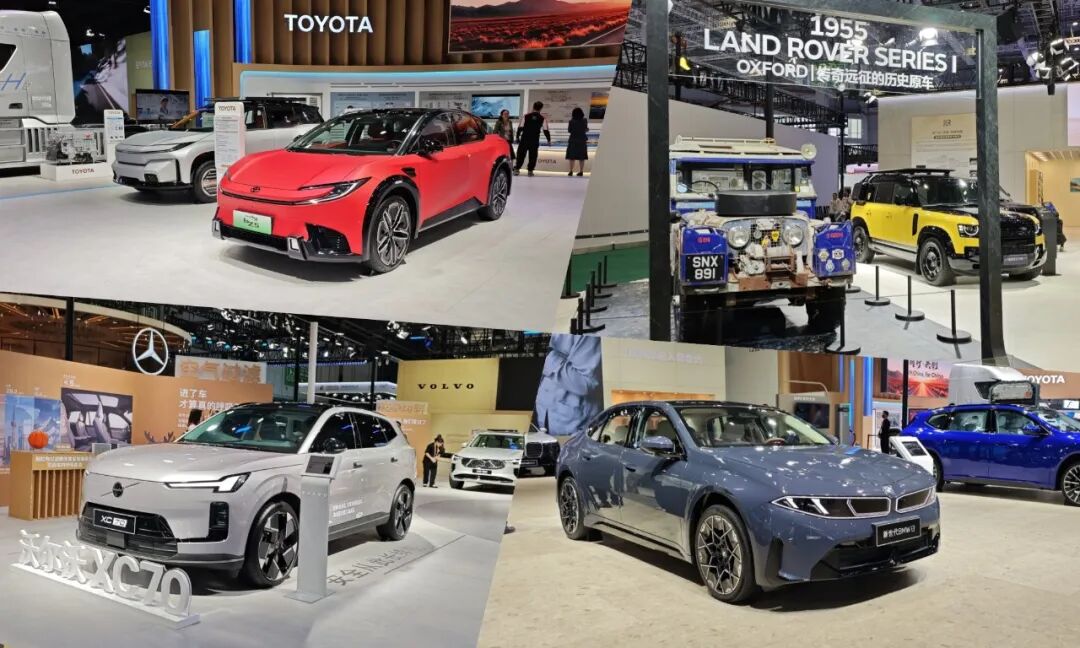
At this year's CIIE, Volkswagen, Toyota, BMW, General Motors, Mercedes-Benz, Hyundai, Ford, Nissan, Honda, Volvo, and JLR all came. But it is obvious that, even the matter of surviving in the Chinese market remains important enough to require a national-level platform every year to make a statement. For most of these automakers, China's auto market is no longer a place that can be settled with attitude alone.
Under the new era's backdrop, Volkswagen emphasizes, emphasizes, and emphasizes again the significance of China to Volkswagen. When SAIC Volkswagen ID.ERA 5X, FAW-Volkswagen ID.AURA L5, and Volkswagen (Anhui) Yuzhong 09 stand at the center of the stage, this in itself sends a signal.
China is not only one of the most important auto markets globally for Volkswagen Group, but also the core battlefield for the group to advance its electrification and intelligent transformation. While continuously strengthening its competitiveness in the Chinese market, Volkswagen Group is further unleashing the global value of its local innovation capabilities, entering a new strategic development stage of "deeply cultivating China, winning together globally."
Today's CIIE will be a mirror that reveals who has truly put down roots and who is merely putting on a show.
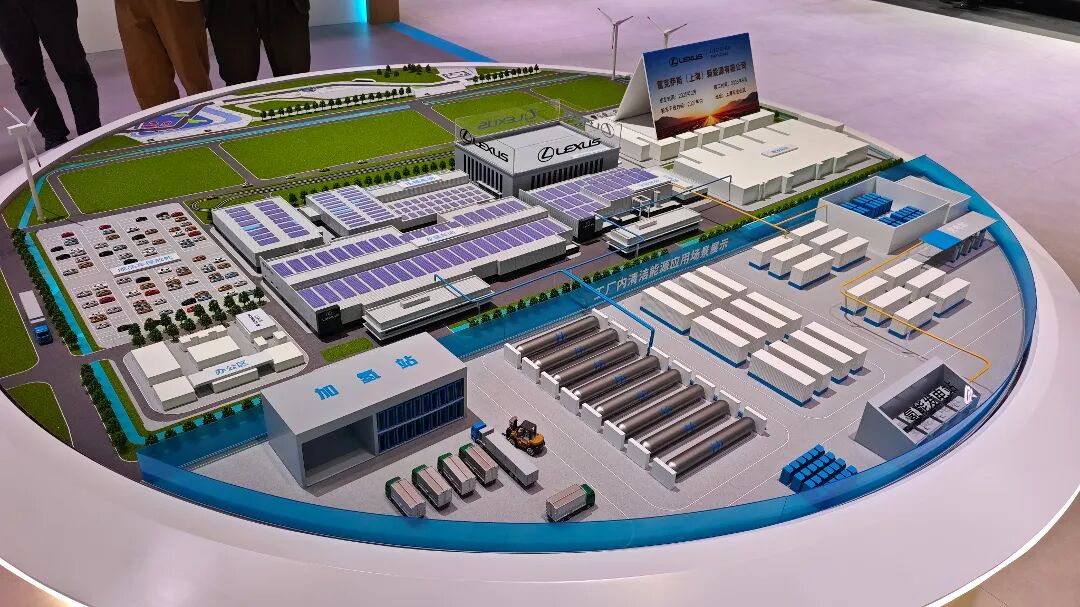
Looking at it with this perspective, Toyota's wholly-owned factory sand table, Volkswagen's local architecture, and BMW's Chinese R&D team may seem like sunk costs; but compared with the laid-back style of just displaying a few imported cars and talking about a few visions, this is paving the way and building bridges for one's own future.
On site, Hyundai Motor is one of the few that systematically displays its hydrogen energy technology, but the newly launched Ioniq V is setting an example for the electrification of Korean cars; Ford's Bronco and Bronco, Volvo XC70 and ES90... without exception, all came with the same attitude.
Nissan even used the two names N7 and Primera EV to link Chinese cars with the world.
In other words, the CIIE is no longer an "imported car show," but a living history of the power shift in China's auto industry. Chinese automakers didn't come, but Chinese technology all came. Huawei, HarmonyOS, Momenta, DeepSeek, Pony.ai, XPeng—these names did not appear on the whole-vehicle list, yet they appeared at the heart of almost every foreign booth. This is the true way in which China's auto industry exists at this edition of the CIIE.
Moreover, the share of independent brands has exceeded 60%, the domestic auto market has entered a period of deep adjustment, and the industry's elimination race is accelerating. When the home field becomes yours, it inherently means you no longer need to borrow someone else's stage to prove yourself. When cars bearing foreign brands use Momenta intelligent driving, are equipped with Huawei HarmonyOS cockpits, and are defined under the leadership of Chinese engineers, when you see all this in Hall 7.2, you should understand: the CIIE will also OTA itself.
Compared with years ago, career anxiety, development confusion, and a sense of powerlessness in judging the future of China's auto market are certainly the questions that every employee in these giants' systems is now constantly thinking about. But times always change, don't they?
All the changes that have occurred in China's auto market constantly remind us that opening up is not a one-sided gesture, but a two-way need for survival. The original intention of the CIIE was that "China's door will not be closed; it will only open wider," and to make China's huge market a major opportunity for the world.
Eight years later, this original intention has not changed; only the way it is fulfilled has changed: what the world gives China is capital, brands, and manufacturing systems, and what China gives the world is technology, supply chains, and engineering speed. The two capabilities have completed an equal exchange in this exhibition hall.
Editor-in-charge: Cao Jiadong Editor: He Zengrong

THE END
-
![]()
Let the Data Speak: China Is Winning the Automotive Electrification Race While the US Market Remains an Island
-
![]()
Electric Vehicles Are Selling Like Hotcakes—Yet Profits Are Halved, Leaving European and American Automakers Bewildered
-
![]()
Is It Reasonable for the CIIE to Be Dominated by "Chinese Cars"?
-
![]()
Tencent's Yao Shunyu Says AI Moats Lie Mostly at the Product Layer, Not the Model Layer
-
Storage Storm Looms, Niche Phone Brands 'Doomed'
-
Has Apple Been "Bitten Back" by Its Supply Chain?
-
Huawei HarmonyOS PCs Hold Just 0.4% of the Global Market, Yet Already Capture 10% of China's Xinchuang Sector?
-
![]()
Breaking: BYD Yangwang Shatters 500 km/h Barrier—Has China's Supercar Era Arrived?