Electric Vehicles Are Selling Like Hotcakes—Yet Profits Are Halved, Leaving European and American Automakers Bewildered
 11/09 2026
 339
Introduction
A large-scale production system and economies of scale have yet to be achieved.
Traditional European and American auto giants may not have anticipated that despite their considerable efforts in electric vehicles and rising sales, their profits are only getting worse.
Recently, a report by BigGo Finance pointed out that as the global EV market continues to hit new sales records, traditional leading automakers such as Volkswagen, Mercedes-Benz, and Ford have collectively reported sharp declines in profit margins. The reason: the traditional automaking logic of diluting costs through scale—which the industry has followed for decades—is gradually failing in the process of electrification.
On top of that, the European used car market is now seeing fuel vehicle residual values fall while EV residual values recover—a reversal that has newly affected the profits of automakers' leasing businesses.
In the first three quarters of 2026, Volkswagen's operating margin excluding one-off items was 3.8%, down from 4.5% in the same period last year. Mercedes-Benz sold a record 68,000 BEVs in the quarter, yet its passenger car operating margin fell from 4.8% to 2.5%. Ford's Model e generated quarterly revenue of US$1.2 billion, with an operating loss of US$1.058 billion—a margin of -86.5%.
The simultaneous occurrence of sales growth and profit decline shows that transition-period costs, price wars, and the parallel operation of old and new powertrain systems are squeezing automakers' profitability. The industry had previously expected that EV popularization would replicate the scale-profit path of fuel vehicles, but data from leading automakers show that high sales have not yet brought high profits.
01 Traditional automakers' profit models face challenges
Arno Antlitz, CFO and COO of Volkswagen Group, said at the third-quarter earnings call that the higher the penetration of EVs in the market, the greater the pressure on profits. Currently, the profit Volkswagen obtains from its EV business is still lower than that from traditional internal combustion engine vehicles, and an overall operating margin of about 3% is difficult to sustain future investment in technological transformation.
Volkswagen's explanation is that EV orders currently account for 40% of the group's total orders, but US tariff policies and weak sales in the Chinese market have prevented growing sales from translating into better performance.
The situation is the same for Mercedes-Benz. In the third quarter, Mercedes-Benz's BEV sales hit a record quarterly high, but even after excluding all one-off costs, the operating margin of its passenger car segment still fell to 2.5%. Ford's EV unit Model e is even more severe, with losses including upfront R&D investment in the next-generation EV platform, raising short-term profitability pressure.
The profitability dilemma comes from a combination of multiple costs. Some scholars say that the battery cost of an EV accounts for about 35% of the vehicle price, and price fluctuations in key raw materials such as lithium, nickel, and cobalt bring great uncertainty to cost control. Fuel vehicles, after more than a century of accumulation, have mature cost control systems and higher operating margins than EVs.
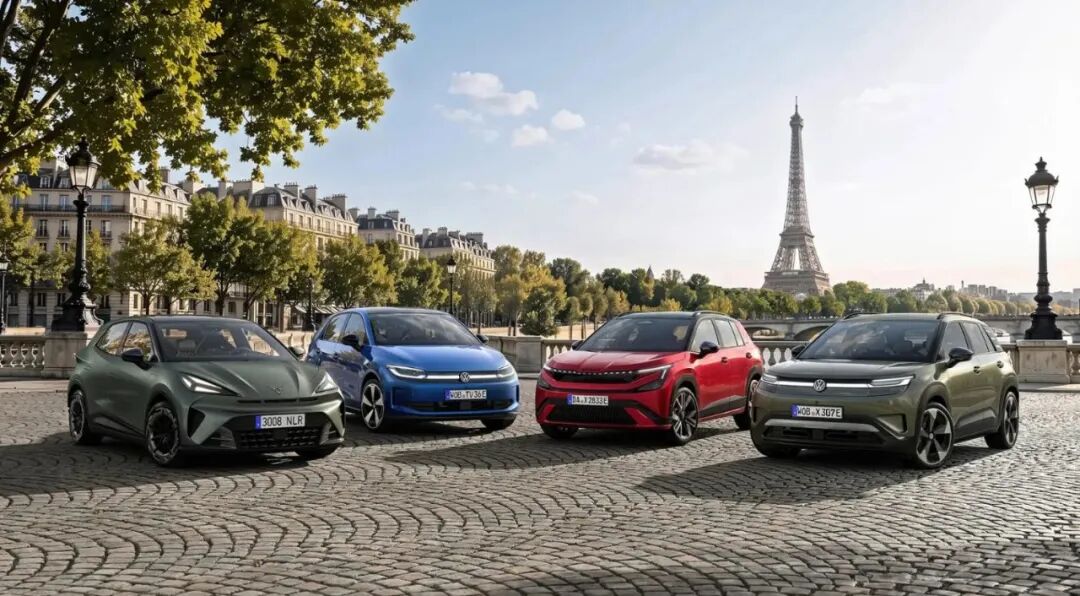
In addition, traditional automakers also face production line conversion costs. Internal combustion engine production lines originally designed for engines, transmissions, and exhaust systems cannot directly adapt to the heavy battery pack assembly requirements of EVs. The cost of converting high-precision equipment at a single plant is as high as US$700 million.
Research by the Korea Automotive Technology Institute points out that traditional automakers are generally in a stage of running two lines in parallel. On the one hand, they must continue producing internal combustion engines and hybrids to meet current demand; on the other hand, they must build EV production facilities. Operating multiple powertrain systems and production systems dilutes profitability.
Today, price competition in the global EV market is further eroding automakers' profit margins. Chinese automakers can accept lower profit margins to expand overseas markets, while established traditional automakers can only follow with discounts and price cuts to defend market share.
Kia's financial data show that in the third quarter, EV sales increased by 75.4% year on year, but expanded sales incentives and direct price cuts reduced profit by US$538 million, and the high proportion of low-margin models shrank profit by another US$344 million.
However, General Motors chose a completely opposite strategy. In the third quarter, its EV sales in the US market fell by 62% year on year, but its adjusted operating margin rose from 6.9% to 8.2%. Analysts believe that GM's initiative to cut loss-making EV sales and increase the sales share of high-margin large pickups was the main reason for the profit recovery.
But the industry consensus is that a complete exit from EVs is not feasible. Kim Seung-jun, head of Kia's finance division, said that companies without EV sales in Europe cannot survive in the long term, and giving up electrification for short-term profit declines is unwise.
In the first half of this year, European EV sales reached 1.22 million units, up more than 40% year on year. Carbon emission regulations and geopolitical conflicts have pushed up fuel costs, driving market transformation. The ultimate way for automakers to break through is still to establish as soon as possible a large-scale production system suitable for EVs and achieve economies of scale.
As the aforementioned scholar mentioned, only by referring to Tesla's approach of diluting costs through large-scale production of a few core models can the overall cost of EVs possibly decline. The industry's focus has shifted from how many EVs are sold to how much profit can be retained after the sale. The speed of transformation and improvement in cost structure determine automakers' future survival space.
02 A reversal appears in European used car residual values
Just as profitability pressure on the new car side has not yet eased, the reversal of powertrain preferences in the European used car market is bringing another profit challenge to traditional automakers. BMW and Volkswagen successively warned on their third-quarter earnings calls that used car buyers are turning to EVs, and the resale value of traditional fuel vehicles is declining, eroding the profits of automakers' leasing businesses.
Stable used car residual values are the foundation of the car leasing business, and residual values determine the price competitiveness of new car leasing. Previously in Europe, the residual value of BEVs was lower than that of fuel vehicles in the same class, which had always been a core factor dragging down the profitability of EV leasing businesses. But since 2026, the residual value gap between the two has narrowed rapidly and even reversed.
Arno Antlitz directly warned investors of the risk that as the European market shifts to EVs, the residual value risk of fuel vehicles is rising rapidly.
It is reported that Volkswagen's financial services division holds about 28 million car lease contracts globally. Affected by weakening residual values of fuel vehicles, Volkswagen lowered the division's annual operating profit forecast to about US$4.1 billion. In the first nine months, the division's operating profit was only 3.3 billion euros. However, Antlitz said the residual value risk has been kept within a controllable range.
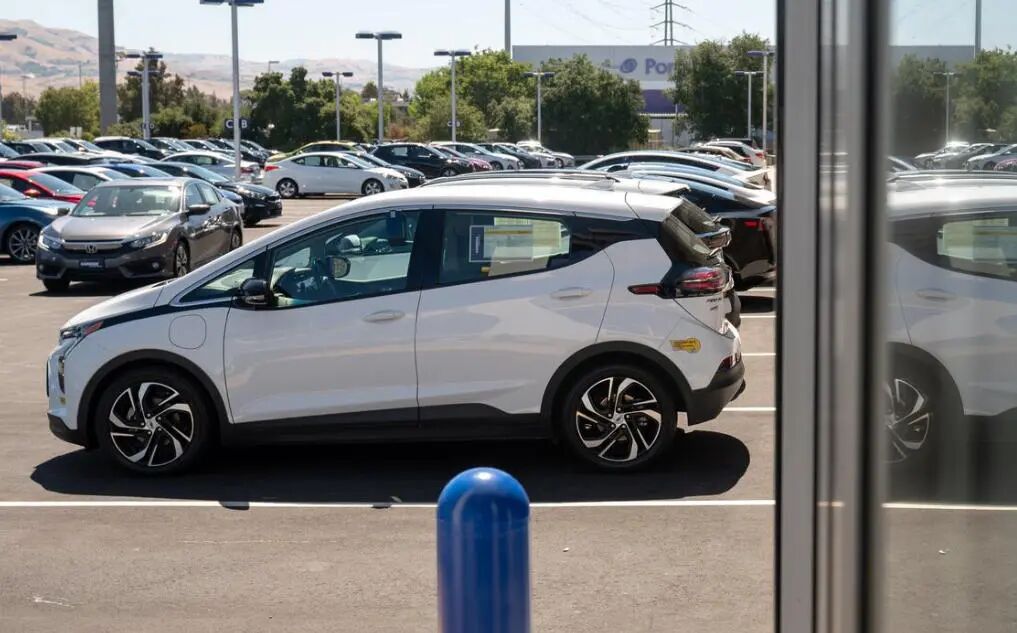
Audi is also dragged down by fuel vehicle residual values. Its disclosed financial update report for the first nine months pointed out that weakening residual values of internal combustion engine vehicles were one of the reasons for the group's operating profit falling 26% year on year. BMW CFO Mertl said that the residual values of internal combustion engine vehicles had slightly deteriorated; since the intensification of conflicts between Iran and Israel and the United States, international oil prices have risen, and the residual values of BMW BEVs have clearly improved.
Data from market research firm Dataforce show that high oil prices have prompted European consumers to turn to BEVs, with the European market share of BEVs rising from 21% in the same period last year to September 30, 2026. Demand for gasoline cars, diesel cars, and hybrids has declined, prices of used BEVs have recovered, and fuel vehicle residual values are lower than previously expected.
Sommelet, CEO of French leasing giant Ayvens, said that profits in the internal combustion engine and hybrid vehicle businesses, which account for the bulk of sales, have clearly declined, with some batches incurring losses, while losses in the previously loss-making BEV business have narrowed. The company manages about 3 million vehicles. In the third quarter, it incurred a sales loss of 21 million euros due to falling used fuel vehicle prices, and BEVs accounted for 30% of total new orders.
Data from German automotive data provider DAT Group show that as of August 2026, the residual value gap between BEVs and fuel vehicles in Germany had narrowed from about 10 percentage points at the end of 2025 to 6 percentage points. For BEVs that are three years old and driven 15,000 to 20,000 kilometers per year, after four consecutive months of price increases, the average residual value rate in August was 51.5%; gasoline cars were 59.4%, and diesel cars were 58%.
Data from British vehicle valuation company Solera CAP HPI show that used prices of some three-year-old BEV models have risen by more than 20% in the past six months. The three-year-old Mini Electric with 30,000 miles traveled rose 28% to 12,710 pounds; the three-year-old Polestar 2 rose 21% to 21,822 pounds; the three-year-old Cupra Born rose 20%.
Its director said that this round of price increases is a recovery from a downturn, not an irrational rise, and most affordable used BEV models still offer good value for money.
Looking back, in 2021-2022, global automakers generally bet that the European market would quickly complete its electrification transformation and launched a large number of BEV new cars in advance, but market acceptance did not meet expectations, directly causing used BEV values to plunge. The leasing industry, due to tax incentives for company cars, had a higher share of BEV leasing than fuel vehicles, and the plunge in residual values caused losses.
In recent months, a large number of smaller and more affordable BEV models have come to market. These affordable models have lower usage costs and are more attractive to price-sensitive used car buyers, further supporting the residual value performance of BEVs. Falling fuel vehicle residual values and recovering EV residual values are gradually shifting the leasing industry's previous losses on EVs to fuel vehicle assets. Therefore, the industry's profitability logic is being reset with the popularization of electrification.
Editor: Cao Jiadong | Editor-in-Chief: He Zengrong

THE END
-
![]()
Let the Data Speak: China Is Winning the Automotive Electrification Race While the US Market Remains an Island
-
![]()
Electric Vehicles Are Selling Like Hotcakes—Yet Profits Are Halved, Leaving European and American Automakers Bewildered
-
![]()
Is It Reasonable for the CIIE to Be Dominated by "Chinese Cars"?
-
![]()
Tencent's Yao Shunyu Says AI Moats Lie Mostly at the Product Layer, Not the Model Layer
-
Storage Storm Looms, Niche Phone Brands 'Doomed'
-
Has Apple Been "Bitten Back" by Its Supply Chain?
-
Huawei HarmonyOS PCs Hold Just 0.4% of the Global Market, Yet Already Capture 10% of China's Xinchuang Sector?
-
![]()
Breaking: BYD Yangwang Shatters 500 km/h Barrier—Has China's Supercar Era Arrived?