New Energy Rides the Wave, While "Old Energy" Drifts
 11/13 2026
 492
Introduction
Gasoline cars are still going strong, yet three or four 4S maintenance stores have already shut down.
Over the past two years, Beaver has switched maintenance stores four times for his gasoline car. First the store on Deping Road in Yongda, then the Yangpu Jiaoyun outlet, then Shenjiang Road, and now he has moved to an even more distant store.
Such frequent changes are not because he is wealthy enough to buy a new car, but because 4S stores kept closing one after another, leaving him no choice but to shuttle from one to the next.
The new energy wave rolls relentlessly forward. Although the durable quality of fuel vehicles remains unchanged, some fuel vehicle 4S stores can no longer hold on.
The "2025-2026 China Automobile Distribution Industry Development Report" (hereinafter referred to as the "Report") released by the China Automobile Dealers Association in March shows that in 2025, the domestic auto 4S network added nearly 5,000 outlets, of which new energy vehicle brands accounted for about 56%; among the nearly 5,000 4S networks that exited, independent brands also occupied a large share, about 76%, joint venture brands about 15%, and luxury brands about 9%.
In other words, the 4S network contracted slightly overall, but the internal structural differentiation is especially severe: the new energy 4S network continues to expand, while the fuel vehicle 4S network is shrinking at an accelerating pace. For car owners, the most direct consequence of this change is "wandering" from one 4S store to another.
01 The Car Is Still Fine, but the Store Is Gone First
"Zhongsheng has delisted, and Yongda has also closed several stores. To use the basic maintenance vouchers, I had to cross the Huangpu River to Pudong. Three locations in three years. We old-energy car owners are now almost like stray pedigree cats shuttled between foster homes."
After a somewhat bittersweet car maintenance experience, the author's senior schoolmate, also a gasoline car owner, rarely showed negative emotions on WeChat Moments.
Previously, the "2025 China Automotive Aftermarket Annual Development Report" jointly released by the China Association of Automobile Manufacturers and Hejun Consulting showed that the average age of traditional fuel vehicles is as high as 8.2 years, and over 60% of vehicles have been in service for more than 7 years.
Fuel vehicles are mostly regarded as durable goods, and car owners also pursue stability. However, against the backdrop of declining fuel vehicle sales, a shrinking customer base, and especially sharply narrowing brand revenue and profits, the situation where "the car is still fine, but the 4S store providing maintenance closes first" is no longer rare.
"XX is really hopeless. This is the second store where I get maintenance, and it's about to close too. Such a big 4S store can't hold on either. I bought the car in 2021, when fuel vehicles were still at their peak, and you had to wait half a month to a month for delivery. A car worth 200,000 yuan, I thought I could drive it for ten or twenty years. In just a few short years, it's been competed to death." A Guangdong car owner wrote this on social media.
The new energy wave came so swiftly and violently that fuel vehicle owners who bought cars a few years ago never expected that the once ubiquitous and mighty fuel 4S stores would decline rapidly within a few years.
For car owners, the closure of 4S stores is an unchangeable fact. Even so, the various inconveniences and troubles brought by changing stores must ultimately be borne by the car owners themselves.
Those most affected are owners of ultra-luxury brands. The already few ultra-luxury stores have become even more scattered after contraction, greatly increasing maintenance difficulty.
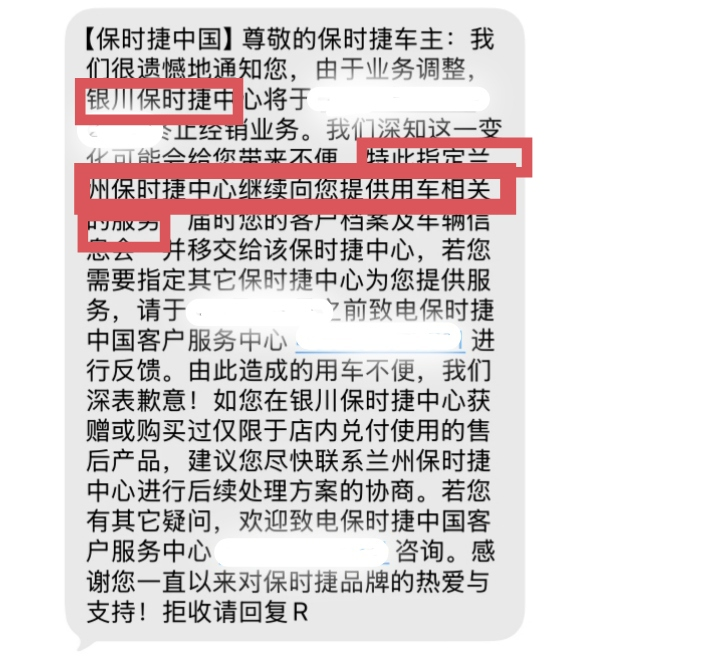
Take Porsche as an example. After years of sales pressure, the brand began optimizing its domestic dealer network and plans to reduce its Chinese stores to 80 by the end of this year.
Some owners say that after the Weifang Porsche Center closed, maintenance requires traveling across cities to Qingdao or Jinan; Porsche owners in Yinchuan also had their after-sales service transferred to the Lanzhou store after the local store closed. Although the receiving party said it would provide door-to-door service from time to time, cross-city maintenance is inherently lacking in convenience and stability.
Relatively speaking, it is already quite difficult for car owners to be properly resettled. Some brands have too many authorized dealers, and because they belong to different platforms, after a store closes, the new store cannot take over the original services, making it difficult for car owners to enjoy the services promised orally by sales or even in written contracts.
Previously, a Land Rover owner bought a Range Rover SUV in 2019 and paid 30,000 yuan in a lump sum for lifetime free maintenance service. In 2025, the original dealership closed, and when the owner was transferred to another store, he was told that to enjoy the service he had to produce the original contract from six years earlier. Eventually, with media intervention, the receiving store proactively retrieved the relevant contract and continued the owner's free maintenance service.
But without media intervention, some Land Rover owners were forced to change stores and could not continue to enjoy free maintenance service. "I also had lifetime maintenance, but before I could use it twice, the 4S store went under."
Whether it is an entry-level hatchback or an expensive luxury car, the exhaustion of shuttling between stores and the disputes after changing stores equally and continuously wear down every fuel vehicle owner.
02 Over Half Are Losing Money; Stores Have a Harder Time Than Car Owners
The maintenance dilemma of gasoline car owners stems from the closure of fuel brand 4S stores. And the contraction of stores is both a clearing out under profit pressure and an inevitability under the changing times.
At the July 2026 China Auto Forum, Lang Xuehong, deputy secretary-general of the China Automobile Dealers Association, said that the total domestic automobile sales and service network currently exceeds 50,000, and in terms of channel numbers, traditional fuel vehicle 4S stores total about 32,000, while the total new energy sales network exceeds 20,000.
Although the fuel vehicle 4S store network has 12,000 more outlets than new energy vehicles, against the backdrop of new energy penetration exceeding 60%, it is not hard to find that gasoline car stores, accounting for 64%, only get 40% of sales.
Sales continue to decline, and profits are shrinking even more sharply. The "Report" shows that in 2025, 55.7% of auto dealers fell into losses; 81.9% of auto dealers had price inversion to varying degrees, and 51.5% of auto dealers had a price inversion margin of more than 15%.
In terms of gross profit composition, the contribution of new car gross profit is even negative, at -25.5%, and the main profit has begun to shift to after-sales, finance and insurance. Some media reported that a traditional luxury brand store that had been open for 12 years officially delisted in June this year, with cumulative losses exceeding 40 million yuan over three years.
The new car business has become a drag, losses have become the norm, and the collapse of the entire 4S store system has evolved from individual competition of survival of the fittest into systemic clearing across all channels. Even leading dealer groups cannot escape.
Channel contraction has further triggered talent loss. The frontline sales turnover rate of traditional 4S stores is close to 70%, and the turnover rate of after-sales technicians exceeds 50%. In 2025, more than half of sales staff at joint venture brand stores took home less than 5,000 yuan per month. The vicious cycle of continuous talent outflow has further weakened offline maintenance capacity.
The bigger problem is that new car sales determine whether 4S stores survive, while maintenance demand is rooted in the stock market. On the one hand, electrification is advancing aggressively. The latest data show that in October, China's new energy vehicle production and sales reached 2.017 million and 1.94 million units respectively, up 13.8% and 13.1% year on year, and new energy vehicle sales reached 64.3% of total new car sales.
On the other hand, the fuel vehicle parc remains huge. As of the end of 2025, the national fuel vehicle parc was still as high as 322 million, accounting for nearly 90% of the total 366 million vehicles, and a massive number of old cars still need gasoline vehicle maintenance services.
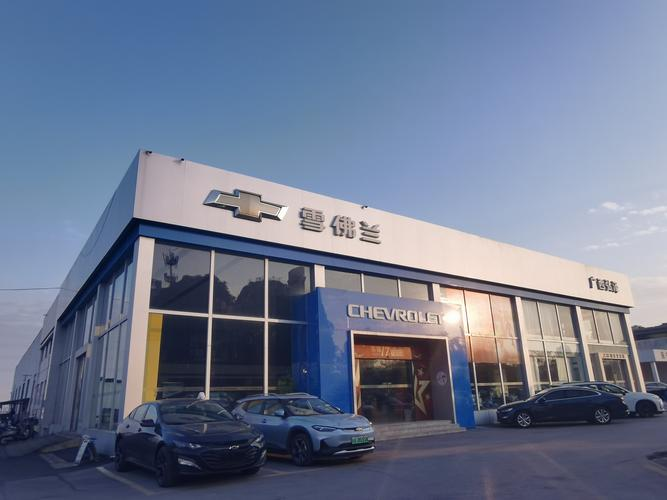
Stores are contracting while the parc continues to expand. Between the contraction and expansion, the supply-demand gap keeps widening. Under the wave of store closures, the first to come under pressure are brands with large historical parcs and continuously declining new car sales in recent years, such as Hyundai, GM, and Ford. Chevrolet, which withdrew from the Chinese market not long ago, has closed a large number of 4S stores, and some old owners can only go to Buick stores under the same brand for maintenance.
Fortunately, the maintenance market can still yield considerable profits. After the absence of official brand outlets, chain aftermarket stores such as Tuhu Car Care, Tmall Car Care, and JD Auto are rapidly filling the gap. For example, as of June this year, Tuhu's global workshop stores had reached 8,825, a net increase of 817 in the first half of the year, up 22.5% year on year.
But even as third-party chain stores continue to expand, they still cannot fully offset the era's growing pains encountered by fuel vehicle owners.
Of course, it can be said that the surging new energy wave has swept away most of the attention in the sales market and also taken away some talent and resources from the aftermarket.
But in the final analysis, the core problem still lies in the channels themselves. Dealers generally face losses, especially when fuel new car sales are poor and cannot bring sustained and stable incremental growth, leaving stores with no choice but to close, which inevitably affects existing gasoline car owners.
In the trade-offs of industrial transformation, the advance and retreat of channels are determined by profit, while the vehicle-use experience of existing owners can hardly be taken into consideration. After that, what is left for more fuel vehicle owners may still be forced "migration" and "wandering."
Editor: Shi Jie Editor: He Zengrong

THE END
-
![]()
Five Charts Show China's Auto Exports Soaring | Total Volume, Automakers
-
![]()
Half of the Second-Tier Luxury Brands Are Already Preparing to Exit the Field, Yet Lincoln Wants to Bet on the EX8
-
![]()
BMW: No Room for Error
-
![]()
October SUV Sales Roundup: Yuan UP Takes the Crown as Three Fuel Vehicles Secure Top Ten Spots
-
![]()
New Energy Rides the Wave, While "Old Energy" Drifts
-
![]()
Ten Questions on Intelligent Organizations: If the Decision-Makers Don't Change, It's Still the Same Old Factory
-
Kaojiang Embraces AI: A Deep Empowerment Journey Begins
-
When Will Interstellar Glory Hit the Bullseye with a Single Shot?