Half of the Second-Tier Luxury Brands Are Already Preparing to Exit the Field, Yet Lincoln Wants to Bet on the EX8
 11/13 2026
 519
The Aviator EX8 will not officially launch until the first half of next year, so it is still too early to say whether it can succeed.
On November 11, 2026, the news that the Lincoln Aviator EX8 had been officially named seemed especially quiet amid the automotive industry's communication channels.
There was no overwhelming traffic hype, no technology launch event with parameters pushed to the extreme, and even the wording in the official press release deliberately avoided the most popular intense buzzwords in the current new energy industry—"subversion," "revolution," and "crushing." It simply and quietly spoke of "combining a century of luxury heritage with the new energy experience."
This restrained move is closely tied to the current predicament of second-tier luxury brands.
In the first ten months of this year, in the domestic passenger car market above 300,000 yuan, the share of independent brands has exceeded 52%. In the monthly sales rankings of luxury SUVs above 500,000 yuan, new force models have occupied more than half of the seats for seven consecutive months. On the other hand, the overall market share of traditional second-tier luxury brands has fallen from 14.7% three years ago to 7.9% this year. More than half of these brands sell fewer than 5,000 vehicles per month, the average terminal discount has exceeded 25%, and the bottom line of the price system has been broken again and again.
Under these circumstances, many people believe that Lincoln is too late to launch the Aviator EX8 at this point, and some say it has no chance of earning a seat at the table at all. But on closer inspection, the Aviator EX8 does not have a weak hand on the surface.
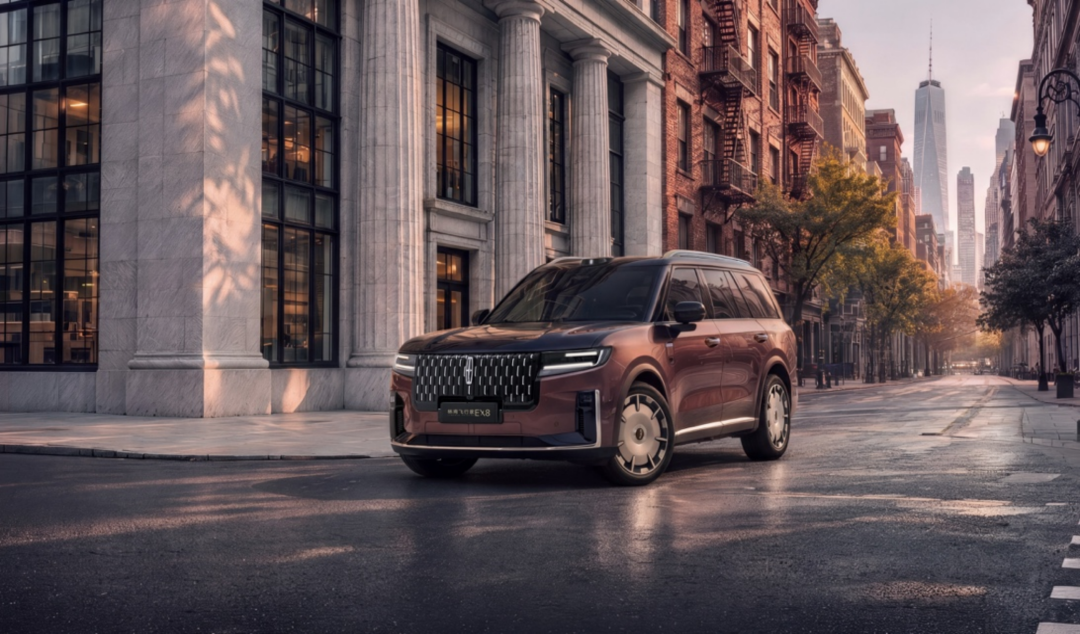
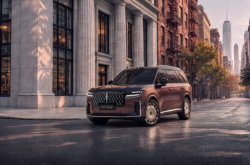
With a 3010 mm wheelbase, the Smart Hybrid system, a large five-seat layout, and a split tailgate, it targets the "old money new elite" crowd and aims to steadily carry the foundation of century-old American luxury into the new energy era. So whether you call it conservative or pragmatic, at least against the backdrop of the entire second-tier luxury brand transformation rhythm collectively lagging by half a beat, Lincoln does not want to follow others in circles, but instead walks directly to the users it knows best.
From Large-Displacement V6 to 1.5T Plug-in Hybrid
When many people, including me, first saw the EX8's parameters, their first reaction was that "Lincoln has lowered its status."
After all, the main selling version of the current gasoline Aviator still uses a 3.0T V6 twin-turbocharged engine paired with a 10AT transmission, following the traditional large-displacement luxury route. Now the EX8 directly switches to 1.5T plug-in hybrid power, cutting the engine displacement in half. Many people shook their heads after seeing it and said the spirit of American luxury is gone.
But if you really place it in the current market and carefully sort through it, you will find that this choice is a precise positioning that Lincoln wants.
How competitive has the current mid-to-large new energy SUV market become? In October 2026, domestic retail sales of large SUVs exceeded 100,000 units for the first time, soaring 65.63% year-on-year, while the overall passenger car market fell 28% during the same period. The price band above 400,000 yuan was the only range to maintain positive growth in the first half of this year, and the new energy penetration rate jumped directly from 44% to 56% within a year.
While everyone is rushing down the path of "maximum space and stacked configurations," the route of the Lincoln Aviator EX8 instead seems somewhat "anti-mainstream."
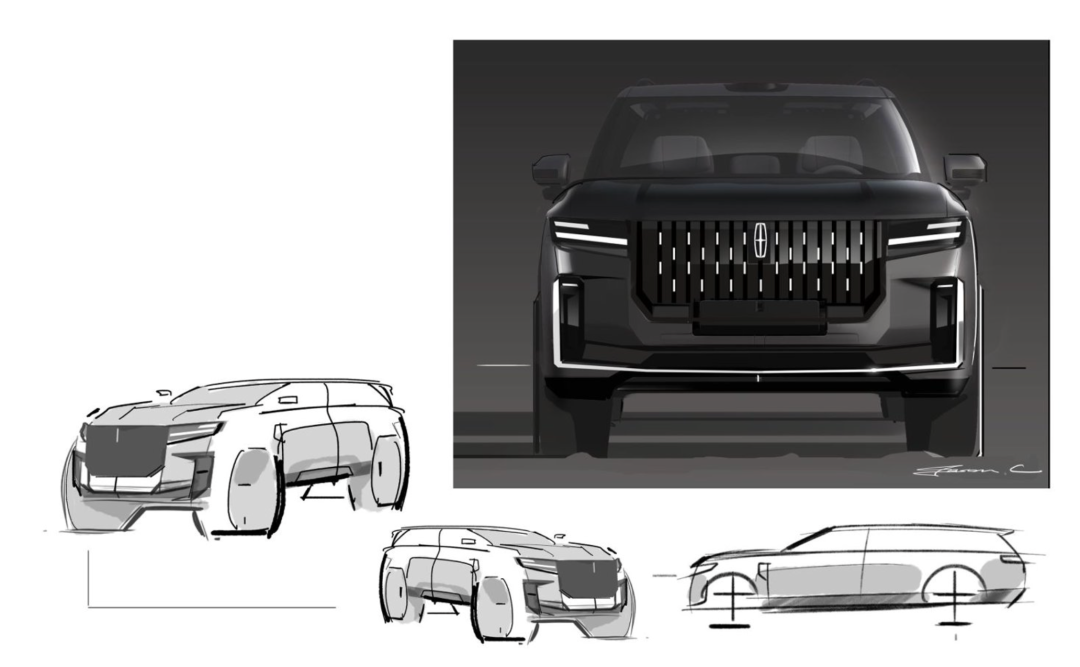
It did not force itself to compete with new forces over who has more screens or more lidar, nor did it follow the trend of making six- or seven-seat models. Instead, it chose a large five-seat layout. With a vehicle length of 5055 mm and a wheelbase of 3010 mm, the redundant space of the past third row is all given to second-row legroom and rear cargo depth. In the second row, you can cross your legs without touching the front seats, and after fitting three 28-inch suitcases plus a stroller in the trunk, there is still plenty of room left.
Coupled with that split tailgate, when stopped it can serve as a viewing platform, a fishing seat, or a small outdoor tea table. This sense of scenario is the Lincoln flavor.
Although the Smart Hybrid system is not particularly impressive in highlights, it can still hit the pain points of many users regarding energy replenishment. The EX8 follows the "oil, electric, and extended-range" route. For daily commuting, it uses pure electric power; for long-distance travel, it uses fuel. The engine can directly drive the vehicle within a reasonable speed range without relying entirely on the electric motor to pull it along. This retains the low usage cost of plug-in hybrid models while not tying users to the charging anxiety of pure electric vehicles.
Of course, its shortcomings are also clearly laid out on the table.
The official full motor power, pure electric range, and intelligent driving configuration have not yet been announced. Based on current information, it cannot be like many domestic new energy models that max out high-level intelligent driving, an 800V high-voltage platform, multi-screen interaction, and other features. For young users who compare parameter tables one by one every day and regard intelligent driving experience as their primary purchasing criterion, the EX8's appeal is indeed not that strong.
But looking at it from another angle, for many middle-aged users who frequently drive long cross-regional trips, do not have fixed charging piles at home, and are not so dependent on fancy electronic functions, "stable, anxiety-free, and composed to drive" are actually more practical than stacking more parameters.
Everyone Is Playing Their Cards a Bit Slowly
Pulling the view away from the Aviator EX8 and looking at the overall picture of second-tier luxury brands, Lincoln's new model this time feels more like a long-overdue awakening for the entire group.
Looking back five or six years, how comfortable were the days of second-tier luxury? In the market above 300,000 yuan, BBA firmly held the brand ceiling above, while ordinary joint venture and independent brands had not yet reached the threshold of the high-end market below. Brands such as Cadillac, Volvo, and Lincoln were stuck in the middle, relying on an ecological niche of "not as good as those above but better than those below," and all of them lived comfortably.
Cadillac could sell more than 200,000 vehicles a year, Volvo's "safety label" almost became an exclusive moat, and Lincoln relied on the differentiated experience of "American luxury" to see sales rise rapidly in the first few years after localization. In that middle ground at the time, it was almost possible to make money while lying down.
But looking back in 2026, this moat has long been washed away.
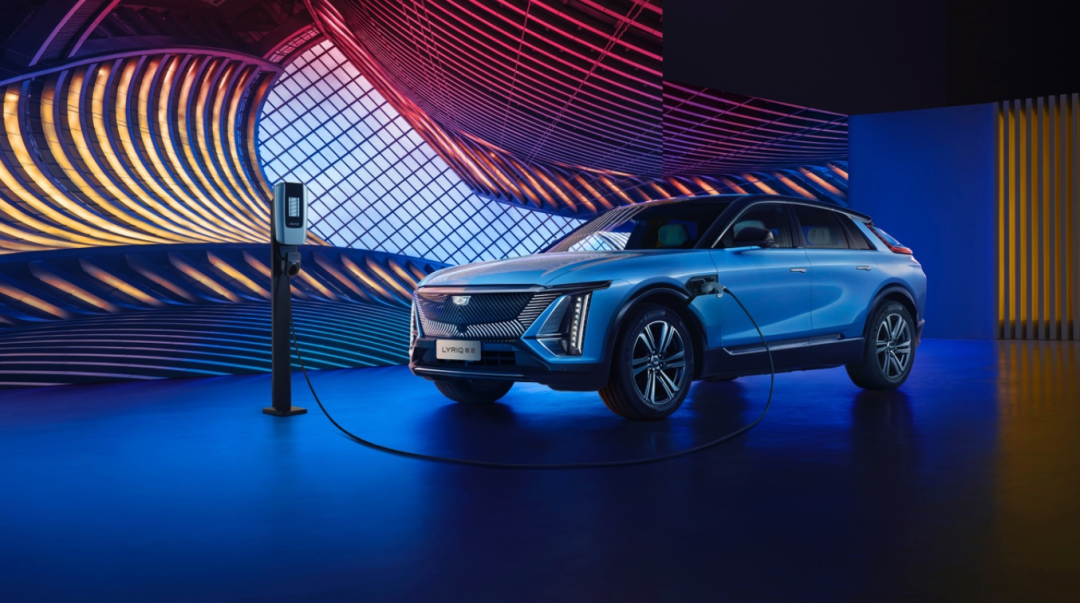
Cadillac is now basically taking the path of "trading oil for volume." The landed price of the CT5 is less than 200,000 yuan, and the terminal discount on the XT5 is 80,000 to 90,000 yuan. The user mindset it built in the past with "rear-wheel drive, high horsepower, and sporty tuning" simply cannot hold up in the new energy era. Even today, its new energy transformation still struggles to produce a truly volume-selling electrified product.
Volvo's mindset built over the past decades on "safety" is now even less scarce. In 2026, any domestic new energy SUV above 200,000 yuan casually brought out will max out high-strength steel proportion, active safety configurations, and body rigidity. Brands like Infiniti need not even be mentioned.
And the collective dilemma of the entire second-tier luxury sector is not at all a problem of one model selling poorly; it is that the entire transformation rhythm is a full beat slow.
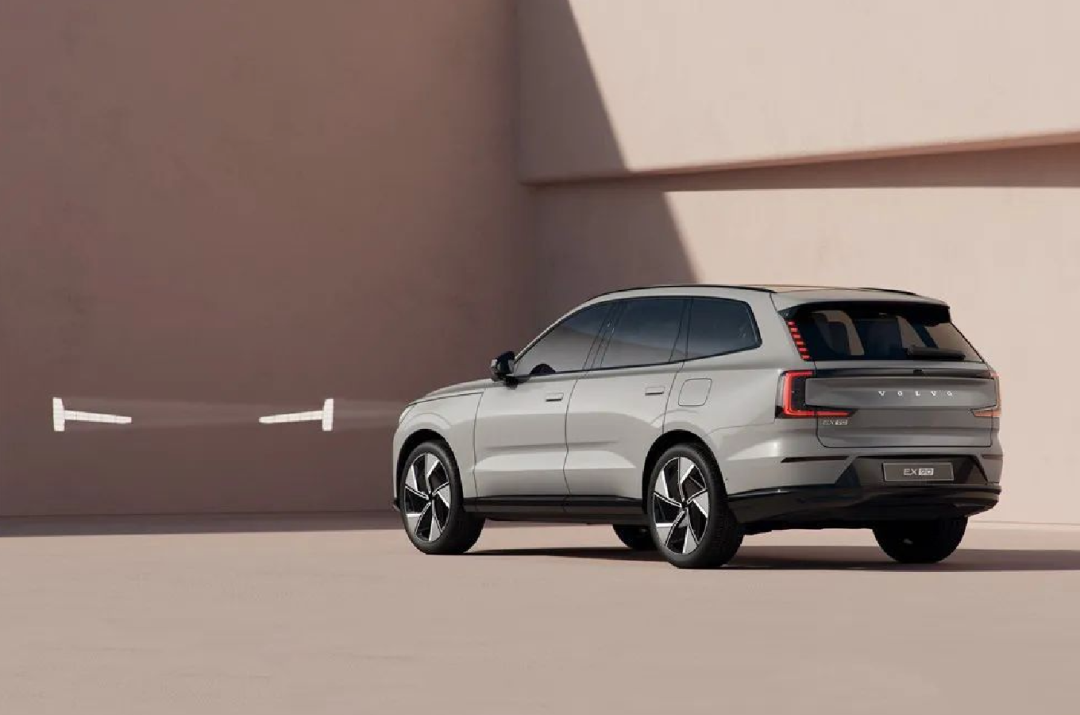
There is now a very popular view in the industry that the middle ecological niche of traditional second-tier luxury has been completely squeezed to death. In the future Chinese high-end market, it will be either BBA or domestic high-end new energy, and brands like Lincoln and Cadillac will have no place to stand at all.
This statement is half right and half too absolute.
If you look at 2026 user survey data, among users of new energy SUVs above 300,000 yuan, nearly 40% previously owned traditional luxury brands. When many people change cars, it is not that they have no feelings for traditional luxury at all. Rather, after trying them, they find that the new energy vehicles you build are inferior to domestic new energy vehicles in intelligent features, space utilization, and usage cost, so they can only turn to new forces.
It is not that users have changed their hearts; it is that no product has been offered that matches the needs of this era. But if you really go deeper into the market, you will find that there is still a group of users who have not yet been fully captured by any new force.
Do Lincoln and Others Still Have a Chance?
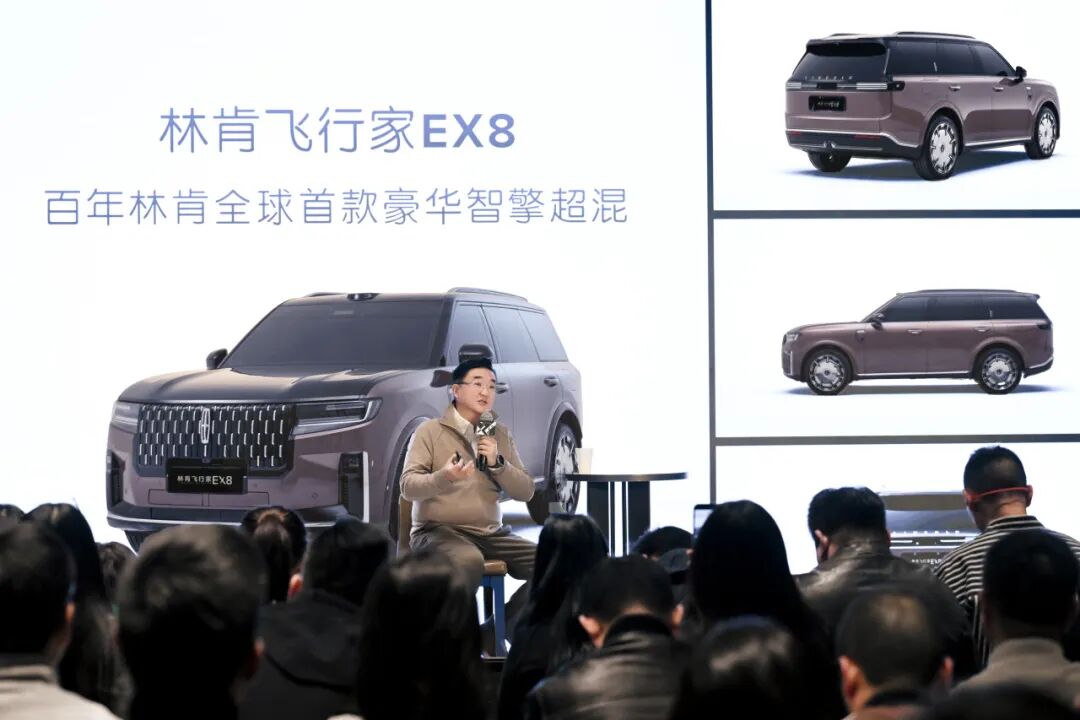
As Lincoln China President Jia Mingdi said in an exclusive interview, he hopes that Lincoln new energy users will mostly be around 40 years old, with some career accumulation, more than one car at home, and many years of experience driving traditional luxury cars, with a natural trust in the smoothness of large-displacement engines and the solid feel of the chassis. They do not reject new energy, but they do not want to be kidnapped by energy replenishment, do not want to plan their schedules around charging every day, and do not want seven or eight screens installed in the car with various pop-up notifications disturbing them as soon as they get in.
"The luxury they want is not stacked parameters, but the composure of 'no hassle, no anxiety, and being steadily delivered to the destination.'"
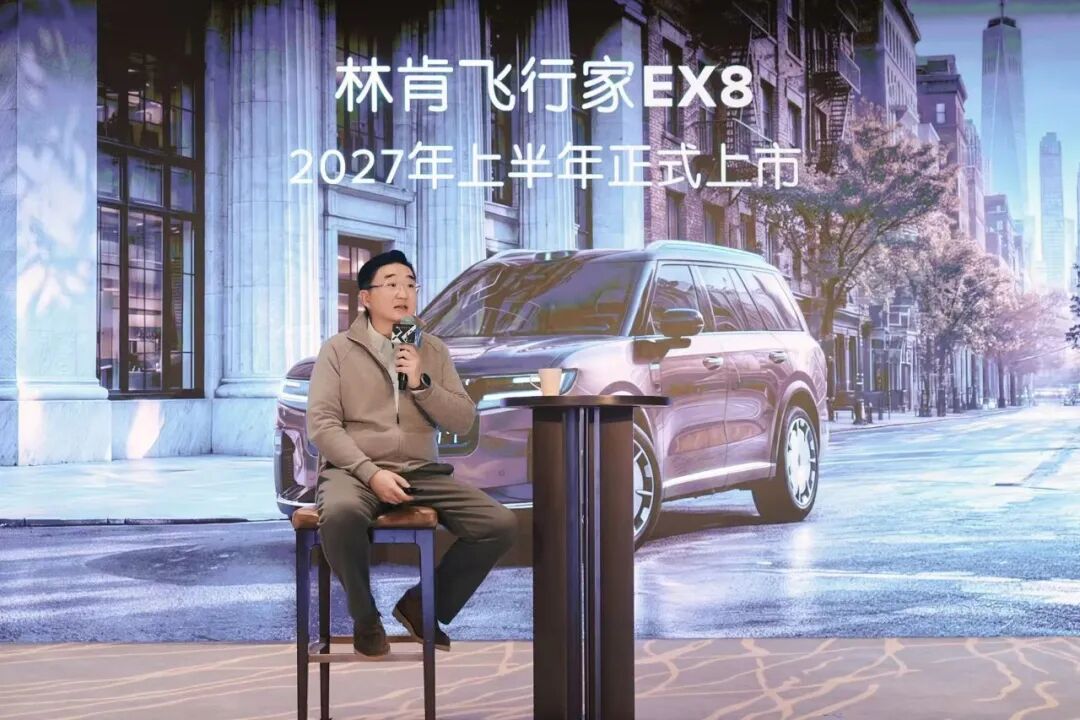
And this may be the tiny gap that the Lincoln Aviator EX8 currently holds in its hands. It does not force itself to compete with new forces on intelligent parameters, but bypasses the frontal battlefield to capture this group of users ignored by the mainstream new energy wave.
The large five-seat space, the classic Art Deco design, not radical and not flashy, and it will not turn the interior into an electronic amusement park in pursuit of a sense of technology. The Smart Hybrid system can run on both fuel and electricity, with no pure electric range anxiety. Daily commuting with pure electric power costs very little, and long-distance travel does not require searching everywhere for charging piles. This positioning of "ease" can hit the core needs of this group of users.
Of course, this absolutely does not mean that Lincoln's road ahead will be easy.
Domestic high-end new energy is attacking upward too quickly. In the market above 500,000 yuan, models such as the AITO M9 and Li Auto L series routinely start at 20,000 units in monthly sales, and BBA terminal prices are also continuously moving downward. With the same budget, users can reach first-tier luxury if they stretch upward, or buy a domestic new energy vehicle with fully stacked configurations if they choose downward. The choice space left for Lincoln is actually very narrow.
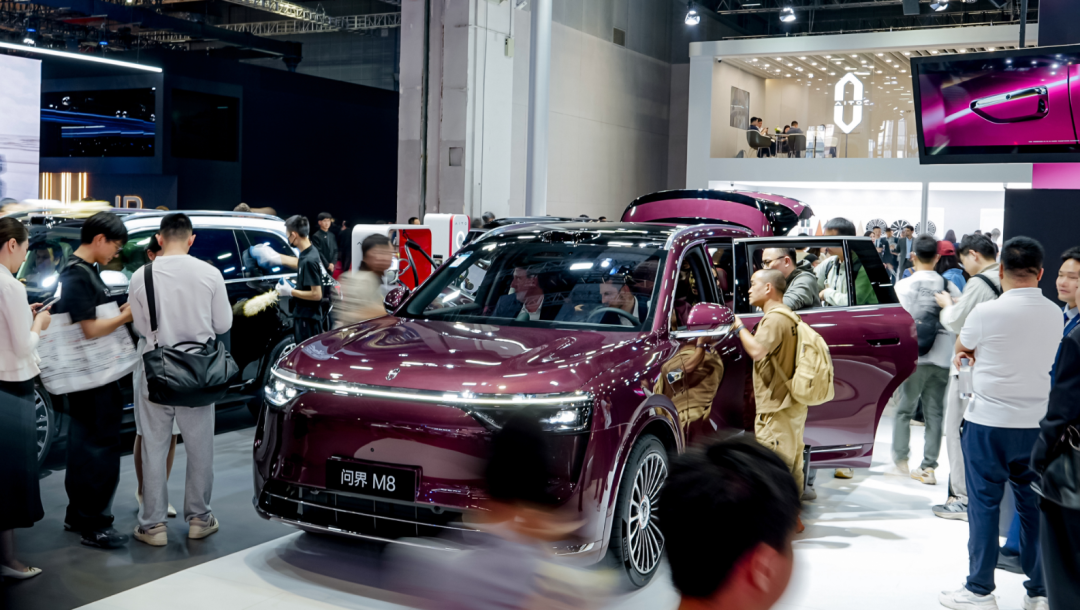
A more realistic problem is that the dealer networks of second-tier luxury brands, including Lincoln, have shrunk considerably. Many users in third- and fourth-tier cities cannot find a nearby store even if they want to experience the real car. The direct-to-user operating system of new forces is precisely what traditional luxury brands have been least good at over the past decades, and this is much harder to solve than the parameters of the Aviator EX8 itself.
Of course, when discussing "whether the Chinese market still needs second-tier luxury brands," one cannot simply conclude with "no." The space in the mainstream mass market is indeed gone, but in those niche yet sufficiently stable segmented tracks, brands like Lincoln still have their own room to survive.
The Aviator EX8 will not officially launch until the first half of next year, so it is still too early to say whether it can succeed. But in an environment where the entire second-tier luxury brand sector is relying on price cuts to stay alive and transformation moves are dragging, Lincoln has finally produced a flagship product truly tailored for China's new energy market.
It cannot subvert the market, and it cannot pull sales back to their peak overnight. It is more like a late but still valid boat ticket that keeps you at the table, so you are not directly left on the shore by the rapidly departing new energy wave.
Note: Some images are from the internet. If there is any infringement, please contact us for deletion.
-END-
-
![]()
Five Charts Show China's Auto Exports Soaring | Total Volume, Automakers
-
![]()
Half of the Second-Tier Luxury Brands Are Already Preparing to Exit the Field, Yet Lincoln Wants to Bet on the EX8
-
![]()
BMW: No Room for Error
-
![]()
October SUV Sales Roundup: Yuan UP Takes the Crown as Three Fuel Vehicles Secure Top Ten Spots
-
![]()
New Energy Rides the Wave, While "Old Energy" Drifts
-
![]()
Ten Questions on Intelligent Organizations: If the Decision-Makers Don't Change, It's Still the Same Old Factory
-
Kaojiang Embraces AI: A Deep Empowerment Journey Begins
-
When Will Interstellar Glory Hit the Bullseye with a Single Shot?