BYD Puts a 5-Million-Yuan Bounty on the Table — and Exposes a Hidden Industry Chain
 11/16 2026
 417
BYD has gone on the offensive — and this time it's playing hardball. Facing a wave of online rumors, the company has named its price: up to 5 million yuan for solid leads. On November 13, BYD's legal department announced progress on several online infringement cases and made its position clear: for information on organized, premeditated smear campaigns against BYD run through MCN agencies and similar operations, verified and eligible providers will receive 500,000 to 5 million yuan; for other qualifying leads, 50,000 to 5 million yuan.
The 5-million-yuan figure is eye-catching enough, but what stands out more in the announcement are the MCNs, mass posting, and AI-generated content. In the battle for automotive public opinion, a single article may sit atop a whole apparatus of account operation, content production, and commercial transaction. That is precisely the chain the company wants to trace. Supporting BYD's lawful rights protection is simple: products can be criticized, operations can be questioned, but facts must withstand verification. Whoever fabricates facts should bear the consequences.
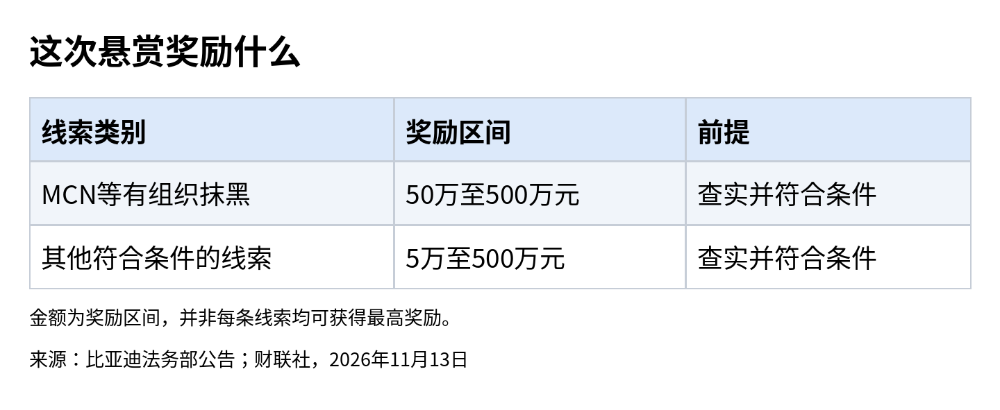 Figure 1: Reward ranges, subject to verification and eligibility

Tracing the Clues Backstage
The announcement covers both disclosed case progress and matters the company is still investigating. According to BYD's legal department, two individuals surnamed Feng and Ji were detained for fabricating and spreading false information about the company, while a person surnamed Jiang was detained for long-term, repeated insults and defamatory remarks. Several online accounts have been found by courts to constitute infringement, and the parties involved were ordered to issue public apologies and pay economic damages.
As for the concentrated posting by accounts under certain MCNs, BYD said preliminary verification found that some content was AI-generated, with identical titles and near-identical wording — and some of it was even spread under the guise of debunking rumors. The company has preserved evidence and taken legal measures to pursue accountability. The specific liability of the institutions involved will be determined by the evidence and the outcome of subsequent proceedings.
The original announcement from November 13; source: IT Home. The most direct effect of the reward is to encourage people with inside knowledge to come forward. Public pages can show who posted an article, but the backstage topic planning, communication records, and payment transactions are typically held by only a handful of people. These are exactly the materials that could clarify how content is produced and how it is pushed out.
Delete one article, and a new version may surface tomorrow. Only by tracing back to the organization and the transaction links can the same playbook be made harder to repeat. The maximum reward buys an opportunity to find evidence; the final effect depends on the quality of the leads and the results of lawful accountability. High rewards must also be paired with clear verification procedures. Where the materials came from, what behavior they can prove, and whether they are consistent with other evidence should all be carefully checked. A clue's value lies in what it helps clarify; the number of forwarded screenshots can only serve as a reference. Only when rewards follow effective evidence does the bounty have practical meaning.
How Much Is Brand Trust Worth?
Automobiles are high-priced, long-term-use goods. Before placing an order, consumers compare price, range, safety, and after-sales service — and they also search for owner reviews.
A sudden controversy can push an order into wait-and-see mode. For companies, the cost of clarifying is hard to recover by deleting posts. Legal teams must secure evidence, technical staff must explain products, and stores must repeatedly explain to consumers.
Spreaders can republish with a changed title, while companies have to explain all over again. The time and energy spent by the two sides differ enormously. BYD's current scale of operations gives greater weight to maintaining trust.
In the first three quarters of 2026, the company's revenue was 566.304 billion yuan, up 0.01% year on year; net profit attributable to shareholders was 22.345 billion yuan, down 4.24% year on year; net cash flow from operating activities was 54.470 billion yuan, up 33.36% year on year. Third-quarter net profit attributable to shareholders rose 28.08% year on year.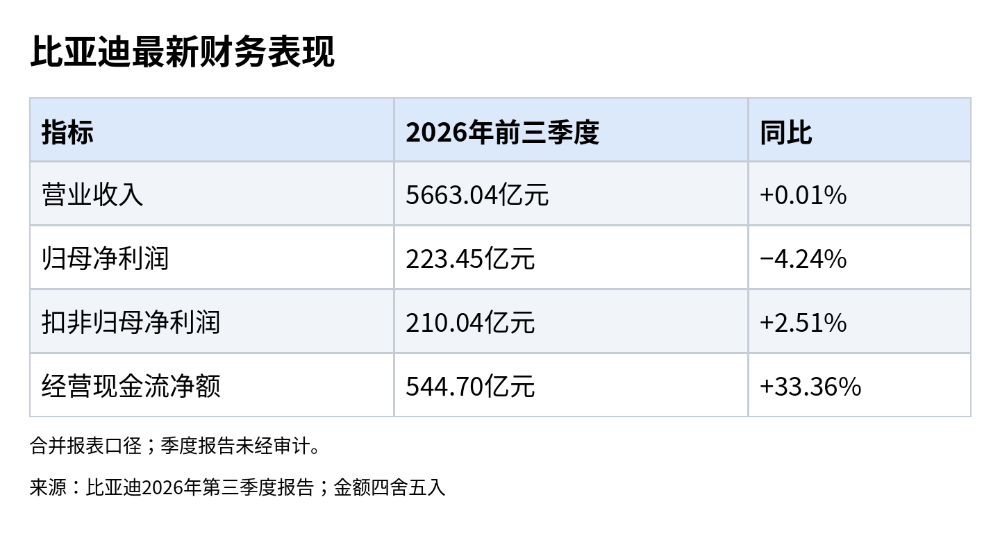
Figure 3: Q3 2026 report data, consolidated basis, unaudited
Cumulative revenue was basically flat, cumulative profit declined, and third-quarter profit grew. This scorecard shows both pressure and improvement. Exaggerating the decline into a full-scale stall, or portraying single-quarter growth as all problems solved, cannot withstand scrutiny of the complete data.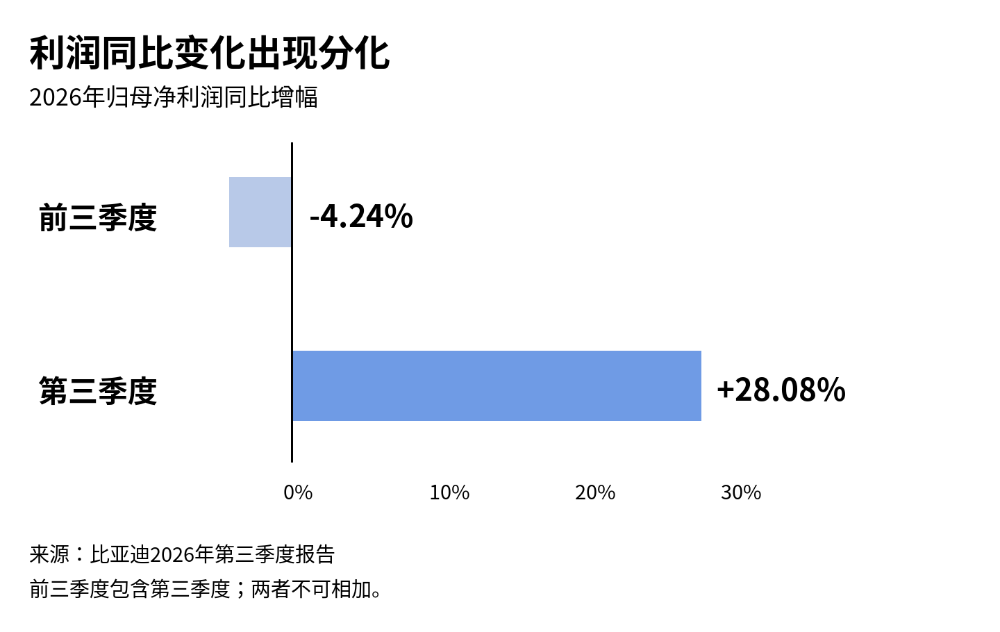
Figure 4: Cumulative and single-quarter year-on-year growth; first three quarters include Q3
Sales show a similar divergence. In the first 10 months, BYD's new energy vehicle sales were 3.6217 million units, down 2.16% year on year; October single-month sales were 490,200 units, higher than 441,700 units in the same period last year. Cumulative sales of pure electric passenger vehicles grew, while cumulative sales of plug-in hybrid passenger vehicles declined.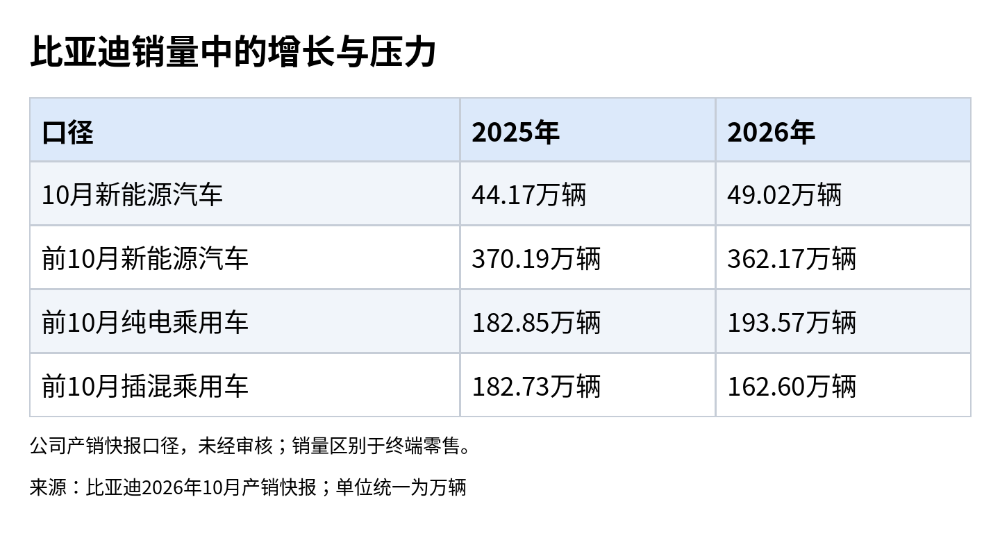
Figure 5: October 2026 production and sales bulletin data, unaudited, different from terminal retail
These changes deserve study, and brands should welcome serious outside discussion. Whether pricing strategy is appropriate, whether product updates can attract consumers, and whether channel services have kept up are all questions business analysis should ask. If all of these are lumped together as malicious smearing, companies will instead miss valuable reminders. Likewise, operating pressure does not prove a rumor true. Sales, profits, and online infringement each require their own evidence. No matter how lively an article is written, logical gaps cannot be filled.
The Rumor Industry Chain
Online rumors have a cost ledger: accounts can be bought, content can be mass-produced, and traffic can be monetized. As long as someone is willing to pay for clicks, boosted metrics, or post deletion, someone will try to turn this set of operations into a business. In a typical case announced by the Cybersecurity Bureau of the Ministry of Public Security in December 2024, a media company in Zaozhuang, Shandong, bought a large number of accounts to attract followers and divert traffic, used AI to fabricate information, and cumulatively published more than 3 million text and video items. Another case in Jinzhou, Liaoning, involved an automotive review platform; relevant personnel published more than 400,000 fake comments for payment and deleted more than 1,000 negative comments.
These are historical cases and are not directly related to the institutions BYD is investigating this time, but they show business models that have already emerged: gain traffic through content and collect money by manipulating reviews. Praise and attacks can both become paid goods. Readers spend time doing research, but what they see may be materials arranged by someone else.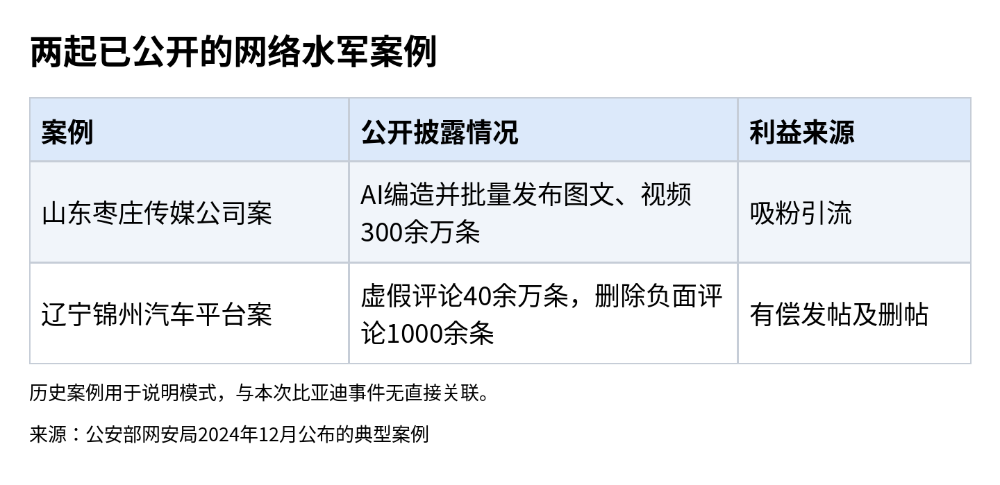
Figure 6: Historical cases published by the Ministry of Public Security, not directly related to this BYD incident
AI further lowers production costs. The same material can be rewritten into many versions and distributed to multiple accounts. When readers repeatedly see similar claims, they may easily think many sources corroborate one another. In reality, repeated posting only increases exposure; there may still be only one piece of evidence, or none at all.
A hidden tactic is to give real material a different conclusion. Financial figures are real, but the statistical period is omitted; footage of a malfunction is real, but the vehicle information is misattributed; an old video reappears with a title making people think it just happened. The less readers verify, the easier it is for out-of-context distortion to succeed. This kind of business also squeezes out serious creators.
Checking an announcement and verifying a set of data takes time; those who mass-assemble content may take the traffic first. Over time, readers' trust in reviews and financial analysis will also be eroded. Cracking down on rumors also protects creators who earn readers through professionalism and honesty. According to phased progress publicly disclosed by the Ministry of Public Security on September 17, 2026, more than 11,000 online rumor cases were solved, and more than 190 online water army cases were solved.
These figures cover multiple fields and use different statistical scopes; they reflect broader online governance issues. Here, MCNs should also be given an accurate position. It is an organizational form of content institutions, and accounts under it collectively discussing hot topics may itself be normal business. To determine whether there is rumor-mongering or paid manipulation, specific content and organizational behavior must be examined.
Institutional identity, article tone, and opinion stance cannot replace evidence. Platforms hold publishing records and account association information and should also participate in solving the problem. They should promptly verify abnormal mass posting, properly preserve original materials, and provide appeal channels for creators who are misjudged. Companies relying solely on bounties will find it hard to handle the entire dissemination chain alone.
Crack Down on Rumors — but Also Let Consumers Speak Up with Confidence
I support BYD in pursuing rumor-mongering liability in accordance with the law. As for objective, professional, and reasonable criticism, companies should accept it humbly and earnestly improve. Only by doing both solidly can there be credibility. To judge an opinion, first look at the facts and basis. If an owner reports a malfunction with maintenance records, it should be investigated; if a reviewer discloses test conditions and points out shortcomings, there should be a professional response; if an investor asks about profit changes based on financial reports, there should be a clear explanation.
Even when opinions are sharp, companies have a responsibility to explain the issues clearly. Conversely, writing speculation as hard evidence, replacing key background in videos, and organizing accounts to repeatedly spread fabricated information should be pursued in accordance with the law. The space for expressing opinions is maintained by taking responsibility for facts.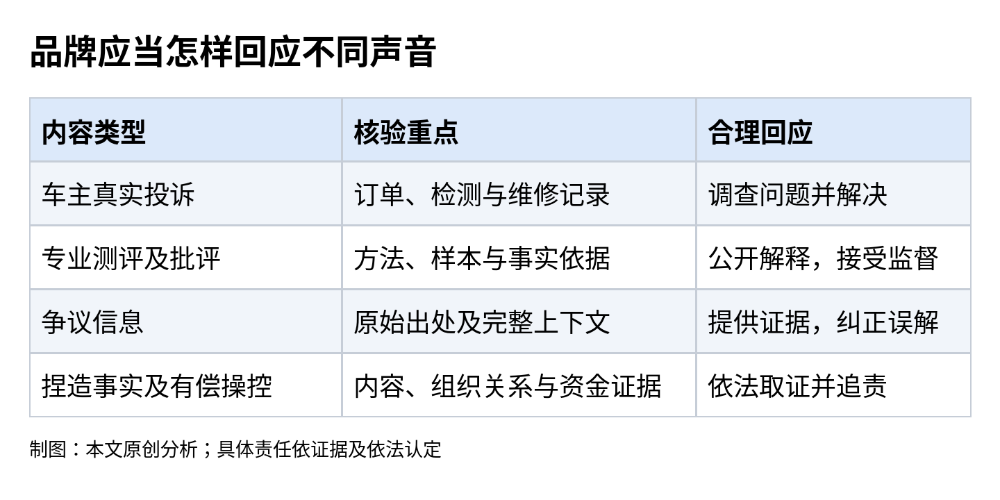
Figure 7: Original analysis of this article; specific liability is subject to evidence and lawful determination
Brand rights protection in particular must translate attitude into action. Real complaints should be received, product controversies should be explained, and confirmed false information should be clarified. The public is more willing to trust companies that can solve problems; no matter how high the reward, it cannot replace a timely and properly handled after-sales response. The legal department pursues infringement, the after-sales department solves malfunctions, and the public relations department explains publicly.
Each has its own focus, but all ultimately point to consumer trust. Companies spend money to protect reputation, and they should also be willing to spend time listening to opinions, turning well-founded criticism into references for improving products and services. The value of this bounty depends on whether solid materials can be produced afterward so that responsibility falls on the corresponding parties.
Clarifying a batch of behaviors is more useful than arguing over positions. Publicly disclosable handling results also help outsiders understand the difference between normal supervision and infringement. An automaker's reputation is ultimately built one car sold and one service performed at a time. Earnestly accept criticism, pursue rumor-mongering in accordance with the law, let consumers speak with confidence, and let those who fabricate facts bear the cost. Only such a brand deserves long-term trust.
What do you think of BYD's bounty? We look forward to your civilized and rational comments below.
Disclaimer: This article is only a financial hot topic analysis from a professional perspective. Data and materials are cited from public queries, company announcements, and Tonghuashun iFinD. The views are for reference only and do not constitute any investment or consumption advice.
#FinancialHotTopics #InDepthInterpretation #BusinessFinance #InvestmentBankingCircle #ListedCompanies #PrimaryMarket #IPO #AI #BYD #BaiduSearch
-
![]()
Volkswagen's Crash Course in Car Making
-
The Second Round of the AI Office Battle Begins
-
![]()
Why Does Correcting One Aberration Often Make Another Worse?
-
![]()
BYD Puts a 5-Million-Yuan Bounty on the Table — and Exposes a Hidden Industry Chain
-
![]()
Chopsticks Catch a Spacecraft! Musk Wins Another Bet—Whose Face Does This Slap Wake Up?
-
![]()
Five Years After the Huawei Spinoff: xFusion Seeks 8 Billion Yuan in IPO — Why Is the No. 2 Server Maker Turning to Energy? The Next Battle in Computing Power Is All About Power Supply
-
![]()
Double 11 Token Rush: Discounts Alone Can't Secure AI's Commercial Future
-
![]()
NIO Main Brand October: ES8 Sells Out, Accounting for Nearly Half