Volkswagen's Crash Course in Car Making
 11/16 2026
 467
How far is it from Wolfsburg to Hefei?
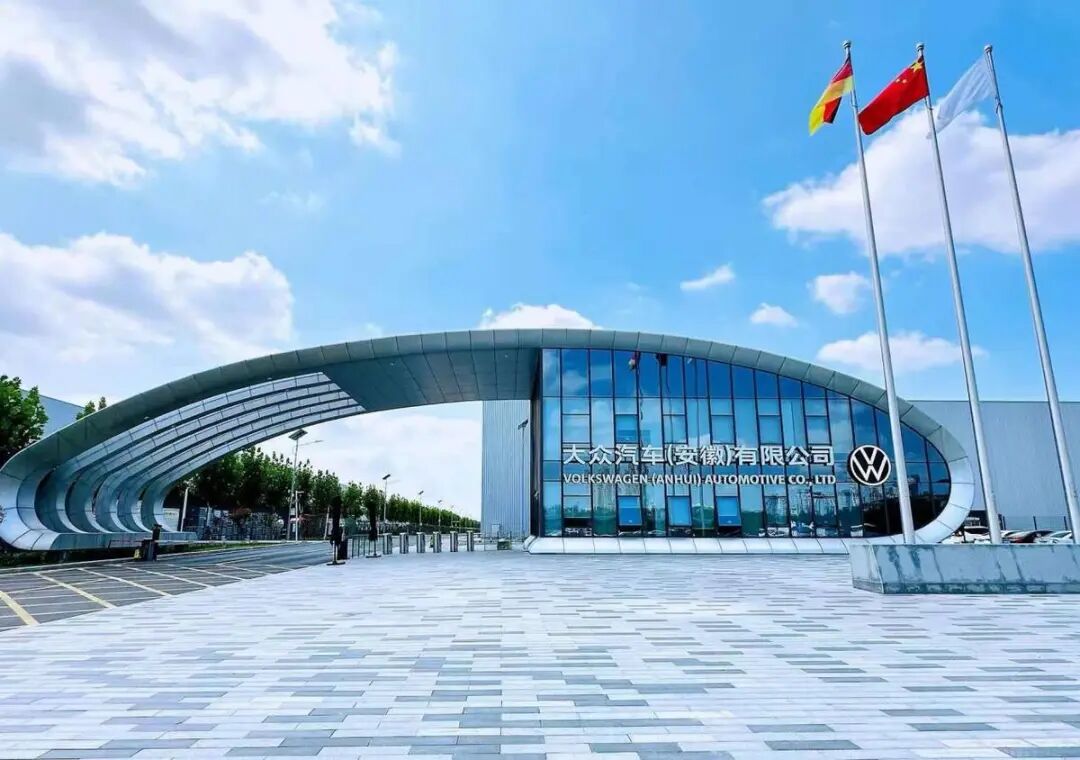
For an 88-year-old German automaker, the answer is: far enough to force its fastest technology sprint ever—right in Hefei, China.
From project approval to launch, a brand-new electrical/electronic architecture took just 18 months—a pace never before seen anywhere in Volkswagen's global system.
Yet here's the twist: at the very same plant, the first car built on this architecture has already seen two official price cuts within six months of launch—and at one point sold just over 200 units in a single month.
1. The Hefei Speed
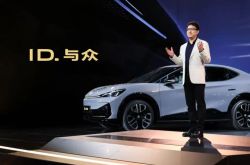
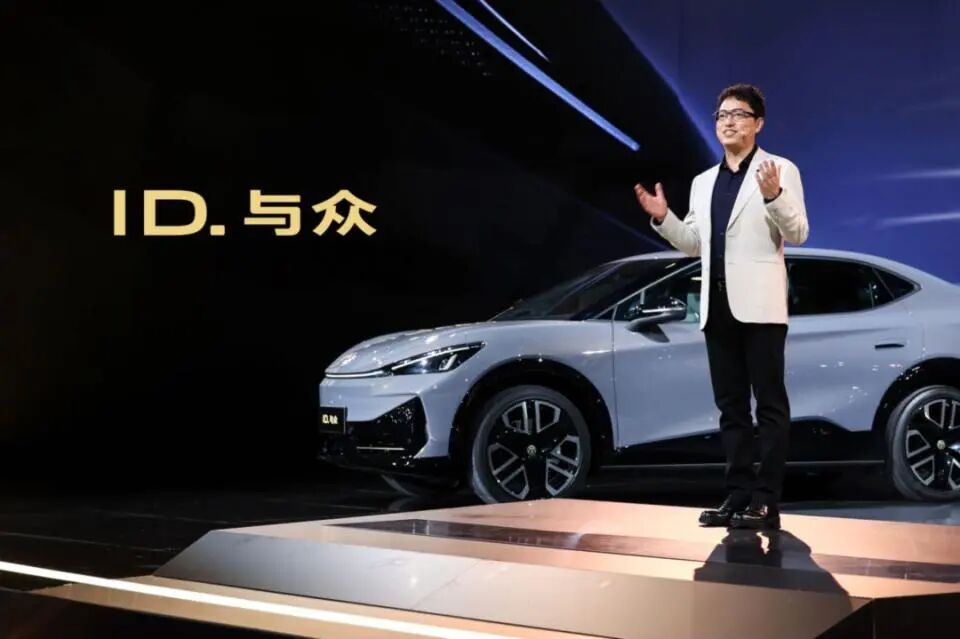
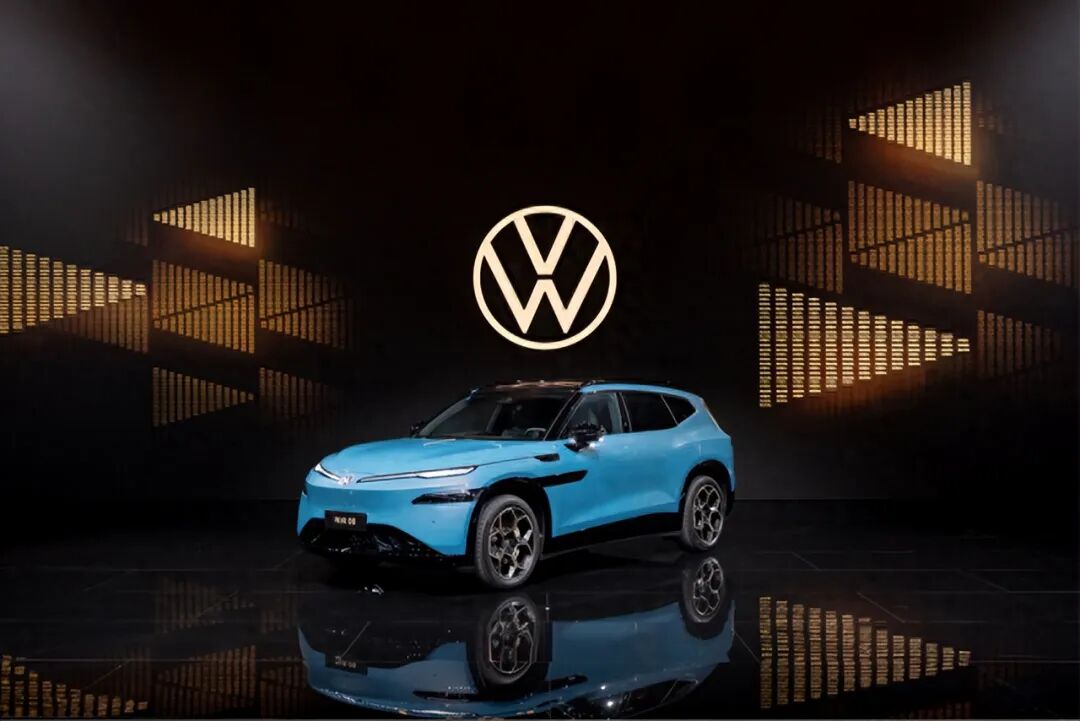
In July 2023, Volkswagen paid $700 million for a 4.99% stake in XPeng. By 2024, the two sides had elevated their cooperation to the architecture level. And in March this year, the first jointly developed model, the Yuzhong 08, rolled off the line at the Hefei plant after a development cycle of a full 24 months. When it launched in mid-April, its guide price ranged from 229,900 to 289,900 yuan.
According to statistics from an automotive consulting firm, in the first five months after launch, the Yuzhong 08 averaged only 267 units sold per month—more than ten times short of the monthly sales target of over 3,600 units set at project approval. During a full-line refresh in September, the limited-time starting price had already been pushed down to 189,900 yuan—two cuts in five months. Sales in September alone rebounded to 1,188 units, but such volume is still unimpressive within a large joint-venture system.
The contrast comes from another car built on the same architecture. The ID.AURA T6, launched by FAW-Volkswagen on the same electrical/electronic architecture, locked in over 33,000 orders in its first month on sale, with orders approaching 38,000 by the end of October; more than 90% of buyers chose the LiDAR-equipped version, and nearly 80% were first-time Volkswagen customers. The only difference is that its smart-driving solution comes from CARIAD.ORIVO—a joint venture between Volkswagen and Horizon Robotics—not from XPeng.
Same base, two fates. The answer isn't in the technical spec sheet; it's in pricing, channels, and product definition. Volkswagen's three joint ventures in China and more than 40 derivative models all crowd into the same price band. By the time a sales consultant finishes explaining how the models relate to one another, customers have often already turned to look at competitors.
In the first three quarters of this year, Volkswagen delivered 1,378,800 vehicles in China, down 30%, including 48,900 pure electric vehicles—a 42.5% decline. Whether October's rebound—over 28,000 new energy vehicles in a single month, up nearly 350%—can be sustained into a lasting curve depends on the upcoming deliveries of the Yuzhong 09 and the ID.AURA T6.
2. JAC: Fewer Cars, More Money
Volkswagen's 2020 stake in the parent company of JAC Group—holding 50% equity (note: not just JAC Volkswagen)—was an earlier move in this chess game. That relationship ultimately shows up in JAC Motors' third-quarter report as a statement where sales volume and revenue move in opposite directions.
In the first three quarters, JAC's overall sales were about 255,200 vehicles, down year-on-year, with 27,200 units in September alone—a year-on-year decrease of 18.69%. Yet revenue during the same period surged to 34.372 billion yuan, up 11.33% year-on-year, and the gross margin on complete vehicles reached about 12.72%, an improvement of 3.86 percentage points. Fewer cars sold, more money collected—because the average price per vehicle went up: the company proactively cut low-margin volume models and freed up capacity and channels for high-value products.
The biggest variable is the Zhuojie. Built together with Huawei, the Zhuojie sedan (S800) has stood in the front ranks of the 1-million-yuan-class market for several consecutive months, alongside the MPVs (V800, V680) launched in August, with deliveries beginning in September. The company's net loss attributable to shareholders in the first three quarters was 1.141 billion yuan, narrower than the 1.434 billion yuan in the same period last year; management attributed the reduced loss to gross margin improvement from higher sales of high-end models and a recovery in investment income from associates and joint ventures. On the other side, JAC's 60-plus-year-old core business of commercial vehicles advanced steadily, with 44,700 pickups sold from January to August, up 12.14%, mainly driven by overseas markets; its products have been exported to 132 countries and regions in total, and its market share of electric trucks in Brazil exceeds 40%.
What needs to be viewed calmly is cash flow: net operating cash outflow in the first three quarters was 4.878 billion yuan, and the asset-liability ratio was about 75.11%. Every step toward high-endization costs real money—the Zhuojie's channels, capacity, and R&D investment are all booked on the income statement. JAC's direction is right, but economies of scale have yet to materialize.
3. Gotion: Record Revenue, Profit Eaten by Two Things
The story on the battery side is more awkward: revenue hit a company record, but book profit is shrinking.
Gotion High-tech achieved operating revenue of 45.437 billion yuan in the first three quarters, up 53.98% year-on-year—already exceeding the full year of 2025. Net profit attributable to shareholders was 849 million yuan, down 66.48% year-on-year. More representative of the core business is net profit attributable to shareholders after deducting non-recurring items: 252 million yuan, up 195.54%. In the third quarter alone, revenue was 17.662 billion yuan, surging 74.62%, but net profit attributable to shareholders was a loss of 537 million yuan—the company's first quarterly loss since listing.
Where did the profit go?
Two non-operating items swallowed the bulk: the fair value change of the company's stock assets was 2.115 billion yuan less year-on-year, leaving only 211 million yuan; financial expenses jumped to 1.966 billion yuan, up 87.85% year-on-year, mainly due to exchange gains/losses and interest on financing for overseas projects. The battery business itself is making money—it's fluctuations in financial assets and exchange rates that flattened book profit.
The real incremental value worth watching is overseas. In the first half, Gotion's overseas revenue was 9.476 billion yuan, up 48.06%, accounting for 34.11% of total revenue; all four bases in Germany, Vietnam, Indonesia, and Thailand have been put into production; in September it won a 6 GWh energy storage order in Saudi Arabia, its largest single order to date.
Its binding with Volkswagen's battery company has also risen to a new level: in September the two sides finalized three joint venture projects in Spain, Slovakia, and Morocco, with total investment of about 3.222 billion euros, equivalent to about 24.6 billion yuan, of which Gotion holds 51% in two projects—the 8.4 GWh cell project in Slovakia and the 100,000-ton cathode material project in Morocco.
Volkswagen Automotive China Investment Co., Ltd. currently holds 24.28% of Gotion, making it the largest shareholder; in the first half, Gotion's sales to the Volkswagen system were 2.536 billion yuan, whereas this business was previously only on the order of 200 million yuan.
The shadow side of expansion is on the balance sheet: construction in progress was 25.974 billion yuan, double the beginning of the year; inventory was 17.394 billion yuan, up nearly 80%; accounts receivable were 22.908 billion yuan, up 40%. If Europe's electrification pace fluctuates, the utilization rates of these overseas capacities will be called into question.
4. Summary and Outlook
Starry Sky Jun believes the biggest lesson this Hefei chess game offers A-share investors is the distance between tying oneself to a big ship and securing a stable seat on it.
Volkswagen has invested about 30 billion yuan over four years and built its largest R&D center outside Germany in Hefei, staffed by more than 3,000 local engineers. It has formed technology alliances with XPeng and Horizon Robotics, betting on both complete vehicles and batteries—no one doubts its determination to transform, but delivery must be proven by the financial statements.
Three focal points lie ahead: first, whether the Yuzhong 09 and the ID.AURA T6 can turn October's recovery into a sustained sales curve, which will determine whether the resources of the Volkswagen Anhui system can continue; second, whether JAC's quarterly loss can continue to narrow as the Zhuojie ramps up, and when operating cash flow will turn positive; third, the production progress and cash collection of Gotion's three overseas bases involving 24.6 billion yuan, and whether the growth of inventory and receivables can be slowed.
-
![]()
Volkswagen's Crash Course in Car Making
-
The Second Round of the AI Office Battle Begins
-
![]()
Why Does Correcting One Aberration Often Make Another Worse?
-
![]()
BYD Puts a 5-Million-Yuan Bounty on the Table — and Exposes a Hidden Industry Chain
-
![]()
Chopsticks Catch a Spacecraft! Musk Wins Another Bet—Whose Face Does This Slap Wake Up?
-
![]()
Five Years After the Huawei Spinoff: xFusion Seeks 8 Billion Yuan in IPO — Why Is the No. 2 Server Maker Turning to Energy? The Next Battle in Computing Power Is All About Power Supply
-
![]()
Double 11 Token Rush: Discounts Alone Can't Secure AI's Commercial Future
-
![]()
NIO Main Brand October: ES8 Sells Out, Accounting for Nearly Half