XPeng Climbs Back into the Black—But the Hard Part Has Only Just Begun
 11/17 2026
 345
Let's talk about XPeng today.
On November 16, 2026, XPeng released its Q3 2026 financial report. Taken as a whole, the most striking impression is one of sharp contrast.
The bright side lies in scale and momentum: in Q3 2026, XPeng's total deliveries reached 118,390 vehicles and total revenue climbed to 24.28 billion yuan—both quarterly records. Revenue even came in above the upper end of the company's prior guidance range of 21.7 billion to 23.4 billion yuan.
The sprint ahead looks even stronger: the company expects Q4 deliveries of 169,000 to 174,000 vehicles, with total revenue of 30.40 billion to 31.80 billion yuan.
On the earnings call, He Xiaopeng revealed that after monthly deliveries topped 50,000 units (50,237) for the first time in October, XPeng expects to break the 60,000-unit mark for the first time in November 2026. Working backward from the Q4 guidance, December sales should also hold steady at around 60,000 units.
But the other side of the coin: despite record revenue, XPeng still posted a net loss of 870 million yuan in Q3—still just shy of the single-quarter profitability it briefly achieved in Q4 2025 (380 million yuan).
So the question is: why is XPeng selling more cars than ever and bringing in more money than ever, yet still losing money on the books?
Now that monthly sales are approaching 60,000 units, what growth drivers will sustain XPeng's continued climb—and where are the hidden risks?
Without further ado, let's get straight to the point.
01 The Reversal Hidden in Average Price
To understand XPeng's Q3 report, you can't just look at the modest 2.1% year-on-year increase in total deliveries.
In Q3 2026, XPeng delivered 118,390 new vehicles, up only 2.1% from 116,007 in the same period of 2025, and up 14.6% quarter on quarter from 103,295 in Q2 2026.
Yet over the same period, vehicle sales revenue reached 21.63 billion yuan—surging 19.8% year on year and 26.9% quarter on quarter.
XPeng's revenue per vehicle jumped from about 155,600 yuan in Q3 2025 and about 165,000 yuan in Q2 2026 to about 182,700 yuan in Q3 2026—an increase of roughly 27,000 yuan year on year.
What pulled XPeng's average revenue per vehicle—which had once fallen below 160,000 yuan—back up? The earnings call revealed two key trump cards.
The first: the 300,000-yuan-class flagship SUV has finally gained a firm foothold.
He Xiaopeng disclosed on the call that the full-size flagship SUV XPeng GX, launched in May 2026, exceeded 20,000 deliveries in Q3 alone, accounting for nearly 20% of total quarterly deliveries and ranking directly among the top sellers in China's new energy SUV market above 300,000 yuan.
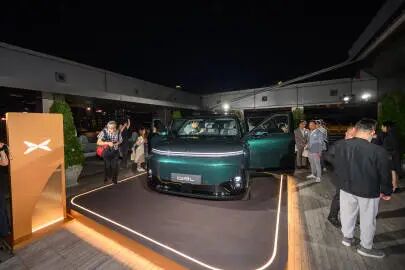
Then, on September 17, the large five-seat luxury SUV XPeng G9L (official guide price 241,800 to 319,800 yuan) launched soon after, thoroughly dispelling the label outsiders had attached to XPeng in 2025—that it "only relies on MONA to sell cheap 120,000-yuan-class cars."
The second, more profitable trump card: the share of high-margin overseas exports crossed the 20% watershed.
Responding to a Goldman Sachs analyst's question, XPeng rarely laid out the bottom line: in Q3, exports rose from less than 20% of total sales in Q2 to more than 20% (with an even higher share of revenue).
On profitability, the gross margin of XPeng's overseas export business is more than double that of its domestic business, and the marginal contribution at the net profit per vehicle level is several times that of the domestic business.
The reason is easy to grasp: on the one hand, there is ample pricing premium overseas; on the other, in many overseas markets (such as the Middle East, Africa, and Southeast Asia), XPeng uses a general agent and dealer model, with channel costs borne by the partner—so book gross profit converts into operating profit far more efficiently.
It is precisely under the dual drive of "GX high-end volume growth + high-profit overseas expansion breaking 20%" that XPeng's vehicle gross margin in Q3 rebounded 1.0 percentage point quarter on quarter, from 12.1% in Q2 2026 to 13.1%.
So why did core vehicle gross margin rise while the group's overall gross margin fell from 20.7% in Q2 to 18.9%? The reasons lie mainly at both ends:
On one hand, revenue and profit margin of the most profitable "services and others" business both declined quarter on quarter.
In Q3, revenue from this segment edged down from 2.70 billion yuan in Q2 to 2.65 billion yuan, and its profit margin dropped from 75.1% in Q2 to 67.1%—a full 8 percentage points. The reason is simple: Q2 happened to recognize a major milestone R&D fee from the Volkswagen technical cooperation.
In Q3, there was no milestone of comparable size, and the segment relied mainly on carbon credit revenue from selling battery electric vehicles in Europe, so the profit margin naturally fell back (the earnings call revealed that a similar-sized European carbon credit revenue will also be recognized in Q4).
On the other hand, the share of the lower-margin vehicle-selling business increased, pulling down the overall average.
Although vehicle gross margin rose to 13.1% in Q3 (from 12.1% in Q2), it remains far below the 67.1% service profit margin. In Q3, vehicle revenue surged 26.9% quarter on quarter, and its share of total revenue expanded from 86.3% in Q2 to 89.1%. The lower-margin pie grew larger while the high-margin pie shrank—together dragging the group's overall gross margin down by 1.8 percentage points.
According to management's judgment on the earnings call, the group's overall gross margin for the full year 2026 can still remain stable at a level close to 20%.
02 Why Is It Still Losing Money at a Record High?
Having clarified the gross profit structure, the next step is to face the core question directly: with single-quarter total revenue reaching 24.28 billion yuan and total gross profit of 4.60 billion yuan, why has the books still not crossed the break-even line?
After all, in Q4 2025, when XPeng delivered 116,249 vehicles and total revenue was 22.25 billion yuan, it achieved a net profit of 380 million yuan.
There are three reasons.
First, both R&D and vehicle selling are spending heavily, and rigid expenditures have not yet been fully covered by gross profit.
In Q3 2026, XPeng's single-quarter R&D expenses reached 2.85 billion yuan, up 17.5% year on year. From January to September 2026, cumulative R&D expenses had already reached about 8.67 billion yuan, with the bulk invested in new model development and AI technology breakthroughs.
In addition, the intensive launch of multiple new cars during the same period increased advertising and marketing, sales team expansion, and commissions. Single-quarter selling, general and administrative expenses reached 2.78 billion yuan, up more than 11% both year on year and quarter on quarter.
R&D plus selling and administrative expenses consumed 5.63 billion yuan in a single quarter.
Fortunately, management revealed the bottom line on the earnings call: as AI infrastructure upgrades improve R&D efficiency, R&D expense growth is expected to moderate in 2027; once sales scale further dilutes R&D and channel costs, the company's firm short- and medium-term goal is to first make the vehicle business achieve positive cash flow and profitability.
Second, compared with the profitable Q4 2025, two buffers are missing.
Many people wonder why Q4 2025 could make money with revenue 2 billion yuan lower than now, while Q3 2026 cannot.
A direct comparison of the statements makes it clear: first, in Q4 2025, 840 million yuan of "net other income," mainly government subsidies, was recognized, whereas in Q3 2026 it was only 110 million yuan—a difference of 730 million yuan just in the pace of subsidy recognition. Second, Q4 2025 coincided with concentrated confirmation of Volkswagen technical cooperation milestones, and single-quarter services and other revenue reached 3.18 billion yuan—530 million yuan more than in Q3 2026.
Put plainly, without the support of large subsidies and milestone windfalls, a vehicle gross margin of 13.1% alone is still not enough to carry the company's more than 5 billion yuan of expenses per quarter.
Third, investment losses and exchange rate fluctuations swallowed nearly 500 million yuan of profit below the operating line.
If you compare with Q3 2025, you will find that the main business operating loss in Q3 2026 (752 million yuan) was actually almost the same as in the same period of 2025 (751 million yuan), but the final net loss doubled from 380 million yuan to 870 million yuan.
The extra loss mainly came from financial and investment items: in Q3 2026, XPeng's long-term external investments lost 197 million yuan, plus foreign exchange losses of 120 million yuan; in the same period of 2025, these two items were profits of 131 million yuan and 26 million yuan, respectively. With the positive and negative swing, the books directly showed an additional loss of 474 million yuan.
However, it should be pointed out that book losses do not mean a lack of cash; on the contrary, XPeng actually had more cash on hand.
As of September 30, 2026, XPeng's cash on hand reached 45.41 billion yuan, a net increase of 4.93 billion yuan in the quarter from 40.48 billion yuan at the end of June.
Losing money while cash rises relies on two inflows: one is faster collection after vehicle sales scale increased. XPeng revealed on the earnings call that operating cash flow net inflow in Q3 exceeded 2 billion yuan. The other is spinning off the cash-burning humanoid robot subsidiary "Pengxing" for separate financing.
On August 24, Pengxing signed an approximately 900 million US dollar financing agreement at a post-investment valuation of 6.3 billion US dollars, led by IDG Capital with Gaorong participating, while Alibaba and Tencent also invested at the same time (external institutions jointly invested 600 million US dollars), XPeng followed with 200 million US dollars, and He Xiaopeng and his wholly owned personal company also subscribed 100 million US dollars out of their own pockets.
It is worth noting that Pengxing's net loss in 2024 was still 87 million yuan, and in 2025 the loss more than quadrupled to 369 million yuan. As of the end of March 2026, its book net liabilities had reached 447 million yuan, and building production lines and pushing toward mass production is exactly when spending is heaviest.
The first tranche of financing was completed and received within Q3. Although Pengxing continues to be consolidated, the R&D and mass production spending going forward will be funded by money invested by external institutions.
03 Three Growth Drivers and Four Hidden Concerns
Looking ahead to the 2027 plan laid out on the earnings call, the support for XPeng's continued upward push is mainly concentrated in three growth drivers.
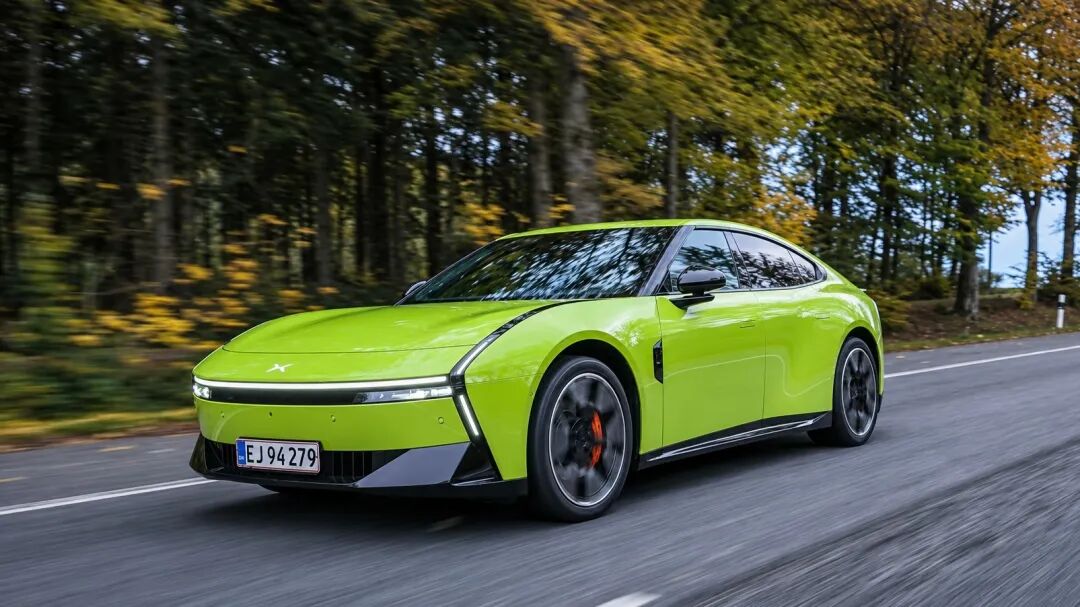
First, dual-power hit models will follow one after another, and domestic channels will expand downward into northern and lower-tier cities.
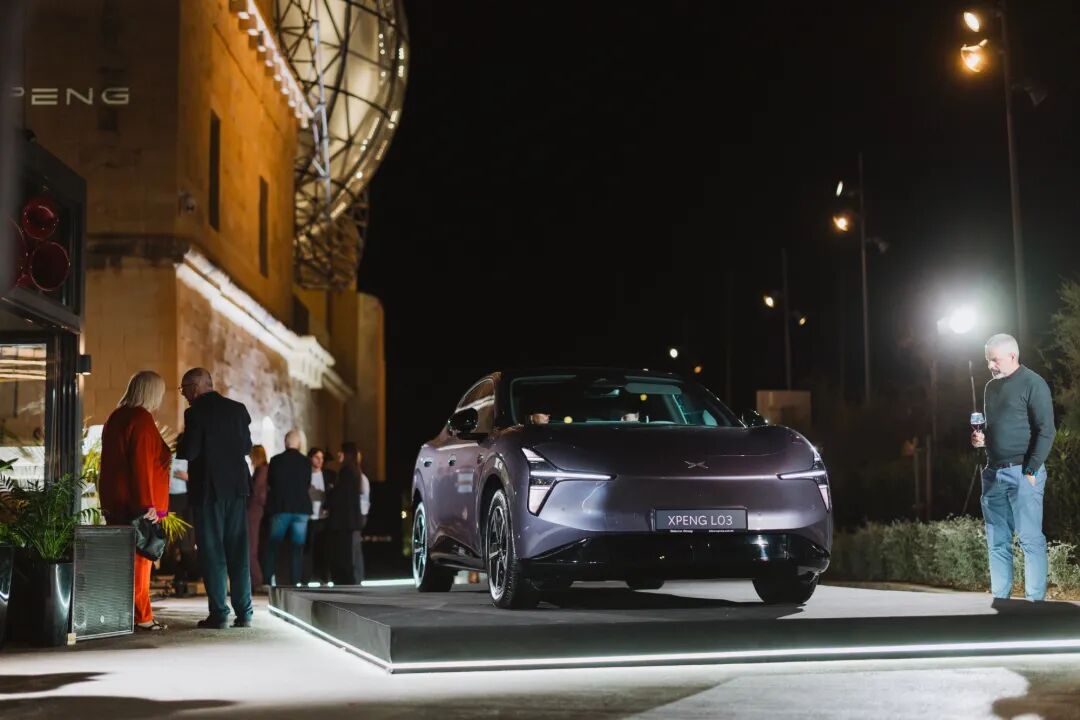
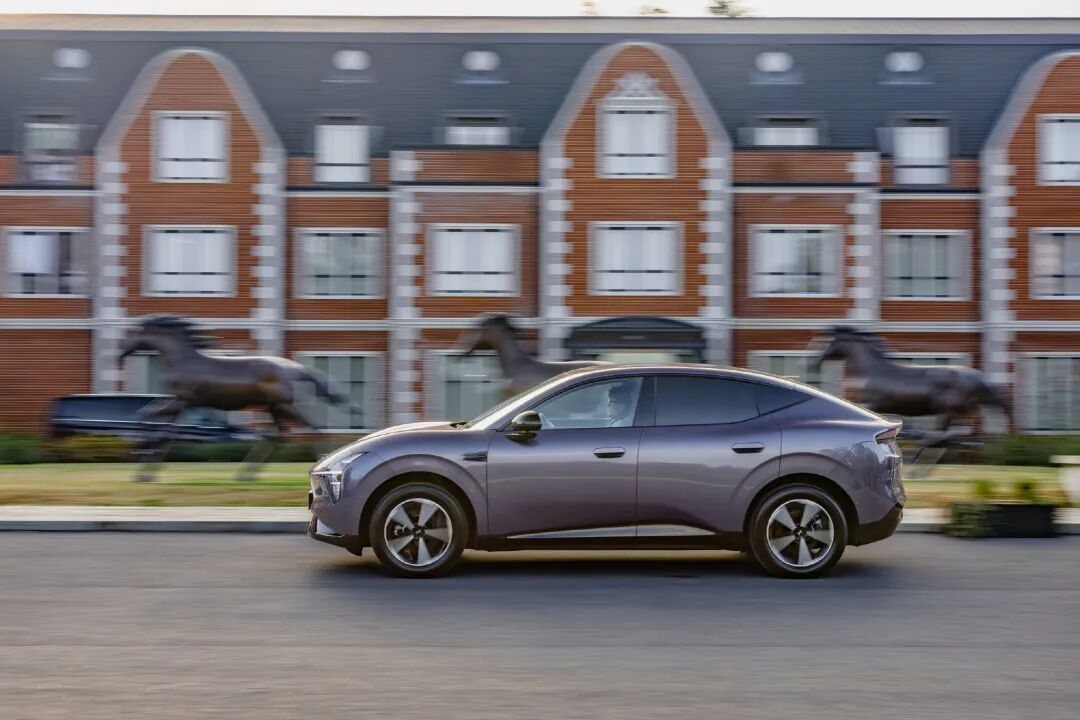
The earnings call for the first time presented the latest scorecards of two volume-driving new cars: the compact SUV MONA L03, globally premiered in Munich in July, exceeded 20,000 deliveries in October 2026 alone; the large five-seat SUV MONA L05 (limited-time benefit price starting at 139,800 yuan), just launched on October 29, was also a hit, and as many as 98% of customers who placed orders chose the Ultra SE and Max versions with advanced intelligent driving.
He Xiaopeng set a goal for the team: L05 deliveries in its first month in November should exceed 10,000 units, setting a new record for XPeng's fastest production ramp-up in history.
The channel strategy has also changed accordingly. He Xiaopeng admitted that XPeng stores used to be mainly concentrated in first- and second-tier cities; now, with "pure electric + super extended range" dual power solving winter range concerns, in 2027 domestic stores will expand aggressively into northern, northwestern, and western lower-tier markets, and networks will be optimized separately for different customer groups of the XPeng series and MONA series, carrying ample order backlog through the winter to cope with the industry off-season in Q1 2027.
Second, annual overseas sales will exceed 100,000 vehicles for the first time, and in 2027 it will build 1,000 stores and aim to double.
In October 2026, as MONA L03 began overseas deliveries, XPeng's monthly overseas sales reached 13,326 vehicles, surging 166% year on year. Management clearly stated the bottom line: the Q4 2026 overseas sales target is more than 40,000 vehicles, and full-year 2026 overseas sales will exceed the 100,000-unit mark for the first time.
By 2027, XPeng plans to expand overseas stores to more than 1,000, invest more resources in key right-hand-drive markets such as the UK and Australia to operate local subsidiaries, with the goal of more than doubling overseas sales in 2027 compared with 2026.
According to XPeng's regional breakdown, in 2027 the European market is expected to contribute more than 50% of total overseas sales, Southeast Asia and Asia-Pacific about 30%, and the Middle East and Latin America about 20%. At the same time, XPeng is also striving to obtain the EU's first batch of autonomous driving regulatory approvals in 2027, so that the advanced intelligent driving that just ran successfully around the Arc de Triomphe roundabout in Paris in October can be deployed in Europe first.
Third, external technology sales will become routine, and Robotaxi and humanoid robots have set timelines for implementation.
The earnings call also disclosed the implementation pace of three new businesses:
First, XPeng has formally elevated external technology export to the status of an independent business line: its smart vehicle solutions unit "XPENG AI ENGINEERING," led by a dedicated team under Brian Gu, is opening up vehicle platforms, Turing AI chips, foundation models, and intelligent driving and robotics capabilities to global automakers and mobility companies. The company is currently in talks with a number of international firms and expects to begin generating revenue on a rolling basis from 2027.
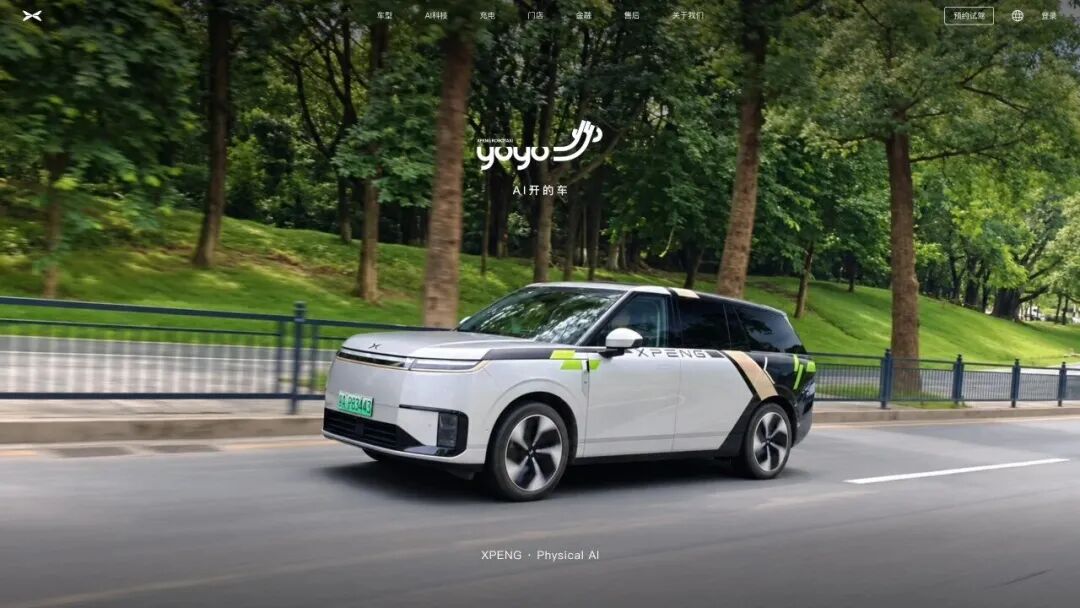
Second, Robotaxi has officially launched under the new brand "XPeng Youyou." Having secured the L4 demonstration operation qualification for all of Guangzhou, XPeng Youyou will first refine its operating model in Guangzhou starting in Q4 2026, plans to export the full suite of solutions to global partners in 2027, and will begin scaling overseas in 2028. On the passenger vehicle side, VLA-Lite was rolled out to Max owners in Q3, with the long-term goal of enabling ordinary mass-produced cars to achieve L4 capabilities as well, opening up room for software-based revenue.
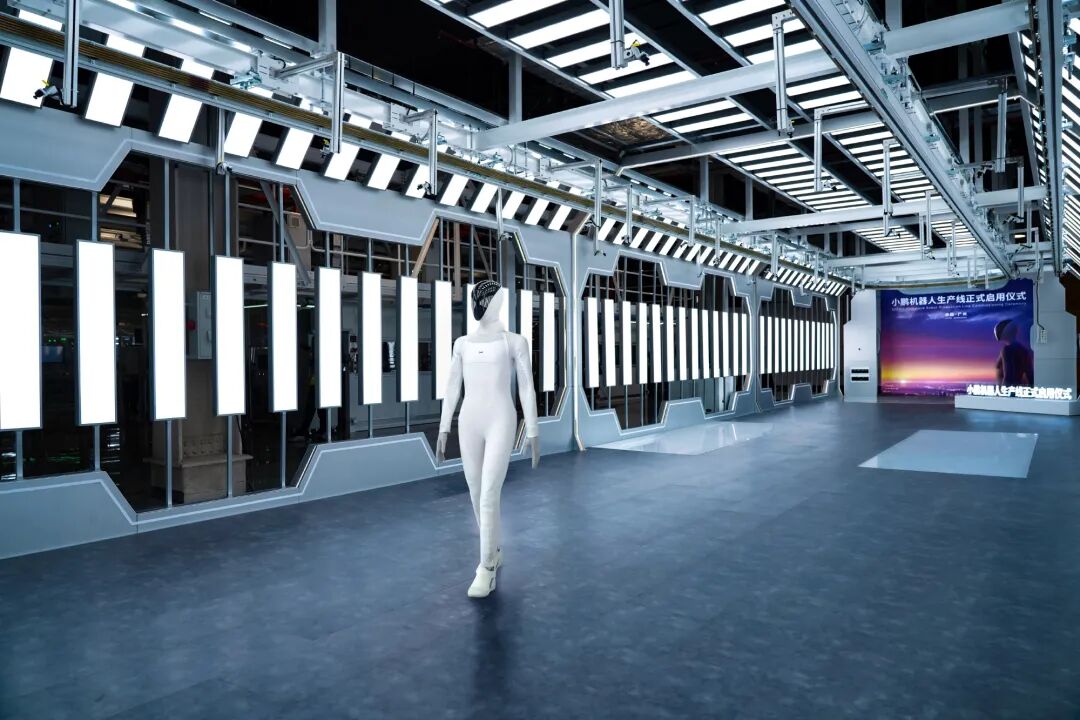
Third, the humanoid robot IRON is about to start work. In September 2026, XPeng already commissioned its first robot production line, achieving an automation rate of over 80% in core processes. The latest version will be unveiled at XPeng AI Day and the Guangzhou Auto Show in November 2026, with mass production officially beginning on January 1, 2027. In Q1 it will first appear in select XPeng stores as a "gold medal salesperson," and in Q2 it will officially launch and be delivered to external commercial customers.
That's the good news. Now for four real concerns that cannot be ignored.
First, in the fourth quarter, the share of volume-driving vehicles rises, and a slight decline in average price will test gross margin resilience.
XPeng already gave advance warning on the earnings call: with large-scale deliveries of the RMB 140,000 to 170,000-class MONA L05, average vehicle selling price in the fourth quarter of 2026 is expected to decline slightly quarter on quarter. This also explains why the fourth-quarter delivery guidance rose 42.8% to 47.0% quarter on quarter, while total revenue guidance rose only 25.2% to 31.0% quarter on quarter.
As the weight of affordable volume models grows again, whether the 13.1% automotive gross margin can withstand dilution through economies of scale will directly determine whether the fourth quarter can reach the break-even line.
Second, in 2027, the company must withstand the triple cost pressure of chip price increases, reduced export tax rebates, and the battery consumption tax.
In looking ahead to the gross margin challenges of 2027, XPeng candidly acknowledged three hard issues: first, hardware costs such as AI chips and memory chips are still rising; second, the export tax rebate rate for domestic new energy vehicles has dropped from 13% to 9% and will continue to decline through 2027 to 2028, forcing XPeng to accelerate knock-down assembly and overseas local procurement at Magna's plant in Austria and its bases in Indonesia and Malaysia; third, with the power battery consumption tax already imposed, XPeng is currently busy negotiating cost-sharing arrangements with upstream suppliers.
Third, RMB 16.86 billion in high inventory and multiple models sold side by side will be a real test of channel turnover.
As of the end of September 2026, XPeng's book inventory had risen from RMB 10.38 billion at the end of 2025 to RMB 16.86 billion. Although stocking up for fourth-quarter volume is reasonable, He Xiaopeng also stressed that in 2026 the company is paying especially close attention to sustained sales 3 months and 6 months after new model launches. However, with multiple dual-power SUVs such as the GX, G9L, L03, and L05 packed intensively into the lineup within half a year, and with networks still being expanded into lower-tier cities, even slightly slower inventory turnover will turn into promotional pressure.
In addition, during the new car preheating period in mid-October, there was a wording controversy at a launch event. The more monthly sales move toward 60,000 units in the mass market, the more the brand cannot afford to lose its sense of propriety in communication.
Fourth, standardized robots must overcome the industry's common problem of being "left to gather dust after purchase."
He Xiaopeng himself said something very candid on the earnings call: many robots sold on the market today end up being left by customers in warehouses gathering dust, and the root cause is inadequate safety and quality.
XPeng does not want to take the old path of doing high-priced customized projects for large enterprises. It insists on making standardized products for small and medium-sized merchants and even households, while also carrying the clause in Pengxing's financing agreement that "a qualifying IPO must be completed within 7 years, otherwise preferred share redemption will be triggered." After deliveries begin in the second quarter of 2027, whether customers are willing to actually use them and continue to repurchase will still depend on real-world performance.
04 Final thoughts
Looking back at the four years from 2023 to 2026, XPeng is probably one of the Chinese new forces that has experienced the most dramatic ups and downs.
From struggling to survive at the bottom in early 2023, to turning things around in the second half of 2024 with the MONA M03, to delivering nearly 430,000 vehicles for the full year of 2025 and fulfilling the prediction of its rise, and then to aiming in November 2026 to hit 60,000 monthly sales and exceed 100,000 overseas deliveries for the year, XPeng's speed of correction has been fast enough, and its resilience indeed strong enough.
On the earnings call, He Xiaopeng put it very plainly: physical AI is not a 100-meter sprint, but a long run over the next decade; in 2027, he will devote more energy to comprehensively improving operations and strengthening the company's ability to generate its own cash flow.
Today's XPeng has already moved out of the strange cycle of its early years, when it was overly skewed toward pure electric vehicles and trapped in low-price internal friction: walking on two legs with both pure electric and extended-range models, pairing domestic lower-tier market expansion with high-margin overseas exports, and selling vehicles to consumers while selling technology to businesses, several business lines have now been straightened out.
But as the elimination round enters its second half, sales scale is only a ticket to entry, and the nearly RMB 4 billion net loss in the first three quarters is still on the table.
After monthly deliveries cross the threshold of 60,000 units in November, what the market most wants to see is not cooler technology concepts at the next launch event, but when XPeng can truly achieve break-even and even profitability.
The end.
-
Has the Tablet Market Collapsed? Behind the 22.3% Plunge: Huawei, Apple, and Xiaomi Are All Falling
-
![]()
The World's No. 1 "Stan" Country: Chinese Entrepreneurs Are Flocking In
-
![]()
New Energy Vehicle Sales Surge as Volkswagen's China Offensive Begins
-
![]()
Liu Bin Takes the Helm at Changan Mazda Sales as the Hard Road of Transformation Begins
-
![]()
Baidu’s Computing Power Dividend: Money In, Money Out—When Will the Kunlun Chip Ride to the Rescue?
-
![]()
Heavyweight Warning! CAAM to Publish Payment Terms Review of 17 Automakers — This Time It Means Business
-
![]()
DeepSeek's Quota Limits: A Prelude to Consumer-Side Paid Plans?
-
![]()
XPeng Poised for Record November Sales Exceeding 60,000 Units, Entering High-Growth Phase: He Xiaopeng Vows to Widen Lead Over Rivals in 2027 | Mingjing Pro