New Energy Vehicle Sales Surge as Volkswagen's China Offensive Begins
 11/17 2026
 347
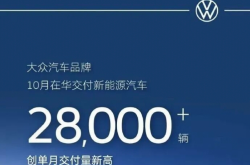
Data from the China Passenger Car Association shows that retail sales of new energy vehicles in October fell 13.7% year-on-year, dampening overall market enthusiasm. Against this backdrop, Volkswagen delivered a sharply contrasting report card. Recently, the Volkswagen brand officially announced that its new energy vehicle sales in China exceeded 28,000 units in October, a year-on-year surge of 346.9%, setting a record high for the brand's single-month new energy deliveries. Meanwhile, the Volkswagen brand's ranking on China's new energy vehicle brand sales list climbed significantly from 30th place previously, leaping into the top 15.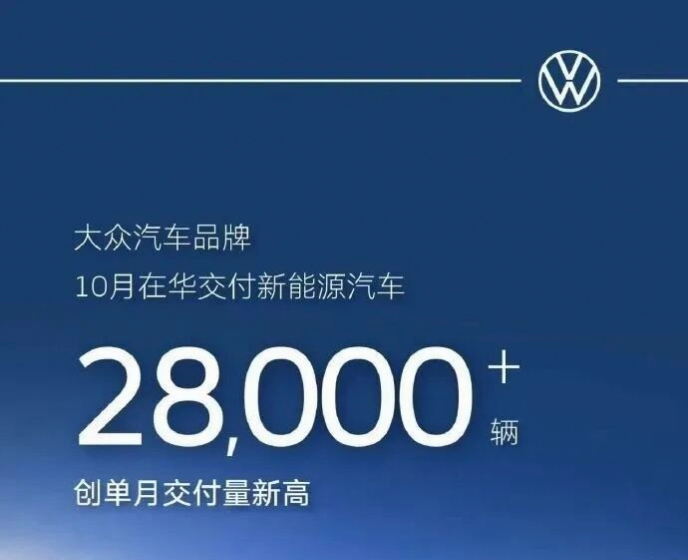
Volkswagen noted that several models under its brand posted strong market performances, providing the main support for this round of sales growth. Among them, the ID. AURA T6 topped the retail list of all-electric mid-size SUVs with 12,032 units in October, and also ranked first among joint venture new energy mid-size SUVs. The ID. ERA 5S was equally noteworthy, with cumulative orders exceeding 32,000 since launch and 7,100 units delivered in October, ranking first in the plug-in hybrid sedan segment. Together, the two new models contributed nearly 20,000 deliveries, serving as the core driving force behind the brand's sales surge.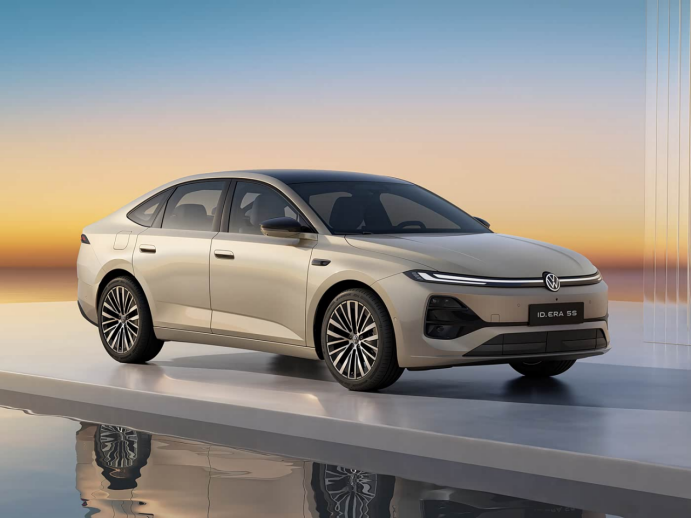
For Volkswagen, this result is a rare positive signal in the Chinese market, and it also allows the brand's localization strategy over the past few years to begin showing some visible returns. In recent years, Volkswagen has no longer simply localized overseas models for domestic production, but has moved toward a "in China, for China" approach. In 2022, the Volkswagen Group signed a cooperation agreement with Horizon Robotics through its software company CARIAD.
In November of the following year, the two sides established a joint venture, CARIZON, focusing on intelligent driving R&D. In July 2023, Volkswagen and XPeng reached a strategic cooperation, investing $700 million, after which the two sides jointly developed the CEA architecture and achieved mass production of their first jointly developed model, the ID. UNYX 08. The ID. AURA T6, one of the contributors to this new energy sales performance, is also a product of this cooperation.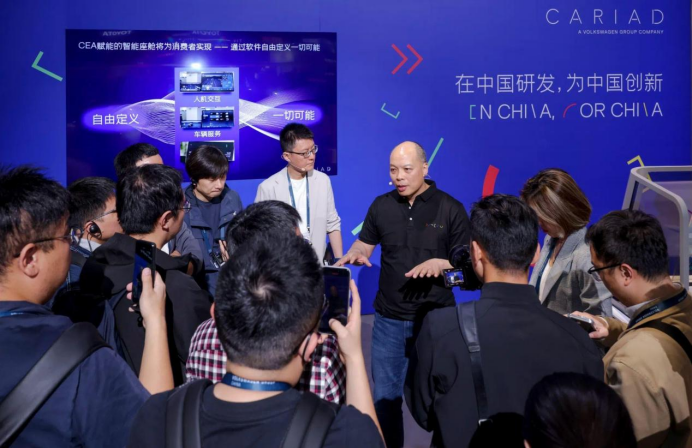
In the same year, the brand invested about 1 billion euros to build the VCTC R&D center in Hefei. This is its largest intelligent connected vehicle R&D base outside Germany, specifically creating the CMP platform and CEA electronic and electrical architecture adapted to domestic scenarios. The center was officially put into use at the end of 2025. In November 2025, Volkswagen's first full-process R&D and testing center outside Germany was also completed in Anhui, shortening the vehicle R&D cycle by 30%.
In October 2026, Volkswagen obtained an L3 autonomous driving road testing license in Hefei; in the same month, Volkswagen China held its first Technology Day in Hefei, unveiling the heavyweight VEGA, a locally self-developed integrated technology matrix that combines the CEA electronic and electrical architecture, the CMP/CSP vehicle platforms, and CARIZON's high-level intelligent driving capabilities.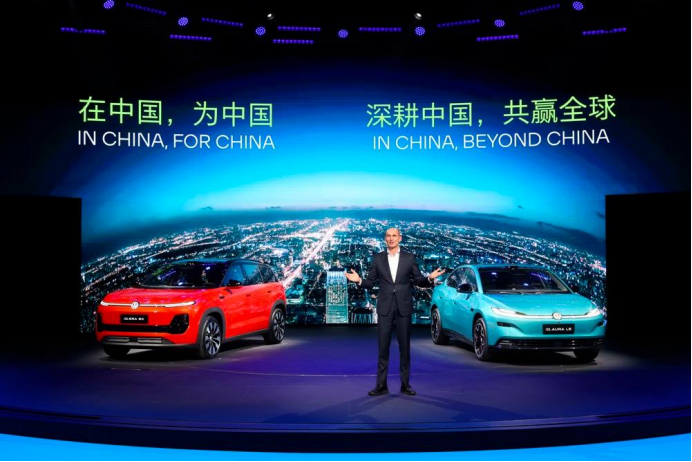
In addition, Volkswagen has also made key adjustments at the organizational and management level. Since the beginning of this year, Volkswagen has further relaxed local management authority, fully handing over Volkswagen Anhui's digital sales and service system to the Chinese team, with core sales and marketing positions held by local executives who directly respond to the user needs and communication environment of the domestic market.
With the technology foundation and local team in place, the pace of Volkswagen's new energy model launches in China naturally accelerated. From January this year to now, more than ten models including the ID. UNYX 07, SAIC Volkswagen ID.ERA 5X, FAW-Volkswagen ID.AURA T6, SAIC Volkswagen ID.ERA 8X, and FAW Jetta M6 have been launched one after another, making 2026 a major year of product mass production for Volkswagen.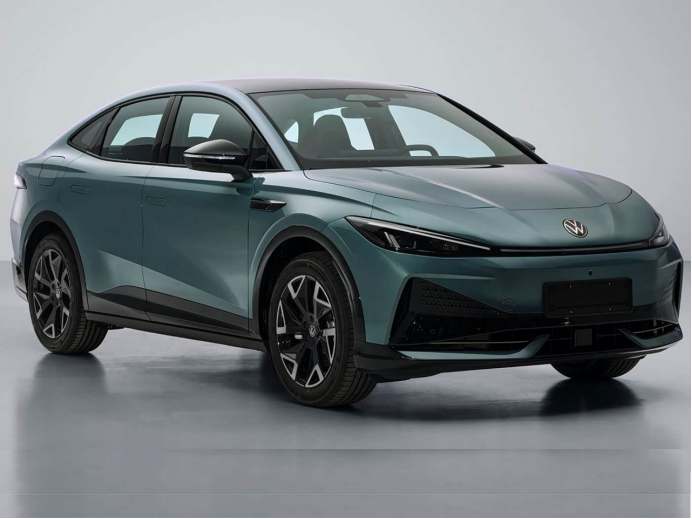
It is not hard to see that Volkswagen is gradually making up for its obvious shortcomings in intelligent cockpits and local intelligent driving, while entering the mainstream market with more competitive pricing, gradually expanding from the entry-level market of around 100,000 yuan to the family market of around 200,000 yuan. Subsequent newly launched models will most likely continue this approach and no longer follow the old path of high-priced introduction and long-term sluggish sales. According to Volkswagen's currently disclosed plan, the brand will launch 30 new energy vehicle models in China before the end of 2029, further strengthening its electrification product offensive in China. The ID. ERA 5X was launched on November 12, and the ID. AURA L5 is also planned for launch in December.
However, competition in the domestic new energy market is intensifying, and Volkswagen's own dividend from fuel vehicles is also continuing to fade. It will not be easy for the brand to break through, and the effectiveness of the new platforms and architectures still needs more time to verify. For now, Volkswagen is still far from achieving a turnaround. At present, other joint venture brands are also following up with localization strategies, and competition will only become fiercer. To return to the market position of the early fuel vehicle era, Volkswagen still has a long way to go. But it is undeniable that this recovery in its new energy vehicle sales at least gives Volkswagen's localization reform preliminary positive feedback. (Images are from the internet and will be deleted if infringing)
-
![]()
New Energy Vehicle Sales Surge as Volkswagen's China Offensive Begins
-
![]()
Liu Bin Takes the Helm at Changan Mazda Sales as the Hard Road of Transformation Begins
-
![]()
Baidu’s Computing Power Dividend: Money In, Money Out—When Will the Kunlun Chip Ride to the Rescue?
-
![]()
Heavyweight Warning! CAAM to Publish Payment Terms Review of 17 Automakers — This Time It Means Business
-
![]()
DeepSeek's Quota Limits: A Prelude to Consumer-Side Paid Plans?
-
![]()
XPeng Poised for Record November Sales Exceeding 60,000 Units, Entering High-Growth Phase: He Xiaopeng Vows to Widen Lead Over Rivals in 2027 | Mingjing Pro
-
First Domestically Built BMW iX3 Rolls Off the Line in Shenyang, Presales from 269,900 Yuan—Can It Turn Things Around?
-
![]()
DeepSeek Breaking: App and Web Usage Limited Amid Computing Power Shortage