Baidu’s Computing Power Dividend: Money In, Money Out—When Will the Kunlun Chip Ride to the Rescue?
 11/17 2026
 463
Before the U.S. market opened on November 16 (Eastern Time), Baidu released its Q3 earnings report. The results were a mixed bag—broadly in line with market expectations, suggesting the company had communicated fairly thoroughly ahead of the release. In a nutshell, Baidu is still milking the computing power dividend, but every penny it earns from computing power is being plowed right back into new infrastructure and large-model investments.
And as the village’s only hope, the spin-off and listing progress of the Kunlun Chip is what investors care about most. Specifically (focusing only on Baidu Core, excluding iQIYI):
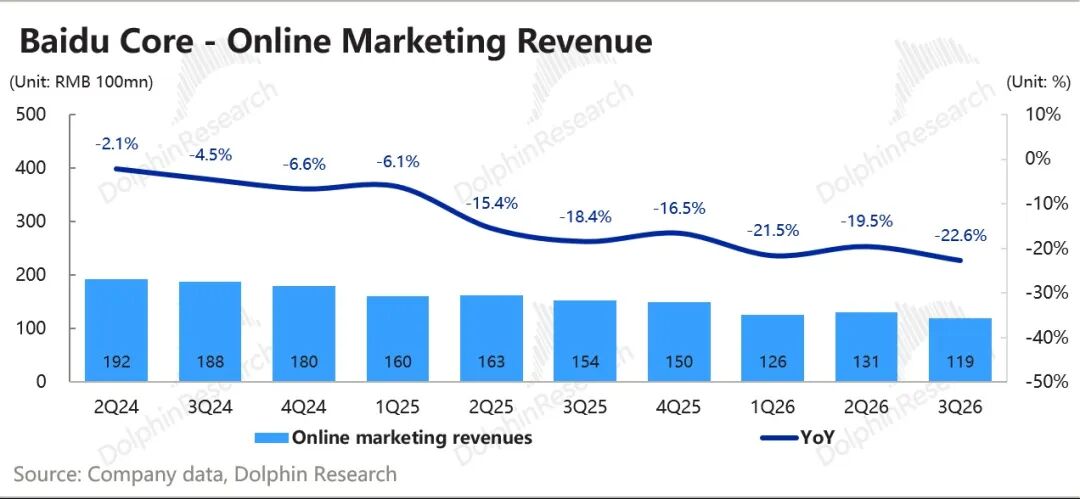
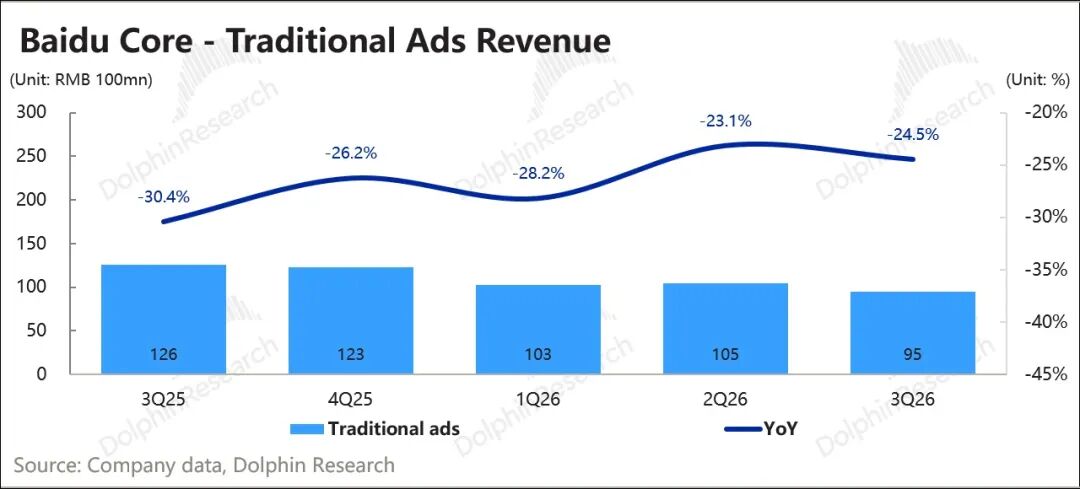
1. Advertising remains very weak—caught in a “double whammy” from the macro environment and AI.
Under the original Q3 caliber, overall advertising revenue fell 23%, worsening quarter-over-quarter. Within that, traditional search dropped 25%, and AI-native marketing also struggled, declining 11% year-over-year.
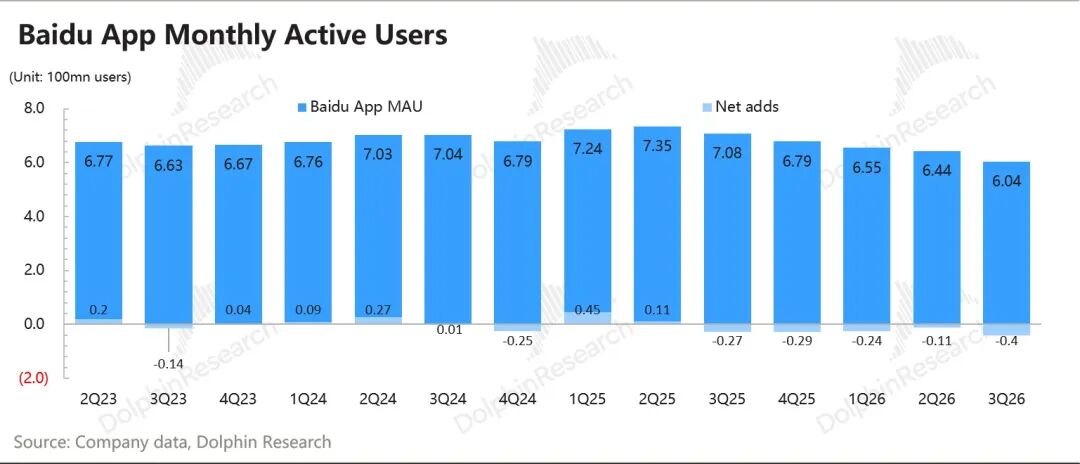
Beyond the macro headwinds, the erosion from AI search is becoming more pronounced—something even Google cannot escape, as evidenced by mobile Baidu’s MAU losing 40 million quarter-over-quarter.
2. Cloud computing power is hot, as expected—keep your eyes on the Kunlun Chip IPO progress.
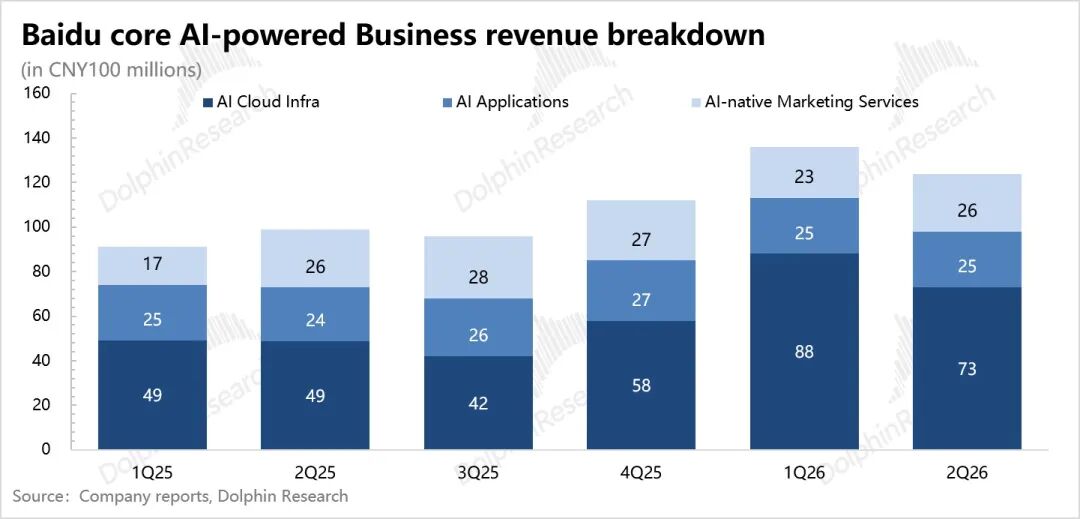
Q3 AI infrastructure (including GPU bare-metal rental computing power, MaaS model distribution, external sales of the Kunlun Chip, etc.) grew 91%, accelerating quarter-over-quarter.
With overseas computing power in limited supply, the scarcity of domestic computing power has escalated—relatively speaking, this is slightly favorable for companies like Baidu that stockpiled computing power early. Although the sustainability of price increases may be questionable, demand is all but guaranteed.
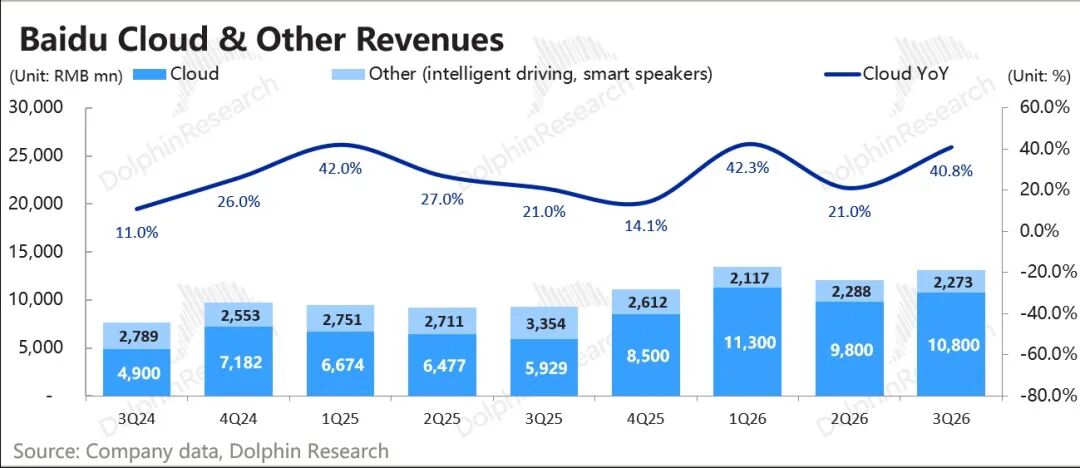
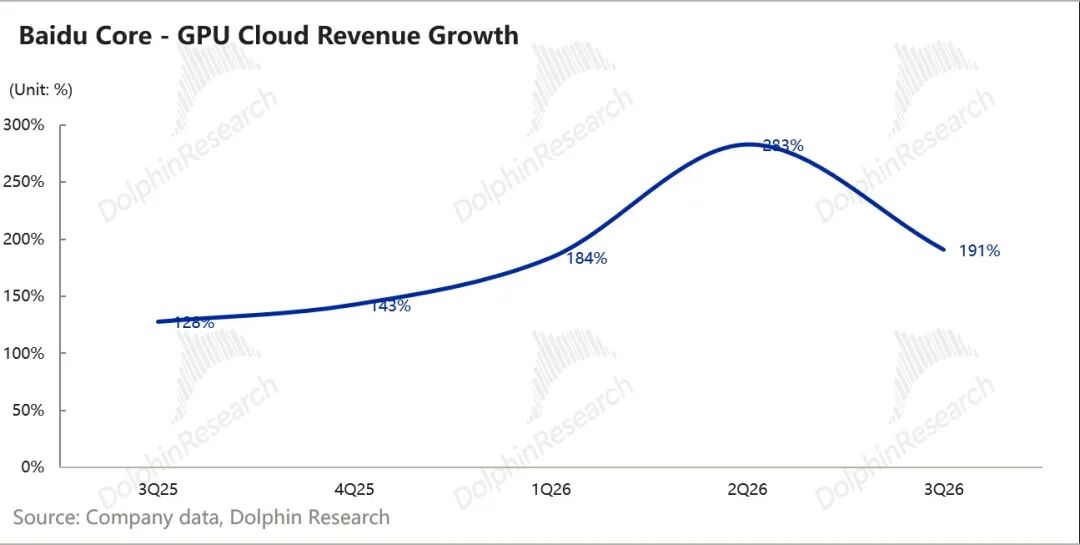
Currently, AI infrastructure is the village’s great hope for Baidu—and that includes the listing catalyst for the Kunlun Chip. With the urgency of domestic computing power substitution mounting, a smooth listing process could effectively support the group’s valuation.
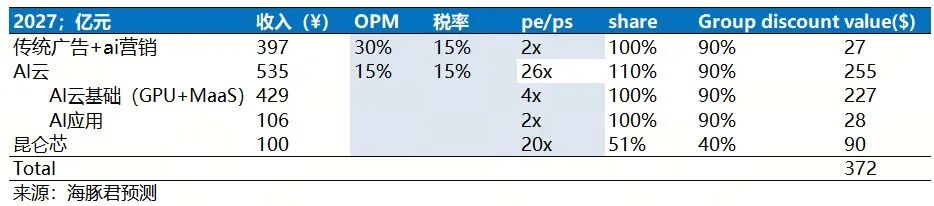
Previously, in early September’s commentary on Stock Connect inclusion, Dolphin Research estimated the equity value of the Kunlun Chip on Baidu’s side—and even with today’s poor industry sentiment and lowered valuation multiples, it can still be seen at around 10 billion.
But since October, rumors that the Kunlun Chip may delay its listing (Bloomberg reported it is still awaiting mainland regulatory approval), as well as the impact of the broader environment, have made capital sentiment more cautious.
The company officially denied the rumor of a delayed listing, disclosing that the confidential filing is still progressing normally, but it did not provide a clearer timeline—making it difficult to fully dispel capital concerns. Therefore, the decline since October can be viewed as a discount for the later the Kunlun Chip lists, the higher the discount.
It is expected that at the earnings call, the Kunlun Chip’s listing process and capacity planning will become key concerns for institutions.
3. Margin decline: advertising drag, increased depreciation, and higher large-model investment
In Q2, the company said Q3 would be the worst quarter for core business operating profit. Under GAAP, Q3 operating profit was only 670 million, mainly due to increased spending on costs (primarily higher depreciation), R&D expenses (a slight increase in large-model personnel investment), and provisions for expected credit losses.
Excluding one-off factors, Non-GAAP operating profit was 1.7 billion—still below historical quarterly performance.
Mid-year, Baidu made organizational adjustments to its large-model team, bringing in Sun Tianxiang with a Fudan MOSS background, Wei Haoran with a DeepSeek background, and young talents from North American frontier AI Labs, boosting the team’s R&D vitality.
In November, Baidu launched Wenxin 5.5 Flash at the World Conference (280 billion parameters, mainly optimized for P800 performance adaptation, priced cheaply), and also disclosed that the Tianchi 1024-card super node will go online in 2027.
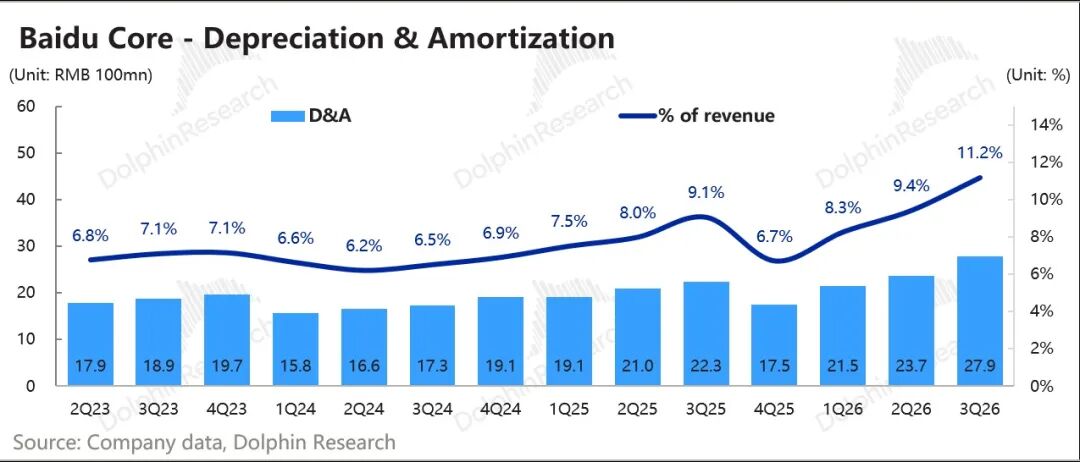
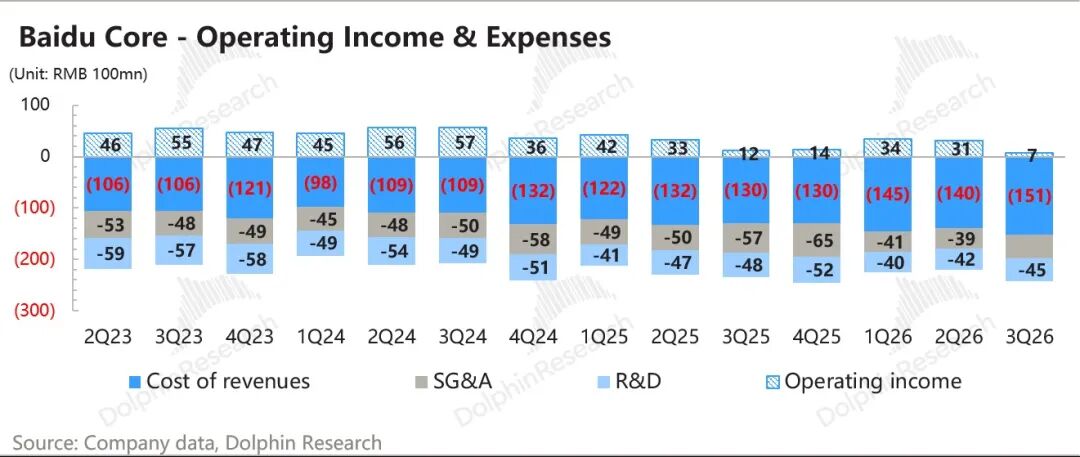
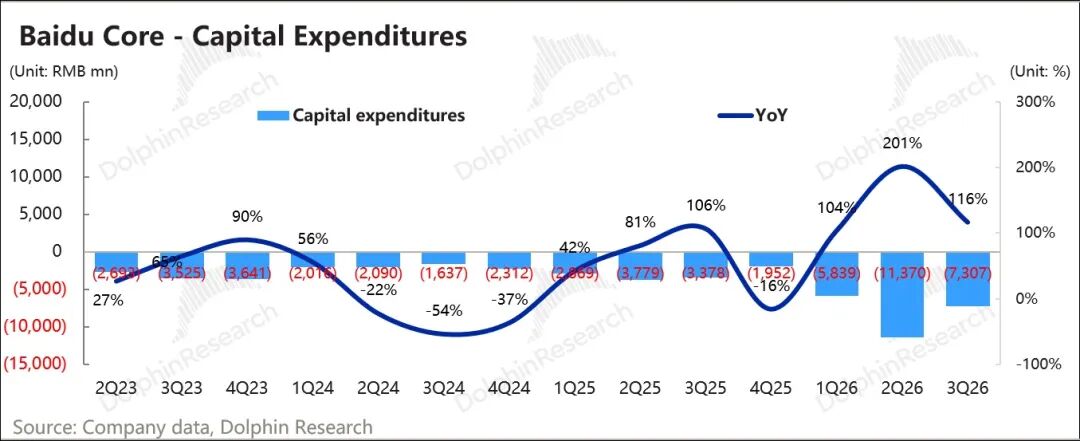
Q3 Capex investment was 7 billion, declining quarter-over-quarter as guided, with Q4 expected to be flat or slightly higher quarter-over-quarter, and the full-year total in the range of 30–35 billion. Thanks to earlier card stockpiling at lower costs, Baidu Cloud’s margin remains in a period of improvement dividend under a growth tailwind in the short term.
To support subsequent computing power business expansion, Baidu needs to expand underlying infrastructure, mainly reflected in leasehold right-of-use assets rising from 9.3 billion at the beginning of the year to 25.3 billion, while using financing methods to maintain short-term cash flow stability, with interest-bearing debt increasing from approximately 89.5 billion at the beginning of the year to approximately 105.1 billion.
However, with foreign cards restricted and the cost of subsequent incremental computing power higher, Dolphin Research believes this may affect the pace of margin improvement, which may depend on the Kunlun Chip’s performance and capacity (M300 scheduled for mass shipment in 2027).
Previously, the company guided confidence in achieving cloud gross margin of 35%–40% within 2 years. Due to changes in the environment, attention can be paid to whether management updates its outlook.
4. Key Metrics Overview
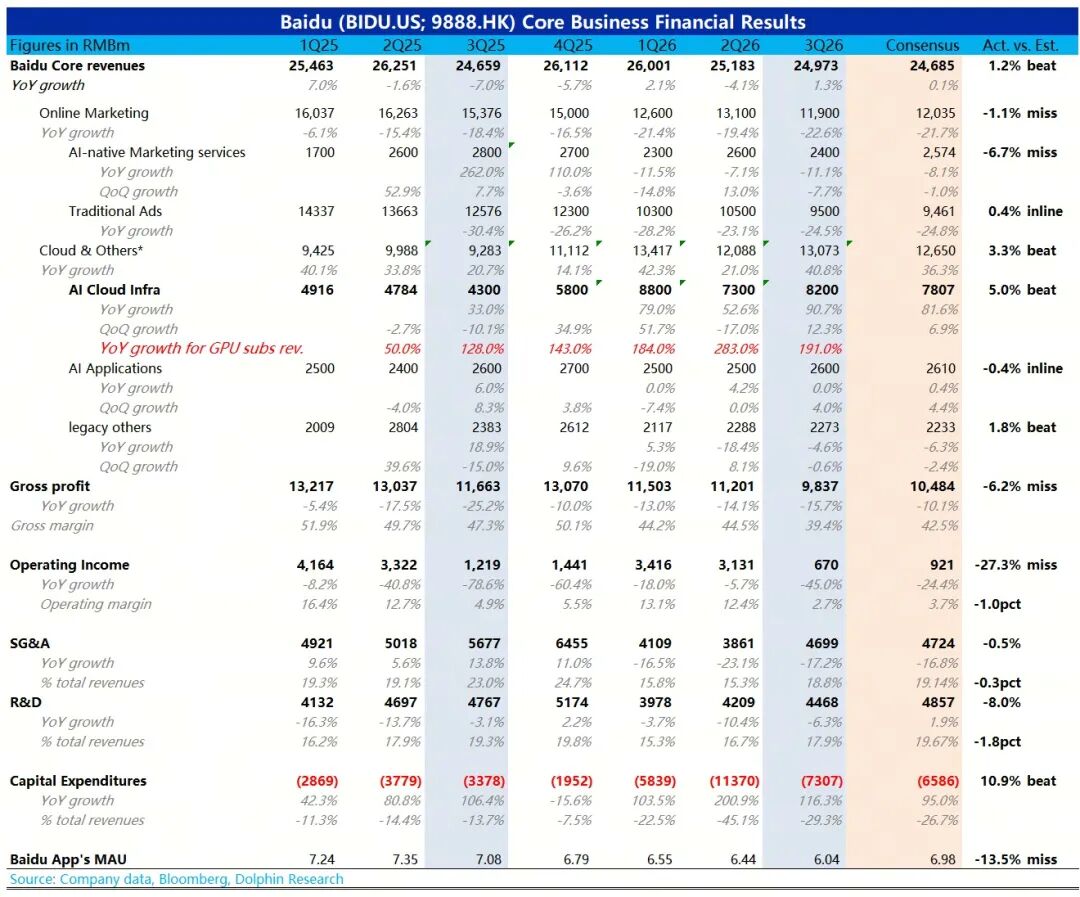
Dolphin Research Overall View:
Of the two catalysts Dolphin Research mentioned last quarter—Stock Connect inclusion and the Kunlun Chip IPO—half have now been realized. The rumor of a Kunlun Chip IPO delay was denied by the company, but if this earnings call cannot provide more certainty, capital confidence will be difficult to restore, and the discount to the Kunlun Chip’s valuation will be difficult to eliminate.
Beyond catalysts, the “surprise” in Q3 fundamentals was that advertising worsened quarter-over-quarter, rather than hitting bottom and recovering as previously thought. This was likely already fully communicated by the company to the market before the earnings report, and combined with the AI erosion issue in search shown in Google’s earnings this quarter, capital expectations had already been adjusted before the earnings report.
The problem is that under an unfavorable environment β and weak own α, Baidu’s old search makes it difficult to give a deterministic judgment on when it will truly bottom out. In other words, advertising can no longer play the role of supplying cash flow, and new marketing under AI temporarily shows no hope of filling the gap.
And for the cloud business to maintain high-speed expansion, it needs new computing infrastructure investment (the company currently has 1GW of computing power and plans to double it to 2GW in the next 1–2 years).
Taken together, Baidu’s “ice and fire” situation remains unchanged—only the fire is fiercer and the ice is thicker. The cash flow backstop can no longer backstop, and neither AI applications nor AI-native marketing can fill the gap after search erosion (AI penetration in Wenku and Wangpan is increasing, yet revenue is flat quarter-over-quarter). In other words, “AI products other than selling computing power still haven’t turned into money.”
And now, the money earned from the computing power dividend must all be used for upfront investment in future business growth. This is also what Dolphin Research has always emphasized: Baidu’s low valuation is only superficial and not sufficient as a buying logic; instead, one should follow the Kunlun Chip’s catalyst window to find opportunities.
Since there has not been much information update on the Kunlun Chip’s listing progress, Dolphin Research assumed last quarter that the catalyst window would be at year-end. And the company’s communication opportunity before year-end is the Q3 earnings call. Meanwhile, after the sudden cutoff of foreign card channels, how computing power will be deployed and planned in the future is also a key focus for investors, making this communication particularly important.
On valuation, based on the closing price of $78.14 on November 13, market cap is approximately $26.8 billion. Net cash on the books at the end of Q3 was $19.2 billion, but unlike most institutions that include net cash in valuation, Dolphin Research tends not to count it.
This is because during the visible investment period, advertising cash flow cannot backstop and may likely consume cash reserves. Although the company has committed to a $5 billion buyback over 3 years, the relatively slow short-term buyback pace also illustrates the issue. In other words, the right to use this nearly $20 billion in net cash does not belong to shareholders.
For business value, Dolphin Research continues to use the sum-of-the-parts framework of “advertising + cloud excluding Kunlun Chip + Kunlun Chip equity”:
- END -
// Reprint authorization
This article is an original article by Dolphin Research. Authorization is required for reprinting.
// Disclaimer and general disclosure notice
This report is for general comprehensive data purposes only, intended for general reading and data reference by users of Dolphin Research and its affiliates, and does not consider the specific investment objectives, investment product preferences, risk tolerance, financial situation, and special needs of any person receiving this report. Investors must consult independent professional advisors before making investments based on this report. Anyone who makes investment decisions based on the use or reference of the content or information mentioned in this report shall bear the risk themselves. Dolphin Research shall not be liable for any direct or indirect liability or loss that may arise from the use of the data contained in this report. The information and data contained in this report are based on publicly available materials and are for reference only. Dolphin Research strives for but does not guarantee the reliability, accuracy, and completeness of the relevant information and data.
The information mentioned or views expressed in this report shall not be regarded or construed as an offer to sell securities or an invitation to buy or sell securities in any jurisdiction, nor does it constitute advice, inquiry, or recommendation regarding relevant securities or related financial instruments. The information, tools, and materials contained in this report are not intended or proposed to be distributed to citizens or residents of any jurisdiction where the distribution, publication, provision, or use of such information, tools, and materials would conflict with applicable laws or regulations or would cause Dolphin Research and/or its subsidiaries or affiliates to be subject to any registration or licensing requirements in such jurisdiction.
This report reflects only the personal views, opinions, and analytical methods of the relevant creators and does not represent the position of Dolphin Research and/or its affiliates.
This report is produced by Dolphin Research, and the copyright belongs solely to Dolphin Research. No institution or individual may, without the prior written consent of Dolphin Research, (i) produce, copy, reproduce, duplicate, forward, or otherwise make any form of copies or reproductions, and/or (ii) directly or indirectly redistribute or transfer to other unauthorized persons. Dolphin Research reserves all related rights.
-
![]()
New Energy Vehicle Sales Surge as Volkswagen's China Offensive Begins
-
![]()
Liu Bin Takes the Helm at Changan Mazda Sales as the Hard Road of Transformation Begins
-
![]()
Baidu’s Computing Power Dividend: Money In, Money Out—When Will the Kunlun Chip Ride to the Rescue?
-
![]()
Heavyweight Warning! CAAM to Publish Payment Terms Review of 17 Automakers — This Time It Means Business
-
![]()
DeepSeek's Quota Limits: A Prelude to Consumer-Side Paid Plans?
-
![]()
XPeng Poised for Record November Sales Exceeding 60,000 Units, Entering High-Growth Phase: He Xiaopeng Vows to Widen Lead Over Rivals in 2027 | Mingjing Pro
-
First Domestically Built BMW iX3 Rolls Off the Line in Shenyang, Presales from 269,900 Yuan—Can It Turn Things Around?
-
![]()
DeepSeek Breaking: App and Web Usage Limited Amid Computing Power Shortage