17 Automakers Face Account Audits and Joint Regulatory Talks
 11/18 2026
 389
Today, let's talk about automaker payment terms.
On November 16, 2026, the China Association of Automobile Manufacturers (CAAM), at the request of MIIT, officially issued the "Notice on Carrying Out Survey and Evaluation of Automobile Enterprise Supplier Payment Terms," placing all 17 major domestic mainstream automakers on the annual account audit and evaluation list.
That same day, a relevant MIIT official made the position clear: a systematic survey and evaluation will be conducted once a year, with results made public. For automakers with large accounts payable, intentionally extended payment terms, or a high volume of complaints, MIIT will join forces with relevant departments to conduct regulatory talks and press for rectification.
Put plainly, the era in which automakers could issue statements to "show determination" is over. The state is now stepping in directly to verify original vouchers and publish scorecards for all to see. Anyone who fails to meet the standard should be prepared to enter a meeting room for joint regulatory talks.
As early as June 2025, 17 key automakers—FAW, SAIC, Dongfeng, Changan, GAC, BAIC, Chery, JAC, Great Wall, Geely, BYD, Seres, Li Auto, NIO, XPeng, Xiaomi, and Leapmotor—had collectively made a public commitment to compress supplier payment terms to within 60 days.
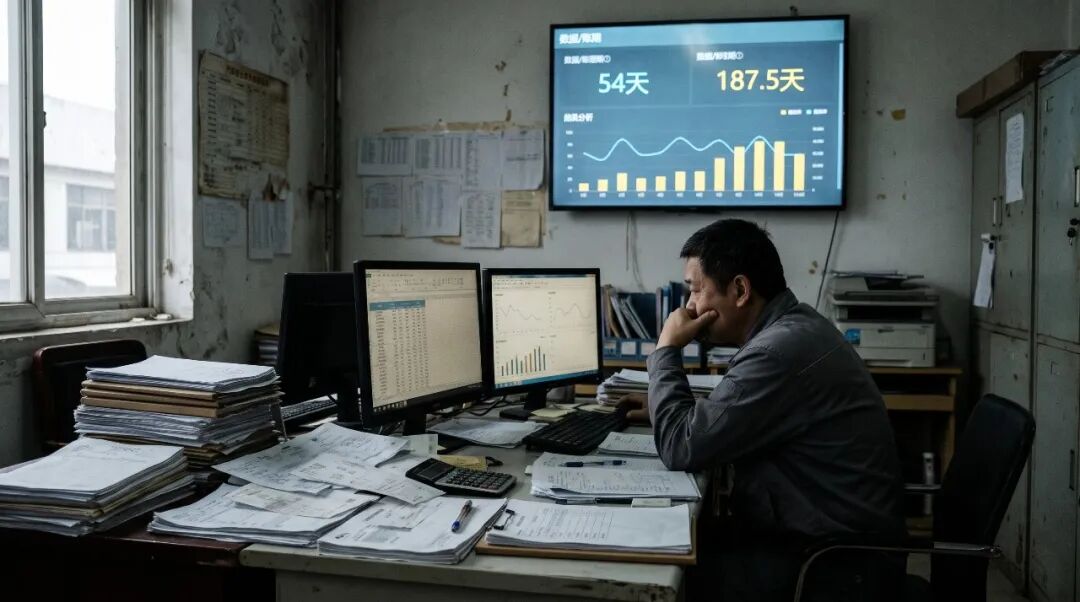
By February 2026, the phased survey report released by CAAM also showed that the average payment period of these 17 key automakers had been shortened to about 54 days.
But open the financial reports of listed companies, and the numbers tell a completely different story.
Statistics from the financial data terminal Wind show that the average "accounts payable and notes payable turnover days" of 14 mainstream listed automakers briefly fell to 164.4 days at the end of 2025, but in the first half of 2026 it rose instead of falling, rebounding to 187.5 days—a full 23.1 days longer than at the end of 2025. The total amount of accounts payable and notes payable exceeded 780 billion yuan.
So here is the question: why, when everyone has verbally committed to 60 days, do the financial statements still show 187.5 days? Now that the regulatory talk mechanism is truly being established, exactly which payment-delay tricks are being targeted?
Without further ado, let's get to the point.
01 The huge contrast between two sets of accounts
First, let's be clear about one thing: the conflict between 54 days and 187.5 days is primarily because the two use different statistical scopes.
The 54 days published in the association survey measures the contract settlement duration from the payment term starting point recognized by CAAM (acceptance, reconciliation, etc.) to the company's payment.
The 187.5 days in listed company financial reports, according to financial formulas, includes all non-matured accounts payable, commercial acceptance bills, and bank acceptance bills on the balance sheet (quarter-end inventory stocking to boost volume also further pushes up period-end balances), while the denominator uses operating costs excluding the cost of unsold products. It cannot simply be directly equated with "default overdue by 187 days."
But even after accounting for differences in statistical scope, the trend of capital occupation revealed by the financial statements is still very real.
From the data for the first half of 2026, among the 14 mainstream listed vehicle manufacturers, 13 saw their accounts payable and notes payable turnover days lengthen quarter on quarter.
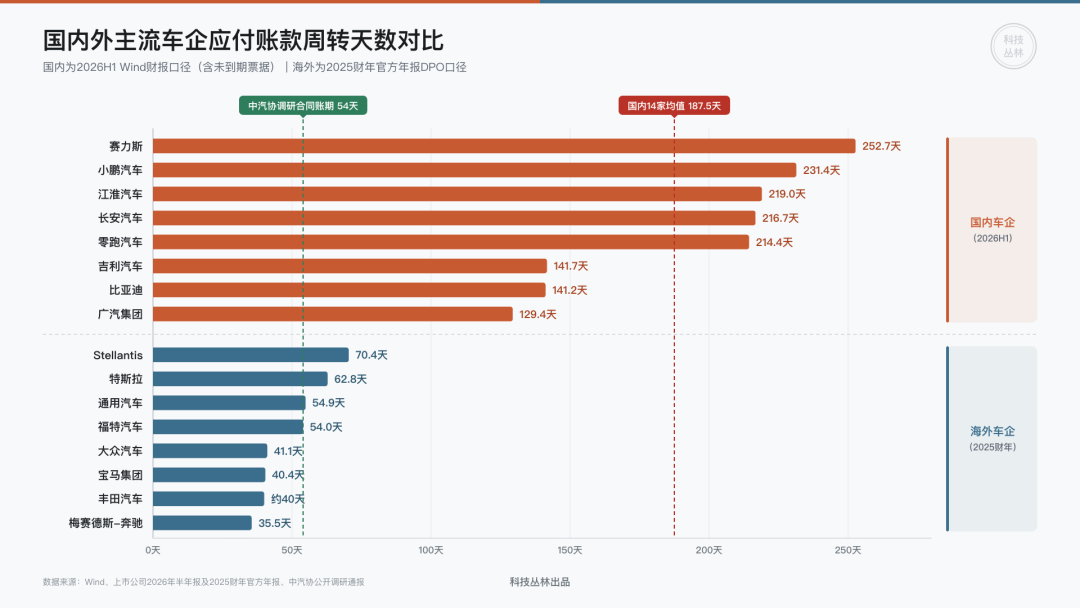
Breaking it down by automaker, the divergence under Wind's methodology is also very obvious: in the first half of 2026, Seres reached 252.7 days, XPeng 231.4 days, JAC 219.0 days, Changan Automobile 216.7 days, and Leapmotor 214.4 days.
Even GAC Group, BYD, and Geely Auto, which ranked lowest among the 14, still had turnover days of 129.4 days, 141.2 days, and 141.7 days respectively—still more than double the 60-day benchmark.
Of course, from a year-on-year perspective, there are also examples of actively tightening payment terms. In the same statistical sample, BAIC BluePark shortened by 67.1 days year on year and Li Auto by 45.8 days, making them the two with the largest year-on-year improvements; but looking at quarter-on-quarter changes, all 14 automakers except Li Auto lengthened, with XPeng (+57.2 days), Leapmotor (+45.2 days), Chery (+44.3 days), and Seres (+42.6 days) showing the most obvious quarter-on-quarter increases.
If we dig one layer deeper and look at the third-quarter 2026 financial reports, the new changes in automakers' books become even clearer.
According to statistics from the first three quarters of 2026 financial reports of 25 A-share vehicle manufacturers, looking solely at "accounts payable" (excluding notes), turnover days shortened by 15.5 days year on year to 73.9 days, and the accounts payable balance also fell by 9.4% year on year.
On the surface, cash payables decreased, but during the same period the notes payable balance of these 25 automakers surged 31.5% year on year, and notes payable as a share of total payables soared to 39.3%.
Combining accounts payable and notes payable, total turnover days actually rose slightly from 170.0 days in the same period last year to 172.2 days.
For example. In early November 2025, BYD, in response to regulatory standards, proactively began phasing out its self-built supply chain finance electronic voucher "DiLink," planning to switch to bank acceptance bills, commercial acceptance bills, and cash settlement over one to two years.
Once the settlement instrument switched, the financial statement line items immediately jumped. BYD's notes payable balance on the balance sheet soared from 2.22 billion yuan at the end of September 2025 and 22.464 billion yuan at the end of 2025 (including about 12.050 billion yuan in bank acceptance bills and about 10.414 billion yuan in commercial acceptance bills) all the way to 78.863 billion yuan at the end of September 2026, surging 251.07% in the first three quarters of 2026 alone compared with the end of the previous year.
In plain language, many automakers have not truly paid money into supplier accounts faster; they have simply converted the IOUs originally recorded under "accounts payable" in bulk into acceptance bills with maturity dates.
As for why automakers are so dependent on occupying upstream payments, the reason is not complicated at all: the end-market price war has crushed vehicle profits.
In the first three quarters of 2026, the combined revenue of 27 traditional listed automakers reached 2,483.55 billion yuan, a slight increase of 2.8%, but combined net profit attributable to parent companies was only 68.05 billion yuan, down sharply by 18.8% year on year.
Official statistics are even more direct: National Bureau of Statistics data show that in 2025 the automotive industry's sales profit margin was still 4.1%; while CAAM data show that by the first half of 2026, the average profit margin in the vehicle manufacturing segment had fallen to 1.5%. For a new car selling for 100,000 yuan, only about 1,500 yuan of profit remained in the manufacturing segment.
Unable to make money selling cars themselves, yet afraid to stop expanding production and investing in R&D, many automakers naturally treat the tens of thousands of upstream parts suppliers as "zero-interest ATMs."
When selling cars, they collect full cash from consumers; when buying parts, they use notes to settle half a year later. As long as sales volume continues to rise, operating cash flow on the books can remain positive.
This is why everyone verbally shouts 60 days, but the body finds it hard to kick the long-payment-term habit.
02 How is 60 days stretched into half a year?
After the entire industry publicly committed that "payment terms will not exceed 60 days," how exactly is 60 days stretched step by step into half a year or even longer?
Breaking down frontline supply chain practice, there are mainly three core tricks.
The first trick: block acceptance at the front end and use consignment systems so the 60-day countdown never starts.
Many automakers stipulate in contracts that "payment shall be made 60 days after acceptance and receipt of invoice," which looks fully compliant, but the real secret lies in "when it counts as accepted."
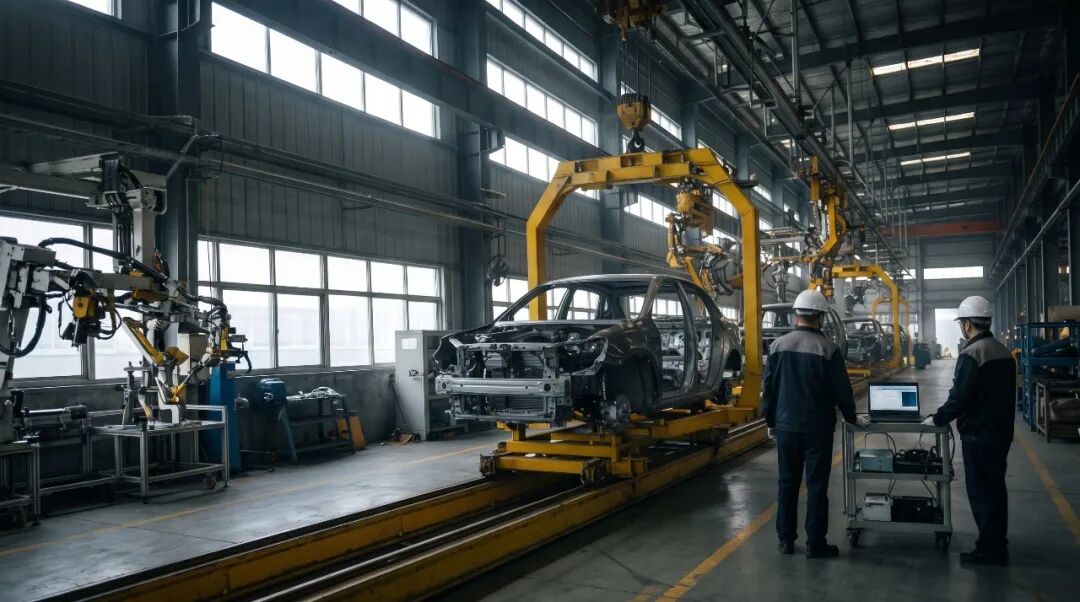
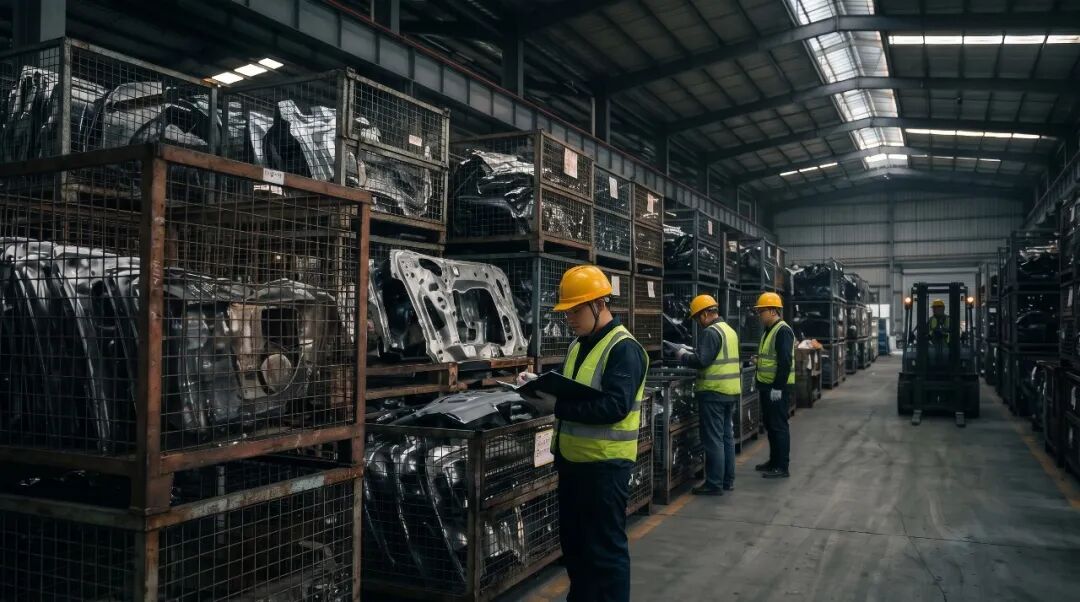
The most common industry practice is the VMI consignment warehouse model: parts are shipped to transfer warehouses near the OEM or even inside the factory, ownership remains with the supplier, and it is not considered formal delivery until the assembly line actually draws and installs them. If a certain model sells poorly and stagnates, parts can lie in the warehouse for 60 days without the OEM counting a single day of payment terms.
Even after parts are installed, there are still various invisible hurdles such as delayed confirmation of receipt, reconciliation windows open only two or three days a month, and notices that "this month's invoicing quota is full, issue next month." Through the whole process, before the 60-day countdown even starts, suppliers have already had their money occupied for 30 to 90 days for nothing.
The second trick: settle on time on day 60, but stuff a 180-day acceptance bill into your hand.
In the supply chain this is called the "second payment term." When day 60 arrives, the automaker's finance department punctually checks "payment completed" in the system, and the ledger looks perfect. But what the supplier receives is not real cash, but a commercial acceptance bill maturing six months later, or an electronic debt voucher on some automakers' self-built platforms.
Suppliers need to pay wages and buy steel and plastic pellets, and cannot wait these 180 days, so they have to find banks or finance platforms designated by the automaker to discount early. Bank acceptance bill discount costs are relatively low, but some automakers' commercial acceptance bills carry annualized discount costs as high as 5% to 8%.
What makes small and medium-sized suppliers even more frustrated is that some OEM-affiliated finance companies also collect discount channel fees or earn spreads, prompting suppliers to complain that they are "both owing me payment and earning my interest, taking from both ends."
Take a 1 million yuan payment due in 180 days and calculate it at common market rates, and it becomes clear.
For bank acceptance bills, from 2025 to 2026 the annualized direct discount rate at banks was generally between 0.6% and 2%. Even at the higher 2%, after deducting about 10,000 yuan in interest for half a year, the supplier would receive about 990,000 yuan; but if switched to commercial acceptance bills or electronic vouchers with annualized discount rates of 5% to 8%, interest for half a year would first deduct 25,000 to 40,000 yuan.
If it also has to go through some commercial factoring companies or designated finance platforms for layered channel monetization, a single service fee of 0.5% to 1% would deduct another 5,000 to 10,000 yuan. After all this, for a 1 million yuan payment, the cash the supplier finally takes home is often only 950,000 to 970,000 yuan.
For small and medium-sized parts factories whose net profit margin is only a few percentage points, this means not only that payment terms have been stretched by half a year, but also that the money received has been gnawed away. Most of the profit on a single deal is absorbed into financing.
Under heavy financial regulatory pressure, self-built electronic vouchers have actually begun to recede. The "Yin Fa [2025] No. 77" document jointly issued by the People's Bank of China and five other departments officially took effect on June 15, 2025 (with a two-year transition period for existing business), explicitly prohibiting core enterprises from forcing suppliers to finance through designated information service platforms and further disallowing illegal collection of high service fees.
Public IPO prospectuses directly confirm this shift. According to the Beijing Stock Exchange prospectus disclosed in June 2026 by Qiaoluming Technology, a core interior and exterior trim supplier to BYD, the company's balance of "DiLink" vouchers was as high as 489 million yuan at the end of 2024. As the leading automaker gradually stopped using them and switched settlement instruments, by the end of 2025 it had plunged nearly 90% to 57.8277 million yuan.
The third trick: freeze payments through annual price reduction negotiations and use "note substitution" to pass the burden down layer by layer.
Domestic vehicle manufacturers generally require parts companies to cut prices by 5% to 15% each year, commonly known as "annual price reduction." The first and second quarters of each year, when old and new contracts alternate in negotiations, are often the toughest threshold.
Automakers require parts to be supplied on time and threaten huge line-stop claims for supply cuts, but on the finance side they use the excuse that "next year's contract unit price has not been finalized and cannot be entered into the system" to directly suspend reconciliation and payment for the entire quarter. Whoever cannot withstand cash flow interruption first can only bow their head and sign the price reduction agreement.
Even though electronic vouchers have decreased, many automakers have switched to another "note substitution" playbook.
On October 20, 2026, MIIT reported at a State Council Information Office press conference that in the first three quarters the proportion of electronic voucher payments for automotive industry accounts payable had dropped significantly. But if you break open the 2026 third-quarter reports of 25 A-share listed vehicle manufacturers, you will find that although the pure accounts payable balance fell 9.4% year on year, the notes payable balance surged 31.5% year on year, and its share of total payables soared to 39.3%.
To put it bluntly, many automakers have done nothing more than swap their "self-issued IOUs" for six-month acceptance bills—and suppliers still wait just as long to see real cash.
Beyond these three tricks, there is another dark corner that public opinion has long overlooked: group headquarters may make commitments, but independently accounted subsidiaries and commercial vehicle divisions still go their own way.
What's more, once large Tier 1 suppliers receive non-cash notes or electronic vouchers, they are often reluctant to absorb the discount cost themselves—so they turn around and split or endorse-transfer them upstream to Tier 2 and Tier 3 suppliers.
A-share listed company Xiangfenghua offers a textbook example that lays out the entire transmission chain. In its reply to a private placement review inquiry disclosed in August 2026, the company documented the whole process.
Xiangfenghua mainly produces lithium battery anode materials and supplies them specifically to battery cell manufacturers, making it a typical Tier 2 supplier in the automotive supply chain.
In its routine payment settlements—with major customers being leading power battery manufacturers—Xiangfenghua received not only "DiLink" from the BYD system but also "Baoxiang" electronic confirmation vouchers issued by Ruixuan Supply Chain Platform under Chery Group.
This shows that electronic vouchers are no longer confined to OEMs and Tier 1 suppliers; they are now circulating across entities further upstream along the industrial chain, all the way to Tier 2 material factories. In this way, funding pressure across the entire supply chain is passed downstream level by level.
Those Tier 2 and Tier 3 small and micro factories making molds, hardware, coatings, and stampings—with zero bargaining power—are ultimately forced to endure payment delays of 180 to 270 days.
On top of that, a set of automotive-specific molds often requires tens of millions of yuan in investment, and being removed from an OEM's designated list is catastrophic. Even when small and medium-sized suppliers feel wronged, they simply dare not publicly name their large customers.
Once you grasp these practical ins and outs, you will also understand the real intent behind the Notice on Promoting Automotive Enterprises to Standardize Supplier Accounts Payable Payment and Optimize Payment Period Management, jointly issued by the Ministry of Industry and Information Technology and the State Administration for Market Regulation on September 7, 2026—as well as the annual survey and assessment launched by the China Association of Automobile Manufacturers on November 16, 2026.
First, block the starting point and acceptance delays: the payment period shall uniformly start from the date when the supplier delivers the goods and acceptance is passed. General production materials must be received within 1 working day after delivery, and acceptance must be completed within 3 working days after receipt. Functional parts requiring vehicle installation verification must also complete vehicle roll-off inspection within 5 working days. For continuous supply, monthly centralized reconciliation is allowed, but from the midpoint of the supply cycle to completion of payment, the upper limit of the payment period must not be exceeded.
Then strictly lock down payment instruments: for small and medium-sized suppliers, the assessment explicitly checks whether within 60 days all payments are made in cash (bank transfer, wire transfer, etc.), or all payments are made in cash and bank acceptance bills (the most strictly constrained in practice are commercial acceptance bills and self-built electronic credentials); for non-small and medium-sized suppliers, within 60 days the proportion of cash and bank acceptance bill payments must not be lower than 80%.
At the same time, block price negotiation freezes: each supply contract signed must have a validity period of no less than 1 year. During price negotiations, for continuous supply, at least 90% must be paid first according to the unit price of the previous contract; for non-continuous supply, at least 70% must be paid first according to the industry average price or designated unit price, and after agreement is reached, any excess shall be refunded and any shortfall supplemented.
Finally, make verification and reporting truly effective: the 17 key automakers included in the assessment must submit their first 2026 annual report before January 31, 2027, and thereafter report regularly at the end of January and the end of July each year; the China Association of Automobile Manufacturers shall randomly select no fewer than 15 sample suppliers from each automaker every year (at least 255 in total across the 17), and conduct on-site cross-checks of contracts, acceptance forms, reconciliation records, invoices, and bank payment vouchers.
At the same time, the normalized reporting channel that has been opened promises to complete preliminary assessment within 10 working days, feed back the verification and handling results to the reporter within 10 working days after verification is completed, and strictly keep the reporter's information confidential. Once it is verified that payment periods are deliberately prolonged or complaints cluster, the assessment results will be made public, and the Ministry of Industry and Information Technology will join forces with relevant departments to conduct talks and urge rectification.
03 Do foreign automakers also have payment periods?
When it comes to automaker payment periods, many people will casually ask: do foreign automakers also have payment periods? Why have we never heard of Toyota or Mercedes-Benz dragging suppliers along and squeezing them for half a year?
Open the official annual reports of major multinational automakers in the United States, Japan, and Europe for fiscal year 2025, and calculate accounts payable turnover days using the internationally common method—ending trade payables divided by operating costs, multiplied by 365 days—and the contrast is indeed striking.
First look at the three European giants: according to the original data in official financial reports for fiscal year 2025, Mercedes-Benz is 35.5 days, the BMW Group is 40.4 days, and Volkswagen Group is 41.1 days. Volkswagen also specifically states in its annual report accounting policies that supply chain factoring liabilities remain fully retained and accounted for within trade payables, with no off-balance-sheet hiding. The 41.1 days is a real, hard-cash payment period.
Now look at the American automakers: measured by ending accounts payable and operating costs, in fiscal year 2025 Ford Motor is 54.0 days, General Motors is 54.9 days after excluding liabilities of financial subsidiaries, and even new-force representative Tesla was 62.8 days in 2025, mainly settling by wire transfer and rarely issuing commercial acceptance bills.
As for Japan's Toyota Motor, based on its Securities Report submitted to the Japan Financial Services Agency and its Form 20-F consolidated financial statements submitted to the U.S. Securities and Exchange Commission (measured by trade payables and operating costs), its routine monthly cash settlement turnover is likewise stable at around 54 days.
The average turnover days of 187.5 days in the first half of 2026 for 14 domestic listed automakers is almost 4 times that of mainstream German and Japanese automakers.
However, the short payment periods of foreign automakers are absolutely not because foreign companies are more morally noble, but because the illegal cost of crossing the 60-day red line is much more expensive than borrowing from banks.
First look at Europe and Germany. The current EU Late Payment Directive caps the payment period for commercial transactions at 60 days (the European Commission proposed in 2023 to cut B2B payment periods uniformly to 30 days, but due to opposition from large European manufacturers and member states, the draft was placed on the 2027 withdrawal list on November 4, 2026, and the current legal upper limit remains 60 days).
In Germany, Article 288 of the German Civil Code directly sets the statutory default interest for overdue payments between enterprises at "the central bank base rate plus 9 percentage points." Combined with the European Central Bank base rate, the annualized default interest often exceeds 10% to 12%, and clauses in contracts stating exemption from default interest are uniformly invalid. For Mercedes-Benz, Volkswagen, and BMW, their own bond financing costs are much lower, so there is simply no need to bear this high penalty interest.

If a European automaker really wanted to delay stubbornly, the French regulatory authorities would teach it a lesson.
Joint venture giant Stellantis had accounts payable turnover days as high as 70.4 to 79.5 days in fiscal years 2024 to 2025.
As a result, in December 2025, the General Directorate for Competition, Consumer Affairs and Fraud Control under the French Ministry of Economy directly issued a rectification order within a time limit, explicitly warning that if unbalanced and overbearing clauses against suppliers were not corrected by the deadline, a continuous daily fine of 500,000 euros per day would be initiated, for a maximum of 240 days, with a theoretical maximum fine of 120 million euros.
Looking further back, in June 2024, the same regulator directly issued Renault a maximum administrative fine of 2 million euros for violating statutory payment deadlines and publicly named it on its official website.
Now look at Japan. The detours Japan took and its governance methods are almost a precise mirror of China's current problems.
As early as 1956, Japan enacted the Subcontracting Act, requiring large enterprises to pay within 60 days from the day goods are received. Regardless of whether the buyer has completed warehousing inspection, the 60-day countdown is forcibly triggered from the date of receipt, and the statutory default interest for overdue payment is as high as 14.6% annualized.
Later, Japanese companies also became clever: on the 60th day they stuffed suppliers with a commercial promissory note that would only be redeemable after another 60 to 120 days. This is exactly the same as the "60 days to give a six-month commercial acceptance bill" popular among some domestic automakers since 2024.
As a result, the Japanese Diet directly passed an amendment in May 2025, upgrading the law to the Act on Ensuring Fair Subcontracting Transactions, which officially took effect on January 1, 2026: it explicitly prohibits the use of commercial bills as a payment instrument for subcontracting payments, and any use of electronic claims or factoring instruments that require suppliers to discount at a loss and result in suppliers being unable to receive 100% full cash within 60 days shall be treated as illegal delayed payment.
In addition, the Japan Fair Trade Commission directly sends survey letters to more than 100,000 enterprises every year. Among the 35,700 respondent enterprises in the May 2026 payment survey, the proportion using cash settlement was as high as 97.1%.
On November 10, 2026, the agency had just issued administrative warning letters to 1,135 enterprises whose payment periods exceeded 60 days, and scheduled to fully extend the 60-day red line to general commercial transactions starting April 1, 2027. A bit earlier, in March 2024, Nissan Motor was publicly named and ordered to fully refund about 3.024 billion yen in payments to 36 suppliers after deducting them without justified reason under the name of "rebates."
As for the United States, although there is no unified federal hard rule of 60 days for manufacturing, General Motors has long followed a highly transparent MNS-2 automatic settlement system. All qualified parts delivered in the current month are automatically paid by bank wire on the second working day of the second month after receipt of goods and invoices, with an actual average payment period of 45 to 50 days.
Behind this set of rules is Wall Street's credit discipline mechanism: once an automaker unilaterally lengthens turnover days, rating agencies and short sellers immediately characterize it as a "signal of deteriorating liquidity," and bond issuance spreads spike instantly, making the gain not worth the loss.
In the final analysis, German and Japanese automakers can maintain payment periods of just over 40 days for a long time not only because of severe external legal penalties and financial market oversight, but internally also because Toyota's just-in-time production pushes work-in-progress inventory to the extreme, and because automakers and core suppliers such as Denso and Bosch have formed an industrial ecosystem of decades of bundled co-development and respect for each other's gross margins.
By contrast, the domestic auto market, caught in a price war, has long subsidized end-market price cuts by squeezing the supply chain.
04 Closing thoughts
Looking back at these 17 months from June 2025 to now, the thread of domestic automotive payment period governance is actually very clear.
From the entry into force of the Regulations on Ensuring Payments to Small and Medium-sized Enterprises in June 2025 and the collective statements of 17 automakers, to the country's first special new rule for a single industry on payment periods in September 2026, and then to the official launch on November 16, 2026 of the annual bottom-line accounting and scorecard publication for 17 automakers and the establishment of the yardstick for joint regulatory talks, the matter of the 60-day payment period has finally begun to grow teeth.
Next, the first annual accounts payable payment report submitted by each automaker on January 31, 2027 will be the first major test of the real quality.
However, before the system is fully implemented, there are also two very realistic issues that determine how useful this major test can actually be:
First, randomly inspecting at least 15 sample suppliers per automaker is certainly much stronger than relying purely on self-inspection, but large vehicle groups often have thousands of first-tier suppliers, and the hidden chains through which group subsidiaries, commercial vehicle segments, and first-tier suppliers pass bills down to second- and third-tier small and micro factories remain extensive. Whether the real-name reporting plus strict confidentiality mechanism can truly protect small and medium-sized suppliers who fear losing their designated status directly determines how effectively clue verification can penetrate within 10 working days.
Second, for automakers that repeatedly refuse to correct or deliberately use bills and acceptance to circumvent the rules in disguised form, are notification and criticism plus regulatory talks urging rectification alone enough?
Japan relies on the Act on Ensuring Fair Subcontracting Transactions to completely ban commercial bills and set a statutory default interest rate of 14.6%; France relies on administrative supervision to directly enter and audit accounts and issue daily fines of 500,000 euros per day. The common logic behind both is simple: only when the cost of delaying payment and violating rules far exceeds the benefit of withholding funds will the rules avoid becoming a mere scrap of paper.
China's automotive industry has already surged to the global forefront, but a truly world-class automotive power is by no means achieved by forcing tens of thousands of upstream parts enterprises into its own "interest-free bank."
When the price war can no longer be financed by swiping the supplier's credit card, after the tide goes out, the industry will truly return to a healthy track of competing on technology, efficiency, and self-sustaining capacity.
End.
-
![]()
Share Link Won't Open: Tracing a URL Parameter Placement Bug
-
![]()
BAIC Group | October Terminal Sales: Product Mix Across Four Brands and 31 Models
-
![]()
Mercedes-Benz China Retail Sales in October: 28,820 Units — How Did Beijing Benz and smart Perform?
-
![]()
Tesla Invests €3 Billion to Upgrade German Factory, Sells Robotaxi — but You Still Pay Monthly to Drive
-
![]()
ARCFOX Slashes Huawei Smart Driving Threshold to the 150,000 Yuan Mark
-
![]()
The Korean Car Conundrum: Boxed In by the Supply Chain, Outmatched in Overseas Markets
-
Has Apple Really Cured the "Rogue App" Epidemic Among Domestic Apps?
-
![]()
AI Short Dramas: A Successful Capital Relocation?