Behind the Tank 300's Decline: Boxy SUVs Are No Longer a Rarity
 11/18 2026
 418
Everyone knows that major changes have taken place in the domestic auto market over the past few years. But no one expected them to happen so fast. Almost without noticing, the Tank 300's monthly sales have slid to 1,200 units. In 2021 or 2022, that number would have been roughly just one week's sales. Back then, the Tank 300 was almost the only option in the boxy SUV market—buyers had to wait for delivery, prices held firm, and word of mouth spread on its own. In just a few years, it went from over 10,000 units a month to just over 1,000. This curve did not appear abruptly; it is more like a mirror reflecting the entire process of the boxy SUV segment turning from a blue ocean into a red ocean.
Looking back at the Tank 300's monthly sales over the past five years, the trajectory is clear. It ramped up after launching in 2021 and climbed to about 12,000 units at year-end; in 2022 it stayed high, hitting a peak of about 11,500 units in June; in 2023 it was high early and low later, still returning to 10,200 units in September but clearly weakening in the fourth quarter; in 2024, apart from a concentrated delivery surge to 12,400 units in June, most months fell to 3,500–7,000 units; in 2025 it averaged about 4,000 units a month; in the first five months of 2026 it ranged between 2,200 and 3,900 units, and now it has reached 1,200 units. The turning point roughly appeared in 2024, followed by stepwise declines—not a cliff, but a gradual diversion of demand.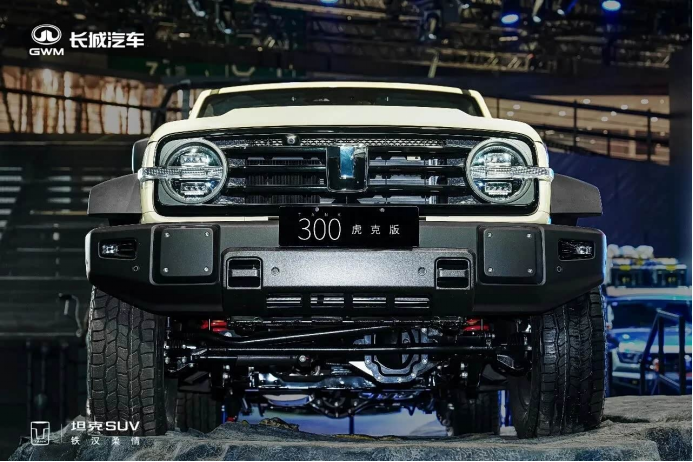
The car itself has not suddenly gotten worse. The Tank 300's off-road foundation, distinctive styling, and modification ecosystem are still competitive today. The problem is that its strongest moat back then—scarcity—is rapidly disappearing. Data from the China Passenger Car Association shows that domestic boxy SUV sales climbed from 168,400 units in 2015 to 1.02 million units in 2025, turning from a niche toy into one of the fastest-growing SUV segments over the decade. The industry estimates that full-year sales in 2026 are expected to exceed 1.5 million units. The cake is indeed getting bigger, but there are more people dividing it: models on sale have rapidly expanded from just over 10 in the early days to more than 40, and in the second half of 2026 alone, multiple all-new boxy models such as the Xiangjie G9, Haval H10, Galaxy Battleship 700, Trumpchi Yue 7, and Jetour Traveler 7 will launch in a cluster. Some industry insiders predict that by 2027 the boxy SUV segment may be a full-blown red ocean. Tank's market share fell from over 50% in 2022 to 32% in 2025 and is still declining in 2026—this is the most direct footnote.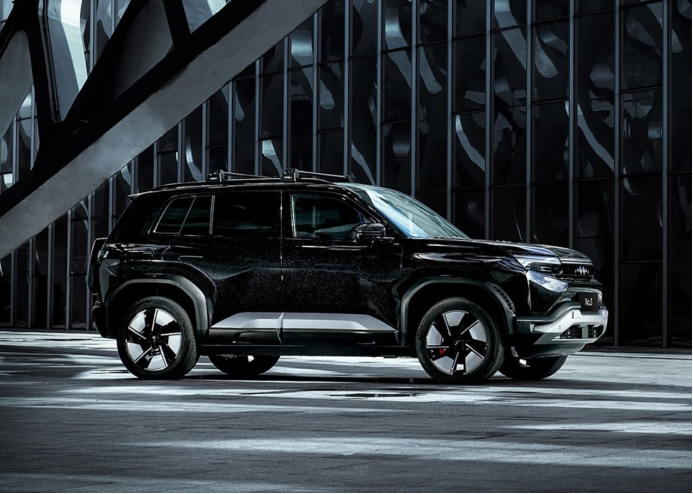
More critically, the newly entered boxy SUVs have stretched the price range widely, covering everything from tens of thousands of yuan to over a million. Continuously lowering prices have directly eroded the 200,000-yuan-class soft off-road heartland where the Tank 300 sits. In the past, consumers who wanted a boxy SUV with off-road flair, daily usability, and a reasonable price could not avoid the Tank 300; now, with the same budget, there are so many choices that people need to make comparison tables. The expansion of supply does not simply mean "a few more competitors"; it means consumers' decision-making logic has changed: from "only it" to "why must it be it."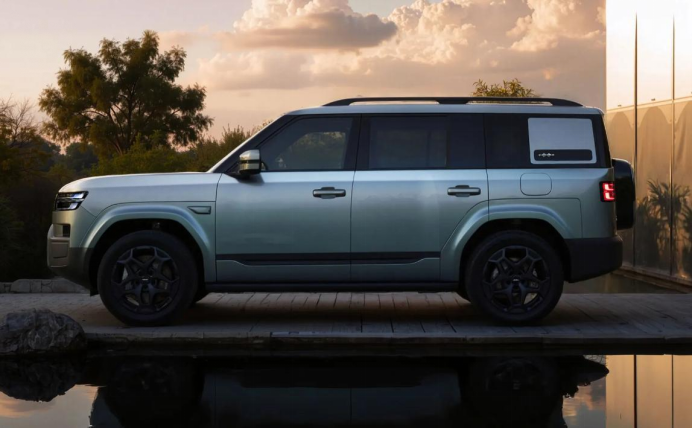
There is another easily overlooked change: electrification, intelligence, and soft off-road are redefining the selling points of "boxy SUVs." Many new boxy models put plug-in hybrids, extended-range systems, smart cockpits, and driver assistance front and center, while off-road parameters become mere background. Among Tank 300 users, a considerable portion never had deep off-road needs in the first place; what they wanted was "soft off-road"—boxy styling, a certain level of passability, and a car that does not look out of place in the city. In plain terms, it is emotional value and a lifestyle label. When these soft off-road needs are captured by more boxy SUVs that are electrified, equipped with smart driving, and cheaper, the Tank 300's scarcity is naturally diluted. It is not that the Tank 300 has lost its off-road capability, but that the "soft off-road" gateway it guarded has been surrounded by latecomers until it became a crossroads.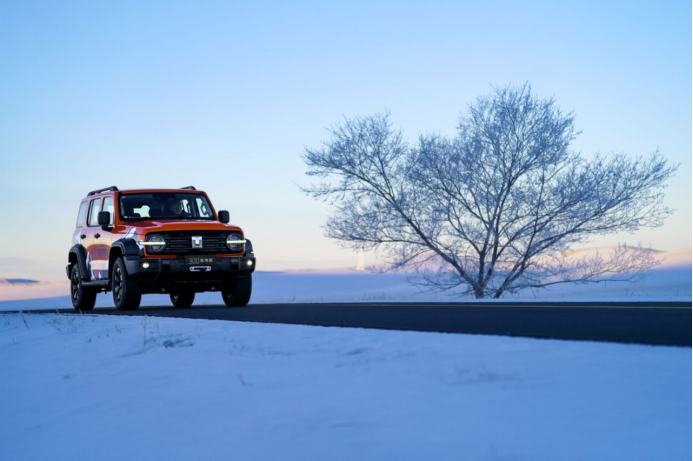
Therefore, the Tank 300's sales decline is the inevitable result of a niche market going from one dominant player to being surrounded by wolves, and the share regression that a first mover must face when a blue ocean turns into a red ocean. Tank's brand share falling from over 50% to 32% is not a problem of the Tank 300 alone; the market soil has changed: boxy SUVs have jumped out of the niche enthusiast circle and become mass consumer goods. With lower prices, surging supply, and the boost of electrification and intelligence, consumers' choices have gone from "no choice" to "dazzling options." In such an environment, it is unrealistic for any model to rely on first-mover advantage and monopolize the market for long. For the Tank 300, beyond the sales decline, another problem is that the phase of living off scarcity is over. Next, it must rely on clearer product positioning, more competitive electrified and intelligent features, and more precisely meeting the real needs of the soft off-road crowd. The boxy SUV market is expected to exceed 1.5 million units in 2026; the cake is still growing, but the rules for dividing it have changed. The Tank 300 once defined the first wave of boxy SUV popularization. Now it needs to answer: when boxy SUVs are no longer scarce, why should consumers still choose it? (Images are from the internet and will be deleted if infringing.)
-
![]()
Share Link Won't Open: Tracing a URL Parameter Placement Bug
-
![]()
BAIC Group | October Terminal Sales: Product Mix Across Four Brands and 31 Models
-
![]()
Mercedes-Benz China Retail Sales in October: 28,820 Units — How Did Beijing Benz and smart Perform?
-
![]()
Tesla Invests €3 Billion to Upgrade German Factory, Sells Robotaxi — but You Still Pay Monthly to Drive
-
![]()
ARCFOX Slashes Huawei Smart Driving Threshold to the 150,000 Yuan Mark
-
![]()
The Korean Car Conundrum: Boxed In by the Supply Chain, Outmatched in Overseas Markets
-
Has Apple Really Cured the "Rogue App" Epidemic Among Domestic Apps?
-
![]()
AI Short Dramas: A Successful Capital Relocation?