XPeng's Record Deliveries and Revenue: So Why Is It Still Losing Money?
 11/18 2026
 342
Even as deliveries hold steady month after month, the outside world is growing more eager to know: when will XPeng finally turn a profit?
A few days ago, XPeng officially released its Q3 2026 earnings report.
After nearly a week of steady declines, the report landed like a shot in the arm, injecting a healthy dose of confidence into the capital markets. On release day, XPeng's Hong Kong shares rebounded 5%, lifting its market value to HKD 73.4 billion.
Judging by several core figures, XPeng's Q3 report is indeed a strong one. Total revenue reached RMB 24.28 billion, up 19.1% year-over-year from Q3 2025 and up 23.0% from Q2 2026—a record high for quarterly revenue.
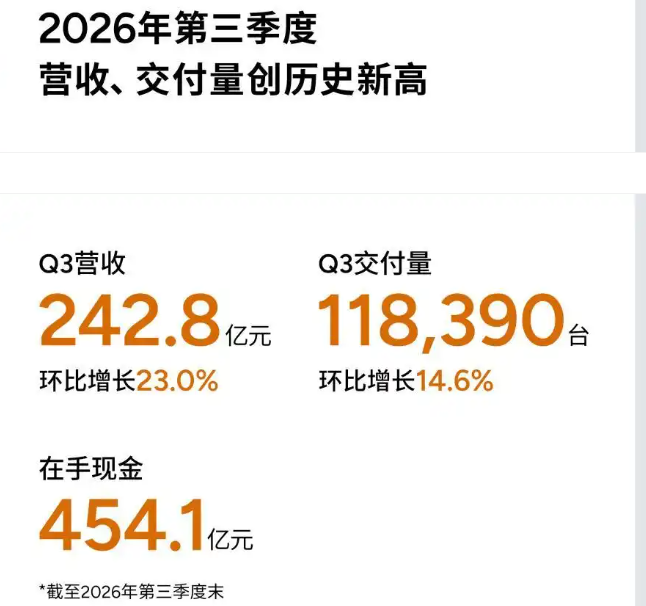
Deliveries also hit a record high of 118,390 vehicles, up 2.1% year-over-year from Q3 2025 and up 14.6% from Q2 2026. What's more, cash and cash equivalents, restricted cash, short-term investments and time deposits stood at RMB 45.41 billion—a net increase of roughly RMB 4.93 billion compared with June 30, 2026.
He Xiaopeng said: "In Q3 2026, XPeng Group not only grew against the headwinds but also made continuous progress in operations. Automotive gross margin rose sequentially to 13%, and the company's overall gross margin approached 19%."
It is worth noting that XPeng's press release, as usual, tells only the good news. In the same quarter, the company posted a net loss of RMB 870 million. Although the loss narrowed sequentially from RMB 1.34 billion in Q2, it nearly doubled compared with RMB 380 million in the same period last year.
The Other Side of Record Revenue
In Q3, the volume burden fell almost entirely on the MONA series.
In September, the MONA M03 and L03 together delivered 17,600 vehicles, accounting for about 57% of total deliveries that month; the L03 alone delivered over 20,000 units in October, becoming the key driver behind XPeng breaking the 50,000-unit mark that month.
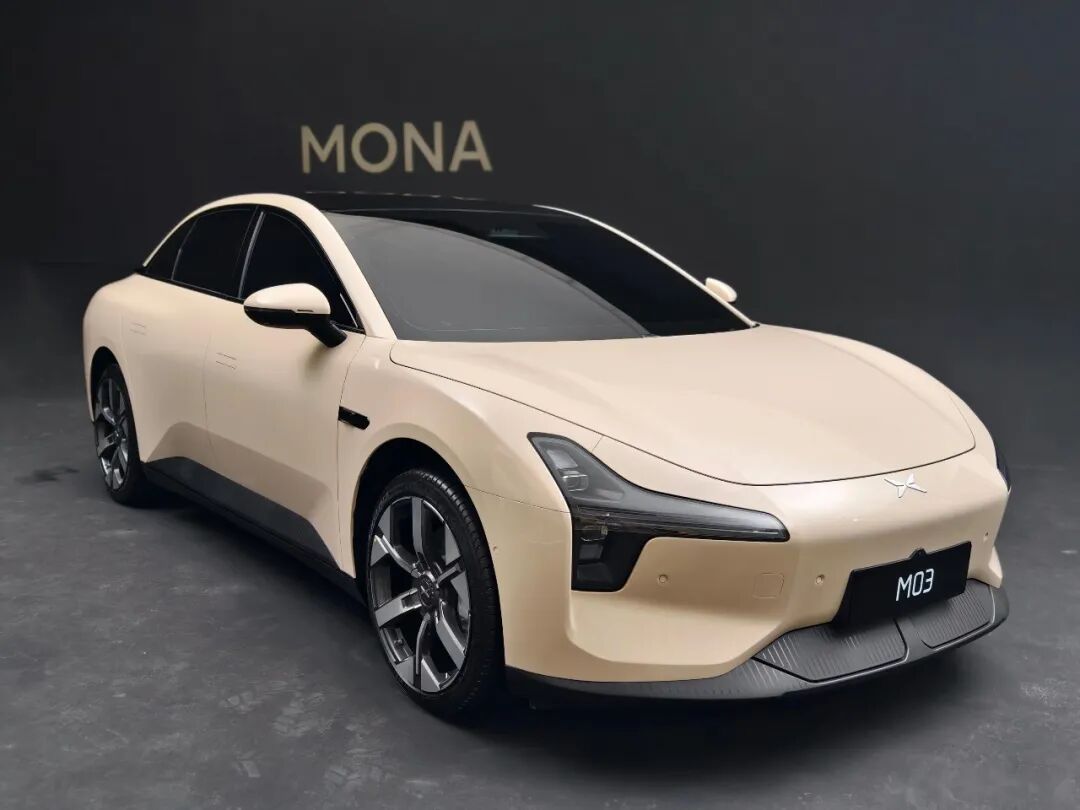
MONA became a hit in the RMB 100,000–200,000 price band, proving XPeng's ability to define mainstream family products—but it also created a structural contradiction. In Q2 this year, XPeng's average selling price per vehicle dropped to about RMB 165,000, and gross profit per vehicle fell from about RMB 21,200 to RMB 19,900.
The outside world once labeled XPeng as good only at "selling cheap MONA cars," with some even saying "XPeng is now at the same table as BYD."
The full-size flagship SUV XPeng GX, launched in May 2026, exceeded 20,000 deliveries in Q3 alone, accounting for nearly 20% of total deliveries that quarter and ranking directly among the top sellers of new energy SUVs above RMB 300,000 in China.
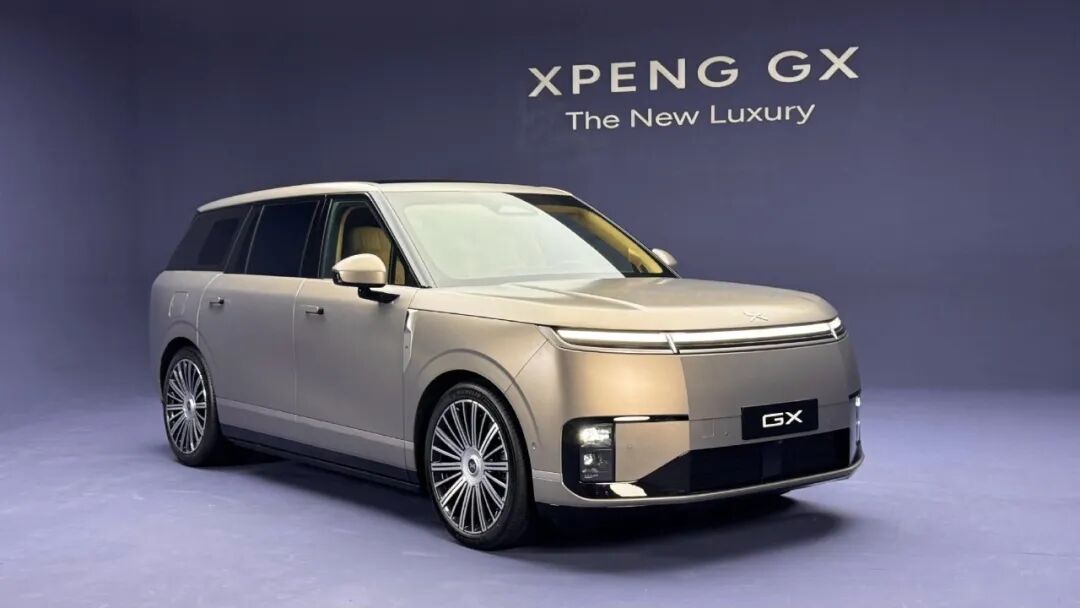
Then, on September 17, the large five-seat luxury SUV XPeng G9L followed. The two models not only improved the structure of XPeng's lower-priced lineup but also brought fresh incremental volume.
In Q3, XPeng delivered 118,390 new vehicles, up 2.1% year-over-year and 14.6% quarter-over-quarter. Notably, automotive sales revenue in the same period reached RMB 21.63 billion, surging 19.8% year-over-year and 26.9% quarter-over-quarter. That is the revenue uplift delivered by an improved product mix.
Simply put, XPeng's push upmarket is working reasonably well, and its cars are selling at higher prices. Based on a rough calculation using automotive revenue and deliveries, the average selling price per vehicle in Q3 was about RMB 183,000—significantly higher than the implied approximately RMB 165,000 in Q2. The earnings report attributed this to an improved model mix and a higher proportion of high-priced models.
But despite these impressive results, XPeng's total gross profit in Q3 was RMB 4.60 billion, up only 12.1% year-over-year—underperforming revenue growth. Overall gross margin was 18.9%, down 1.2 and 1.8 percentage points from 20.1% in the same period last year and 20.7% in the previous quarter, respectively. More notably, automotive gross margin in Q3 was 13.1%, up 1.0 percentage point sequentially but basically flat year-over-year.
Revenue growth without profit growth seems to have become the fatal weakness of new automakers.
According to the earnings report, XPeng's R&D expenses in Q3 were RMB 2.85 billion, up 17.5% year-over-year; selling, general and administrative expenses were RMB 2.78 billion, up 11.4% year-over-year and 11.2% quarter-over-quarter. Management attributed the sequential increase to higher marketing and advertising spending and rising franchise store commissions.
R&D and selling expenses alone totaled RMB 5.63 billion—about 22% more than the quarter's gross profit of RMB 4.60 billion. In other words, the profit the company earned in the quarter was not enough to cover R&D and selling expenses, so operating break-even is naturally out of the question.
A net loss of RMB 870 million in Q3 is already not bad. But some also ask: last year's same period saw a loss of less than RMB 400 million, so why did the loss double even as revenue and deliveries hit record highs?
Since August this year, the international investment environment could be described as extremely poor—almost on par with the 2008 financial crisis. During this period, XPeng booked a loss of RMB 197 million on long-term external investments, plus a foreign exchange loss of RMB 120 million from exchange rate fluctuations; in the same period of 2025, these two items were gains of RMB 131 million and RMB 26 million, respectively.
Altogether, XPeng's books took an extra loss of RMB 474 million. Although non-operating gains and losses are not directly reflected in automotive gross margin, they did weigh on XPeng's push to turn profitable quickly.
Betting on Overseas Markets and AI?
Rather than engaging in cutthroat competition in the domestic market, it is better to focus on overseas markets.
XPeng Group management stated that exports accounted for more than 20% of total deliveries in Q3, with an even higher revenue share, and that the gross margin of the export business was more than twice that of the domestic business.
He Xiaopeng further stated on the earnings call: "Overseas sales reached 13,000 vehicles in October, up 166% year-over-year; the overseas sales target for Q4 is over 40,000 vehicles, and full-year overseas sales are expected to exceed 100,000 for the first time."
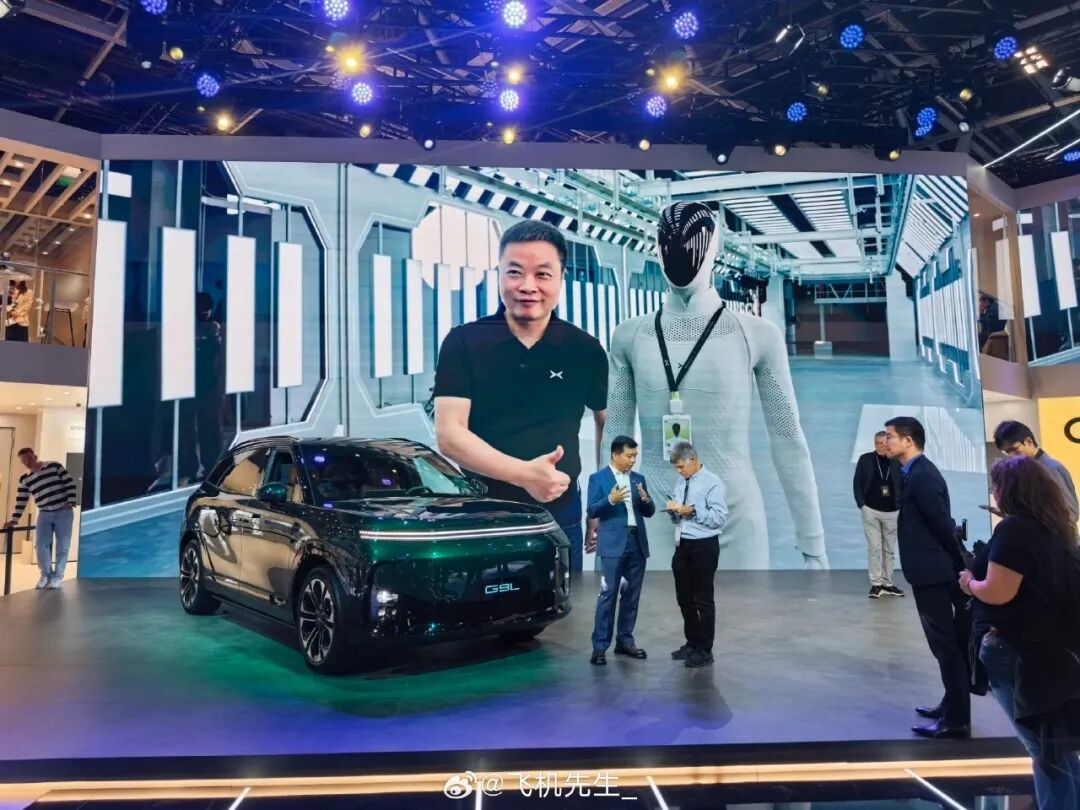
To support this goal, XPeng has designated models such as the G9L, MONA L05 and GX as products for the global market. "Europe may still account for 50% or more of overseas sales; Southeast Asia and the Asia-Pacific region about 30%; and other regions such as the Middle East and Latin America about 20%."
To improve gross margin, besides going overseas, there is also a slow but solid path on the cost side. The earnings report shows that after XPeng switched its entire lineup to self-developed Turing chips in the first half of this year, per-vehicle cost fell by about RMB 9,000 sequentially to RMB 145,000, partially offsetting pressure from rising raw material prices.
Some media estimates suggest the cost per self-developed Turing chip has been reduced to the RMB 2,500–3,000 range.
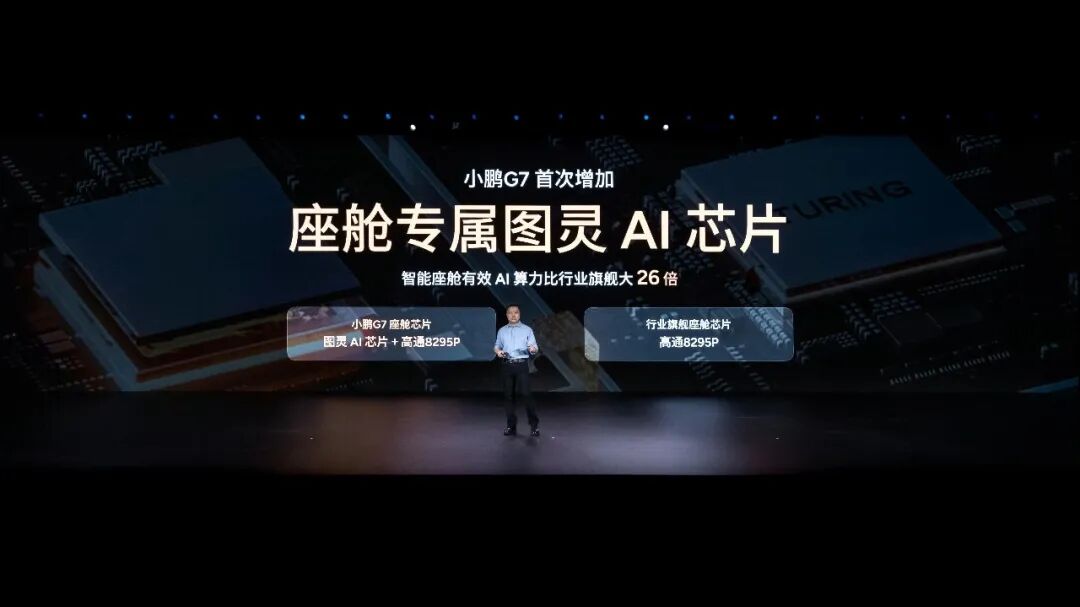
For XPeng, the significance of self-developed chips is not just cost savings; it is also the foundation of its transformation into a physical AI company.
Robotaxi was approved in October for L4 demonstration operations in Guangzhou. Previously, pre-installed mass-production Robotaxis equipped with the second-generation VLA completed more than 2,000 internal test orders in Guangzhou, with the goal of achieving passenger-carrying operations without safety officers by 2027.
In September, XPeng launched its first automated production line for high-level general-purpose humanoid robots and completed the signing of designated agreements with supply chain companies. Currently, the new-generation IRON is advancing hardware mass-production preparations for the end of the year, with plans to start at the end of 2026—first deploying in stores and parks, and delivering to external customers in 2027.
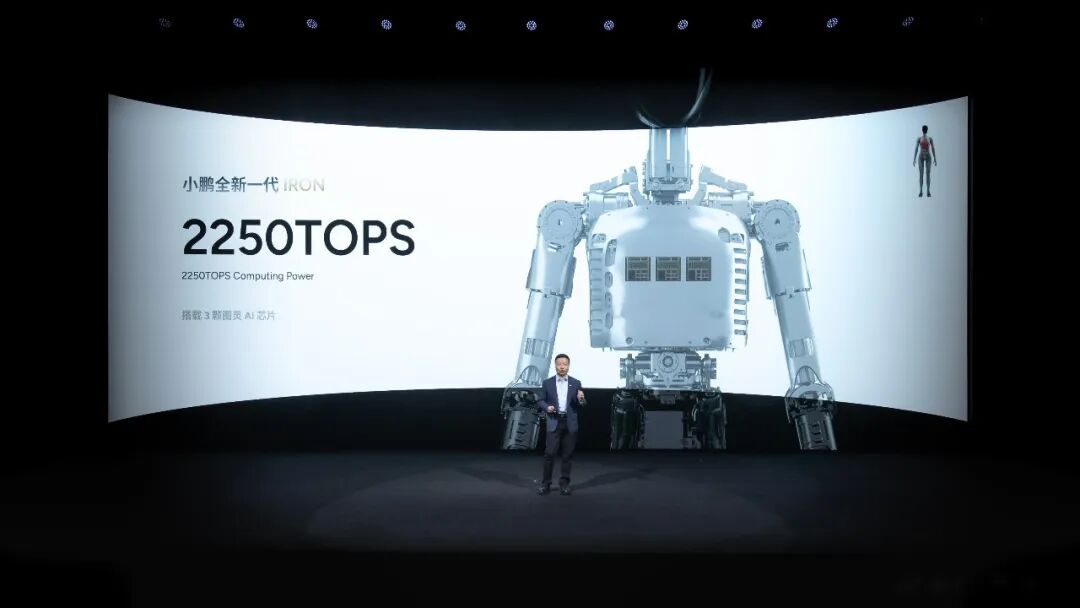
The robotics business completed its first round of financing of over USD 900 million in Q2, with a post-investment valuation of over USD 6.3 billion.
Turing chips, the VLA large model, Robotaxi and IRON share the same technology foundation. Data and computing power investment generated by the vehicle business can be reused across product lines. This physical AI strategic logic is undoubtedly self-consistent, but at this point in time, while the technology narrative opens up valuation space, it is also a bill continuously recorded on the income statement.
This also explains the divergence among institutions. Some brokerages maintain a buy rating but lower their target price, citing lower-than-expected growth and a delayed pace of profit realization, while others give a neutral rating. In other words, the market disagreement is not about whether XPeng's technology is good, but about the timing of converting technology investment into profit—which is precisely the hardest part of valuing new automakers.
The RMB 870 million loss and 13.1% automotive gross margin together show that scale itself does not automatically lead to profitability. "The development of physical AI is not a 100-meter sprint, but a long run over the next ten years," He Xiaopeng said, adding that in 2027 the company will devote more energy to comprehensively improving operations while advancing mass production and delivery of high-level robots.
Apart from Leapmotor, XPeng currently outsells a host of new automakers in sales and firmly holds the second position. Against the backdrop of sustained steady deliveries, the outside world is more eager to see when XPeng will achieve profitability.
Note: Some images are from the internet. If there is any infringement, please contact us for deletion.
-END-
-
![]()
Share Link Won't Open: Tracing a URL Parameter Placement Bug
-
![]()
BAIC Group | October Terminal Sales: Product Mix Across Four Brands and 31 Models
-
![]()
Mercedes-Benz China Retail Sales in October: 28,820 Units — How Did Beijing Benz and smart Perform?
-
![]()
Tesla Invests €3 Billion to Upgrade German Factory, Sells Robotaxi — but You Still Pay Monthly to Drive
-
![]()
ARCFOX Slashes Huawei Smart Driving Threshold to the 150,000 Yuan Mark
-
![]()
The Korean Car Conundrum: Boxed In by the Supply Chain, Outmatched in Overseas Markets
-
Has Apple Really Cured the "Rogue App" Epidemic Among Domestic Apps?
-
![]()
AI Short Dramas: A Successful Capital Relocation?