A Share Swap Reshapes Toyota's North-South Divide—Who Will Take the Lead in China?
 11/18 2026
 512
The 22-year north-south split is over: GAC takes the wheel, FAW steps back without stepping out, and Toyota reclaims its say.
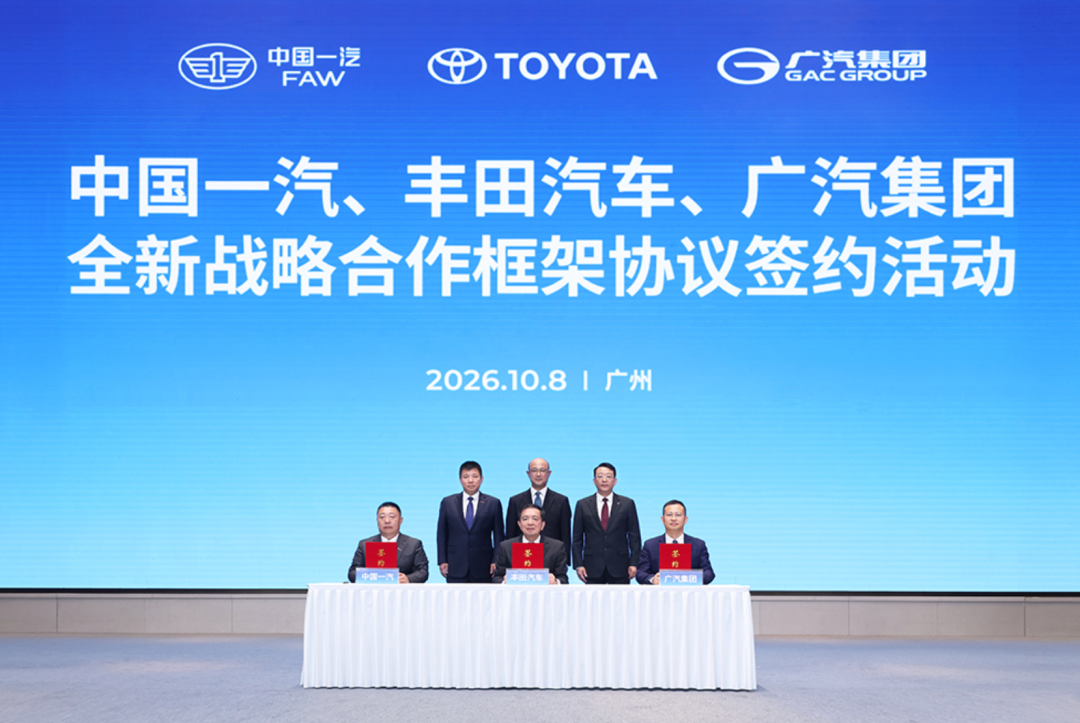
Guangzhou, October 8, 2026. Liu Yigong, General Manager of China FAW, Kenta Kon, President of Toyota Motor, and Feng Xingya, Chairman of GAC Group, appeared together at the same signing ceremony.
The three parties signed a new strategic cooperation framework agreement: Guangzhou Automobile Group Co., Ltd. (hereinafter "GAC Group") plans to acquire, through a share issuance, the 50% stake in FAW Toyota Motor Co., Ltd. (hereinafter "FAW Toyota") held by China First Automobile Co., Ltd. (hereinafter "FAW Shares"). Once the deal closes, FAW Toyota will continue to exist as an independent entity, and FAW will instead become a major strategic shareholder of GAC.
At the same time, all three parties released official statements with word-for-word identical language.
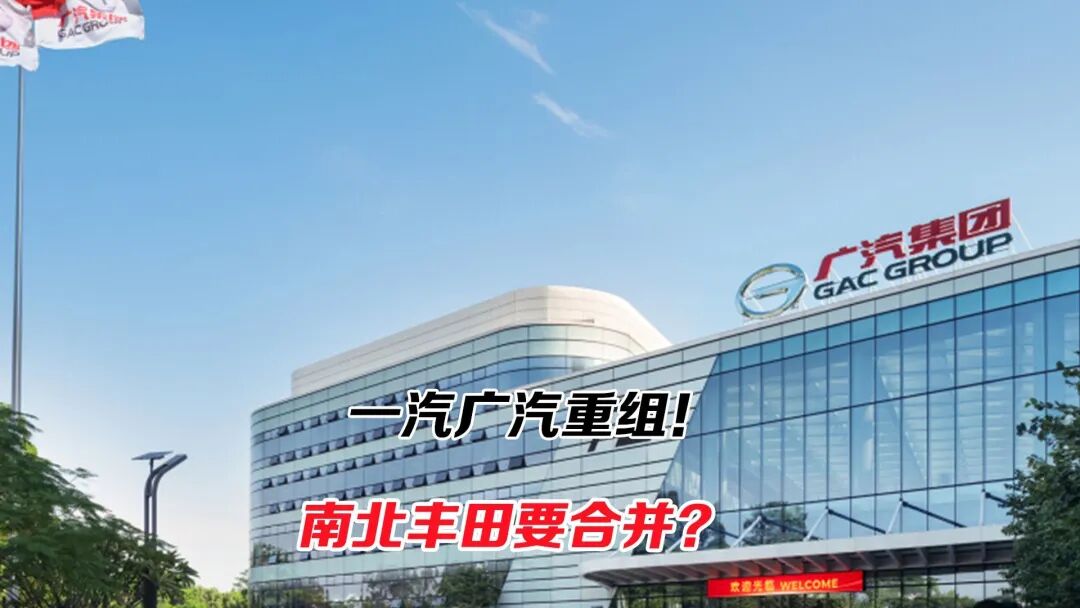
Just ten days earlier, FAW Toyota Sales Company had dismissed rumors that it was "about to bow out of history." Behind the synchronized messaging is the market's need for a single narrative to put speculation to rest.
Toyota's 22-year north-south divided governance in China has now been genuinely rewritten for the first time—and it marks the first time in the history of Chinese auto joint ventures that a central state-owned enterprise, a local state-owned enterprise, and a foreign investor have been bound together through a market-based share swap.
Some industry observers note that this is Toyota's move to actively adapt to the Chinese market—but adapting to the market is not the same as solving the market. Equity can be unified overnight; board votes, dealer interests, and who owns product definition rights will take years to settle. And the window left for joint venture brands in China's auto market is no longer measured in years.
Yidian Zixun believes that consolidating north and south merely merges two card tables into one. If the lead position remains vacant and definition rights keep being pulled back and forth, the internal friction saved will return under another name—as costs. What determines the quality of this deal is not who stands on the stage on signing day, but who is willing to make concessions on the key issues three years from now.
1. Shares change hands, the signboard stays
Rumors had circulated that North and South Toyota were highly likely to merge, and this equity swap has only deepened that judgment.
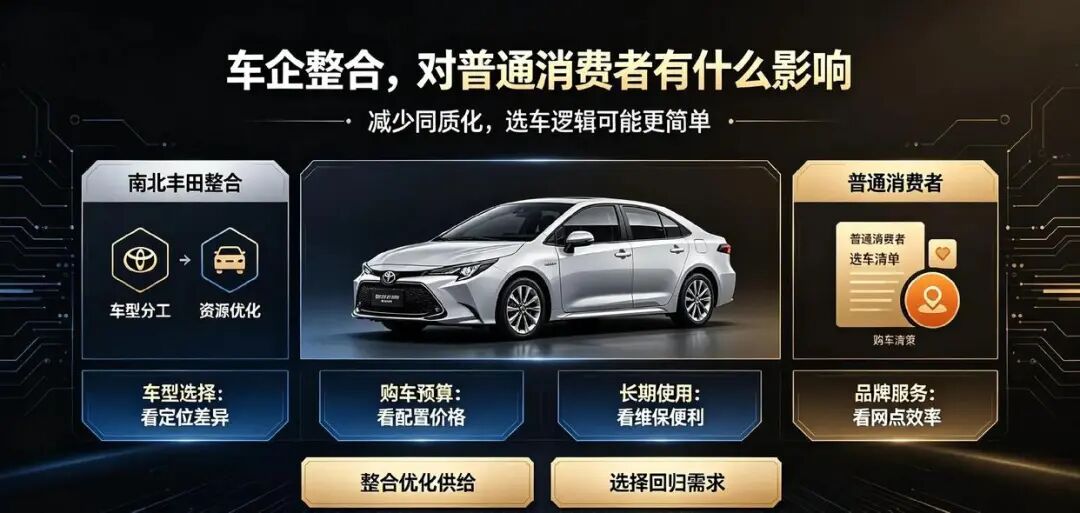
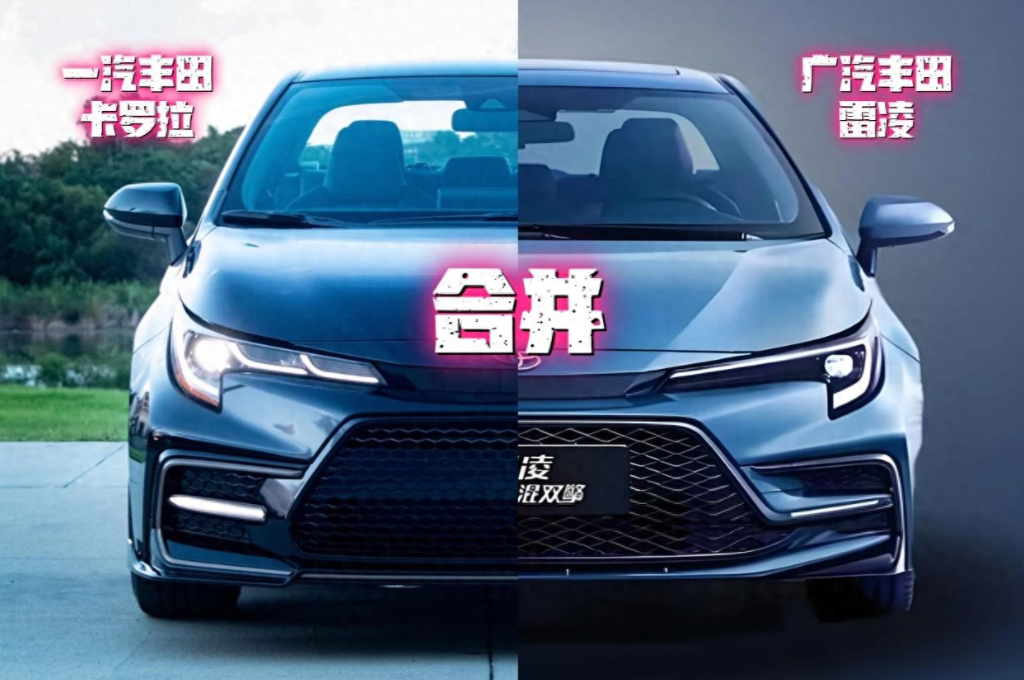
In fact, FAW Toyota will continue to operate as an independent entity—the two joint ventures have not merged into one, but the Chinese controlling shareholders of each have changed: FAW Toyota's Chinese shareholder shifts from FAW to GAC, while FAW Shares trades its equity for GAC Group shares and becomes a strategic shareholder. The legal entity, local tax revenue, and personnel system will remain unchanged for now.
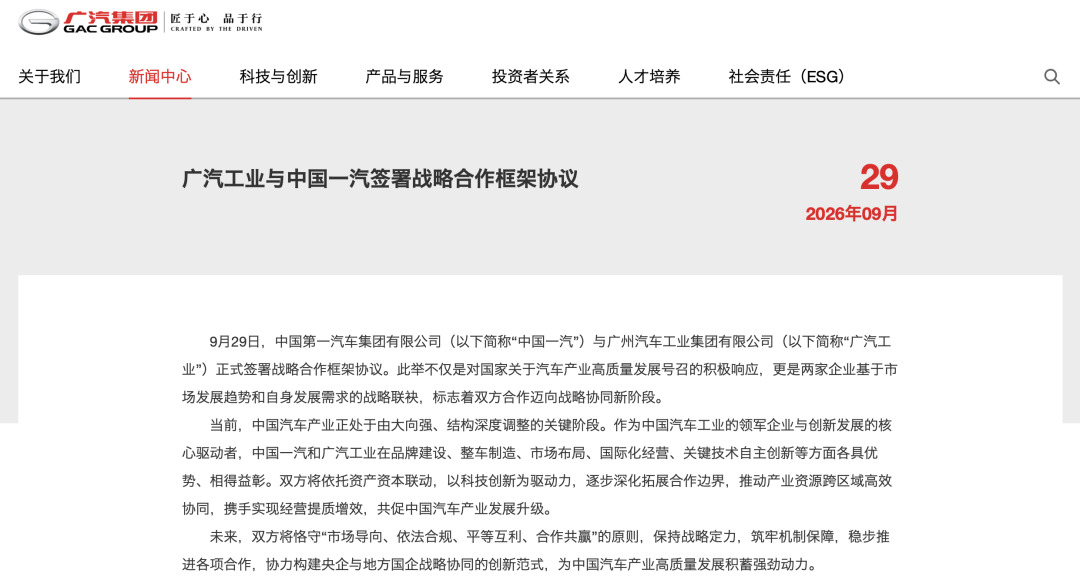
Under the restructuring plan disclosed on September 28, GAC will issue A-shares to FAW Shares at 5.75 yuan per share to purchase assets, and raise supporting funds from no more than 35 specific targets. The transaction involves no cash consideration.
Upon completion of the proposed transaction, FAW Toyota's equity will shift from "FAW Shares 50% + Toyota Motor 45.7706% + Toyota Motor (China) Investment Co., Ltd. 4.2294%" to GAC and Toyota each holding 50%. At the listed company level, GAC Group's controlling shareholder will remain GAC Industry Group, and the actual controller will remain the Guangzhou SASAC—so control stays unchanged. However, the share issuance to purchase assets and raise supporting funds will expand total share capital, diluting GAC Industry Group's pre-issuance 54.02% stake. The exact post-transaction ratio will be disclosed once the valuation and number of shares issued are finalized.
FAW Shares is expected to hold more than 5% of GAC Group and, according to the announcement, will become the second-largest shareholder.
The transaction is expected to constitute a major asset restructuring and related-party transaction, but will not constitute a reverse takeover.
In this share swap, FAW Toyota Motor Sales Co., Ltd. (FTMS), which handles sales, falls outside the scope of the transaction. Its equity remains 38% held by FAW Shares, 32% by Toyota Motor, and 30% by FAW Toyota—"stepping back without stepping out" is a retention clause secured at the negotiating table.
Production will be coordinated by GAC, while the sales side has yet to be agreed among the three parties. The Japanese side strongly advocates establishing a separate "Toyota (China) Sales Company" (proposed), with Toyota holding 50% and FAW and GAC each holding 25%, fully connecting the channels. That plan remains on paper, but the retail end has already loosened up first: some dealers report that FAW Toyota 4S stores can already provide after-sales service for GAC Toyota models.
2. One transaction, three sets of books
For Toyota's future in China, internal friction may not be the primary concern.
From January to August 2026, Toyota's cumulative sales in China totaled 927,900 vehicles, down about 19% year-on-year. On a fiscal half-year basis, sales from April to September were 684,900 vehicles, down 25% year-on-year—the lowest for that period since 2017.
The decline narrowed to 1.6% in September but did not hold in October—GAC Toyota announced on November 1 that October sales were 53,022 units, down 25.95% year-on-year.
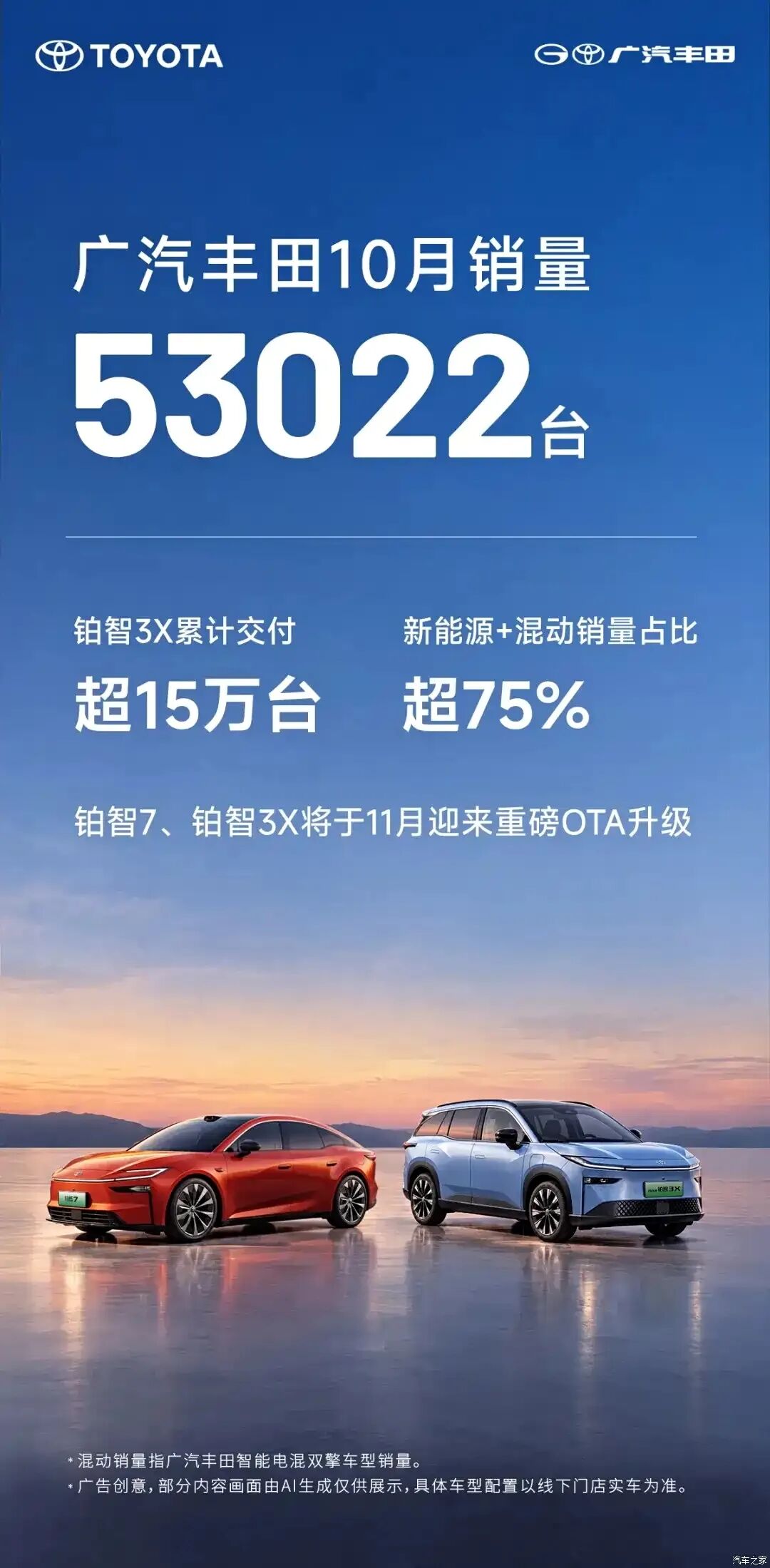
The strongest card in the lineup is still the bZ3X, with cumulative deliveries exceeding 150,000 units. In the first half of the year, GAC Toyota's bZ series sold about 50,000 vehicles, while FAW Toyota's bZ series fared even worse—combined north-south pure electric sales came in under 70,000 vehicles.
And the bZ7 was recalled for 39,552 vehicles due to software issues fewer than 100 days after launch—a stark lesson in electrification quality.
For GAC, this is a profit cake that is thinning.
FAW Toyota's net profits in 2024 and 2025 were 4.717 billion yuan and 4.234 billion yuan respectively, falling to 1.009 billion yuan in the first half of 2026, with sales down 27% over the same period—contributing roughly 1 billion yuan annually on an equity-method basis for the 50% stake.
GAC's third-quarter report shows a net loss attributable to shareholders of 6.987 billion yuan for the first three quarters, with a single-quarter loss of 2.52 billion yuan in Q3, up 62.04% year-on-year.
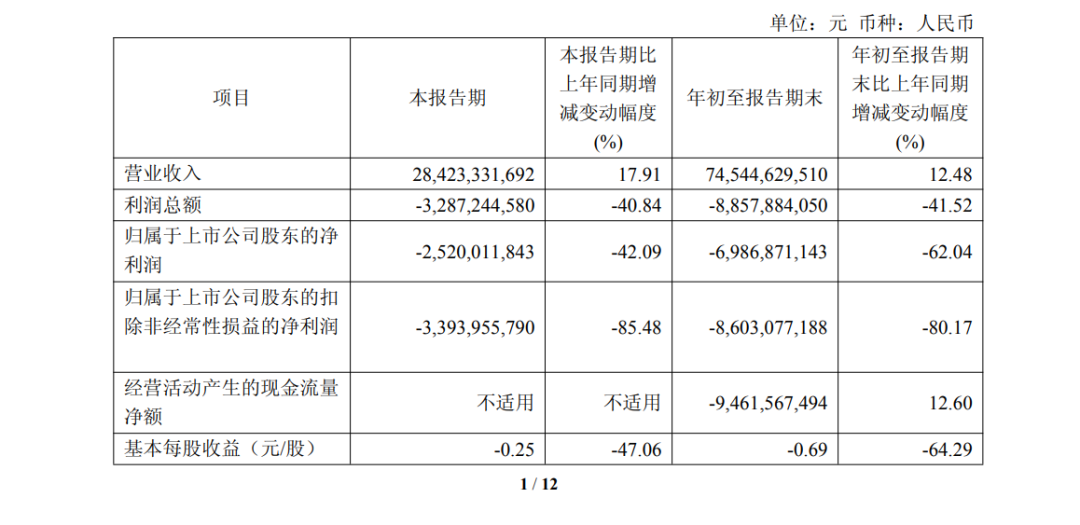
Facing a loss of nearly 7 billion yuan, that 1 billion yuan amounts to little more than a "blood transfusion"—far from "stopping the bleeding."
What is propping up GAC's financials are three other curves: new energy vehicle sales of 172,200 units in the third quarter, up 50.79% year-on-year, with self-owned brands accounting for more than half; and exports of 76,000 vehicles, up 151.2% year-on-year.
This is both the confidence that emboldens GAC to take over and the reason it is eager for "synergy dividends"—self-owned brands are charging ahead, and the joint venture must first stop the bleeding.
For FAW Group, the priority is to revitalize existing assets and further concentrate its energy on the performance of Hongqi and Besturn. In theory, then, this is a three-win situation.
3. After the change of ownership, who makes the decisions?
In reality, however, this is a situation in which FAW has shed burden, Toyota has unified its channels, and GAC has taken on the pressure.
Look one level up, and it is a rearrangement of power within the listed company—and the question of voice must be spelled out clearly.
GAC Group's actual controller remains the Guangzhou SASAC, but the shareholder seats will be rearranged.

In mid-September, several media outlets calculated—based on the assumption of acquiring about 25% equity—that FAW Shares' post-transaction stake could approach 30%. But the 27.56% in second place on the register is the pre-issuance figure for HKSCC NOMINEES, the H-share nominee holder representing multiple clients. The two are not directly comparable, and the September 28 plan has already changed to acquiring 50% equity at an issue price of 5.75 yuan per share. The target's appraisal and valuation have not been determined, and there is no official figure for the final ratio.
If the stake falls in the higher range, FAW may gain a board seat and exert influence on major operating decisions—the announcement only states "expected to be more than 5%" (the threshold for related-party designation) and "the second-largest shareholder with strategic influence."
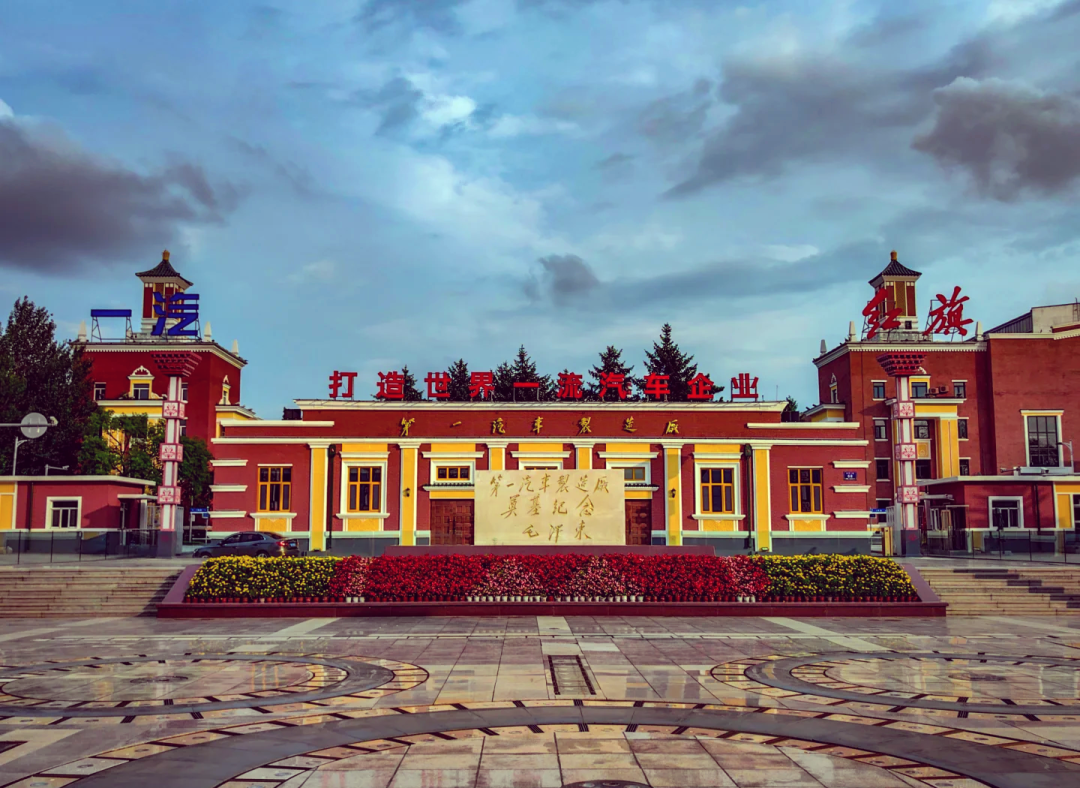
Once FAW appoints a director, every transaction between GAC and the FAW system will constitute a related-party transaction and must be voted on by independent directors and non-related shareholders. The two governance genes will also collide for the first time: FAW is a vice-ministerial-level central SOE, whose top leader is appointed by the central government and whose hierarchy is clear-cut; GAC is a municipal SOE, whose management is appointed by the board and which is pushing IPD and IPMS reforms. Moving its headquarters to Panyu was precisely to "let those who hear the gunfire make the decisions."
How to reach consensus going forward, and how to avoid deadlock—none of that is written in the announcement.
Look one level down, and it is the power structure within the joint venture.
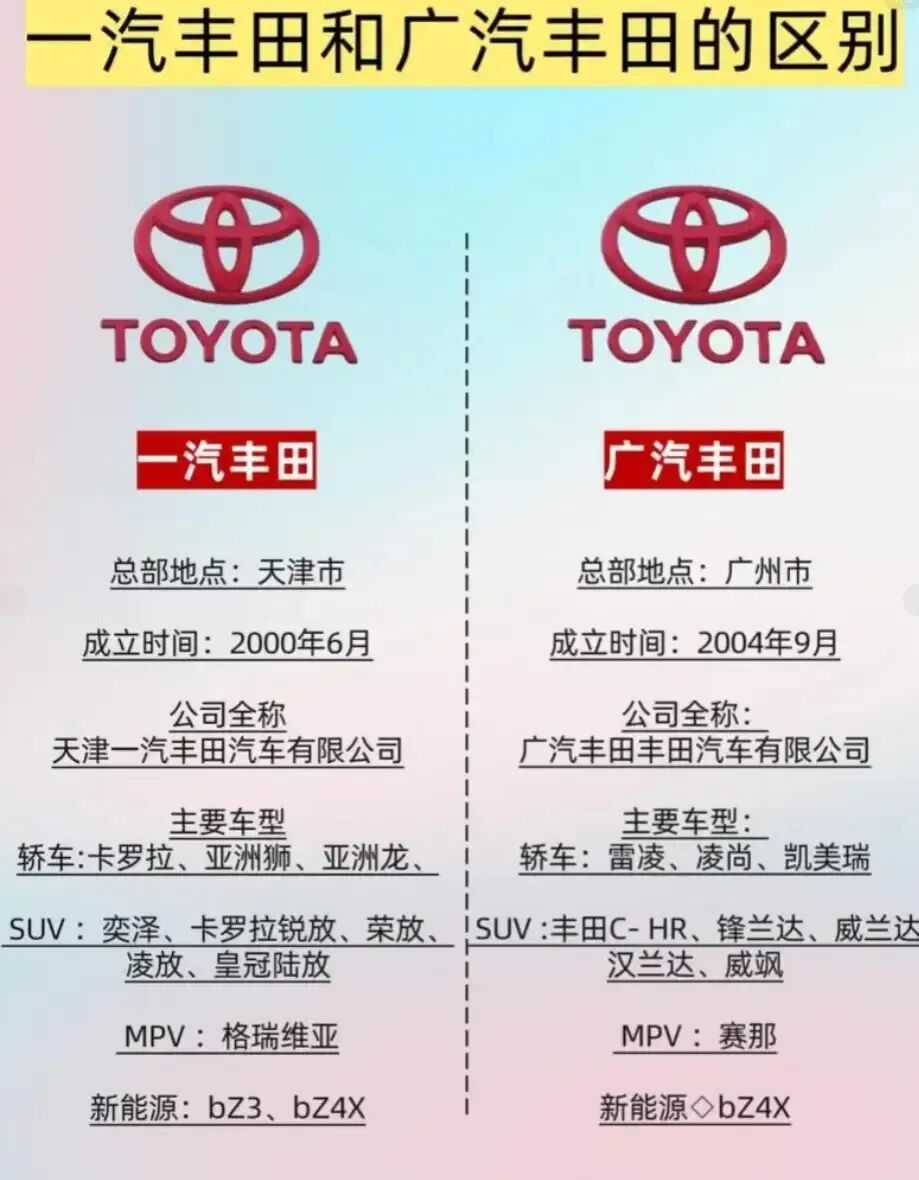
Both are 50:50 equal-structure arrangements, and Toyota holds a veto on major matters. Equal equity is inherently prone to governance deadlock.
The plan deliberately leaves the underlying equity unchanged and instead separates ownership from operating rights: production is coordinated by GAC, while sales explore a three-party coordination led by Toyota with FAW and GAC participating.
For Toyota Motor, without spending a penny, it has pushed through channel unification unprecedented in the past four decades—and brought the voice back to itself. FAW retains the value of northern production capacity and licenses, while GAC obtains only coordinating leadership.
On the surface, all three parties' interests are satisfied—but for now, GAC is under the greatest pressure.
Moreover, the mismatch between geography and assessment is equally tricky. FAW Toyota's bases are in Tianjin, Changchun, and Chengdu, with tax revenue and SOE assessment belonging to Changchun; GAC Toyota belongs to Guangzhou, behind which sit two levels of investors and two sets of assessment systems.
Changchun's tax revenue and employment, and Guangzhou's state-owned asset preservation, both require cross-level coordination. Combined with the valuation, auditing, and information disclosure processes of an A+H dual listing, the integration cycle will be further lengthened.
Rumors of a North-South Toyota merger have circulated for years, and only in September 2026 was a letter of intent signed. The Dongfeng-Changan restructuring was shelved earlier, and large-scale capital integration among state-owned automakers has never been easy.
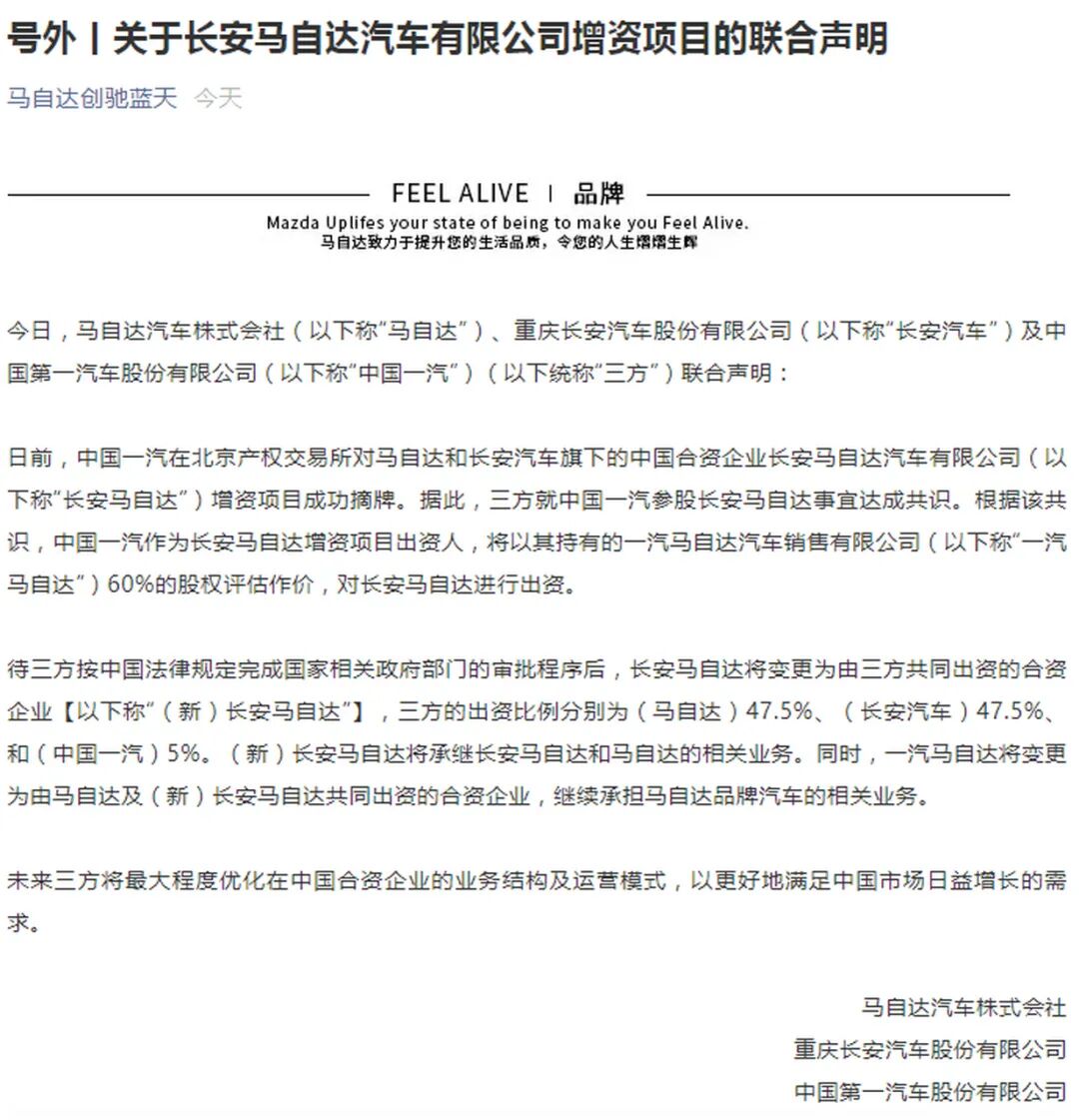
Industry players are no strangers to such games. After the SAIC Volkswagen Lavida was defined under the leadership of the Chinese team and stayed in the top three in sedan sales for years running, Volkswagen took back the definition rights for product styling and interior. When FAW Mazda was merged into Changan Mazda, unifying the dealer network was likewise a hard-fought battle.
The more successful the product, the more delicate the struggle over who owns definition rights—and the more telling the personnel adjustments become. On September 30, Huang Jian, former president of the Trumpchi BU, returned to GAC Toyota as executive deputy general manager and head of the highest Chinese management position. His cross-entity coordination experience is precisely the most scarce capability for synergy.
Other reports say FAW is seeking more equity in the new sales company, and there were rumors of sending senior executives—none officially confirmed. These unsettled details are precisely the traces of an ongoing tug-of-war over leadership.
4. Synergy is easy to calculate, but implementation is just beginning
Toyota Motor's purpose is actually very clear: connect R&D, procurement, production, and channels, expected to bring a 5% to 8% cost reduction.
But at the execution level, at least four hurdles remain. Nearly a thousand dealerships overlap heavily across first- and second-tier cities, and redrawing regional boundaries and reallocating redundant outlets will take years. The rigid hierarchy of a central state-owned enterprise (SOE) versus the market-driven decision-making of a municipal SOE means that merging the two personnel systems will inevitably be painful. Tianjin, Chengdu, and Guangzhou lie thousands of kilometers apart, so coordinating production capacity may, in the short term, actually drive up process costs. And although product definition authority has been centralized through the ONE R&D system and the Chinese Chief Engineer (RCE) system—by the Beijing Auto Show, the number of RCEs had grown from four to seven—integrating the sales networks is the real hard battle.
Industry rankings of the difficulty also tend to converge: unifying procurement and component standards is the easiest; sharing back-office functions such as testing and validation, basic software, and overseas after-sales comes next; reallocating vehicle platforms, production bases, and brand resources is the hardest. The rule of thumb is to start with what can be clearly accounted for and leave the most painful parts for later.
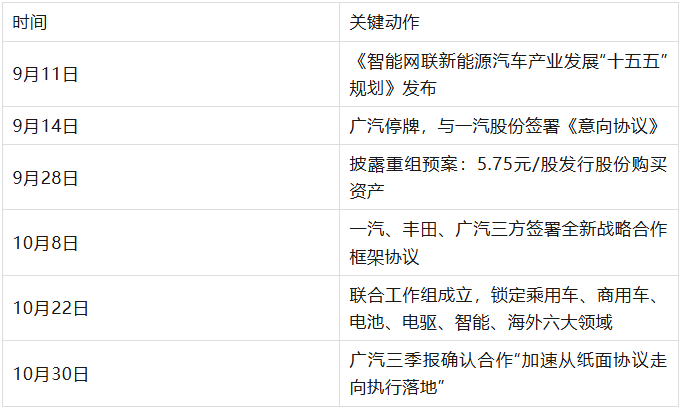
The driving force for breaking the deadlock does not come from the market alone. In March 2025, the SASAC explicitly called for strategic restructuring of central SOE automakers. On September 11, 2026, the "15th Five-Year Plan for the Development of the Intelligent Connected New Energy Vehicle Industry" included "increasing efforts in lawful mergers and acquisitions and cross-regional integration of automobile enterprises," and the letter of intent was implemented just days later.
This is the first verifiable case of stock integration involving an existing whole-vehicle joint venture after the text of the "15th Five-Year Plan" was implemented, providing a reference for Volkswagen, Honda, and others still caught up in internal competition within their "dual joint ventures."
So far, the transaction remains at the framework agreement stage, with valuation yet to be determined. Due diligence, auditing, state-owned asset approval, CSRC restructuring review, and the joint venture partner's waiver of the right of first refusal are all procedures that have yet to be undertaken. All benefits and difficulties rest on a plan that has not yet been priced or approved.
At a time when the market share of self-owned brand passenger vehicles has reached 77.1%, it is inherently unsustainable for foreign investors to maintain two independent joint venture platforms.
How the path unfolds depends not on the day the shares are issued, but on the years that follow: who makes concessions on key matters, whether cultures can integrate, whether channels can be merged, and whether electrification can be accelerated. Who ultimately holds decision-making power remains unknown at present.
Commentary: The gains were divided up on the day of signing, while the risks are left for the next three years. FAW wins by exiting, Toyota wins by spending nothing, and GAC gains leadership while taking on all the pressure. Whether it is worth it will become clear in three years.
-
![]()
Share Link Won't Open: Tracing a URL Parameter Placement Bug
-
![]()
BAIC Group | October Terminal Sales: Product Mix Across Four Brands and 31 Models
-
![]()
Mercedes-Benz China Retail Sales in October: 28,820 Units — How Did Beijing Benz and smart Perform?
-
![]()
Tesla Invests €3 Billion to Upgrade German Factory, Sells Robotaxi — but You Still Pay Monthly to Drive
-
![]()
ARCFOX Slashes Huawei Smart Driving Threshold to the 150,000 Yuan Mark
-
![]()
The Korean Car Conundrum: Boxed In by the Supply Chain, Outmatched in Overseas Markets
-
Has Apple Really Cured the "Rogue App" Epidemic Among Domestic Apps?
-
![]()
AI Short Dramas: A Successful Capital Relocation?