Two Years into End-to-End: Has the Gap Between Smart-Driving Suppliers Widened?
 11/20 2026
 534
A few days ago, we discussed where automakers' technology stands now that end-to-end has become mainstream. In fact, suppliers in the smart-driving field are not to be underestimated—they have become key players and drivers of the industry.
So two years after end-to-end went mainstream, has the technology gap between suppliers widened?
01 DeepRoute.ai: From End-to-End Mass Production to Large-Model Iteration
DeepRoute.ai is one of the earlier suppliers to put end-to-end technology into mass production in passenger vehicles. In November 2024, the Wey Blue Mountain began carrying DeepRoute.ai's end-to-end smart-driving solution.
This marked an important milestone as its technology route moved from R&D to mass production. Since then, DeepRoute.ai has continued to advance its model architecture upgrades.
In December 2025, the all-new Wey Blue Mountain Intelligent Advanced Edition carried its VLA model, meaning its technology route began extending from the early end-to-end solution to a large-model architecture integrating vision, language, and behavioral decision-making. In terms of mass-production scale, DeepRoute.ai's growth is fairly obvious.
In April 2026, DeepRoute.ai disclosed that mass-produced vehicles equipped with its urban NOA assisted-driving solution had exceeded 300,000 units. Since then, its urban NOA installations have continued to grow.
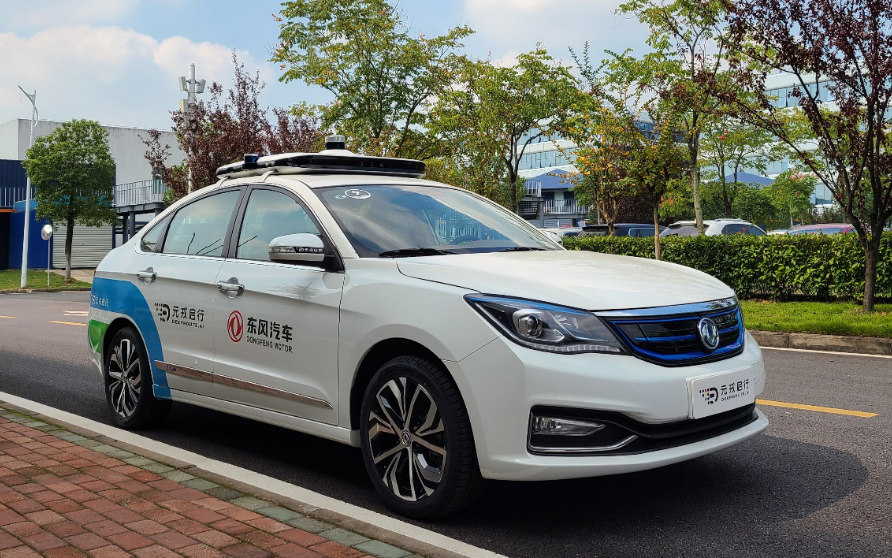 Image source: Internet
According to data released by D1EV, in August 2026, DeepRoute.ai's monthly urban NOA installations reached 62,100 units, a significant increase from 17,600 units at the beginning of the year.
These figures show that DeepRoute.ai has already developed relatively strong large-scale urban NOA delivery capabilities. However, monthly installations reflect phased market performance and cannot be directly equated with the cumulative mass-production installation scale of a company's full series of assisted-driving solutions.
But for DeepRoute.ai, mass-production scale growth is only one aspect. More important is the change in customer structure and technology reuse capabilities. In the early stage, its mass-production projects were mainly concentrated in brands under Great Wall Motor, and later gradually expanded to other automaker brands.
For third-party smart-driving suppliers, different automakers bring different vehicle electronic and electrical architectures, computing platforms, sensor configurations, and development processes. Being able to achieve mass production across multiple brands shows that suppliers need stronger engineering adaptation capabilities.
End-to-end models can reduce information transfer loss between traditional modules, but they cannot automatically solve adaptation problems between different vehicle models.
How models are transferred, how data is reused, and how different chassis and actuation systems cooperate still require a large amount of engineering work.
What is worth watching about DeepRoute.ai at present is whether it can further transform the experience gained from early mass-production projects into continuous delivery capabilities across brands and vehicle models.
02 WeRide: Bringing L4 Technology Accumulation into Passenger-Vehicle Mass Production
If DeepRoute.ai represents a gradual evolution from passenger-vehicle end-to-end mass production toward large models, then WeRide's path is somewhat different.
In the past, WeRide's industry label came more from L4 autonomous-driving businesses such as Robotaxi and Robobus.
Whether its long-accumulated road data, complex-scenario handling capabilities, and autonomous-driving system R&D experience can be transferred to ordinary passenger vehicles is a question worth watching.
In April 2026, WeRide announced that WRD 3.0 had achieved adaptation to multiple chip platforms, supporting automotive computing platforms such as NVIDIA DRIVE, Qualcomm Snapdragon, and SiEngine's Xingchen No.1.
Among them, GAC Aion N60 became WeRide's first model to mass-produce and deploy one-stage end-to-end technology on the Qualcomm Snapdragon platform.
This indicates that WeRide is promoting the adaptation of the same end-to-end algorithm architecture to different chip platforms, reducing the difficulty of deploying the solution across vehicle models and hardware platforms.
During the Beijing Auto Show in April 2026, WeRide disclosed that WRD 3.0 had obtained design wins for nearly 30 vehicle models.
According to the company's subsequently released financial report for the second quarter and first half of 2026, as of the disclosure of the report, its L2++ solution had obtained mass-production design wins for more than 30 vehicle models, and WRD 3.0 shipments in the second quarter were about 30,000 sets.
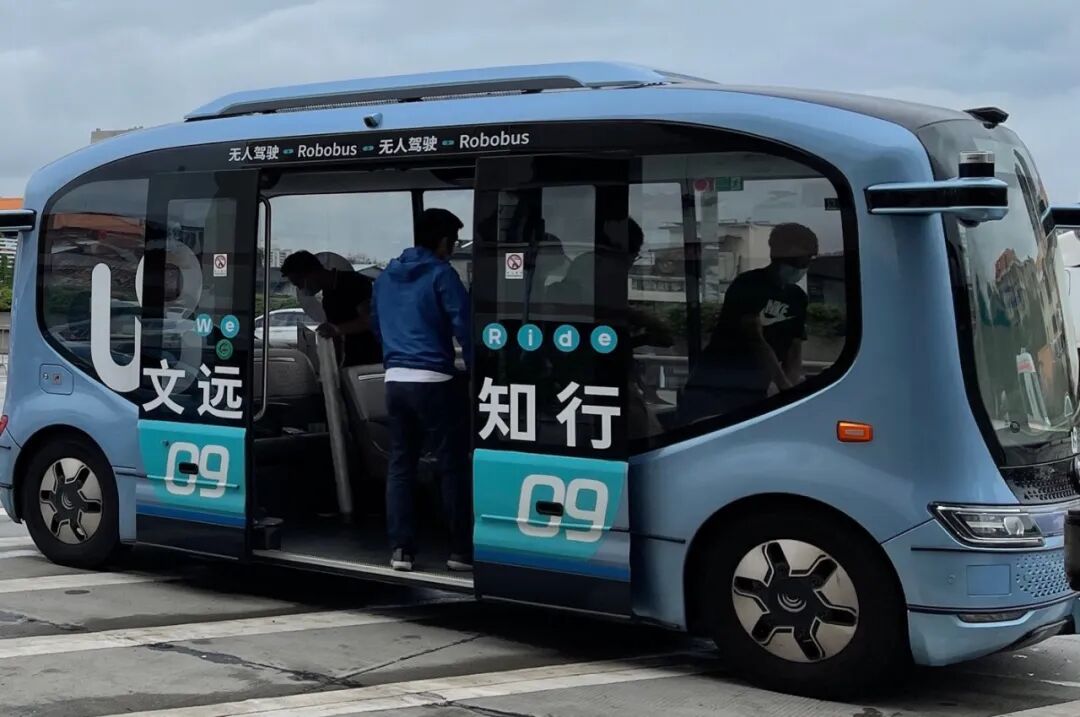
Image source: Internet
These milestones show that WeRide is gradually transforming its technology capabilities originally accumulated in the L4 autonomous-driving field into mass-produced passenger-vehicle products.
Here there is actually a question worth discussing: can L4 autonomous-driving companies entering the L2 assisted-driving market really form a technological advantage?
L4 systems can be designed around specific vehicles and operational scenarios, while assisted driving for ordinary passenger vehicles needs to adapt to different brands and different hardware platforms, and also consider stability in consumers' daily use.
The technological accumulations of the two overlap, but their engineering goals are not the same. WeRide's advantage lies in its long-accumulated autonomous-driving data and complex-scenario handling experience.
In particular, long-tail scenario data accumulated during real Robotaxi operations can provide material for model training and problem analysis. But these data cannot be directly transformed into passenger-vehicle assisted-driving capabilities.
The sensor configurations, computing resources, control interfaces, and cost constraints of different vehicles all need to be reconsidered. Whether L4 technology accumulation can deliver value under these conditions still needs verification through more vehicle models and actual usage data.
03 Horizon Robotics: From Chip Supplier to Integrated Software-Hardware Solutions
Horizon Robotics' path is different again from the previous two companies. Its core market advantage in the past came from smart-driving chips. Through the Journey series chips, Horizon Robotics has entered the supply chains of a large number of automakers and Tier 1 suppliers.
In September 2026, Horizon Robotics announced that cumulative mass production of Journey series smart-driving chips had exceeded 15 million sets, empowering more than 8 million car owners, cooperating with more than 40 automobile brands, and obtaining design wins for 500 mass-produced vehicle models.
However, chip shipments cannot fully represent a company's competitiveness in the high-level smart-driving field. As urban NOA gradually becomes an important direction of market competition, Horizon Robotics is also extending toward algorithms and complete solutions.
The most noteworthy of these is HSD, namely Horizon SuperDrive. HSD adopts a one-stage end-to-end architecture, integrating environmental perception and driving-trajectory generation into a unified model.
Image source: Internet
In the second half of 2026, Horizon Robotics launched the HSD V2.0 upgrade, further introducing world models and reinforcement learning to optimize capabilities such as driving, parking, and safety.
More importantly, this integrated software-hardware solution has begun to be implemented on models of different joint-venture brands under Volkswagen Group. In September 2026, FAW-Volkswagen ID. AURA T6 was officially launched, equipped with Horizon Robotics Journey 6H chip and HSD AI foundation model.
SAIC Volkswagen ID. ERA 5S also entered the ranks of mass-produced models. From the perspective of technology route, what Horizon Robotics hopes to establish is not just a simple supporting relationship between chips and algorithms, but rather, through software-hardware collaboration, a closer connection among model training, computing resource allocation, and vehicle deployment.
This route has an advantage: suppliers can provide different levels of hardware and software combinations according to the cost and computing power requirements of different vehicle models. But integrated software-hardware does not mean all customers must adopt the complete solution.
Horizon Robotics still needs to maintain an open cooperation ecosystem, allowing automakers and Tier 1 suppliers to choose different cooperation methods according to their own R&D capabilities.
What it truly needs to prove in the future is whether HSD can form stable experience and delivery capabilities on more mass-produced vehicle models, rather than relying solely on Journey chips to establish market scale.
04 QCraft: After Million-Level Installations, Moving Toward VLA and World Models
QCraft is another supplier worth watching. In January 2026, QCraft announced that cumulative installations of its assisted driving reached more than 1 million units, and announced cooperation with Li Auto to launch an urban NOA solution based on a single Journey 6M chip, debuting on the refreshed AD Pro of the Li Auto L series.
This means QCraft has established a certain scale of pre-installation delivery foundation. Technologically, in January 2026 QCraft announced a unified architecture of VLA and world models, upgraded its Chengfeng solution to 2.0, and launched a solution exceeding 500 TOPS.
Its technology direction is no longer limited to traditional end-to-end models, but has begun exploring the combination of visual language understanding, environmental prediction, and driving decision-making.
VLA can enable models to process richer visual and semantic information, while world models attempt to help the system understand environmental changes and the possible results of actions.
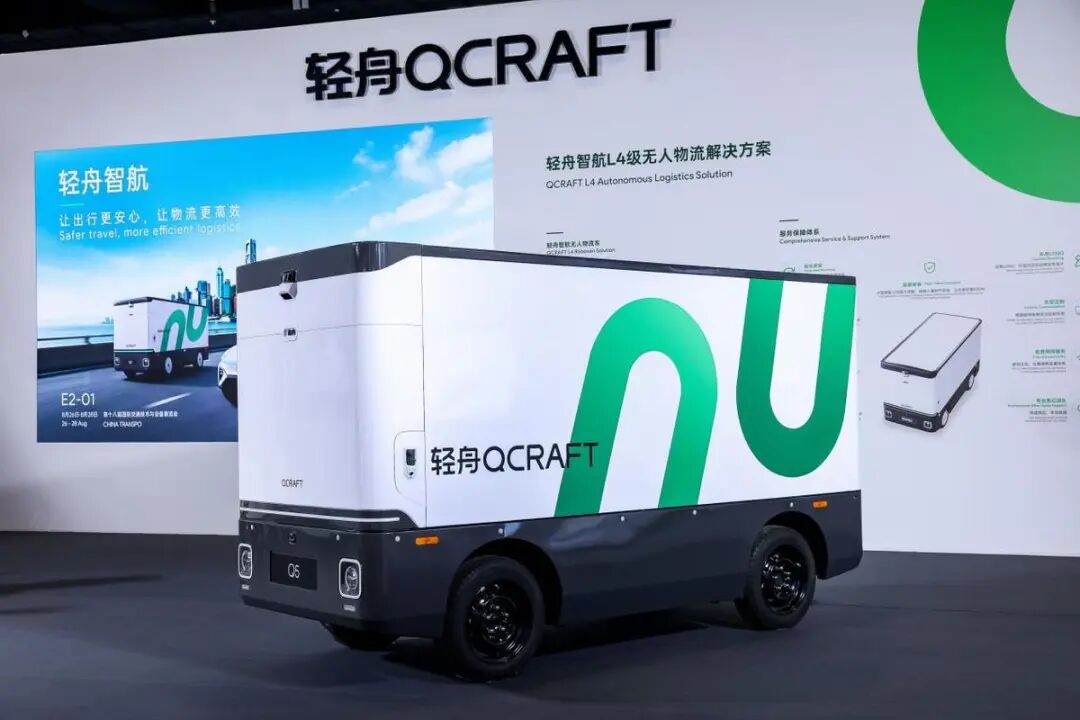
Image source: Internet
Combining the two has the potential to improve the system's understanding and generalization capabilities when facing complex scenarios. Here it is necessary to distinguish between technology announcements and actual mass production.
The single-Journey 6M urban NOA solution that QCraft has already mass-produced cannot be directly equated with the unified architecture of VLA and world models it announced. Whether the new model capabilities can enter more mass-produced vehicle models still needs to be verified by subsequent vehicle models and software versions.
From early mass-production delivery, to single-Journey 6M urban NOA, and then to the unified architecture of VLA and world models, QCraft's technology route shows a relatively clear evolution process.
What is more noteworthy about it at present is how it can combine the engineering experience accumulated from million-level installations with the R&D of a new generation of models.
05 Zhuoyu Technology: From Passenger-Vehicle Mass Production to Multi-Scenario Capability Transfer
Zhuoyu Technology is more reflected in the expansion of its technology system and business boundaries. From the former DJI Automotive to today's Zhuoyu, it has already formed a certain customer and vehicle model foundation in the passenger-vehicle field.
On October 29, 2026, Zhuoyu disclosed that it currently has 22 passenger-vehicle customers, cumulative mass production of more than 60 vehicle models, and has obtained design wins for more than 110 vehicle models.
Its Chengxing high-comprehension large model has undergone four major version iterations. Version 4.1 has been installed on multiple vehicle models, and version 4.2 is planned to be launched in the fourth quarter of 2026. The native multimodal foundation model is planned for mass production and installation in the first quarter of 2027.
It should be noted here that Zhuoyu's high-comprehension large model cannot be simply equated with a one-stage end-to-end solution either. Its characteristics are more reflected in the continuous upgrading of model capabilities, data-driven approaches, and engineering systems.
At the same time, Zhuoyu is also trying to extend its existing mobile intelligence technology system to other scenarios.
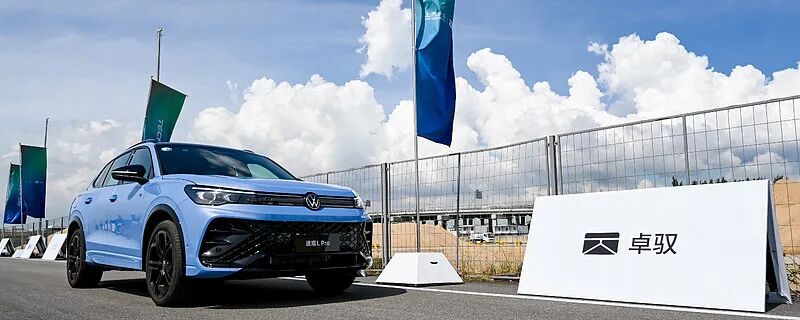
Image source: Internet
In October 2026, Zhuoyu officially launched its commercial vehicle intelligent assisted-driving solution Panxing, covering different vehicle types such as heavy trucks, buses, and light trucks.
Among them, Panxing PDS 4 corresponds to version 4.0 and above of the high-comprehension large model, mainly supporting high-speed NOA for commercial heavy trucks, and has currently achieved mass production in multiple brands.
PDS 5 corresponds to the native multimodal foundation model and will further support more complex traffic scenarios such as urban NOA in the future.
From this it can also be seen that the perception, decision-making, data training, and engineering delivery capabilities accumulated by suppliers do not necessarily only serve passenger vehicles. However, there are obvious differences in the operating environments, dynamic characteristics, and safety requirements of different vehicles.
Which capabilities can be transferred from passenger-vehicle solutions and which parts need retraining and development still need to be verified through actual mass-production projects.
06 Momenta: From End-to-End Mass Production to the World-Model Stage. Momenta has already been covered in the previous review of automakers' end-to-end development, so it will not be repeated here.
From the perspective of technology evolution, Momenta has further advanced from its early end-to-end mass-production solution to the R7 reinforcement-learning world model.
In April 2026, the SAIC Volkswagen ID. ERA 9X was officially launched, making it one of the first mass-produced models to feature Momenta's R7 reinforcement learning world model.
On September 28, the model began receiving OTA upgrades for the R7 world model, signaling that the technology is moving from debut demonstrations into real-world application for mass-production users. The SAIC Audi E7X will also adopt Momenta's R7 world model.
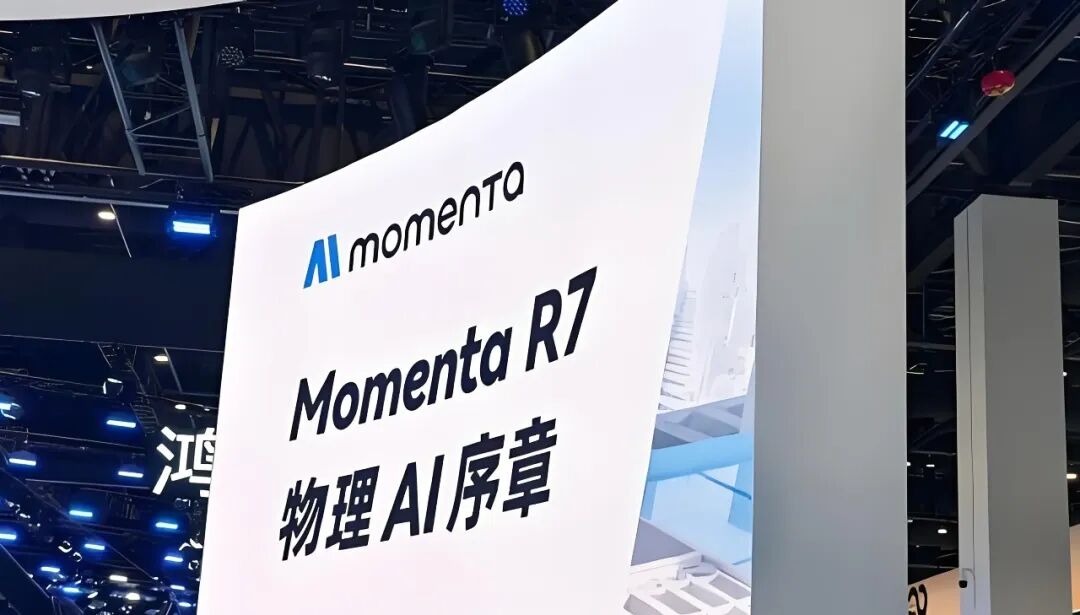
Image source: Internet
In November 2026, SAIC Audi announced that dealership test-drive vehicles had already completed the upgrade, with OTA rollouts for delivered vehicles to follow in batches starting in December. This shows that R7 is gradually expanding from a single debut model to a broader range of mass-produced vehicles.
Clearly, Momenta's model capabilities have progressed from R&D and vehicle debuts to the stage of continuous over-the-air upgrades for customer vehicles. Momenta's trajectory also demonstrates that end-to-end is not the endpoint of technological development.
As model training and system architectures continue to evolve, suppliers are working to bring capabilities such as world models and reinforcement learning further into mass-produced assisted driving systems.
07 Two years of end-to-end development: the real gap between suppliers is no longer just about models
Judging from the trajectories of several suppliers, two years into end-to-end development, industry competition is no longer simply about who launches a new architecture first or whose model has more parameters.
Whether models can iterate continuously, whether solutions can be replicated across vehicle models, and whether delivery and operating costs can be kept under control after mass production are becoming more important competitive metrics. The data closed loop determines whether models can keep improving.
Once vehicles are on the road at scale, companies can all collect real-world driving data—but data accumulation alone does not automatically translate into model capabilities.
Whether system issues can be identified from complex scenarios, and whether data screening, model training, and real-vehicle validation can be completed, determine each supplier's iteration efficiency.
Cross-model delivery capability will also determine whether the technology can achieve scale.
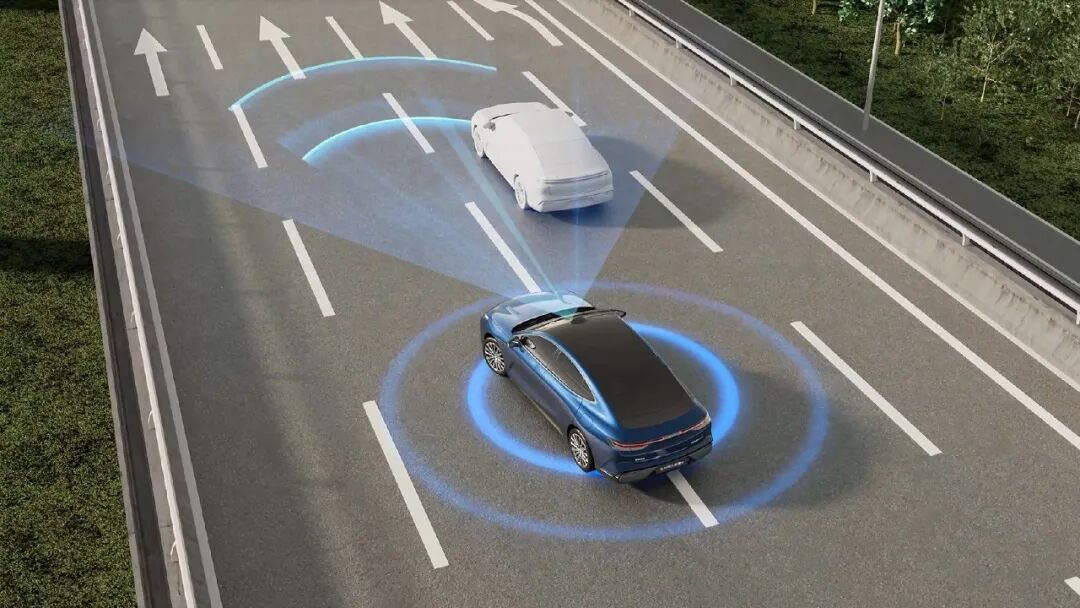
Image source: Internet
A solution that performs well on one vehicle model does not necessarily deliver the same results when switched to different sensors, chip platforms, and vehicle architectures. Suppliers must solve not only algorithm adaptation but also hardware collaboration, vehicle control, and full-vehicle validation.
Only by gradually platformizing these efforts can repeated development costs be reduced and technical capabilities replicated across more vehicle models. This also shifts supplier competition from pure project delivery to long-term model operations.
Vehicle delivery does not mean R&D work is over. Subsequent data feedback, model upgrades, issue fixes, and OTA support all affect user experience—and determine whether automakers are willing to continue the partnership.
However, scale growth does not equal technological leadership, nor does it represent profitability. The number of vehicle model designations, installed volume, and chip shipments can reflect business scale, but cannot directly indicate model performance.
Adaptation, validation, and ongoing maintenance for different vehicle models all require resource investment. If each additional vehicle model demands substantial repeated development costs, order growth may not translate into corresponding profits.
Therefore, after two years of end-to-end development, intelligent driving suppliers have already shown differentiation in mass-production scale and engineering delivery capabilities, but the ultimate gap in technical capability has not yet fully taken shape.
In the future, truly competitive companies will not only be able to build an end-to-end solution with strong performance, but will also be able to iterate it continuously and reliably replicate it across more vehicle models at controllable cost.
#AutonomousDriving #IntelligentDrivingSuppliers
-
![]()
Two Years into End-to-End: Has the Gap Between Smart-Driving Suppliers Widened?
-
Fangchengbao Titan 9 Launches at 279,900 Yuan: A New Luxury-Tech Six-Seat Flagship Arrives
-
![]()
Rocket Companies All Want to Build Their Own Engines—So How Do Jiuzhou Cloud Arrow and Others Make Money?
-
Tencent Chooses to Break Out from Within
-
![]()
Apple Support Community Shuts Down After 28 Years: Once the World's Largest Apple Fan Community
-
![]()
Lei Jun's APEC Nerves and Xiaomi Auto's Overseas Ambitions: A Closer Look
-
![]()
“Double 11” at Eighteen: From Bustle to Blandness
-
Alibaba Burns Through 79.1 Billion Yuan in Cash Flow in Half a Year, Then Counters with an HK$80 Billion Placement to Replenish Capital