Sinotruk Announces Leadership Change: 42-Year-Old Lü Tao Appointed General Manager
 11/20 2026
 379
Sinotruk recently issued an announcement stating that the board of directors received a written resignation report from Zhao Hai. Citing work changes, Zhao applied to resign from his positions as the company's general manager, non-independent director of the 10th board of directors, and related roles on special committees under the board, and will no longer serve in the company or its subsidiaries following his resignation. On the same day, the board deliberated and approved the appointment of Lü Tao as the company's general manager, with a term lasting until the expiration of the 10th board of directors.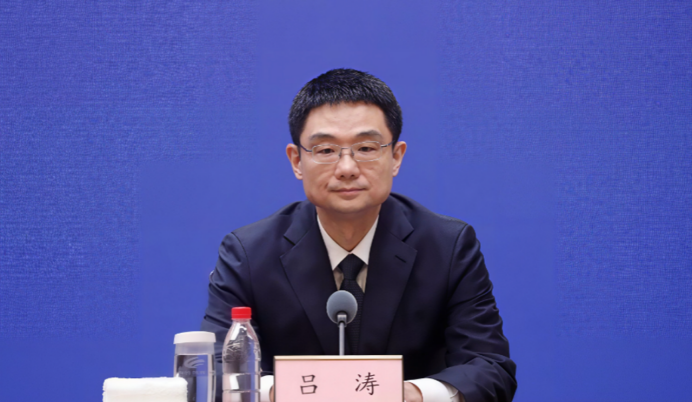
The timeline suggests a notably tight adjustment. When the board was re-elected on May 8 this year, Zhao Hai had just been reappointed—only about half a year ago. A general manager whose term was originally set to run until the expiration of the 10th board stepped down just six months after the re-election. Behind the phrase "work changes" in the announcement lies considerable room for outside speculation. His successor, Lü Tao, is a typical "Sinotruk insider."
His resume shows that Lü Tao was born in May 1984, is 42 this year, holds a bachelor's degree, and is a senior engineer. His career has unfolded almost entirely within the Sinotruk system. He previously served as manager of the body department and manager of the assembly department at Sinotruk Jining Commercial Vehicle Co., Ltd., and was later transferred to serve as deputy general manager and safety director of the manufacturing company of Sinotruk Jinan Truck Co., Ltd. Prior to this appointment, he served as deputy secretary of the company's Party committee, general manager, and quality director.
Two details in this resume stand out. First, Lü Tao has long been rooted in manufacturing and quality roles—from the body and assembly departments to safety director and quality director—reflecting a clear technical background. Second, he previously served as deputy secretary of the Party committee. In the governance structure of state-owned enterprises, this is typically the final step before reaching the core management level.
In other words, this appointment as general manager was not an outside hire but a continuation of the internal cultivation path. The heavy truck industry in which Sinotruk operates is currently at a delicate cyclical juncture. In the domestic market, the penetration rate of natural gas heavy trucks and new energy heavy trucks continues to rise under the dual drivers of policy and cost, while the share of traditional diesel heavy trucks is gradually being eroded. Overseas markets have become the most eye-catching source of incremental growth for Sinotruk in recent years, with the weight of export sales in the group's overall business increasing year by year.
At the same time, the logic of industry competition is shifting—from pure product cost-effectiveness to full-lifecycle service capabilities encompassing after-sales networks, financial solutions, and used vehicle residual value management.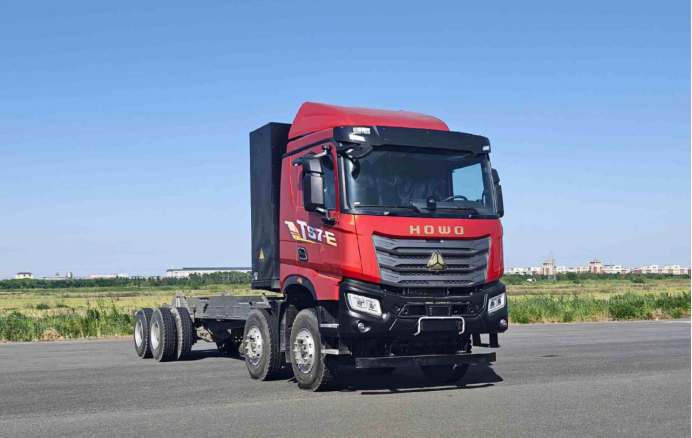
During Zhao Hai's tenure, Sinotruk maintained a leading position in exports and market share. But a change of general manager often signals that the board of directors has reprioritized its goals for the next stage of development.
Lü Tao's manufacturing and quality background may suggest that, beyond scale expansion, product consistency and quality control systems will be placed higher on the agenda. As capital goods, heavy trucks are far more sensitive than passenger cars to reliability and uptime for users, and a general manager with a quality director background naturally carries the implication of guarding this threshold.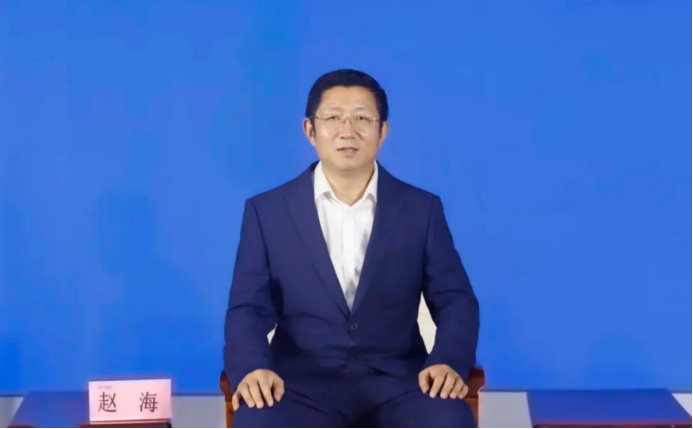
Another dimension that cannot be overlooked is age. A 42-year-old general manager belongs to a fairly young tier among large state-owned listed companies. This aligns with the broader trend of younger management in state-owned enterprises in recent years, and also means that Lü Tao has a sufficient time horizon to implement a strategy that crosses cycles, rather than making tactical swings under short-term performance pressure. Sinotruk's announcement did not explain the specific destination of Zhao Hai's "work changes," nor did it disclose whether this adjustment involves a broader reshaping of senior management responsibilities.
The board of directors also nominated Lü Tao and Feng Chenguang as candidates for non-independent directors of the 10th board of directors, which still requires deliberation by the shareholders' meeting. This means that the full picture of the personnel changes will not be finalized until after the extraordinary shareholders' meeting. For this heavy truck leader headquartered in Jinan, a change of leadership itself is not uncommon.
What is truly noteworthy is the extent to which a 42-year-old technical manager stepping onto the front stage will shift the weighting among quality, cost, and globalization for this enterprise. The answer will not be written in the announcement, but must be found in the production and sales data and profit margins of the next earnings season.
(The image is from the internet and will be deleted if infringing.)
-
iCAR V25 Launches with Red Packet Pricing from 119,800 Yuan — Is This Extended-Range Box Car Really a Good Deal?
-
![]()
Boxy SUVs: Only 3 Models Top 10,000 Units in October, 52% Sell Fewer Than 1,000; Deepal G318 and Hongqi G919 Under 200 Units | Mingjing Pro
-
![]()
Google Opens Genie 4 to Eligible Users, Upgrading Real-Time World Generation
-
![]()
Volkswagen Group October China Retail: 145,000 Units — How Do Volkswagen, Audi, and Jetta Break Down?
-
![]()
Musk Wants to Build a Model Y Without a Steering Wheel: Robotaxi Expands from a Solo Car to a Family-Size Vehicle
-
![]()
Weipai Reports 7,886 Retail Units in October; Gaoshan PHEV Alone Accounts for 77.4%
-
![]()
Soaring 34%! ChatGPT's Strongest Rival Goes Public, Market Cap Hits 1.5 Trillion
-
![]()
The World Wants Its Own Shenzhen