Google Opens Genie 4 to Eligible Users, Upgrading Real-Time World Generation
 11/20 2026
 391
In 2026, the world-model track is defined by three clear main threads.
Author | Xiao Biga
Editor | Shanzi
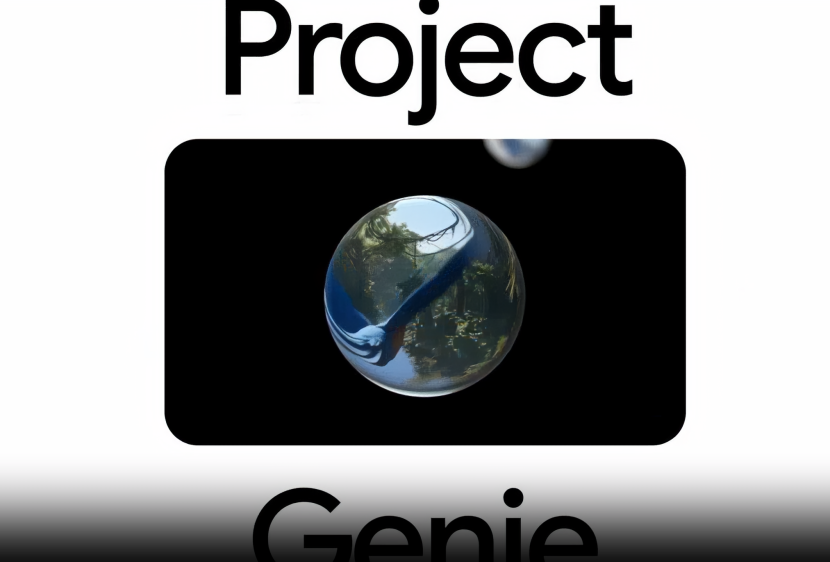
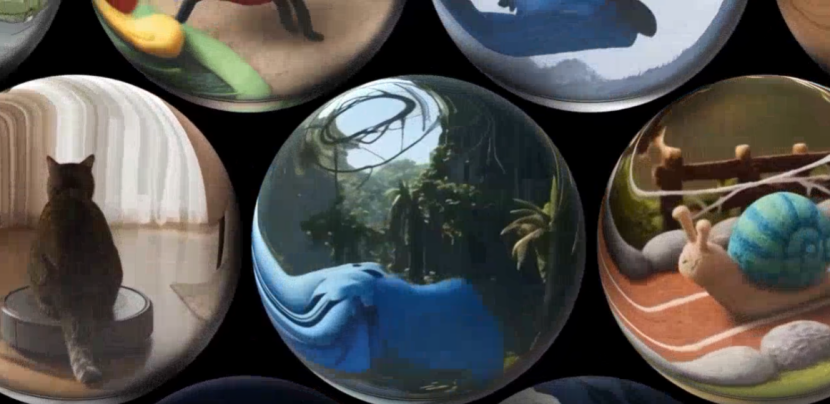
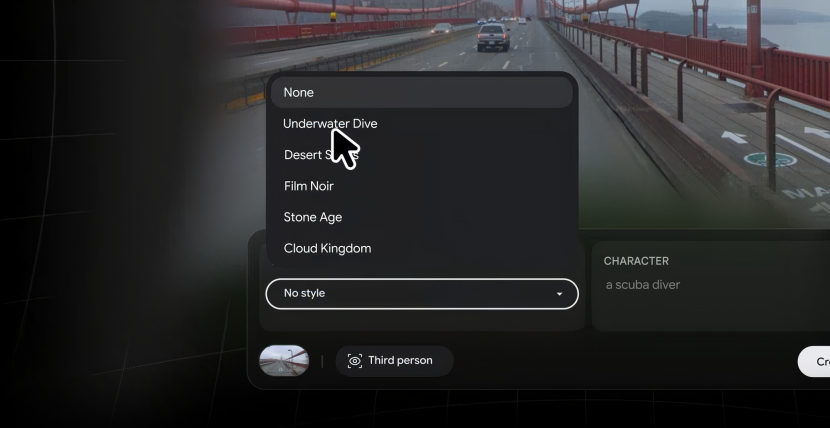
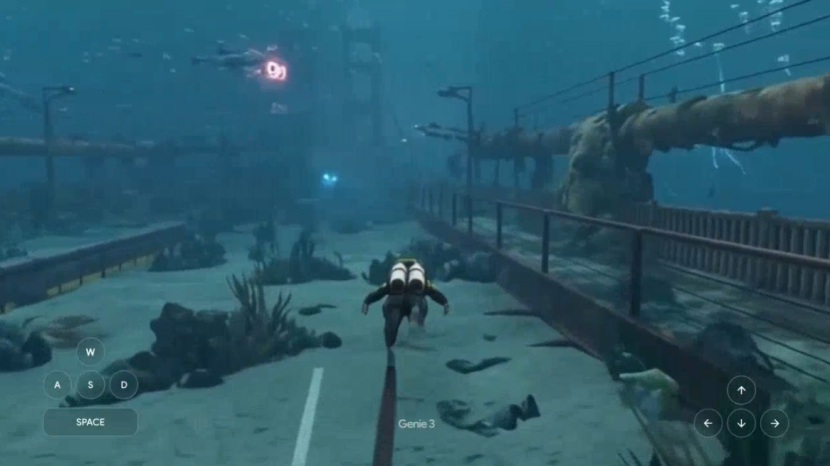
On November 18, Google DeepMind officially opened its latest world model, Genie 4, to eligible Google AI Ultra subscribers. The update marks Project Genie's move from research prototype to a product usable in daily life. Users type a sentence in the browser to generate an explorable world, walk into it with the keyboard, and then type mid-journey to rewrite it—changing the weather, adding characters, altering the plot—with visuals and audio keeping pace in real time.
What Genie 4 Brings
Google DeepMind released its latest world model, Genie 4, as a research preview on Tuesday, October 27. It is the company's most photorealistic and most interactive generation of models to date: users can enter prompts halfway through a simulation to change the scene, and the model can also generate real-time audio matched to the simulated world, covering music, ambient sound, and interactive dialogue.
Months before Genie 4's release, AI video company Runway had just launched its second world model, GWM Worlds 2, a playable model that responds dynamically to user input and includes audio generation. Meanwhile, the world-model industry is beginning to consolidate: Fei-Fei Li's World Labs is being acquired by AMD, Amazon is in talks to acquire Decart, and Rivian has just acquired Third Dimension to bring simulation capabilities into its own autonomous-driving testing.
Genie 4 is Google's latest move to stay ahead on this crowded track.
Google's previous-generation product, Genie 3, was released as a research preview more than a year ago. Besides being far more photorealistic than the previous generation and adding audio, Genie 4 also supports free editing—changing the weather or camera angle in real time, for example, or adding new characters and objects. It can maintain a scene coherently for up to two minutes, double the previous generation's limit, and delivers better physics and more human-like characters.
Google's AI model Gemini is also more tightly integrated with Genie 4, playing the role of director within it—planning steps and checking frames while Genie generates visuals. In a research experiment related to Gemini Robotics, a Gemini 4 Argon model broke a task into steps, which Genie 4 then simulated in real time. The experiment demonstrates a possible path for testing robotic scenarios in a simulated environment before they happen in the real world.
Tejas Kulkarni, Google's director of research, said at a briefing, "In the future we will increasingly see this hybrid kind of world model, combining Gemini writing code and text while Genie receives this content in real time and simulates reality at different levels of abstraction."
Like other world models, Google's flagship commercial use cases include gaming, interactive learning, and robotics. One imagined example of interactive learning is stepping into a painting depicting a historical scene and chatting with the figures in the painting about the events it portrays.
But the trusted testers who gained first access pointed to a possible new use: film prototyping.
Google DeepMind engineer Diego Rivas said at a press conference, "The advantage of real time becomes most apparent in scenarios where maintaining creative flow is extremely valuable—for example, in the ideation stage, the storyboarding stage, any moment when you need to quickly brainstorm ideas."
Google also offers the AI video generation model Veo, which can generate high-definition short films with built-in synchronized audio based on text, image, or video prompts; the tool is growing in popularity among filmmakers. Rivas added that users could eventually use Gemini Omni, a multimodal large language model that can turn images, audio, and text into video, to turn these prototypes into creative assets. However, he said these capabilities still have quite a way to go.
Throughout the media briefing, Rivas emphasized that Genie 4 is still at an early stage and that what the end-to-end product experience will actually look like remains unclear. The team also acknowledged that Genie 4 still has shortcomings: the longer a simulation runs, the more likely details and objects are to drift; the team has also not fully solved the accuracy of audio or the problem of keeping text within the frame clearly legible.
From Research Preview to Subscription Product
This opening turns several tester-only capabilities into the default experience.
AI Pro members cannot enter directly for now but can join a waitlist and queue; the entire process is completed in the browser with no client download required.
A conversational creation agent has also launched. Building a world no longer requires a single perfectly written prompt. Users describe ideas in natural language, and the Project Genie agent orchestrates Google's multimodal models to generate the initial visuals and a matching-mood background score; Gemini models can also join during the session to observe screen content, offer next-step suggestions, or automatically trigger in-world events.
A community gallery has also launched simultaneously. Users can publish the worlds they build to the gallery for others to explore and remix, with remixing covering world structure, soundtrack, and rules. Featured launch cases include Living Memory, which turns personal photos into explorable spaces; Dino Field Guide, which roams prehistoric habitats based on 360-degree panoramas; and Rock Paper Scissors, with Gemini acting as real-time referee. Google also collaborated with creative technology experts to create the Gothic manor puzzle experience Villa Giallo, and with filmmaker Anand Gandhi to launch the ant's-eye-view The Life of Ants.
Genie 3 has not been taken down; instead, it received an upgrade in the same wave of updates, with single-generation duration increased from 60 seconds to up to 3 minutes, support for chaining multiple worlds into a continuous journey, and support for seeding new worlds from 360-degree panoramic photos. When longer sessions or panoramic seed scenes are needed, users can still call it in the model selector.
According to the model card published by Google DeepMind, Genie 4 is adapted from Gemini Omni Flash, uses a transformer architecture, natively supports multimodality, takes text, images, and real-time user operations such as keyboard and mouse as input, and outputs real-time video at up to 720p and 24 frames per second with synchronized audio. Gemini Omni is responsible for anchoring the simulation to the real world's appearance and behavior, while Gemini's reasoning capability is responsible for maintaining the simulation's coherence.
A notable judgment is that this is the first time a frontier world model has been delivered at scale to ordinary consumers in the form of a subscription product. A studio, a trainer, or a marketing team can create an explorable demo prototype with one instruction and one conversation, and readjust it mid-session in front of a client, without first launching a game-engine development project. Google also states that Genie 3 and Genie 4 still belong to frontier research, and their outputs are suitable for prototypes and demonstrations rather than production lines.
Where the World Model Has Reached
The name Genie comes from Generative Interactive Environments. Genie 1, which debuted in early 2024, could only generate 2D platform-game-style worlds; Genie 2 in December 2024 entered 3D, but a single scene could only last 10 to 20 seconds; Genie 3, released in 2025, achieved coherent scenes on the order of one minute for the first time and was opened as a research preview; Genie 4 in 2026 doubled the duration to two minutes, added audio, and completed the leap from research preview to consumer-grade product in 22 days.
The pace of this product line corresponds to the overall acceleration of the world-model field. After language models that predict the next word, models that predict the next state are becoming the new main thread. A world model observes the world, predicts the consequences of actions, and generates or plans accordingly; it learns physics more like a child—by watching, by guessing, and by being corrected by reality.
Looking across the industry, the 2026 world-model track presents three clear main threads.
The first is the dense entry of competitors. AI video company Runway released the playable world model GWM Worlds 2 in September, streaming interactive worlds at 720p and 24 frames per second with synchronized audio; Fei-Fei Li's World Labs takes the persistent 3D scene route, and the worlds generated by its Marble can be exported and retained; Decart focuses on real-time interactive generation; Nvidia's Cosmos 3 serves robotics companies with open weights for generating synthetic training scenarios; Meta's V-JEPA 2 chooses to predict consequences in an abstract representation space rather than rendering pixel by pixel; Yann LeCun left Meta at the end of 2025 and founded AMI Labs to continue advancing this route.
The second is the rapid closing in of capital and computing-power owners. The aforementioned deals each have their own price tags: AMD is acquiring World Labs for $8.2 billion in stock, Amazon's talks to acquire Decart are valued at about $7 billion, and Amazon had previously invested in Odyssey, which completed a $310 million Series B in June at a valuation of $1.45 billion. The logic is not complicated: real-time world models are among the most computing-intensive AI workloads currently, and companies that sell computing power want to keep demand in their own hands.
The third is the gradual emergence of commercial landing points. Gaming is widely regarded as the nearest landing point; game designers can let the world's rules accommodate the model's limitations, whereas the worlds faced by autonomous driving and robotics cannot be simplified; the film and television industry uses real-time simulation as a tool for previsualization and storyboarding; robotics teams use world models to generate training environments with infinite variations; autonomous-driving companies such as Waymo, Waabi, and Wayve have already embedded world models into their technology stacks. Players with real revenue are currently concentrated in real-time generation APIs, subscription products, and simulation services.
The challenges are equally concrete.
The first is data. Language models crawled an internet that was almost free, whereas world models need first-person data annotated with actions; video must correspond to the operations that produced it. Such data is scarce and expensive, which also explains why Google, with YouTube, and Tesla, with its fleet, enjoy natural advantages.
The second is consistency: generated worlds drift and deform, and Genie 4 is no exception. The third is evaluation; the industry still cannot offer a recognized benchmark to answer whether a model has actually learned physics or has learned videos that look like physics. On the What-If World causal reasoning benchmark, no leading system currently exceeds 52%, and open-source models cluster around 28%. Looking right and being physically right are still separated by an entire stretch of road.
The opening of Genie 4 pushes this roadmap to a new position: world models no longer exist only in papers and demo videos; they are beginning to be subscribed to monthly by ordinary users, used per session, published, and remixed. As for whether it will ultimately be a replacement for game engines, a training ground for robots, or an entirely new creative medium, the answer must wait for these subscribers to walk their own paths through two-minute worlds.
-
![]()
Claude Goes Wild: The Overseas Mac mini Rental Craze Explained
-
![]()
Alibaba Forced to "Hold Back"
-
iCAR V25 Launches with Red Packet Pricing from 119,800 Yuan — Is This Extended-Range Box Car Really a Good Deal?
-
![]()
Boxy SUVs: Only 3 Models Top 10,000 Units in October, 52% Sell Fewer Than 1,000; Deepal G318 and Hongqi G919 Under 200 Units | Mingjing Pro
-
![]()
Google Opens Genie 4 to Eligible Users, Upgrading Real-Time World Generation
-
![]()
Volkswagen Group October China Retail: 145,000 Units — How Do Volkswagen, Audi, and Jetta Break Down?
-
![]()
Musk Wants to Build a Model Y Without a Steering Wheel: Robotaxi Expands from a Solo Car to a Family-Size Vehicle
-
![]()
Weipai Reports 7,886 Retail Units in October; Gaoshan PHEV Alone Accounts for 77.4%