iCAR V25 Launches with Red Packet Pricing from 119,800 Yuan — Is This Extended-Range Box Car Really a Good Deal?
 11/20 2026
 411
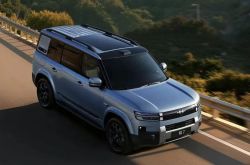
On November 19, the iCAR V25 was officially launched, with a guide price of 129,800 to 159,800 yuan and a limited-time red packet price of 119,800 to 149,800 yuan: RWD Pro at 119,800, RWD Max at 129,800, AWD Max+ at 139,800, and AWD Ultra at 149,800 yuan. The red packet offer runs until December 31, with a direct discount of 10,000 yuan, up to 39,000 yuan in benefits, and a lifetime warranty on the three electric systems for the first owner. Compared with the presale starting price of 139,800 yuan, the entry price is about 20,000 yuan lower. Can the iCAR V25 sell well? Is it worth buying?
The price has indeed been "downgraded," but the "good" version is not the base trim
The officially launched limited-time red packet price starts at 119,800 yuan — a full 20,000 lower than during presale. In the first minute of sitting in the car, you get front-row ventilation, heating and massage, zero-gravity leg rest for the passenger seat, rear heating and ventilation, 15-speaker audio, and a chassis tuned by the Prodrive team with front MacPherson and rear five-link suspension that handles speed bumps crisply and does not feel loose during rapid lane changes.
Buying this set of seats and chassis quality for around 120,000 to 130,000 yuan is indeed not a loss at the same price point. But iCAR has drawn a very clear line on the configuration list: 560TOPS computing power, lidar, and urban navigation are only available on the top trim; the volume-selling RWD Pro does not even have L2 assisted driving, and the RWD Max only stops at highway navigation.
The most "good" choices are the RWD Max/Pro — what you pay for is the most valuable part of the V25: styling, comfort, chassis, and the extended-range safety net. The least "good" are those attracted into the store by smart driving advertising and who finally find their budget only enough for the volume version.
The rivals are not in "box cars," but in "battery and range at the same price"
There are not many box cars that truly overlap with the V25 in price; the Haval Raptor and Fang Cheng Bao Tai 3 count as the two closest: packing extended-range power, four-wheel drive, and lidar into a more compact car is where the V25 stands out. But with a budget of just over 100,000 yuan, consumers cannot look only at styling.
The extended-range versions of the Leapmotor C10 and C11 offer 38.7kWh and 41.7kWh batteries respectively, with CLTC pure electric ranges of 290 km and 300 km, while the V25 has only 33.67kWh, CLTC 210 km, and WLTC only 145–150 km. It is clear that the iCAR V25 has no advantage in pure electric range among cars in its class.
The V25's "box car" shape is a differentiation weapon, but its pure electric range is on the smaller side among extended-range cars at the same price. The large wheels and 265mm wide tires further eat into range redundancy, which shows that this car's priority is "looking rugged and good when parked," not "driving far and using cheaply every day."
Pure electric range: enough in spring and autumn, but the range extender is needed on highways and in winter
The measured data is fairly honest: in spring and autumn city commuting, the achievement rate is 85%–92%, with the RWD version actually running 170–190 km on pure electric — enough for one charge a week with home charging; with the air conditioner on in summer, 150–170 km; in northern winters, lithium iron phosphate batteries degrade noticeably, with only 110–140 km actually available.
Highways are the weakest link for pure electric range. Under the box car's wind resistance, actual pure electric range is about 60%–70% of the nominal figure, roughly 90–100 km.
In terms of charging, the 33.67kWh battery takes about 15 minutes to fast-charge from 30% to 80%, so the charging speed itself is not bad.
The conclusion is clear: the V25's pure electric mode suits people "with home charging and mainly city use." If your one-way commute exceeds 80 km or you often drive on highways, this car's daily experience will be closer to "a gasoline car carrying a battery."
Fuel consumption on highways when depleted: indeed higher than same-size Japanese hybrids — this is the physical cost of a box car
The WLTC fuel consumption when depleted is 6.9L/100km for the two-wheel-drive version and 7.15L/100km for the four-wheel-drive version, with measured display values around 7L in fuel-priority mode.
Compared with same-size Japanese hybrids: the CR-V Hybrid consumes about 5.4–6.5L/100km on highways, and the Highlander Hybrid about 5.8L/100km combined.
It is highly likely that the V25 is 0.5–1.5L/100km higher than the CR-V Hybrid in depleted highway scenarios. A box car shape at 120km/h cruising will consume 1–2L more than a low-slung SUV; this is determined by wind resistance, not by the range extender itself.
But on the other hand, the V25 can run on 92-octane gasoline, with a combined range of over 1,200 km on a full tank and full charge, so long trips do not require planning charging stops. It solves the anxiety of "can I refuel," not the anxiety of "is refueling economical."
The "past record" of iCAR's extended-range system is the trust threshold the V25 most needs to overcome
The 1.5T range extender used in the V25 is not entirely new; Chery has already applied it in the Tiggo series and the iCAR V27, so there is a certain foundation of technical maturity.
But the V27's previous market performance left a shadow: some owners complained about limited-range faults in the extended-range system, loss of power on highways, failure of after-sales emergency calls to perform their duties, and misdiagnosis by 4S stores that led to vehicles being driven with problems.
Although the V25's range extender has been specifically optimized in calibration and cooling, "the range extender itself is reliable" and "the quality control and after-sales system of the entire extended-range system are reliable" are two different things.
The problems exposed by the V27 point more to quality consistency and after-sales response than to the engine itself. If the V25 cannot prove the stability of this system in the hands of first-batch owners, the V27's reputation will follow like a shadow. No configuration list or price can answer this on its behalf.
With 120,000–150,000 yuan for an extended-range box car, is the V25 worth buying?
If your budget is capped at around 120,000 to 130,000 yuan, you want a car with distinctive styling, class-leading seat comfort features, and a chassis that is not tiring in daily driving — mainly for city commuting, with home charging available, occasional long trips backed by gasoline, and no obsession with urban smart driving — the RWD Max/Pro is the version in the V25 lineup where "the money is spent where it matters."
If you often drive on highways, are sensitive to fuel consumption when depleted, or what you really want is advanced smart driving — then you need to raise your budget to 150,000–160,000 yuan for the top trim, and at that price point you are no longer facing the bonus of "box car scarcity," but head-on competition with Leapmotor, Deepal, Haval Raptor, and others.
The V25 is a car that is "split well": it keeps the most tempting card for the top trim, but also keeps the most practical part in the mid trim. Figuring out which part you are paying for is more important than asking "is it a good deal."
-
![]()
Claude Goes Wild: The Overseas Mac mini Rental Craze Explained
-
![]()
Alibaba Forced to "Hold Back"
-
iCAR V25 Launches with Red Packet Pricing from 119,800 Yuan — Is This Extended-Range Box Car Really a Good Deal?
-
![]()
Boxy SUVs: Only 3 Models Top 10,000 Units in October, 52% Sell Fewer Than 1,000; Deepal G318 and Hongqi G919 Under 200 Units | Mingjing Pro
-
![]()
Google Opens Genie 4 to Eligible Users, Upgrading Real-Time World Generation
-
![]()
Volkswagen Group October China Retail: 145,000 Units — How Do Volkswagen, Audi, and Jetta Break Down?
-
![]()
Musk Wants to Build a Model Y Without a Steering Wheel: Robotaxi Expands from a Solo Car to a Family-Size Vehicle
-
![]()
Weipai Reports 7,886 Retail Units in October; Gaoshan PHEV Alone Accounts for 77.4%