BBA Charges into the Heartland of NIO, XPeng, and Li Auto
 11/24 2026
 370
Introduction
Introduction
Looking at the three brands' transformation progress through this Guangzhou Auto Show.
In November 2026, the three German luxury brands are having a very hard time in China. Following the significant decline in 2025, the three again recorded a drop of at least 20 percent in the first three quarters of this year. Such a severe situation stems not only from the pressure of the continuous strong rise of domestic independent brands, but also from the enormous uncertainty of oil prices since March this year.
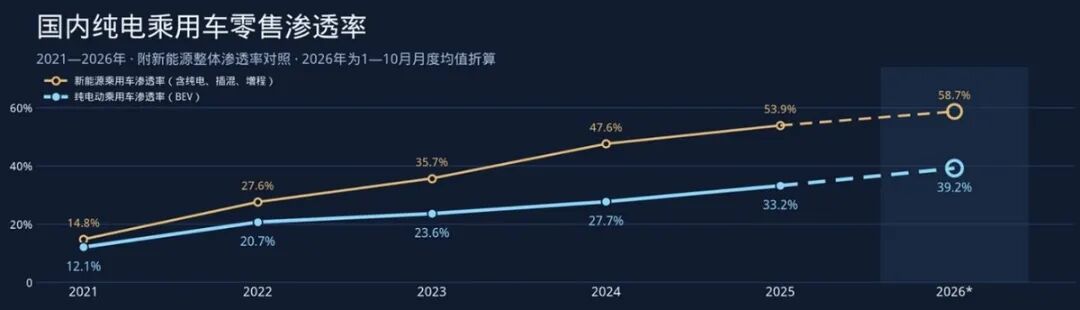
Under this combined effect, China's new energy vehicle industry is beginning a second round of large-scale expansion. Its momentum is so strong that it is no longer limited to last year's 50 percent penetration rate. Over the past ten months, the market penetration rate of new energy vehicles has climbed to nearly 60 percent, among which the penetration rate of pure electric models has reached 39.2 percent, accounting for almost 40 percent. By comparison, retail sales of fuel vehicles fell 45 percent year on year, and retail sales of luxury brands also fell nearly 40 percent year on year.
At present, independent brands have basically dominated the 250,000 to 400,000 yuan range, and the 400,000 to 600,000 yuan range is also being constantly eroded and carved up by high-end models from several brands. In this era of earth-shaking change, the three BBA brands that once dominated China's high-end market have still not been able to offer a high-end new energy product recognized by the market...
The Audi e-tron imported in 2019 was once priced sky-high. The Mercedes-Benz EQ series used the previous-generation EVA architecture, with the body continuing the engineering framework of fuel vehicles, and it started a separate EQ name. As a result, sales staff had to explain for ages which fuel vehicle class the EQE should be compared with.
Similarly, the BMW iX3 was a pure electric derivative built on the CLAR platform, and its guide price was once set higher than that of fuel models. Only after being educated by the market did terminal prices begin to be discounted all the way.
For nearly 20 years, the convention for BBA models that dominated the Chinese market was to first define the platform overseas and then introduce it to China for lengthening, often with a year between release and market launch. Nowadays this path no longer works.
On the one hand is the life-and-death problem currently faced by fuel models; on the other hand, domestic cars at the same price already have better alternatives in size and intelligence. For BBA, the current vicious cycle is that prices are first set high and then lowered, new customers wait for discounts, and existing owners are resentful about being "stabbed in the back." As for infotainment, voice control, and even urban navigation, without local teams following up, they still have to wait for overseas updates, which is usually very unreliable.
Where exactly are the main new energy models from BBA that can rival their fuel models? This has been a common question across all sectors since April 2021, when the 19th Shanghai International Automobile Industry Exhibition issued the declaration of "embracing change" to the world.
Now, the 24th Guangzhou Auto Show is about to open on November 27. As the closing exhibition of the Chinese market each year, let us specifically review the pure electric cars the three brands will put on their stands this time, as well as the differences from the previous generation of products.
And they are about to charge into the heartland of NIO, XPeng, Li Auto, and a host of domestic high-end new energy brands, attempting to regain the lost right to speak in the high-end new energy market with an all-new product matrix and localized technology routes. The head-on confrontation at this auto show will also become a true systemic strength contest between foreign luxury brands and China's domestic high-end new energy forces, directly determining their market position in the high-end new energy track in 2027.
01 BBA's New Energy 2.0
In April this year, FAW Audi launched the new-generation mid-to-large pure electric sedan A6L e-tron. The status of this model is roughly aligned with the fuel A6 series, and together with the pure electric SUV model Q6L e-tron, it forms the core direct-line product matrix of Audi's current new energy 2.0 plan.
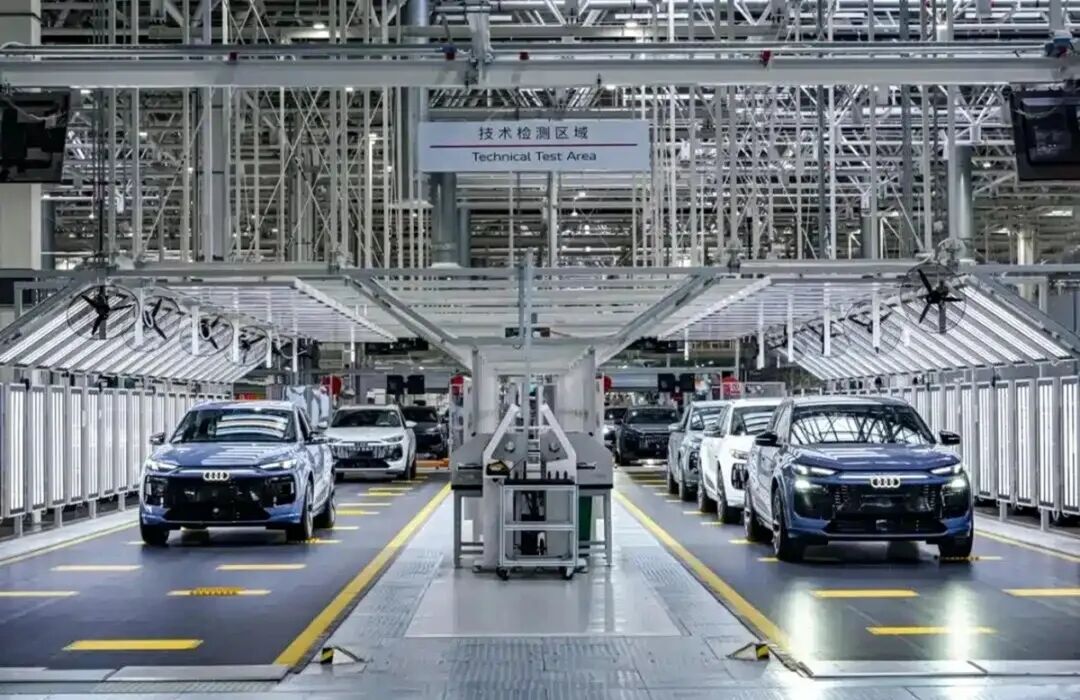
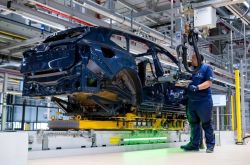
Image 丨 In 2022, Audi spent 20.93 billion yuan to build the Audi FAW Super Intelligent Ecological Factory in Changchun, Jilin, which was completed and put into operation at the end of 2024
Unlike the 1.0 era, which was based on modifying fuel platforms or directly using the MEB platform (Volkswagen Group's previous-generation global pure electric architecture), Audi's new energy products in the 2.0 era are based on a specially built high-end pure electric platform (PPE, jointly developed by Audi and Porsche, pure electric only). At the same time, to solve the assisted driving problem, a domestic-exclusive Qiankun intelligent driving version was specially developed, cooperating with Huawei to carry the Qiankun ADS solution with a two-sided jaw-style lidar layout developed specifically for Audi.
But outside the direct-line route, the AUDI E7X launched at the end of May takes another route. It adopts the Advanced Digitized Platform (ADP, China-exclusive) jointly developed by Audi and SAIC, with assisted driving and the cockpit handed over to Momenta and a local large-model team, respectively.
This is actually SAIC Audi's second product. In October last year, this solution had already been implemented first on the AUDI E5 Sportback pure electric touring car. Compared with the direct-line products that align with global models and undergo large-scale localized adjustments, lettered Audi adopts a model led by local partners.
Mercedes-Benz did not start another brand identity; the changes in 2.0 fall on both the platform and naming.
The pure electric CLA launched in November 2025 is the first mass-produced car on the MMA platform, and its position in the lineup is roughly aligned with the fuel CLA. MMA is Mercedes-Benz's new-generation oil-electric universal platform, developed with pure electric priority while also leaving room for fuel and hybrid. The smart hybrid CLA to be launched during this Guangzhou Auto Show also comes from this architecture. The pure electric GLC launched in July this year switched to the MB.EA architecture, Mercedes-Benz's new-generation pure electric platform that does not make fuel or hybrid versions. The two cars respectively support the compact sedan and mid-size SUV segments, forming the core direct-line matrix of Mercedes-Benz in this round.
During this Guangzhou Auto Show, GLC will add two more versions in addition to the Gilded Edition already launched in July. At the same time, the VLE, which is in the same class as the V-Class fuel vehicle and built on a dedicated pure electric architecture for vans, will make its China debut.
The EQ series in the 1.0 era used the previous-generation EVA architecture, with the body and engineering framework mainly continuing those of fuel vehicles, and it started a separate EQ name. Sales staff had to explain from scratch which level in the fuel lineup an EQE should be compared with. In September 2025, Mercedes-Benz CTO Markus Schäfer said in an interview that the electric series would no longer be named EQ and would instead use pure electric plus model name, with CLA being the beginning of this new series. In June this year, when media visited dealers, they received claims that the EQ series would be discontinued, but there is temporarily no official information to support this.
The pure electric E-Class, still in the development stage, is planned to succeed the EQE in the future. In addition, Mercedes-Benz has separate dedicated architectures for high-performance pure electric models, VAN.EA for building pure electric MPVs or commercial vehicles, and AMG.EA specifically for building high-performance pure electric SUVs.
Who to hand localization to? Mercedes-Benz's choice is full cooperation, but with reservations. MB.OS is Mercedes-Benz's self-developed operating system, managing software and the cockpit. Urban and highway navigation is handed to a solution jointly developed with Momenta, the cockpit is connected to the Doubao large model, and the China R&D team led the software upgrades on this side. Vehicle engineering and platform definition rights, however, remain in Mercedes-Benz's own hands.
Among the three, BMW deserves a special mention at the end, because the news currently coming out about this company's Neue Klasse models, as well as some of their technical performance, can all be described as very good.
It should be said that among BBA, BMW had a head start in electrification. The MegaCity i3 model under the BMW i series launched in 2014 was one of the first practical pure electric vehicles worldwide. But quite a few of the electrified products after that had a somewhat makeshift flavor. The old iX3 was converted from the fuel X3, and the i3 was derived from the 3 Series.
The Neue Klasse has finally switched to a pure electric dedicated architecture developed with full focus, with the electric drive, large cylindrical battery cells, and electronic and electrical architecture all redone as a whole. The sixth-generation power battery rolled off the production line in Shenyang in October this year, and both cars had already appeared in the Ministry of Industry and Information Technology filings in September.
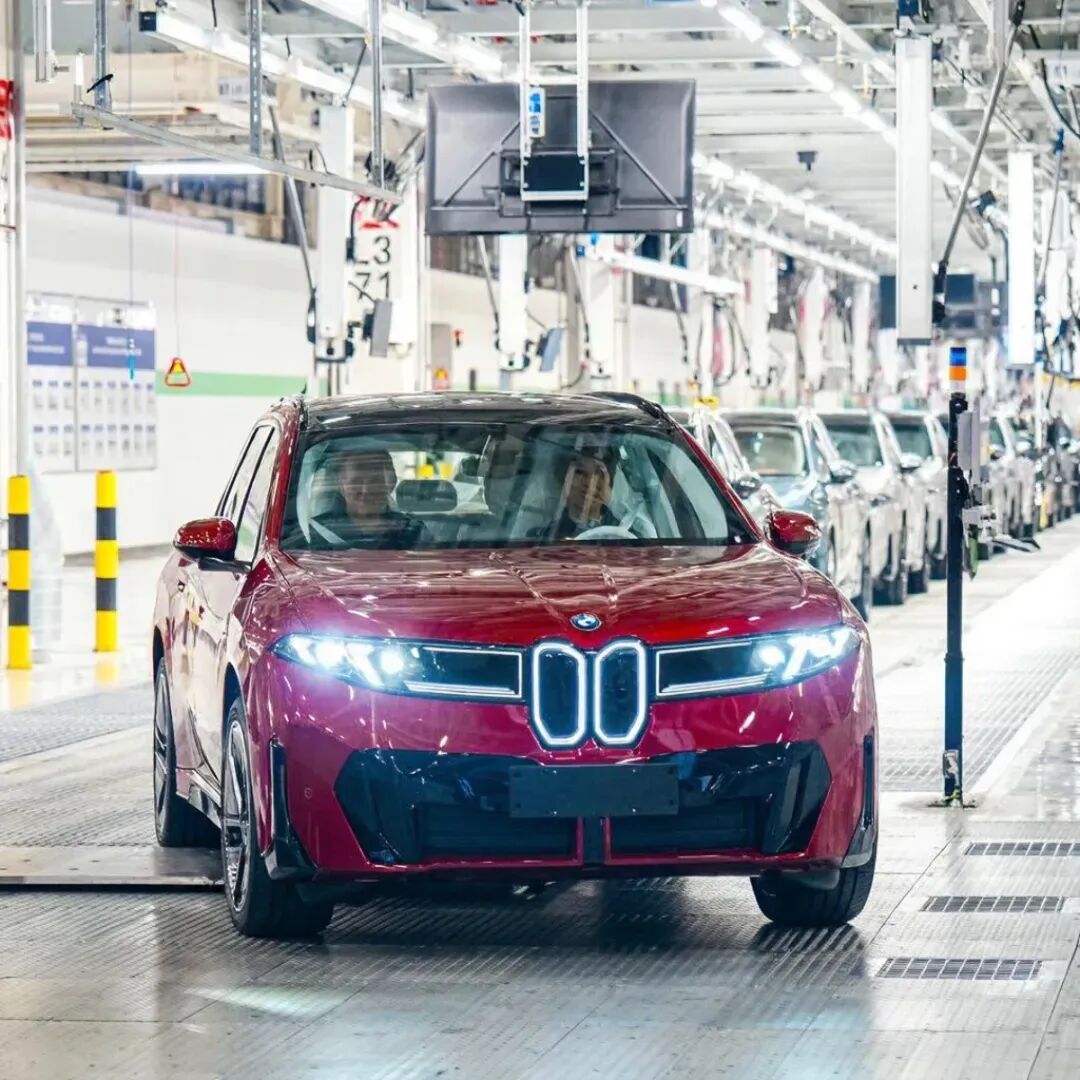
Image 丨 The domestically produced new-generation iX3 long-wheelbase model started production last Monday (November 16) at BMW Brilliance's factory in Shenyang and is scheduled to begin deliveries on November 25
The domestically produced long-wheelbase version of BMW's new-generation iX3 is scheduled to officially begin domestic deliveries on the very day this article is published. At the same time, the long-wheelbase sedan version i3, built on the same Neue Klasse platform, will also be placed on BMW's stand during the auto show. It should be noted in passing here that BMW's new-generation pure electric dedicated architecture Neue Klasse literally translates into Chinese as "new class."
02 Success or Failure Ultimately Depends on the Market
From the above introduction, it can be seen that the new energy 2.0 of the three BBA brands has all been put on track. Audi took the lead in laying out two product systems and each has produced a basic product matrix, while BMW's and Mercedes-Benz's new-generation electric products have been laid out and are being gradually launched.
The basic approach of all three is to fully integrate China's technology into their intelligent systems, while each retains definition rights over core products to varying degrees. Relatively speaking, the approaches of Mercedes-Benz and BMW are closer to the fuel era, no longer starting separate brands and model names. Audi, on the basis of insisting on independent definition for its direct-line products, has set up the lettered logo, a concept similar to a sub-brand, to let the local team give full play to its strengths.
Judging from the current situation, BMW's playbook seems to have more method. It first settles the platform and battery, then hands intelligent driving and the cockpit to Chinese partners, and finally changes pricing along with it. The iX3 is delivered on the 25th, and the i3 will announce its price at the auto show two days later. This rhythm can be said to be carefully arranged.
At present, the all-new iX3 enjoys high acclaim in Europe. Since its official release and pre-sale launch last year, total orders over the past year have exceeded 100,000, accounting for about one-third of BMW's pure electric orders in the same period. BMW's Debrecen plant in Hungary has already started running nonstop and recruiting a large number of "temporary workers" in order to catch up with deliveries in early next year.
As for the domestic situation, although there is temporarily no official clear statement, combining information from various channels and what this author gathered from visiting stores, the overall picture is still fairly good. However, media and channels have multiple versions of the reservation numbers. The highest says that "some media statistics claim cumulative reservations of tens of thousands of small deposits in nearly a week of pre-sale," while a more conservative one says that "foreign media have revealed that reservations for the new-generation iX3 in China have exceeded 20,000."
On this issue, BMW has basically kept its mouth shut and has not released any official data on large or small deposits, with an overall attitude clearly focused on caution.
So in the final analysis, what really matters is delivery, and whether after the first batch of pre-ordered deliveries, it can maintain sales for more than half a year. For the new-generation iX3, it can only be said to have made a good start.
Compared with BMW's optimistic situation, Audi's side seems to face considerable resistance. Especially the first to encounter resistance are the direct-line global models.
The Q6L e-tron and Sportback versions totaled more than 6,000 units in the first nine months of 2026, and FAW Audi has not separately announced delivery numbers for this model. Its price band highly overlaps with its own fuel Q5L, and after customers enter the store, even if they show interest in the pure electric model, they often compare back and forth between the two powertrains.
In the author's view, what has led to this unfavorable situation is first of all the sluggish development of the pure electric platform. In the original plan, PPE was scheduled to land in 2023, and the new-generation pure electric models based on this platform could be launched within 2024. But a series of delays caused by various reasons, including the pandemic, ultimately stacked up so that the Q6L e-tron was not officially launched until the second half of 2025. By that time, the 800V architecture and driving assistance systems in China had already become widespread on various independent mid-to-high-end models.
The situation with the lettered logo is another matter. As a solution led by the technical strength of the domestic partner, it has progressed rapidly since its release, and the AUDI E7X achieved certain results at the beginning of deliveries in June and July this year. However, the brand's two products currently on sale basically remain at a sales line of less than 2,000 units per month, indicating that the market has not yet fully accepted the lettered logo. This issue is something beyond the car itself. In addition to whether the lettered brand is generally recognized, there is also the question of how used-car dealers price the new logo and how the customer groups of the two types of stores are divided. These problems cannot be solved overnight.
The situation Mercedes-Benz faces is relatively straightforward. The pure electric CLA sold just over 1,000 units at its launch in November 2025, and this year's sales are almost negligible. The pure electric GLC launched in July this year and has maintained monthly sales of just over 1,000 to nearly 2,000 units, while the fuel GLC in the same period sold about 6,000 units. Although the data may ultimately differ due to different statistical calibers, the order of magnitude is there. Mercedes-Benz's return from the EQ naming system and the introduction of a native pure electric platform is certainly a correction, but a return in market perception still takes time.
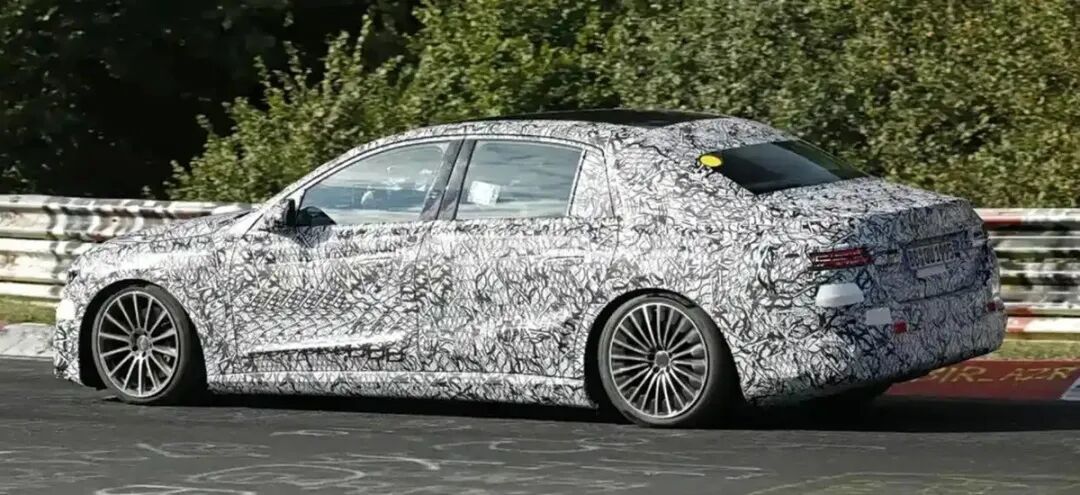
Image 丨 Since a year ago, Mercedes-Benz's new E-Class pure electric test cars have been running all over Germany.
Although the official final exterior of the car has not been announced and the test car is tightly wrapped in camouflage stickers, it can be found from its side lines alone that Mercedes-Benz has completely changed back this time.
As for Mercedes-Benz's next-generation pure electric E-Class, it is still in the road-testing stage. The test car photographed in September returned to three-box proportions, and discussions among domestic car owners mostly focus on "whether the exterior finally looks like an E-Class," which is roughly a positive signal. After all, the least flattering aspect of the EQ series was that it completely abandoned the brand's iconic exterior features from the fuel era, so much so that the curved body always competed for presence with the three-pointed star logo.
However, although various rumors say this mainstay model will be launched next year, details such as its succession to the EQE have not been officially confirmed, and there seems to be no sign of it in the announced lineup for the auto show.
The online joke about off-brand electric vehicles has been circulating for at least three years.
The pain point this meme points to was mostly felt by users who bought BBA pure electric models in the early years: nominal range was seriously inflated, the infotainment system lagged, features and apps were scarce, and urban intelligent driving was basically unusable. What made users even more dissatisfied was encountering official price cuts shortly after taking delivery; when circulating vehicles on the second-hand market, either dealers refused to take them or valuations were sharply depressed.
Ultimately, this kind of negative impression has nothing to do with the brand label itself; it is a stereotype gradually formed by the accumulation of a series of shortcomings in products and user experience. Once a stereotype solidifies, it is very difficult to reverse with just a few launch events; change must come from the products themselves. The capabilities accumulated over nearly a century in the fuel era—engines, chassis calibration, supply chains, dealer operating systems—were all formed through long-term refinement. Turning to the pure electric track, most capabilities need to be rebuilt from scratch, while the fuel business cannot stop at the same time.
This is precisely the most difficult contradiction BBA faces right now. Since the second quarter of this year, the gray rhino of soaring oil prices has hit the market, and fuel vehicle sales that were originally planned to remain stable during the transition buffer period have declined rapidly. According to BBA's transformation plan, before the all-new pure electric products can stand on their own, they rely on fuel vehicles to contribute sales and profits in exchange for room to trial and error at ease. Now this buffer period has been greatly compressed.
Stepping out of one's inherent comfort zone is inherently extremely difficult, and in this round none of the three companies changed direction because of short-term sales fluctuations in one or two quarters.
Handing the faster-iterating intelligent driving and cockpit segments to Chinese parties while keeping vehicle architecture and product definition authority in their own hands may appear to be mutual concessions, but in essence it is a division of labor. Local teams are more familiar with domestic road conditions and iteration rhythms, while BBA's accumulated underlying calibration experience in bodies, steering, and overall vehicle cockpits is irreplaceable. Audi's mechanical feel, BMW's steering calibration, and Mercedes-Benz's control of body proportions will not be surrendered just because of the switch to electric drive; their pure electric models still retain distinct brand recognition.
Standing at this point at the end of November 2026, BBA has in fact already crossed the hardest hurdle of transformation: new platforms, self-developed batteries, and localized intelligent driving and cockpits have all landed on production vehicles. Short-term sales may not be spectacular; as long as they do not return to the old path of price cuts to chase volume, nor give up core product definition authority in exchange for momentary heat, these previous investments will gradually pay off through deliveries and word of mouth. Continuous deep cultivation and getting the electrification route to work are more worthwhile than chasing one or two quarters of sales.
The right path has always been difficult and takes a long time to show results, but this round of products is already poised to launch, and what comes next will be answered by deliveries and word of mouth.
Responsible editor: Yang Jing Editor: He Zengrong

THE END
-
![]()
P/S and O/E: Two Fundamentally Different Naming Systems Describing the Same Polarization State
-
![]()
Too "Involutionary"—Even a Foot-Washing Basin Gets Into the Car?
-
![]()
November Auto Market: Penetration Rate Spikes as Retail Contracts — How to Make Sense of It?
-
![]()
Nissan in China: Seeking the Next Round of Growth
-
![]()
Musk Delivers on His Promise! Tesla FSD V15 Makes a Blockbuster Debut: Stock Surges Over 11% Overnight
-
![]()
Outpaced by Chinese Brands, Japanese Automakers Opt for Their Quietest Strategy Yet
-
![]()
BBA Charges into the Heartland of NIO, XPeng, and Li Auto
-
![]()
Tencent WorkBuddy, Winning "Major Contracts" in Quick Succession!