Outpaced by Chinese Brands, Japanese Automakers Opt for Their Quietest Strategy Yet
 11/24 2026
 495
Introduction
Their goal: cut costs to free up funds for innovation in the fight against Chinese rivals.
Nikkei has just reported that Chinese cars now outsell Japanese cars in 39 countries. Of these, China overtook Japan in market share in 14 countries in 2026, including eight in Europe. Even in Southeast Asia, long a stronghold for Japanese companies, their dominance is beginning to waver.
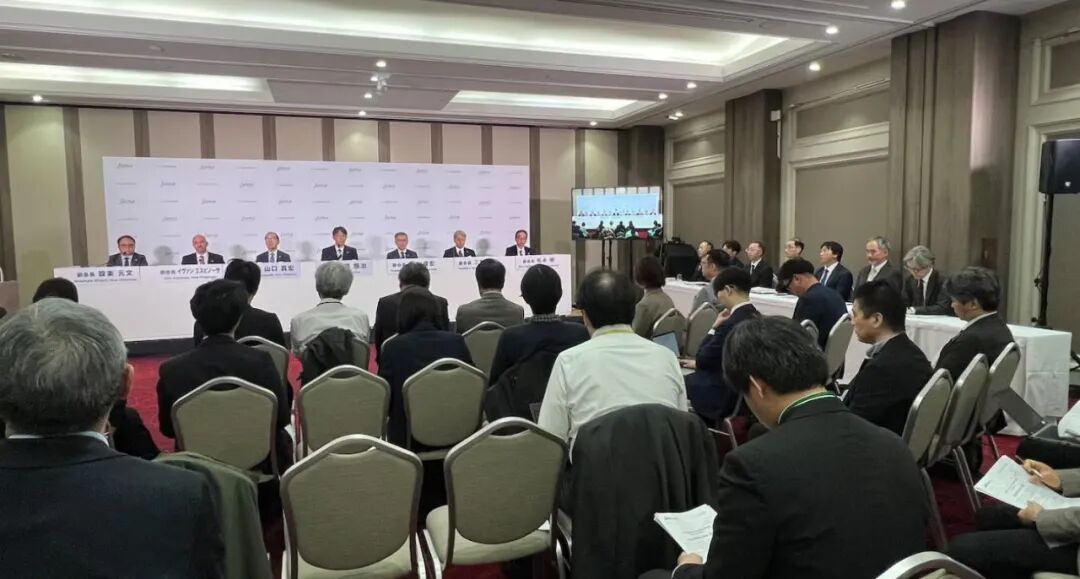
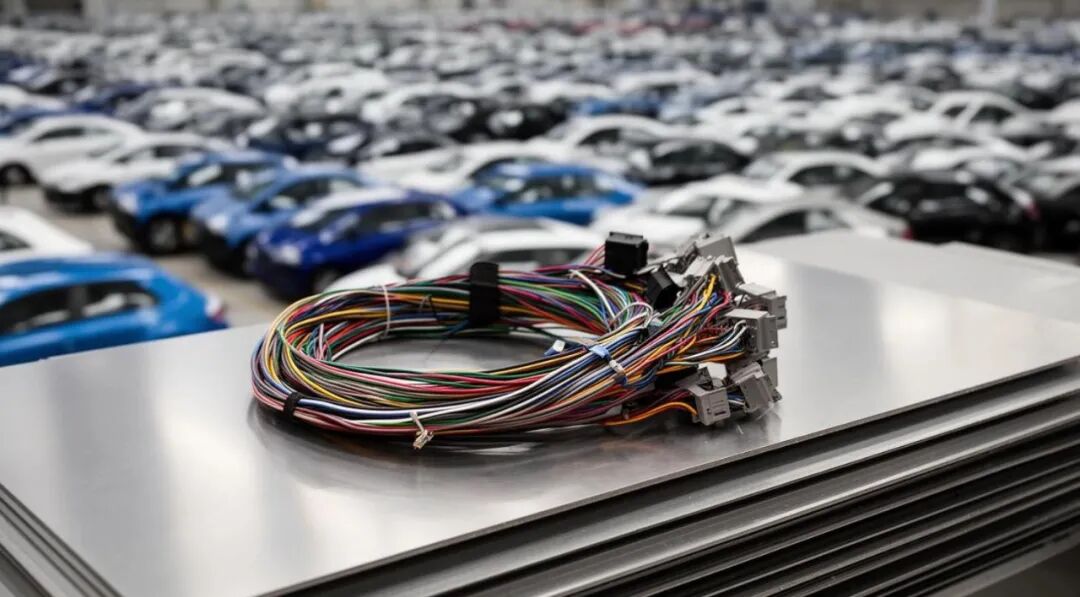
Perhaps sensing this urgency for some time, on November 19 the Japan Automobile Manufacturers Association (JAMA) and the Japan Auto Parts Industries Association (JAPIA) announced that they will work to standardize key materials and components for Japanese automakers, breaking down barriers between companies. The first three sets of parts standards identified focus on steel, resin, and wiring harnesses, laying the groundwork for unified standards to take effect starting in 2027.
The plan covers seven Japanese automakers—Toyota, Nissan, Honda, Mazda, Subaru, Mitsubishi, and Suzuki. JAMA Chairman Koji Sato (who is also Vice Chairman of Toyota Motor Corporation) launched this campaign after taking over as head of the industry lobbying group in January this year, and announced the agreement on steel, resin, and wiring harnesses at JAMA's last regular meeting of the year.
According to JAMA, the association will begin with steel, resin, and wiring harnesses, then gradually expand to other components covering the entire vehicle. Discussions will start with Japanese suppliers first, but will soon extend to international suppliers.
Koji Sato stated: "We all feel the crisis strongly, and that drives us to seek change. It is precisely this sense of crisis that led us to choose these three areas." This is partly because these components are not easily noticed by consumers and do not directly affect brand value or differentiation. They account for a high proportion of vehicle input costs, so results can be seen quickly.
JAMA confirmed that approximately 70,000 different wiring harnesses are the primary target for consolidation. Parts standardization is also one of the seven priority challenges JAMA is addressing, aimed at ensuring the country's automakers can weather what executives call a "once-in-a-century" industry storm.
01 Starting with Three Sets of Auto Parts
The heads of both associations, JAMA and JAPIA, elaborated on the plan: first uniformly assess standards and reduce the variety of parts, then gradually expand the scope of standardization. Koji Sato pointed out that R&D resources freed up by standardization will be reallocated to growth areas such as electrification, autonomous driving, and software-defined vehicles (SDV).
Steel and resin account for a large proportion of the cost of body and interior/exterior parts, while wiring harness production involves a large amount of manual work, such as bundling wires, and is also costly. Specific measures include consolidating small-batch steel production for steel, promoting the use of recycled materials for resin, and reducing the variety of wires and advancing automation of production processes for wiring harnesses.
JAMA Vice Chairman and Honda CEO Toshihiro Mibe stated: "Areas like wiring harnesses are areas that end customers don't pay much attention to, and can be commoditized." "We reduce costs, and the money saved can be used to enhance product appeal." After establishing such standards in Japan, JAMA hopes to use this as a basis for establishing international standardization.
This plan is not without precedent. The auto industry has previously discussed parts standardization, but progress has not been smooth due to differing specifications among manufacturers and close relationships with affiliated parts suppliers. Since last December, relevant discussions have progressed slowly due to differences in thinking within the pyramid structure where affiliated parts companies sit below large automakers.
The urgency that has finally materialized now lies in the rapid rise of Chinese companies within just this past year. Chinese automakers are leveraging local supply chains to develop new models in a short time and continuously expand their share of the global market.
As competition in electrification and autonomous driving intensifies, Japanese automakers face pressure to devote management resources to next-generation vehicle R&D, and the key to reducing costs lies in the standardization of materials and components.
Of course, parts sharing is nothing new. Volkswagen Group's MQB platform became a model of cross-brand platform sharing in the 2010s, providing the foundation for models from six different brands. Toyota and BMW jointly developed the current Supra and Z4, and the Mazda MX-5 also provided a large number of chassis components for the Fiat 124 Spider.
But what makes Sato's proposal different is scale rather than nature. These examples are based on bilateral joint ventures between two willing partners, while his plan requires seven normally fiercely competitive independent companies to unify standards across the entire national industry, with suppliers required to produce according to common "Japanese standards" rather than pieced together from various customized specifications.
Styling, driving dynamics, interiors, and brand character will still be decided by each company, because the components under discussion are not the factors that determine a car's identity in the showroom or on the road. "We will see more collaboration among Japanese automakers." Toyota and Subaru are already collaborating on some models, demonstrating that two like-minded partners can work together technically.
In March this year, when Sato was CEO of Toyota Motor Corporation, he also warned the company's major suppliers that they must urgently improve productivity if they hope to survive in an environment where change is sweeping the entire industry. He told about 700 executives from 484 companies that the world's largest automaker and its suppliers must redouble efforts to control costs and collaborate on innovative technologies.
In April, Sato handed the helm of Toyota Motor Corporation to Kenta Kon, while he took on the role of Vice Chairman and Chief Industry Officer, responsible for coordinating collaboration among Japanese automakers. In addition to parts standardization, the seven priority challenges JAMA is addressing include unifying logistics, simplifying Japan's complex automobile taxes, redesigning the country's autonomous driving infrastructure, ensuring access to key raw materials, commercializing a circular recycling economy, and improving talent recruitment.
02 There Are Cases of Both Success and Failure
As this news spread, industry views on the matter are not unanimous. Analysts say the move could help suppliers win larger-volume orders, but could also intensify price competition because it makes it difficult for companies to differentiate products. The success or failure of standardization could affect companies' procurement strategies and the restructuring of related parts manufacturers.
At the same time, it remains unclear how far collaboration among manufacturers can advance, and the scope and speed of standardization could affect future competitiveness. Volkswagen's platform strategy, for example, has long been criticized, accused of making its brands too similar beneath the badge, and any attempt to standardize parts among Toyota, Honda, and their competitors will invite the same scrutiny.
Some reports point out that whether this collaboration can be achieved on the large scale Sato envisions is another matter. Getting seven manufacturers, each with different engineering cultures, supplier relationships, and production lines, to agree on common standards is itself a huge coordination challenge, and getting the broader supply chain to retool around those standards is another challenge entirely.
Analyst Dave Andrea, who has been researching the automotive supply chain for more than 30 years, holds a different view. He believes Detroit automakers have every reason to abandon their long-held philosophy that "every component must be designed according to its unique specifications for each new model."
Last year, the Detroit Section of SAE International published a white paper urging the auto industry to work at "China speed" and "China cost" to remain competitive with China, the world's largest auto producer. "One approach is to start with industry standards that have already been designed, developed, and validated."
Today's automakers do not have enough money for unnecessary parts development, forcing them to consider new approaches they would never have dared to imagine before. To remain competitive while improving efficiency, organizations such as the Motor & Equipment Manufacturers Association (MEMA), SAE International, AUTOSAR, USCAR, and the GENIVI Alliance have already made many efforts aimed at voluntary, industry-led standardization.
MEMA Corporate Vice President Megan McDonald said that OEMs sharing non-differentiated components can reduce capital investment, accelerate vehicle development, and potentially lower parts costs. "The key is to find those components that do not affect vehicle performance, feel, or appearance, while also considering aspects such as capital investment, design ownership, and intellectual property."
Sam Abuelsamid, Vice President and analyst at Telemetry, believes Japan's collaborative model is very reasonable because many auto components do not need to be unique. Automakers have long used off-the-shelf components provided by suppliers and then made some modifications. Although these modifications significantly increase costs, their impact on performance is minimal.
If these components are treated as commodities, substantial cost savings can be achieved, thereby lowering vehicle prices. Many institutions have conducted teardown analyses of Chinese cars, revealing how Chinese auto brands rapidly develop and reduce costs while utilizing existing components.
However, standardizing certain components in Japan or the United States may make sense, but even an example like wiring harnesses is problematic because each harness matches a specific body style or feature combination, and different automakers use different connectors, Andrea said.
He believes that the deep-rooted inertia of automakers will hinder substantive change in the traditional auto industry. Perhaps this sluggishness stems from traditional automakers realizing that if they operate in a global market, implementing such initiatives will ultimately benefit not only domestic manufacturers but also foreign automakers.
Editor: Yang Jing Editor: He Zengrong

THE END
-
![]()
P/S and O/E: Two Fundamentally Different Naming Systems Describing the Same Polarization State
-
![]()
Too "Involutionary"—Even a Foot-Washing Basin Gets Into the Car?
-
![]()
November Auto Market: Penetration Rate Spikes as Retail Contracts — How to Make Sense of It?
-
![]()
Nissan in China: Seeking the Next Round of Growth
-
![]()
Musk Delivers on His Promise! Tesla FSD V15 Makes a Blockbuster Debut: Stock Surges Over 11% Overnight
-
![]()
Outpaced by Chinese Brands, Japanese Automakers Opt for Their Quietest Strategy Yet
-
![]()
BBA Charges into the Heartland of NIO, XPeng, and Li Auto
-
![]()
Tencent WorkBuddy, Winning "Major Contracts" in Quick Succession!