Nissan in China: Seeking the Next Round of Growth
 11/24 2026
 540
"In the Chinese market, a new car's 'shelf life' is only about three months."
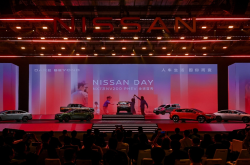
That statement came from Ma Zhixin, Chairman of the Nissan China Management Committee and President of Dongfeng Motor Co., Ltd. In a post-event interview following the Zhuhai NISSAN DAY on November 13, the joint venture leader made the point unmistakably clear.
What does three months mean? A few years ago, a joint venture brand model could comfortably coast on its success for five or six years, with facelifts calculated on an annual basis. But in today's Chinese auto market, a model may peak at launch only to find itself surrounded and outflanked three months later by competitors across configurations, pricing, and intelligence. Once automakers finish selling the car, the real battle for attention has only just begun.
The products on stage confirmed that sense of urgency: apart from the two-door sports car Nissan Z NISMO, everything Nissan brought to the stage this time was domestically produced new energy vehicles. On the same day, Nissan also changed its brand statement, which had been in use for many years, from "Excitement by NI" to "People, Cars, Life, Changed by You," and reiterated its commitment to "In China, for the World."
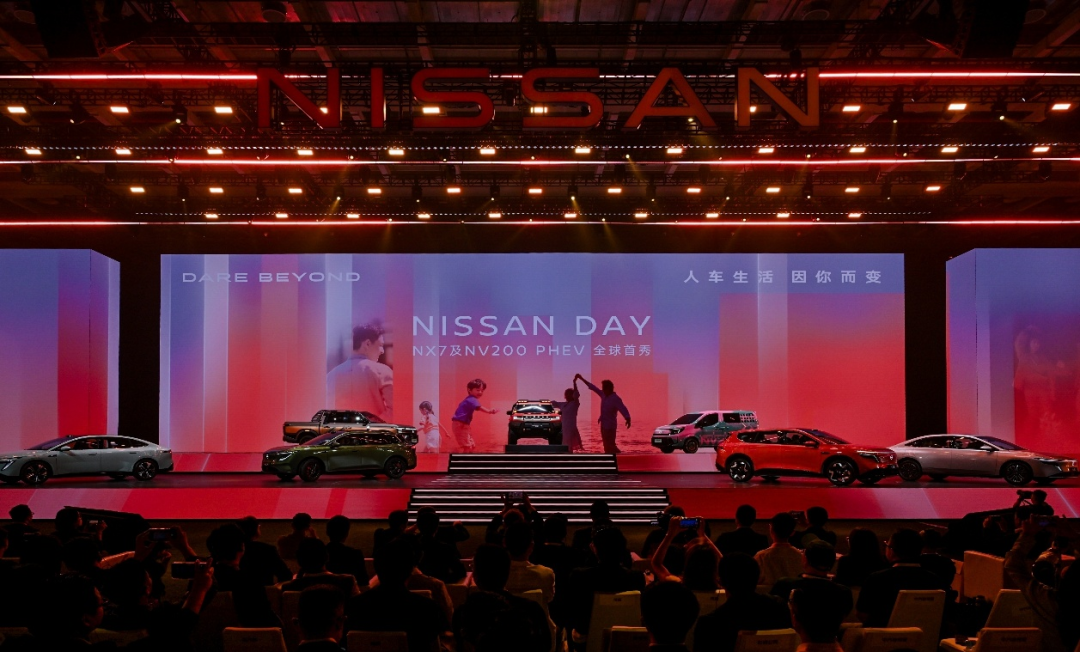
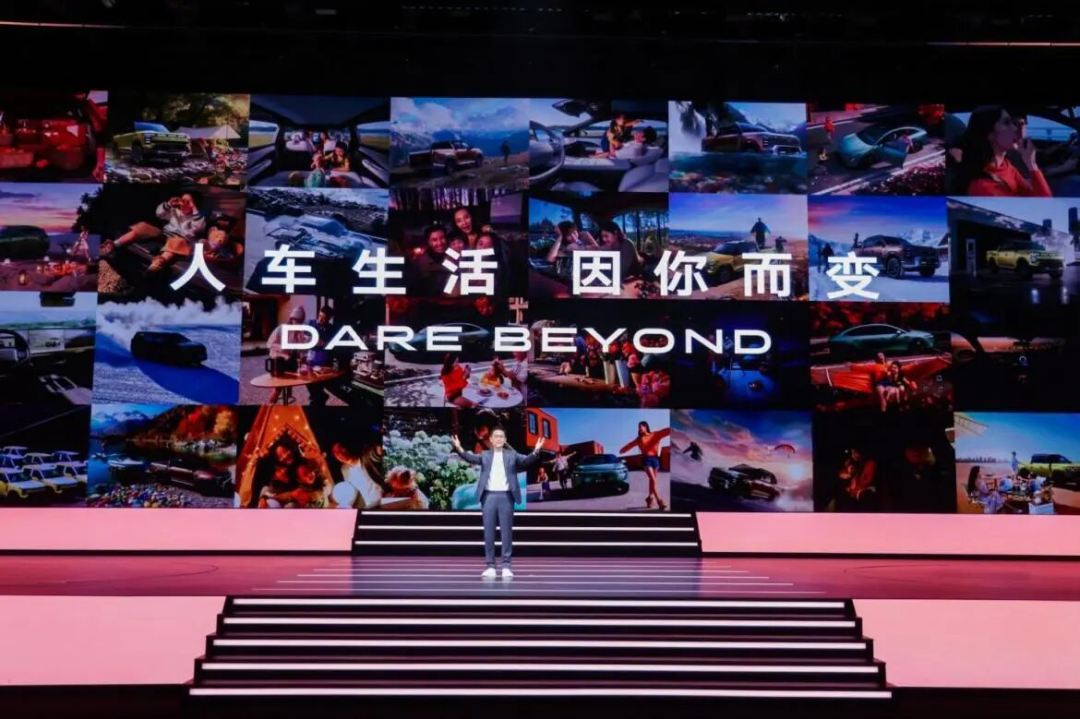
The new energy vehicle lineup on stage, the sense of crisis about "three months" off stage, and the brand-new brand slogan all point to the same fact: Nissan is redefining China's role. This is no longer just a traditional market that needs to halt the decline and recover; it has been pushed to the forefront of global R&D, technology integration, and even complete vehicle exports.
The direction is already clear, but the new transformation has only just begun. For Nissan, which has just gone through a global business restructuring, whether the Chinese market can truly make the new model of "giving back to the world" work will not only determine the next round of growth for this veteran Japanese company, but also serve as an excellent window for observing how all multinational automakers reallocate global resources.
China is beginning to become Nissan's product source
From announcing the start of its new energy transformation in China in 2024 to the concentrated display of new energy products during NISSAN DAY, Nissan's product launches in China have clearly accelerated.
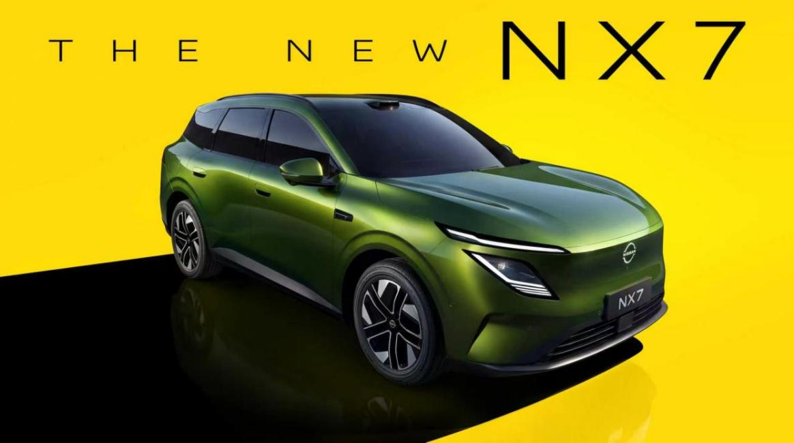
Before NISSAN DAY, Nissan had already launched five new energy models in China, four of which were Nissan-branded models, including the N7, N6, NX8, and Frontier Pro. On that day, the NX7 opened pre-sales, and the NV200 PHEV completed its global debut. These models cover battery electric, plug-in hybrid, and extended range, spanning sedans, SUVs, and pickups. The expansion of the product matrix first responds to the long-standing problem of insufficient product supply that Nissan has faced in China's new energy market.
But beyond the number of models, what is more noteworthy is how these new cars were actually "defined."
Ma Zhixin summarized Dongfeng Nissan's upcoming product strategy as "battery electric + 1": taking battery electric as the foundation, then adding plug-in hybrid or extended range power according to segmented market demand. According to him, the specific power form adopted depends on the actual needs of consumers in the segment. Nissan hopes in this way to make its product portfolio more flexibly adapted to the Chinese market.
This differs from the relatively mature product development model of joint venture automakers in the past. In the past, joint venture brands followed a typical pattern of "headquarters sets the tone, China adapts," with platforms, powertrains, and product planning often decided by global headquarters, while the Chinese team was more responsible for localization fine-tuning and market sales. Now, how to configure power, how to choose configurations, and how to set the pace increasingly require the Chinese team to judge independently based on market realities.
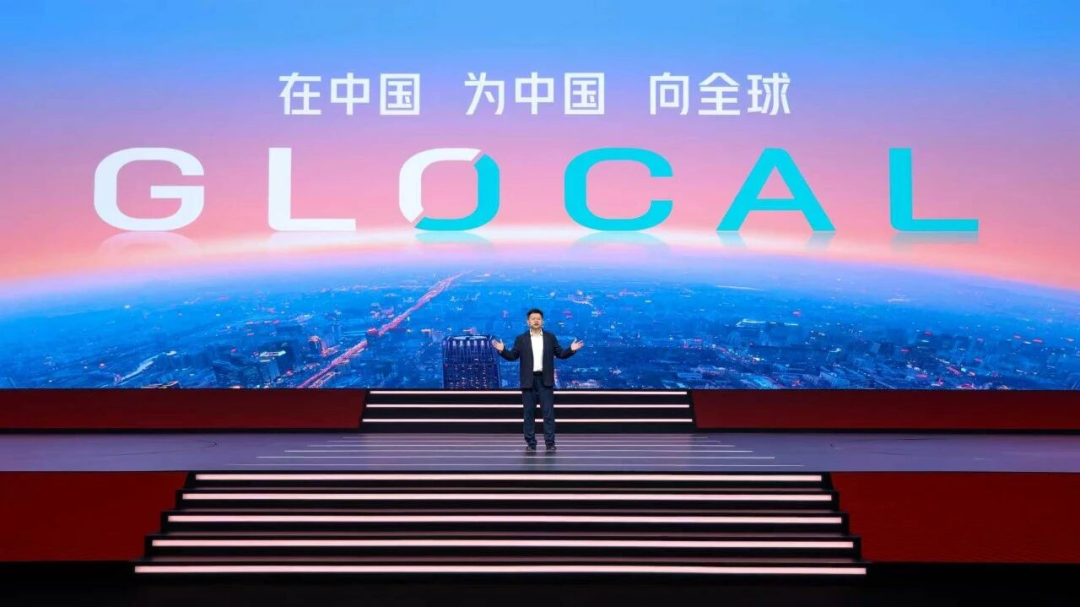
Supporting this shift in voice is Nissan's so-called "GLOCAL" model, which grafts Nissan's global quality, safety standards, and technological accumulation onto China's local R&D, supply chain, and market response speed. The "Tianyuan Architecture" is precisely the technical carrier of this approach, covering areas such as power, electrical and electronic architecture, intelligent comfort, and safety, while the NX7 is the core model built on Tianyuan Architecture 2.0.
Looking at the NX7's specification sheet, the traces of localization are very concrete: the power battery comes from CATL, the assisted driving system uses the Momenta R7 world model, and the intelligent cockpit is NISSAN OS 3.0 jointly developed with iFlytek. At the same time, Nissan has injected chassis tuning expertise from the same team behind the Z NISMO.
These partnerships mean that Nissan is heavily leveraging China's mature technology supply chain to significantly compress the cycle of product development and technology integration. For a multinational automaker in urgent need of filling its new energy shortcomings, this kind of "borrowing the boat to go to sea" is far more realistically efficient than developing everything from scratch on its own.
The personnel arrangements in R&D also sent a signal. Hirobumi Eda, who once served as chief engineer of the Nissan Z model, now leads Nissan's R&D work in China. This arrangement at least shows that Nissan is attempting to deeply integrate the hard power of global performance development with local Chinese product needs.
However, changes in product definition capability require more careful judgment. Looking at the NX7, the powertrain combination, configuration choices, and integration of local suppliers do indeed reflect a significant increase in the Chinese team's participation; but this cannot simply be equated with "global product definition power having already completely shifted." Nissan's global platforms, quality standards, safety bottom lines, and validation systems still impose hard constraints, and the Chinese team is more completing product definition and development within the global technology framework while combining local market conditions. Therefore, Nissan China's turn is not a "solo flight" detached from the global system, but rather the Chinese team beginning to shoulder more real power in product definition and technology integration.
This is precisely the first substantive change in "In China, for the World": China is no longer just a sales endpoint that absorbs global products, but has formally become one of Nissan's product sources. The most critical thing to watch next is whether this R&D model combining Chinese and foreign elements can truly adapt to the current speed of competition in the Chinese market.
With a three-month "shelf life," how can Nissan catch up?
Three months is Ma Zhixin's estimate of the competition cycle for new cars in China. His judgment comes from the dramatic changes in China's auto market over the past year and a half to two years: competitors are clustering with new launches, consumers are becoming more selective, the spotlight effect after a new car launch is shorter and shorter, and attention can be diverted at any time.
The real-world experience of the N7 gave Nissan a vivid market lesson. This model initially achieved a good market response after launch, but as competitors engaged in close combat, product heat soon faced a test. Nissan concentrated the experience gained from this tuition into the development and launch preparation of the NX7, reworking everything from the core configurations consumers actually pay for, to the reception scripts at dealerships, to the final price anchor.
This shows that Nissan has begun to bring market feedback more directly into the development process of the next product. In the past, multinational automakers' product development usually required longer cycles, with processes organized around platform planning, engineering validation, and global market coordination. This system helped ensure product quality and development standards, but it was not necessarily suited to the rapidly changing competitive environment of the Chinese market.
In today's Chinese market, product competitiveness no longer depends only on power, chassis, and manufacturing quality. The smoothness of the intelligent cockpit, the usability of assisted driving, the speed of software iteration, and even pricing strategy—any shortcoming can deter users. Automakers need to judge demand more accurately during product development and also absorb market feedback promptly after launch.
By binding with leading supply chain players such as Momenta, iFlytek, and CATL, Nissan has indeed opened a "fast lane" to fill in electrification and intelligence. But buying top-tier components does not automatically mean having a good product. System integration, function calibration, vehicle validation, and subsequent OTA iterations still test the automaker's own engineering strength. The NX7 bringing in the team behind the Z NISMO to handle chassis tuning precisely reflects this relationship: hardware and technology can be integrated through the supply chain, but the driving experience and product character of the complete vehicle still require the company's own development capabilities to accomplish.
Ma Zhixin also mentioned that products need to maintain freshness at high frequency, and it may not be necessary to carry out drastic facelifts every time, but users must feel continuous evolution. This statement seems light, but in fact it forces Nissan to reshape its entire development process, internal decision-making chain, and even the collaboration mechanism between Chinese and foreign teams. What Nissan needs to build is not only the ability to "make cars fast," but also the systematic ability to translate market feedback into product adjustments.
From the N7 to the NX7, Nissan has taken the first step in iteration. But how long the NX7 can maintain its heat after launch still needs to be tested by sales. For Nissan, the "three-month shelf life" has never been a test of a single model's 100-meter sprint, but of the entire company's endurance in continuously responding to market changes.
From export trials to global layout, how far is there still to go?
If the intensive launch of new energy vehicles is Nissan China's "internal reshaping," then complete vehicle exports are the most direct external implementation of "In China, for the World."
On October 7, the Frontier Pro officially landed in Mexico. According to Ma Zhixin, Nissan has an overall market share of about 18% in Mexico, and local dealers are constantly urging for orders, hoping to bring in more Frontier models. Then on November 6, both the Frontier and Navara pickups entered the Philippines, and the N7 also entered the local market under the classic "Primera" badge.
The channel that opened the overseas path for this batch of new cars is precisely Nissan Import & Export (Guangzhou) Co., Ltd. As models developed in China and manufactured in China continue to drive overseas, Nissan China's positioning has also extended accordingly, upgrading from simply serving the local market to an important link in Nissan's global supply chain.
A larger overseas map has already been laid out. According to plans disclosed by management, in 2026 the joint venture company's products will enter more than 30 countries and regions, and related market cooperation is being advanced; in 2027, coverage is planned to be further expanded. In terms of the product lineup, in addition to the Frontier and N7, the NX8 has already locked onto the Latin American market, the NX7 is in the export evaluation stage, and the production version of the Terrano PHEV Concept is also planned for some overseas markets.
Export products include both pickups and battery electric and plug-in hybrid models. This means that what the Chinese base supplies is no longer just a single product line developed for the Chinese market, but a core piece truly integrated into Nissan's global product matrix.
However, there is still a distance between the number of export countries and actual commercial contribution. Ma Zhixin was very candid: at present, Nissan China's export base is still not large. As for whether to spend money building plants overseas, Nissan also remains highly restrained, first using complete vehicle exports to test the local waters, and waiting until sales truly achieve scale effects before evaluating the necessity of localized assembly or production.
Behind this "small steps, quick progress" strategy is an extremely pragmatic business calculation. Building plants overseas means heavy-asset, long-cycle investment in equipment and capacity. Once the market volume cannot support it, fixed assets will become a heavy burden. This is highly consistent with the overall direction of strict cost control and pursuit of resource efficiency in Nissan's current global business restructuring.
At this stage, going overseas is more like a stress test of product adaptability for Nissan. Positive feedback from Mexican dealers is a good sign, but global markets vary greatly, from user preferences and regulatory access to differences in brand awareness and channel systems, and the experience of one market cannot simply be copied.
For exports to truly turn from a "strategic project" into a sustainable "good business," several indicators still need to be observed: whether sales in a single market can reach scale, whether after-sales service and channels can keep up, whether products can earn stable profits, and whether there is the economic viability for further localized production. Before these conditions are met, the more than 30 countries represent only the breadth of market coverage, and there is still some way to go before true commercial depth.
Can 19 million existing customers become the new chassis for growth?
In addition to filling in product R&D and opening export channels, Nissan also needs to win back Chinese consumers. After years of deep cultivation in China, Nissan has accumulated more than 19 million base customers. This is a solid foundation, but in a dramatically changing market, existing users will not automatically become new car buyers.
In the interview, Ma Zhixin acknowledged that many consumers still associate Nissan with "traditional fuel vehicles" and remain unaware of its current new energy vehicle lineup. The fact that the NISSAN DAY stage featured only new energy products—aside from the sports car Z—was precisely Nissan's concentrated effort to break this stereotype.
The brand statement was updated from "Excitement by NI" to "People, Cars, Life, Changed by You," a move that also responds to this need. Liu Xinyu, General Manager of Nissan (China) Investment Co., Ltd., explained it this way: the previous slogan leaned more toward a single emotional expression, while the new statement emphasizes the brand's response to users' real needs and lifestyles.
In fact, Nissan does not lack strong brand assets to leverage. On the performance front, the GT-R, Z, and NISMO enjoy extremely high fan recognition; in family scenarios, the "mobile sofa," durability, and fuel-saving reputation were once Nissan's sharp weapons for sweeping the market; in the hardcore off-road segment, the Patrol and pickups have also cultivated a loyal fan base. These brand assets were formed in the fuel vehicle era, but that does not mean they have lost value in the new energy era. The key is whether Nissan can transform these emotional labels into actual experiences perceivable in new cars, rather than merely repeating brand history.
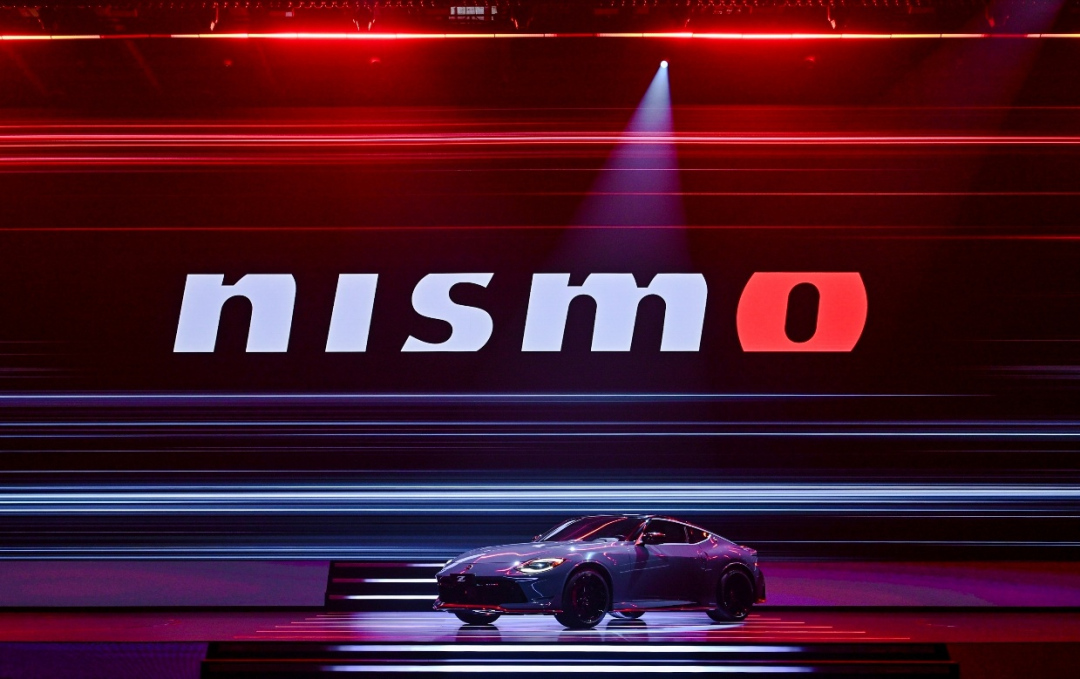
Officially introducing NISMO into China is Nissan's move to reactivate its performance DNA. Nissan hopes to feed the track accumulation and chassis tuning expertise back into its mass-produced cars in China, creating differentiation in a highly homogeneous electric vehicle market. Ma Zhixin believes that as product homogenization becomes increasingly serious, consumers' desire for personalization and driving feel will, on the contrary, become more prominent.
At the same time, Nissan must also stabilize its channel foothold. At present, Nissan's dealer network in China remains under the dual pressure of declining fuel vehicle sales and per-store profitability. Management has clearly stated that the channel network will continue to be optimized and adjusted, with the core goal of preserving the operational health, service standards, and customer stickiness of retained outlets.
This also means that Nissan's brand reshaping is by no means just a marketing issue. Whether consumers know that Nissan has new energy vehicles, whether they can enjoy a matching experience after entering the store, and whether dealers have reasonable profits to continue generating cash flow—all these factors are interlinked. The 19 million owners are Nissan's base card for restarting user connections, but turning the existing base into incremental growth must rely on the simultaneous efforts of products, channels, and services.
Developed in China, seeking global growth
Taking stock, Nissan's strategic puzzle in China has clearly emerged: on the product side, the new energy matrix is accelerating its expansion; on the R&D side, the Chinese team has taken over more product definition and technology integration authority; on the overseas side, models developed and manufactured in China are beginning to enter more overseas markets, and Nissan is also trying to incorporate China's supply chain, R&D efficiency, and manufacturing capabilities into global resource allocation; on the brand side, it is trying to revive its traditional assets in performance, comfort, and off-road capability. Several fronts are advancing simultaneously, reflecting Nissan's thorough reassessment of the value of the Chinese market.
In the past, China played more of a "super marketplace" role in Nissan's global product and technology system; but today, China's local supply chain advantages, R&D efficiency, and manufacturing capabilities are being deeply embedded in the reallocation of Nissan's global resources. China is no longer just a sales endpoint, but is also expected to become a new engine driving products and performance.
This is both a microcosm of the rise in the discourse power of China's automotive industry chain and an inevitable choice for multinational giants to reinvent themselves in adversity.
But it must be clearly recognized that Nissan is still in the deep water zone of transformation. Before management, there is still a series of tough questions to be answered: can the densely launched new energy vehicles continue to win market recognition and reverse the trend of sales and share in China? Can models developed and manufactured in China gain a firm foothold overseas, enabling overseas expansion to move from "early experimentation" to "sustainable profitability"? At the same time, can the adjustment of the channel network and the refresh of brand perception keep up with the pace of product launches? The answers to this series of questions will directly determine whether Nissan's new layout in China can truly support the fulcrum of global recovery.
From "selling in China" to "developing in China for the world," Nissan has taken a key step. But the real test has only just begun—it must prove with market results that China can not only help Nissan build more competitive cars, but also bring this veteran Japanese company real growth in sales, share, and profit.

Image: from Nissan
Article: Auto Review
Layout: Auto Review
-
![]()
P/S and O/E: Two Fundamentally Different Naming Systems Describing the Same Polarization State
-
![]()
Too "Involutionary"—Even a Foot-Washing Basin Gets Into the Car?
-
![]()
November Auto Market: Penetration Rate Spikes as Retail Contracts — How to Make Sense of It?
-
![]()
Nissan in China: Seeking the Next Round of Growth
-
![]()
Musk Delivers on His Promise! Tesla FSD V15 Makes a Blockbuster Debut: Stock Surges Over 11% Overnight
-
![]()
Outpaced by Chinese Brands, Japanese Automakers Opt for Their Quietest Strategy Yet
-
![]()
BBA Charges into the Heartland of NIO, XPeng, and Li Auto
-
![]()
Tencent WorkBuddy, Winning "Major Contracts" in Quick Succession!