Priced from ¥339,900, with range starting at 651 km and no urban NOA—Who Exactly Is the Lexus ES EV Meant For?
 11/24 2026
 563
This was an exceptionally low-key new car launch.
On November 22, the all-new Lexus ES pure electric version was launched in China, with two variants introduced this time. The ES 350e long-range version is priced at ¥339,900, and the ES 500e high-performance version at ¥359,900. Compared with the ES 350h hybrid version launched at the previous Beijing Auto Show at ¥299,900, the pure electric version carries a ¥40,000 premium. Some described it this way: in a corner where no one was paying attention, the ES pure electric was launched. That description roughly captures the awkward position it finds itself in.
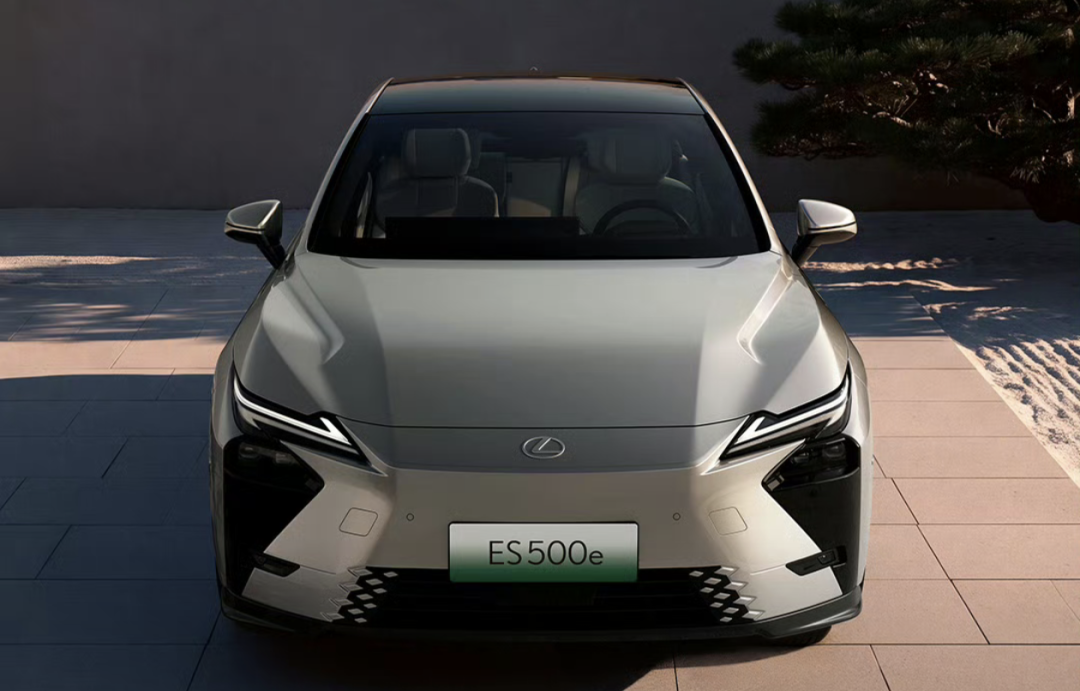
Unlike the new-generation pure electric products currently launched by BBA, the Lexus ES pure electric is not a model built on a native pure electric platform, but is built on Lexus's Multi-Pathway shared platform. Its logic is to share the chassis foundation between hybrid and pure electric, with the battery placed under the floor. This product definition determines its competitiveness boundary and market ceiling, and also defines Lexus's position on China's electrification chessboard.
From the perspective of product competitiveness, the strengths of the Lexus ES pure electric lie in chassis quality, reliability, and brand inertia, while its weaknesses lie in platform architecture and intelligence. For a pure electric product, Chinese consumers now default to associating this with strength, but the Lexus ES pure electric has not achieved this, which gives it an inherent lack of competitiveness in the market.
In terms of range, the Lexus ES pure electric is equipped with a 68.5kWh ternary lithium battery from CATL. The CLTC range is 707 km for the 350e and 651 km for the 500e. At its level, this range does not hold an advantage and is a middling performance. Secondly, in terms of charging, the maximum DC fast charging across the lineup is 105 kW, with 30%–80% charging taking about 23 minutes; in terms of power, the 350e is front-wheel drive with a 0–100 km/h acceleration of 8 seconds; the 500e is equipped with DIRECT4 electronic dynamic all-wheel drive, with a combined power of 252 kW and a 0–100 km/h acceleration of 5.5 seconds. It can be seen that the Lexus ES pure electric does not simply pursue straight-line drag racing capability.
In terms of other configurations, the Lexus ES pure electric is equipped with SiC silicon carbide electronic control, swing valve damping shock absorption, 3.5 kW external discharge, the LSS+4.0 intelligent driving system, Mark Levinson audio, soft-close doors, front-row infrared heating, and other LEXUS configurations.
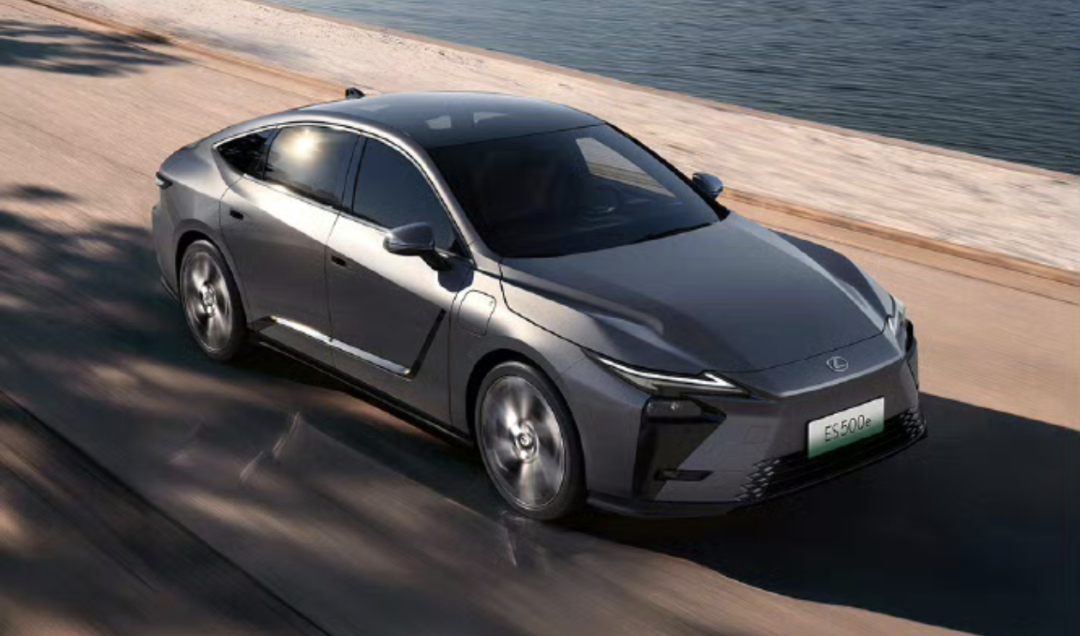
In terms of intelligence, the car comes standard across the lineup with the LEXUS Lexus Safety System+ 4.0, covering the Advanced Park intelligent parking assist system, Lane Change Assist LCA, Predictive Active Driving Assist System PDA, and others, calmly adapting to diverse and complex road conditions. The new car is also equipped with high-precision pixel-style micro LED headlights, supporting the High-precision Adaptive High-beam System HD-AHS, improving nighttime lighting performance. Compared with the industry, this is indeed somewhat inadequate.
Its advantages are the continuation of Lexus's traditional luxury capabilities:
First, the engineering orientation of chassis tuning, quietness, and long-term reliability continues the ES family's character of comfort, low fatigue, and low failure rate; the torque distribution logic of DIRECT4 all-wheel drive focuses on smoothness and controllability rather than aggressive performance;
Second, energy consumption control is impressive, with electricity consumption as low as 12.2 kWh per 100 kilometers, which is at the upper level among mid-to-large sedans of the same size. The battery capacity is not large, but the range figures are considerable;
Third, the service and value retention system continue, with the battery offering free warranty for 8 years / 160,000 kilometers if capacity falls below 70%, carrying on the replacement trust of existing ES users;
Fourth, it shares the same vehicle series, exterior, and interior with the hybrid, lowering the cognitive threshold for existing users, and is suitable for existing customers who do not want to completely jump out of the Lexus system but want to try pure electric.
The shortcomings of this car are equally prominent—this is also the core evaluation yardstick in China's current high-end pure electric market:
400V voltage platform, which has not kept up with the domestic mainstream 800V ultra-fast charging wave; 105 kW fast charging power, compared with domestic models in the same price range that generally have fast charging above 200 kW, the gap in charging efficiency is obvious; the platform is a multi-pathway platform shared by oil and electricity, not a native pure electric exclusive platform, and the chassis layout, battery pack placement, and body lightweighting are all constrained by the hybrid structure; intelligent driving is mainly based on LSS+4.0 assisted driving, without high-level urban NOA or multi-lidar solutions, and the gaps in cockpit interaction, OTA iteration speed, and ecosystem expansion capability compared with domestic independent luxury carmakers' products are relatively significant.
In the ¥300,000–350,000 price band, the competitors of the Lexus ES pure electric can be divided into three categories: the first category is domestic high-end pure electric sedans, such as Stelato S9, Luxeed S7, NIO ET5, etc. The second category is German foreign luxury pure electric: BMW iX3, Mercedes-Benz GLC pure electric, etc. The third category is Tesla Model 3. Even when facing similar BMW iX3, Mercedes-Benz GLC pure electric, etc., the Lexus ES pure electric does not have very certain advantages.
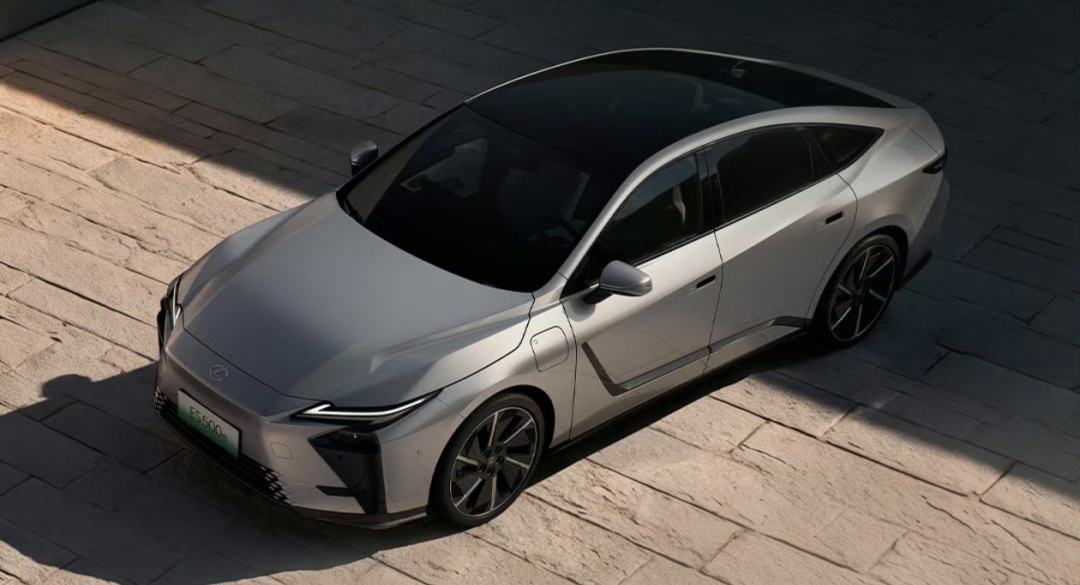
Compared with its own ES350h hybrid, the pure electric version carries a ¥40,000 premium, while the hybrid version has no charging anxiety and no constraint of relying on charging piles, and remains the sales mainstay of the ES series. For most traditional ES buyers, the hybrid is still the more prudent choice. For a Lexus pure electric that can truly compete, it may still be necessary to wait for subsequent domestically produced products. Based on product structure, pricing, and target customer groups, in the fiercely competitive ¥300,000–400,000 price band, it is difficult to attract mainstream pure electric buyers, and the ES pure electric version is unlikely to become a volume model.
Of course, Lexus also has its own very fixed consumer group. They have high brand loyalty and also care more about imported cars, so there is still a certain market foundation. Under an optimistic scenario, the ES pure electric can stabilize at a small-scale monthly sales volume as a supplement to the ES series, but it is difficult to replicate the scale of thousands of units in monthly sales of the hybrid ES. Its market positioning is more like a "brand pure electric sample" rather than a sales mainstay.
We believe the significance of this car is not in driving sales, but in strategic signaling. Lexus has long adhered to the "multi-path parallel" route, not betting on a single pure electric path, but advancing hybrid, plug-in hybrid, and pure electric simultaneously. The ES pure electric is the implementation carrier of this route in the Chinese market.
It completes the powertrain spectrum of the ES family. As Lexus's most core sales pillar in the Chinese market, the addition of a pure electric version to the ES prevents this ace IP from being marginalized in the wave of electrification. Second, this is a large-scale validation of Lexus's multi-pathway shared platform. Third, it is a transitional product before Lexus's domestically produced pure electric vehicles land. The ES pure electric first establishes pure electric user awareness in the Chinese market, polishes the pure electric service system, and collects Chinese users' feedback on the pure electric version, paving the way for subsequent domestically produced native pure electric models.
The ES pure electric version is a product with very distinct characteristics. The ES pure electric has held on to the half that Lexus is good at, but has not yet made up the other half required by the new market. This will be the adjustment needed for subsequent domestically produced cars.
-
![]()
Xiaomi: Out of the Woods, but What Lies Ahead?
-
![]()
AI Enters the Factory: The First Revolution Is in the Enterprise
-
![]()
Shenzhou-24: Reallocating Time in Space
-
![]()
Han Xinyi's 150 Million Users Are Not Ant Afu's Ticket Into the AI Era
-
![]()
The Profit Fulcrum Shifts Outward as the Arbitrage Window Closes
-
Lei Jun Is Having a Really Tough Time: Xiaomi Auto Made Only 900 Million Yuan in Profit Last Year, but Lost 9.1 Billion Yuan in the First Nine Months of This Year!
-
After Raising Over HK$24 Billion, Luxshare Precision Issues Bonds Again: Just How Cash-Intensive Is Its Automotive Expansion?
-
![]()
Can Carmakers No Longer Sustain the Price War?