November New Phone Wave Hits Again! Imaging Remains the Focal Point as Mid-Range Phones Shift Away from Performance Wars
 11/02 2026
 509
Amid the price hike wave, the logic of smartphone competition is evolving.
The flagship launch battles of September and October have barely drawn to a close, and before anyone could catch their breath, the November new phone wave has already arrived.
Over the past two months, manufacturers including Xiaomi, OPPO, vivo, Huawei, Apple, and Honor have rolled out their annual flagships one after another. With these launches in the books, attention now shifts to each company's mid-range product lines.
Based on current official teasers and related leaks, several series—including the OPPO Reno17, vivo S70, Honor 700, and Huawei nova17—are expected to make their official debuts in November. In addition, the long-rumored new Huawei sub-brand "Starlight" may also see its first product unveiled.
However, Leikeji has observed that the smartphone industry finds itself in a somewhat unusual position this year. As costs for components such as storage continue to climb, phone makers are facing mounting cost pressure. Judging from the information exposed so far, this batch of new mid-range phones also appears to be shifting its approach, placing greater upgrade emphasis on imaging, battery life, and appearance design. So, against the backdrop of rising costs, what exactly are manufacturers preparing to offer?
November New Phones Pile Up, Imaging Remains the Top Priority
Let's start with OPPO. As OPPO's product line targeting younger consumers, the Reno series has always been positioned around appearance, portrait photography, and hand feel—and in some imaging features, it even outshines the Find series.
The upcoming Reno17 series is poised to carry this advantage forward.
According to current leaks, the OPPO Reno17 series is expected to offer two distinct product plans featuring large and small screens. Among them, the Reno17 Pro may retain the roughly 6.32-inch small flat-screen design, support 1.5K resolution, and further enhance its imaging configuration while maintaining a relatively compact body.

(Image source: OPPO official)
In terms of imaging, it will feature a 200-megapixel large-sensor main camera with gimbal stabilization technology, and may even be equipped with a 50-megapixel periscope telephoto lens. In addition, OPPO is reportedly evaluating an independent AI button and rolling out more new features centered on live photos, video shooting, and AI photo editing.
If these leaks prove accurate, the imaging upgrades on the Reno17 series are indeed worth looking forward to. After all, for users in this price range, phone photography is no longer just about documenting life. Whether it's travel photography, daily selfies, or sharing live photos on social platforms, imaging features are used quite frequently.
The periscope telephoto lens, in particular, is what Xiaolei considers the most anticipated configuration of the Reno17 series. In the past, although many mid-range phones packed high-pixel main cameras, telephoto was often the first configuration to be cut. Even when a telephoto lens was included, its actual imaging performance struggled to match that of flagship phones. If the Reno17 series can fit a quality periscope telephoto lens into a relatively thin and light body, its shooting experience could genuinely meet the needs of more users.
Of course, price is the trade-off when it comes to performance. Current leaks suggest that the Reno17 Pro may be equipped with the Dimensity 8550 SUPER processor (the same as the Reno16 series). By 2026 standards, this processor is indeed not particularly powerful, and its performance in some high-load scenarios may leave something to be desired. Rather than blindly chasing flagship-level performance, OPPO clearly hopes to channel costs into imaging, battery life, and body design.
Xiaolei actually sees nothing wrong with this approach. After all, the core users of the Reno series were never aiming for extreme gaming performance. As long as daily smoothness is guaranteed, better photos and longer battery life can meet the needs of the target group.
Compared with OPPO, the imaging upgrade on the vivo S70 series is far more aggressive.
According to existing leaks, the vivo S70 series is expected to feature a roughly 6.59-inch 1.5K flat screen, be equipped with the Snapdragon 8s series mobile platform, and focus its imaging upgrade on periscope telephoto. According to relevant sources, the vivo S70 series may be equipped with a 64-megapixel periscope telephoto lens. Xiaolei suspects it may use the same sensor as the vivo X100 Ultra, so there's little need to elaborate on resolving power and image quality.

(Image source: vivo official)
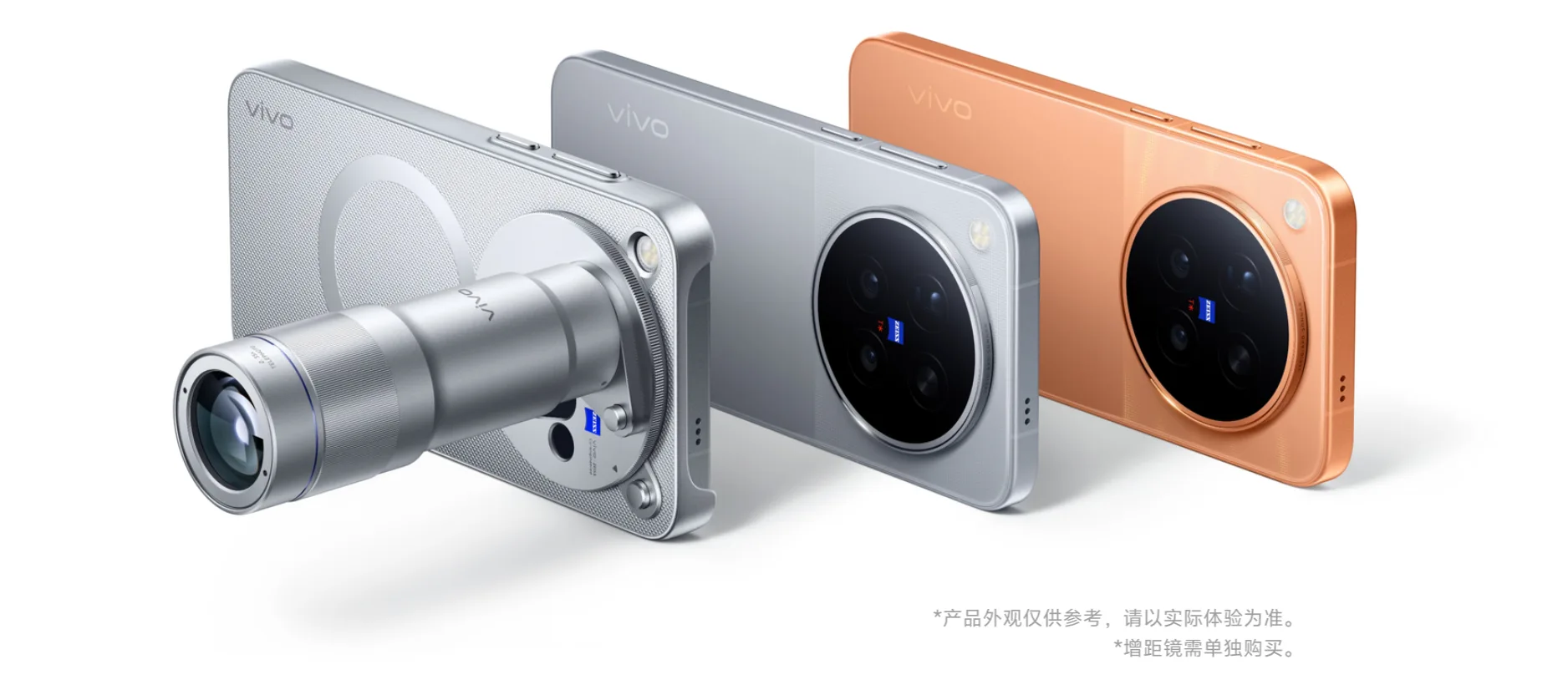
Interestingly, the vivo S70 series may also support an external teleconverter. The external teleconverter is one of the imaging features that vivo's X series flagships have heavily promoted this year: through additional optical lens groups, phones can achieve longer equivalent focal lengths, offering composition capabilities that are difficult to achieve with ordinary phone telephoto lenses at concerts, sporting events, and during long-distance landscape shooting.
However, such accessories generally only appear on flagships and top-end models. A full set costs at least seven or eight thousand yuan, if not ten thousand, so the barrier to entry remains quite high. If vivo really brings this solution down to the S70 series, then for young users who enjoy shooting concerts and stage performances, it would indeed be quite appealing.
(Image source: vivo official)
More importantly, the vivo S series itself has always focused on portrait photography, and telephoto lenses are also well-suited for shooting half-body portraits and close-ups. If combined with a teleconverter, the versatility of the entire imaging system would undoubtedly be further enhanced.
Of course, Xiaolei also has some reservations about this approach. First, while an external teleconverter can deliver a longer focal length, it also means users need to carry additional accessories, and attaching and detaching it is not as convenient as simply using the phone. Second, the teleconverter itself is not cheap. If a full set of accessories costs over a thousand yuan, then for users buying mid-range phones, how many are actually willing to spend this extra money?
As for the Honor 700 series, it may be the most aggressively specced of this batch of new phones. According to current leaks, the Honor 700 series is expected to offer three versions, all featuring a 6.57-inch 1.5K flat screen with an extremely narrow four-sided equal-width design, and the Pro version may also add a 1.72-inch native rear screen. In terms of imaging, the Honor 700 series is expected to use a 200-megapixel large-sensor main camera, and the Pro version may also be equipped with a 50-megapixel periscope telephoto lens. Even more remarkably, the version with the largest battery capacity in the series may exceed 9000mAh.
For users, an increase in battery capacity is often easier to perceive than a ten-plus percent bump in processor performance. Especially for users who frequently go out to take photos, watch videos, or use navigation for extended periods, the peace of mind that a large battery provides is hard to replace with other configurations.
However, the most intriguing aspect of the Honor 700 series may still be the newly added rear screen. This year, the Xiaomi 18 Pro series has already made the rear screen one of its key product selling points, and now Honor appears to be preparing to bring a similar design to its own numbered series. From Xiaolei's hands-on experience, the rear screen can handle functions such as notification display, selfie preview, and shortcut operations. For users who like using the rear main camera for selfies, this design does have certain practical value.
But Xiaolei believes whether the rear screen can become one of the key selling points of the Honor 700 series still depends on how well the system adaptation is executed. If it can only display time, notifications, or simple animations, then users' novelty may quickly fade. Conversely, if Honor can create more interactions around selfies, live photos, and daily shortcut operations, then the rear screen will have a chance to truly integrate into users' habits.
After all, for mid-range phones, every newly added configuration means added cost. Whether users are willing to pay for this rear screen still depends on how many practical features Honor can offer.
Will Huawei Bring Wide Flat-Screen Designs Down to Nova?
As for the Huawei nova17 series, quite little information has been revealed so far. Essentially, all that can be confirmed is that it will be released in November and
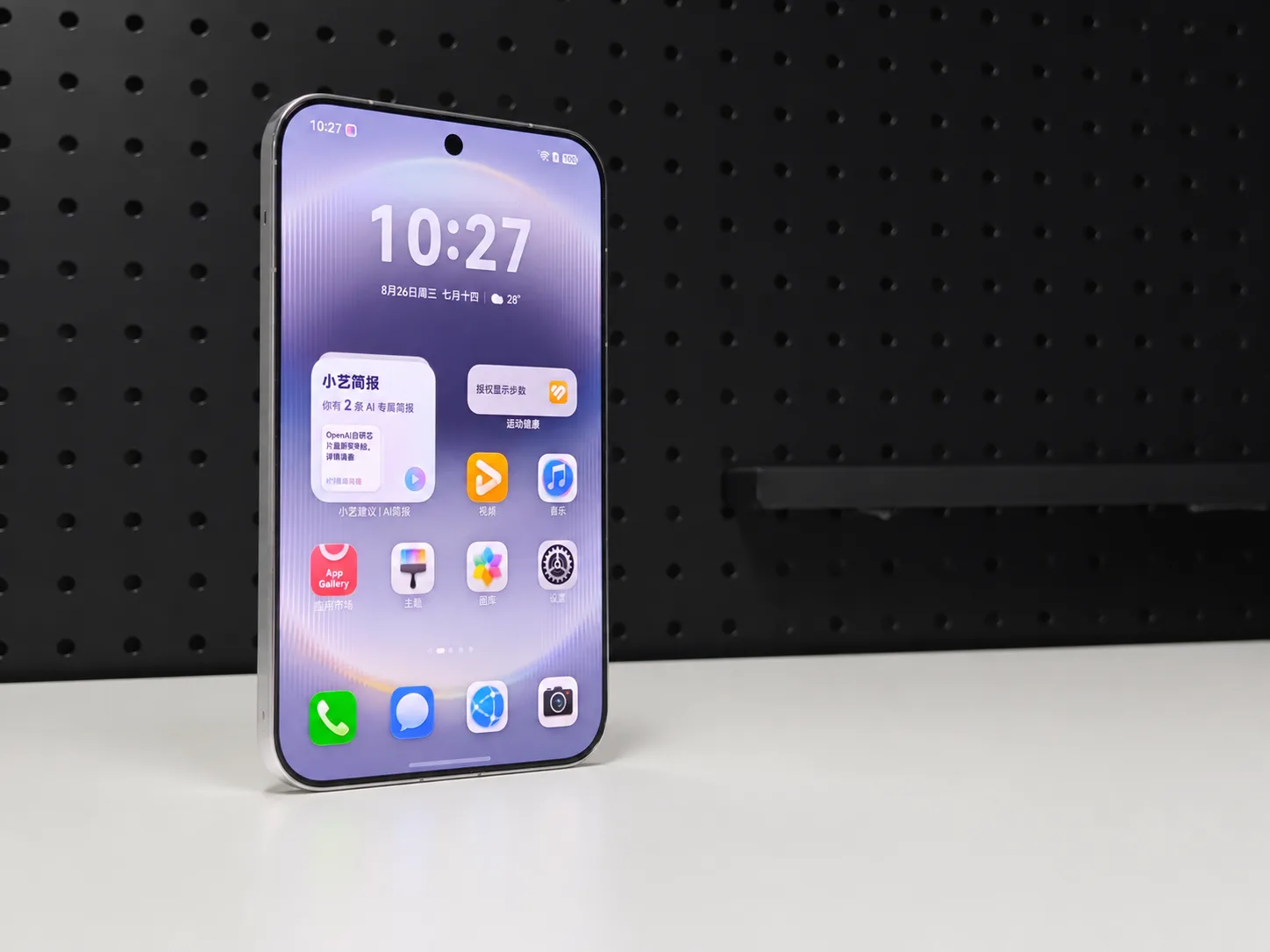
will continue to upgrade around imaging, appearance design, and the usage needs of young users. Previously, there were also leaks claiming that Huawei is evaluating screen plans of different sizes and aspect ratios for the nova product line, including the recently popular wide flat-screen design. Considering that Huawei has already experimented with new screen ratios on the Pura series, it is not out of the question for the nova series to adopt a similar design in the future.
(Image source: photographed by Leikeji)
By comparison, Xiaolei is more concerned about whether Huawei will continue to trickle imaging capabilities from the Mate and Pura series down to the nova series. For example, Red Maple original-color imaging, live photos, and AI photo editing features built around the HarmonyOS system are all areas Huawei has prioritized over the past two years. Red Maple original-color imaging, in particular, matters for users who frequently shoot portraits: accurate skin tone reproduction, stable white balance, and color consistency under different lighting conditions are often more important than simply stacking specs.
If the nova17 series can further improve performance in these aspects, then even without particularly exaggerated hardware configurations, it still has a chance to attract many users. Moreover, Huawei has another advantage: it can combine imaging features with the AI capabilities of HarmonyOS to make the workflow among shooting, editing, and sharing smoother.
In addition to the four products above, there is another brand worth noting in November—the possible new Huawei sub-brand "Starlight."
Recently, a digital blogger revealed that Huawei is planning a new phone brand, possibly positioned more toward the online market and focused on cost-effectiveness. Multiple related products are currently in the pipeline, including even models equipped with active cooling fans. However, as of now, Huawei has not officially confirmed the existence of this phone sub-brand, and the specific product positioning and release timeline still await official announcement.
Mid-Range Phones Begin to Shift Their Approach
In past years, competition in the mid-range phone segment often revolved around processor performance. Especially in the two-to-three-thousand-yuan price range, manufacturers liked to advertise how powerful their chips were, how many hundreds of thousands of points they scored on benchmarks, and how much game frame rates had improved. But judging from the November new phones exposed this time, the situation seems to have changed somewhat. What these products share in common is that they are all striving to find new selling points beyond performance.
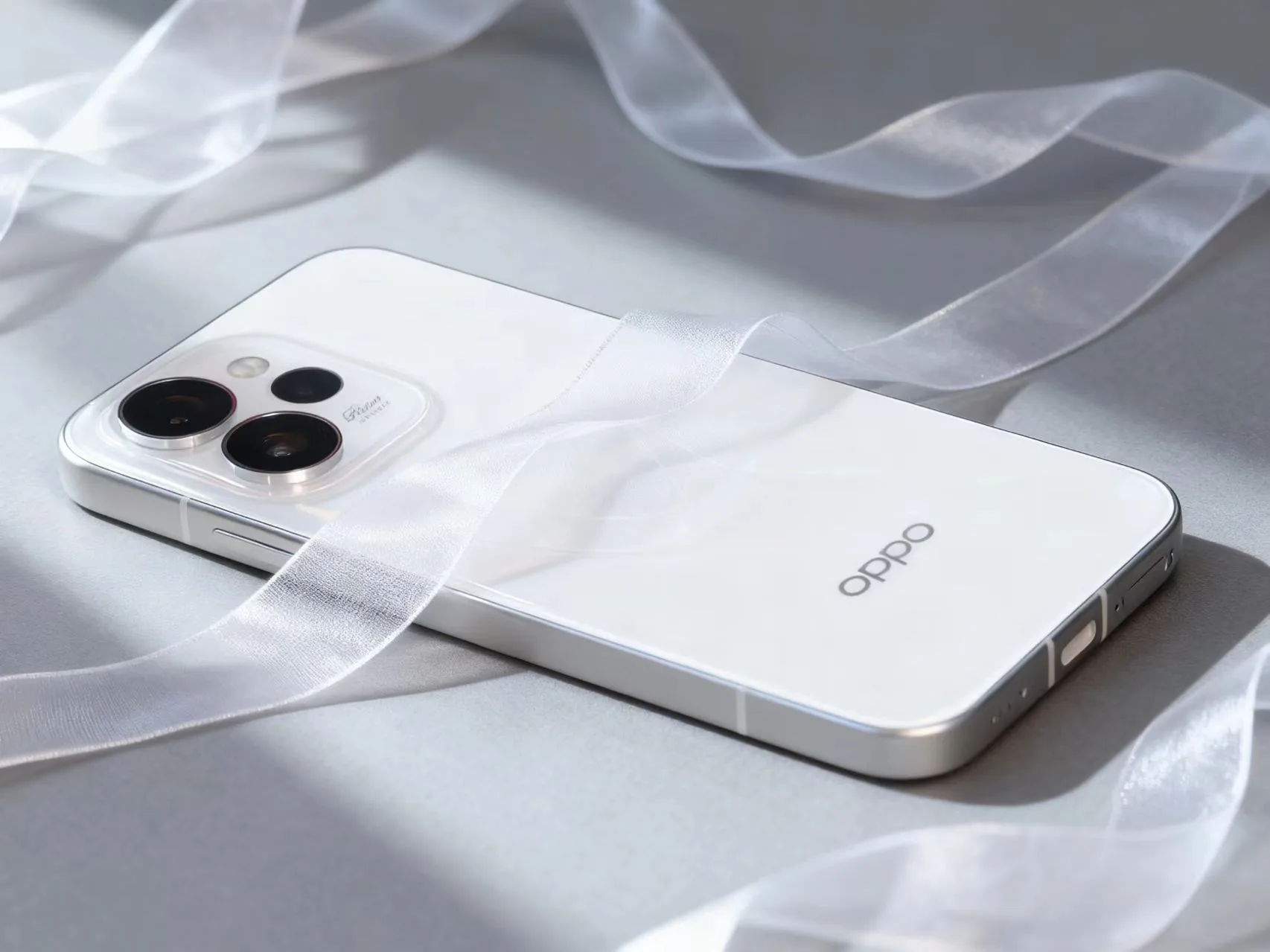
Why has such a change occurred? Xiaolei believes the most direct reason is still cost. Since the beginning of this year, prices of components such as storage chips have continued to rise, already putting considerable pressure on phone manufacturers. For mid-range products in particular, profit margins are relatively limited to begin with, making it difficult for manufacturers to continue upgrading processors, screens, imaging, and batteries while maintaining original prices.
If they continue following the past approach—pursuing stronger processors, larger memory, and higher benchmark scores with each generation—then in the end it is very likely that costs can only be absorbed through price increases.
(Image source: Leikeji)
But the problem is that the user base for mid-range phones is often more sensitive to price. If a phone originally sold for two or three thousand yuan suddenly increases in price by several hundred yuan in the new generation, even if the configuration has indeed been upgraded, it may not necessarily win consumer recognition.
As a result, manufacturers have begun to place more emphasis on product differentiation. For example, OPPO and vivo have already accumulated considerable technology and brand awareness in imaging, so continuing to strengthen the photography experience is clearly more sensible than blindly chasing flagship-level performance. Honor, meanwhile, has chosen to use configurations such as the rear screen and large battery as new selling points, hoping to further enhance product appeal through hardware upgrades that are easier for consumers to perceive.
However, this strategy also has an obvious downside: mid-range phones may become increasingly unbalanced.
Imaging has been upgraded, but the processor has not improved significantly; battery capacity has increased, but body weight and thickness may also increase. Especially against the backdrop of rising storage costs, if manufacturers allocate more budget to imaging or appearance design, then other configurations may naturally be affected.
Xiaolei does not think this shift is necessarily a bad thing. After all, the phone market today is already quite mature, and the performance of most mid-range processors is sufficient for daily use. For users who do not often play large-scale games, a twenty percent increase in processor performance may be less practical than a telephoto lens and a large battery. Moreover, the needs of different users are inherently quite diverse. Some prefer thin and light small-screen phones, some care more about telephoto shooting, and some simply want a phone with sufficiently long battery life.
If manufacturers can introduce more distinctive products tailored to these needs, they may also inadvertently prevent the entire mid-range market from degenerating into competition based solely on benchmark scores and specifications.
However, differentiation must not become an excuse for cutting corners on configurations. If a phone significantly compromises other lenses in order to add a 200-megapixel main camera, or sacrifices body weight, heat dissipation, and charging experience in pursuit of an ultra-large battery, then whether such upgrades are truly worthwhile is still questionable.
Summary: November new phone launches are bustling, and price has become a key competitive factor
Overall, although the upcoming November does not feature as many annual flagship launches as September and October, competition in the mid-range phone market may be no less intense. Judging from current leaks, OPPO, vivo, Honor, and Huawei are all preparing to offer something new—especially in imaging and battery life, where many configurations previously promoted mainly by flagship phones have already appeared.
But Xiaolei believes whether this batch of new phones can ultimately gain market recognition still depends on the selling price. After all, 200-megapixel cameras, periscope telephoto lenses, rear screens, and ultra-large-capacity batteries all sound attractive, but if the final prices rise significantly, then the appeal brought by these configurations will also be greatly diminished. Moreover, this year many performance flagships have already pushed prices to quite aggressive levels. If mid-range imaging phones continue to move toward the three-to-four-thousand-yuan price range, they will inevitably face greater competitive pressure.
For users preparing to change phones at the end of the year, Xiaolei suggests waiting until this batch of November new phones is officially released, and then making a decision based on actual prices and configurations. As for which manufacturer can offer truly sincere products amid rising costs, the answer should emerge in the next month.
Source: Leikeji
Images in this article are from: 123RF licensed image library Source: Leikeji
-
![]()
Apple Finally Announces Beta Timeline for Apple Intelligence in China
-
![]()
A Nonexistent Poor Child Is Draining Your Parents' Wallets
-
![]()
Is Automatic Parking Really the Touchstone for Intelligent Driving?
-
![]()
Final Word: Why Has the "Golden September and Silver October" Disappeared from China's Auto Market This Year?
-
![]()
Behind the 18-Satellite Launch: Who Determines the Fate of China's Commercial Rockets?
-
Anthropic's IPO Challenge: Can It Outrun Compute Bills and Loss Pressures?
-
Insta360 Innovation Q3 Report: New Products Accelerate, Ecosystem Synergy Builds Strength for a New Cycle of All-Scenario Intelligent Imaging
-
New Forces Reshuffle: Xiaomi Breaks 50,000 Again, Secures Top 3 — Has "Xiao-Wei-Li" Taken Shape?