Are AI Imaging Features About to Become Paid? Rising Cloud Token Costs for Phone Makers Make On-Device Computing Power the Right Path
 11/05 2026
 447
Spend seven or eight thousand yuan on a phone, and you still have to pay to edit a photo.
This year, the competition among phone makers in imaging has shifted from hardware to AI.
From the earliest AI passersby removal and AI outpainting to today's AI super-resolution, AI photo editing, and AI composition—and even the ability to automatically adjust a photo's color, lighting, and background by simply typing a sentence—AI's presence in smartphone imaging is growing stronger. This year in particular, AI has become an almost unavoidable focus at flagship phone launch events, with manufacturers eager to slap the word "AI" onto every photography feature.

(Image source: vivo official)
But Leitech (ID: leitech) has found that with the "proliferation" of these AI features, a new problem has emerged: these features may not be entirely free.
Take this year's Xiaomi 18 series as an example. Its "Legendary Moment" large-model imaging feature has already begun using a points mechanism. In addition, some AI features from brands such as vivo and Honor have also gradually introduced usage limits, and some have even begun experimenting with paid models.
In the past, users could enjoy all photography features after buying a phone. Now phones are getting more expensive and AI features are multiplying—so why do users instead have to "pay" for a photo?
AI Imaging Features Are Getting Stronger, but They May Not Stay Free Forever
Over the past few years, phone makers have mainly focused on sensor size, lens focal length, optical stabilization, and computational photography algorithms. By 2026, AI imaging has become a key point at flagship launch events and has even begun to participate in composition, shooting, and post-processing.
Previously, when Leitech (ID: LeiTech) compared the Xiaomi 18 Pro Max, OPPO Find X10 Pro Max, and vivo X500 Pro Max in a side-by-side review, it noted that in addition to conventional AI removal and AI outpainting features, domestic phone makers have also added features such as "AI shooting assistant," "AI retoucher," and "AI image-to-video," with the main selling point being that users only need to press the shutter and leave everything else to the phone.
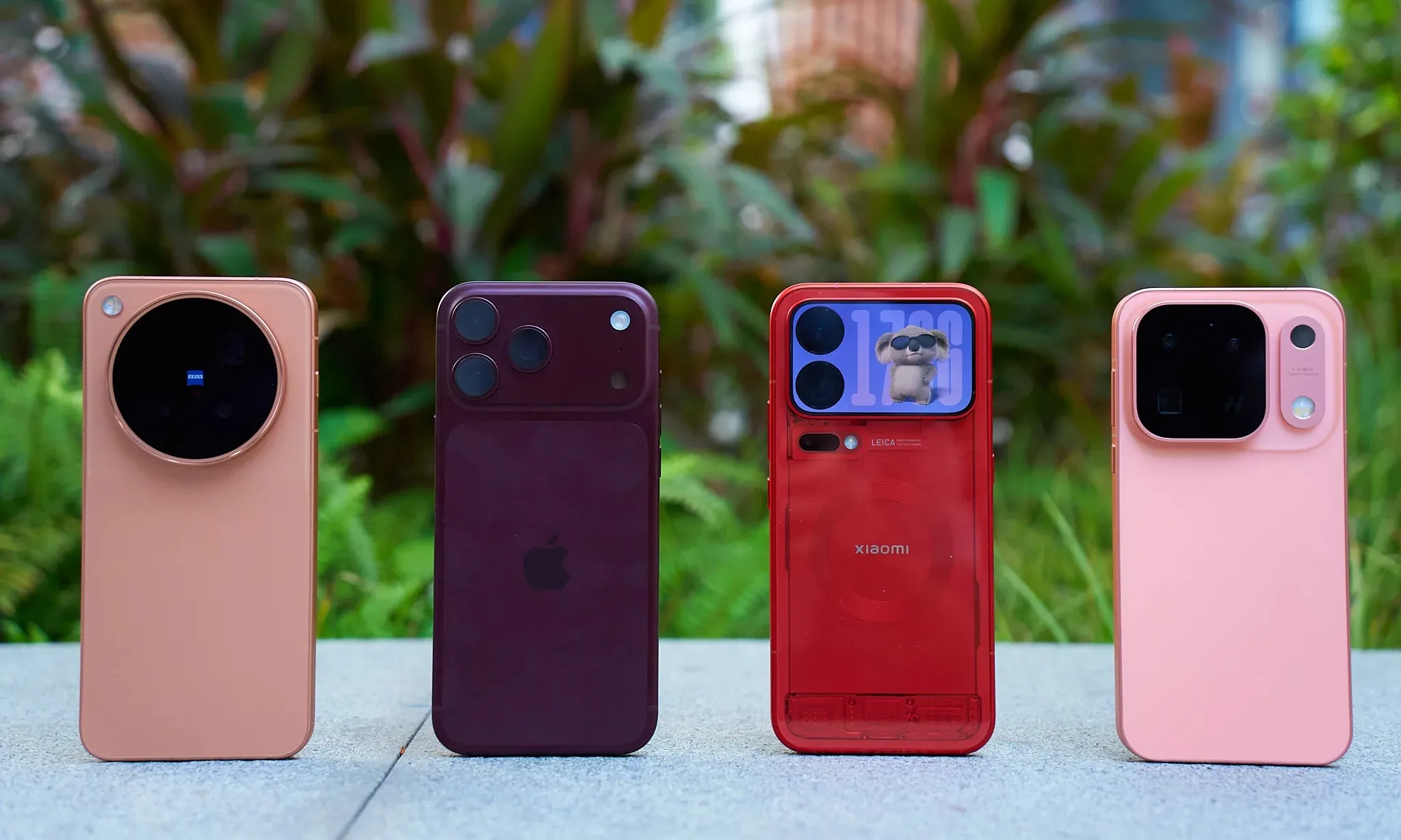
(Image source: photographed by Leitech)
However, these AI features are not necessarily all free to use.
A relatively typical case at present is the "Legendary Moment" feature of the Xiaomi 18 Pro series. Under the current rules, each invocation of this feature consumes 100 points, the system grants a certain monthly allowance, and starting in 2027 it plans to shift to a paid points mechanism.
Some vivo AI features have also begun introducing usage limits. For example, the AI custom beauty feature of the previous X300 series once imposed limits on usage quota.
Honor's AI image-to-video feature launched in some markets has already adopted a combination of free quota and paid generation. Users can try it free a certain number of times, and after exceeding the quota they need to pay extra.
Of course, the charging policies of different manufacturers still differ significantly. Some features are completely free, some have usage limits, and some have already clarified paid rules, so they cannot be generalized.
Is Charging for AI Photo Editing Reasonable? Phone Makers Have No Choice Either
At this point, many readers may feel that phone makers are being a bit too greedy.
A flagship imaging phone now starts at six or seven thousand yuan, with top-end models approaching five figures, and yet users still have to pay extra even to edit a photo. No matter how you look at it, that seems hard to justify. But from a technical perspective, charging for AI imaging is not entirely without reason.
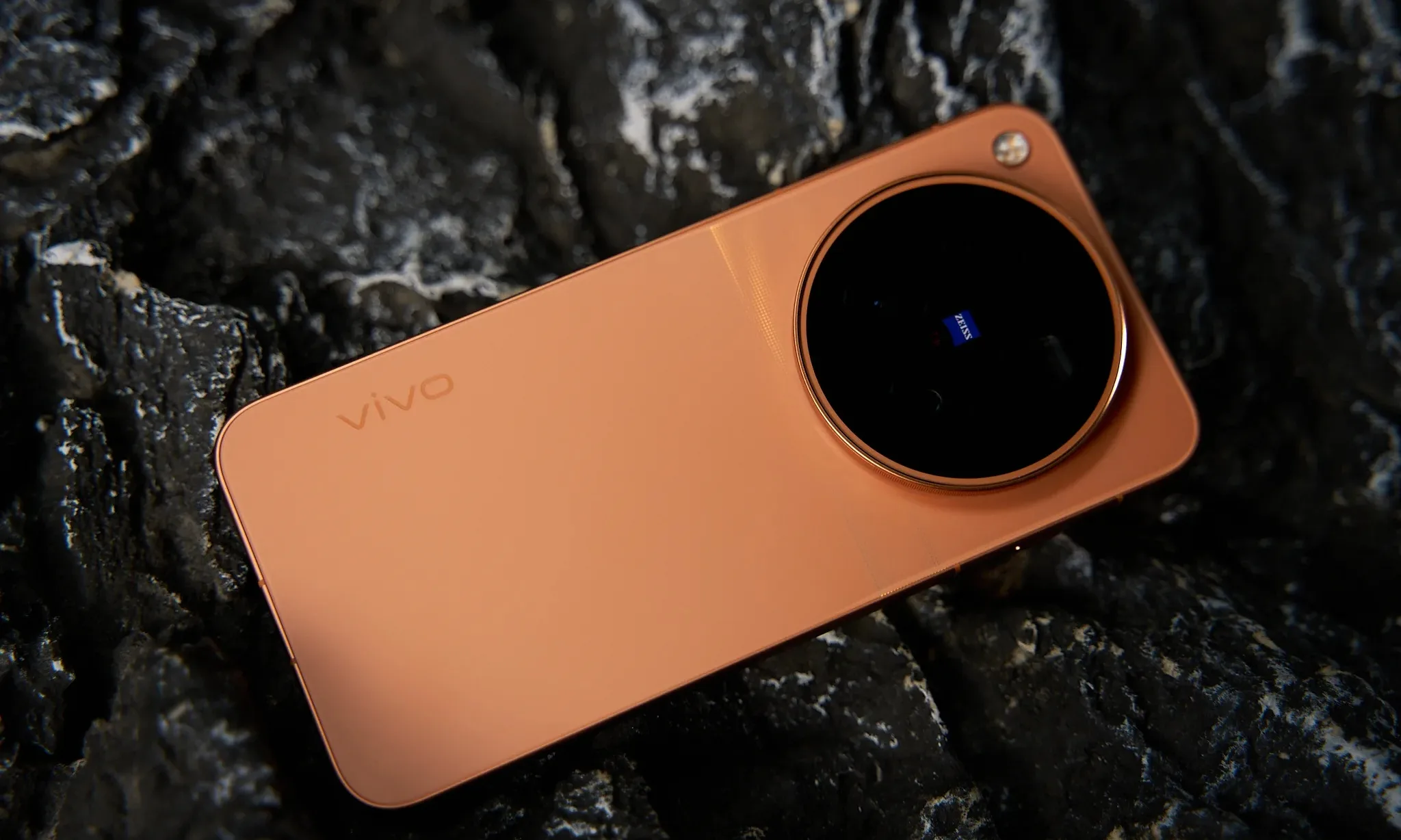
(Image source: photographed by Leitech)
First, I should clarify that today's AI photo editing and what we used to call computational photography are completely different things. In the past, phone photography mainly relied on local algorithms to process images, such as HDR compositing, night noise reduction, and portrait blur. Although these features also required substantial R&D investment, once deployed on the phone they mainly rely on the processor and ISP to complete computations, and manufacturers do not need to provide cloud computing resources for every photo users take.
But generative AI photo editing is completely different. Take AI outpainting as an example. When a user wants to extend a vertically composed photo into a horizontal composition, AI needs to analyze the content of the original image and then generate a background that did not originally exist. If the image contains buildings, people, or complex textures, it also needs to ensure as much as possible that the newly generated parts remain consistent with the original image. Similar cases include AI super-resolution, removal of complex objects, and AI background replacement. To achieve better generation results, some manufacturers choose to hand these tasks over to cloud large models for processing.
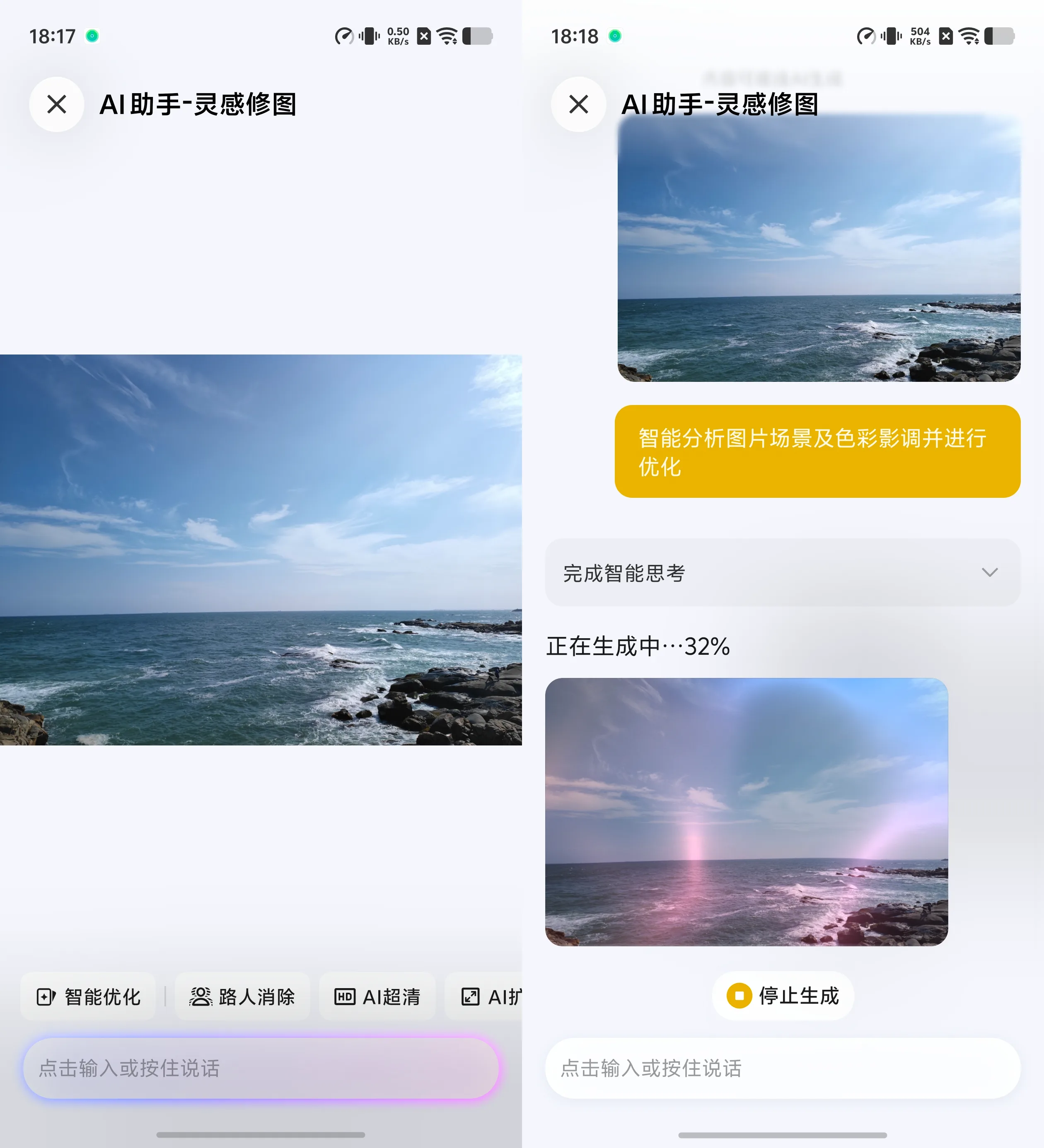
(Image source: chart by Leitech)
This means that every time a user clicks generate, the phone has to perform corresponding computations in the cloud and burn a certain amount of tokens. Moreover, the higher the photo resolution and the more complex the image content, the more data usually needs to be processed. If the user is dissatisfied with the generated result and repeatedly adjusts instructions and regenerates, the consumption of computing resources will further increase.
For phone makers with tens of millions or even hundreds of millions of users, maintaining these AI services over the long term indeed requires considerable investment. Moreover, cloud AI services also involve long-term costs such as server maintenance, network transmission, and model updates. Even if the phone has already been sold for several years, as long as users are still using the relevant features, manufacturers still need to continue bearing operating costs.
It Is Not Easy to Persuade Users to Pay; Strengthening On-Device AI Is the Right Path
But I think that manufacturers having operating costs is one thing, and whether users are willing to pay for those costs is another.
After all, AI imaging itself is an important selling point that manufacturers use to attract users to buy new phones. At launch events, manufacturers spend a lot of time demonstrating how AI can make photos clearer, how it can remove passersby from complex backgrounds, and how it can generate an ideal photo through a single sentence. After watching these demonstrations, users naturally assume that these features are also "part" of the phone.

(Image source: OPPO official)
If users choose to buy a certain phone precisely because of these features, only to discover after using it for a while that continued use requires extra payment, it is inevitable that they will feel a psychological gap. In particular, if the charging rules for some features are not clearly stated at launch and quotas are later adjusted or subscription mechanisms are added, it is even more likely to cause controversy.
Over the past two years, from Qualcomm and MediaTek to various phone manufacturers, all have continuously emphasized on-device AI capabilities. The NPU performance of today's flagship processors has improved significantly, and some AI tasks that previously required an internet connection have gradually begun to run locally on the phone. For example, some relatively simple image recognition, basic photo editing, and image quality enhancement tasks can already be completed through on-device models. Although complex generative AI still requires cloud support, there will certainly be more and more operations that can be completed locally on the phone in the future.
Of course, on-device AI also has limitations such as memory usage, power consumption, and generation quality, and it cannot completely replace cloud large models in the short term. But since manufacturers have been emphasizing the phone's own on-device AI computing power, how to use that computing power to reduce cloud service costs is also something manufacturers should consider.
Otherwise, if phone makers promote how strong the processor's AI performance is while also adopting AI charging mechanisms, users will inevitably feel somewhat conflicted.
We Do Not Oppose Charging for AI Imaging Features, but Not Everything Should Be Charged
In a previous flagship imaging side-by-side review, I also specifically tested the AI photo editing features of manufacturers such as Xiaomi, OPPO, and vivo. I have to admit that domestic flagships have indeed made obvious progress in this regard this year. In particular, adjusting a photo's lighting and color, or even directly replacing the background, through text instructions no longer requires users to master complex editing skills.
But in actual use, I found that the features I use most often are still AI removal and AI reflection removal. For example, when traveling, passersby often appear in the background of photos, and they can be removed simply by circling them, which is indeed much more convenient than before. As for features such as AI outpainting and AI background replacement, although I could not resist trying them a few times when I first got the phone, their frequency of use in daily photography is actually not high.
Moreover, today's AI photo editing is not as perfect as imagined. For example, when removing people from complex backgrounds, problems such as misaligned building lines and repeated textures occasionally appear; images generated by AI outpainting may also have perspective errors. As for AI super-resolution, although it can make photos look clearer, some details are actually generated by AI and may not match the real scene.
What is more troublesome is that most cloud AI features require some waiting time. If the result is unsatisfactory, users have to readjust instructions and then wait through another round. For users who just want to snap a photo and post it on social media, probably not many are willing to spend so much time.

(Image source: chart by Leitech)
In fact, when taking photos in daily life, the problems I encounter often have nothing to do with AI. For example, when shooting street scenes at night, light signs are still prone to overexposure; when switching from the main camera to the telephoto camera, the color of the photo may change; when trying to capture a moving pet, the photo may come out blurry. These problems still exist in this year's flagship phones, and they cannot be easily solved by using AI photo editing after taking the picture.
I do not oppose charging for AI imaging, but features such as AI removal and AI reflection removal, which have become standard phone configurations, should preferably remain free.
Features such as AI removal, AI reflection removal, and basic photo restoration have gradually become standard configurations on flagship phones, and manufacturers should keep them free as much as possible. In particular, for features promoted as core selling points at launch events, if users only discover after buying the phone that they require extra payment, that would be hard to accept.
As for features such as AI image-to-video, complex scene generation, and high-resolution AI photo editing, because they require more cloud computing power and users do not use them frequently, a model of free quota plus paid services is reasonable. Ordinary users can try them free a certain number of times each month, and professional creators with higher usage needs can purchase quotas according to actual circumstances.
However, I am not very optimistic about directly adopting a monthly subscription model. After all, AI photo editing is not like music or video memberships. Most people may use it intensively only when traveling or taking important photos. If someone only edits one or two photos occasionally but has to buy a whole month's membership for that, it is obviously not cost-effective.
In addition, manufacturers should also be responsible for the generation results of paid features. If a photo generated by a user who paid for it contains obvious errors, at the very least the user should be allowed to regenerate it for free, rather than making users repeatedly consume points for AI's mistakes.
AI Will Always Be Only a Bonus for Imaging; Do Not Let Users Pay for Gimmicks
In the final analysis, if phone makers want to charge for AI features, they must make users feel that the money is worth spending. There are already many independent AI photo editing tools on the market, and features such as AI removal, AI outpainting, and AI background replacement are not technologies with particularly high barriers. If phone makers simply add points and membership restrictions to features that were originally free, without delivering better editing results and user experience, users can completely choose to "switch brands"; there is no need to pay for the AI features built into the phone.
I have always believed that AI should be a bonus for phone photography, and it should not become a reason for manufacturers to neglect the basic imaging experience. For advanced features that require a large amount of cloud computing power, reasonable charging is understandable, but basic photo editing features should still be free as much as possible. At the very least, users should not discover only after buying the phone that features promoted at the launch event require continued top-ups.
After all, most people who spend thousands of yuan on an imaging flagship are most concerned about whether it can take good photos. As for those AI features that are used only a few times a year, no matter how strongly manufacturers promote them, it will probably still be difficult to make users willingly spend money.
Source: Leitech
Images in this article are sourced from the 123RF licensed image library. Source: Leitech.
-
![]()
Are AI Imaging Features About to Become Paid? Rising Cloud Token Costs for Phone Makers Make On-Device Computing Power the Right Path
-
![]()
Why Is MONA Accelerating Its Split from XPeng—Planning Dedicated Stores for 2027 and Leaving the Door Open to Independence
-
![]()
Apple Is Also Starting to "Save Tokens": The AI Money-Burning Frenzy Has Reached Its Reckoning
-
Behind Musk's Election Campaign Defeat: Who Pays the Bill for AI Expansion?
-
![]()
Second Search War: Buyers Shift from Humans to Models
-
![]()
More Than a Car Key: AI Agents Drive Into Cars as vivo Teams Up with BYD to Redefine the Smart Cockpit
-
![]()
A $500 Million Company Lasted Only Three Months: Former Feishu VP Shi Kaiwen Resigns and Joins StepFun
-
![]()
Automotive SiC Still in Adjustment Phase as ON Semiconductor Posts 23% Net Profit Growth to $314 Million, AI Data Center Revenue Up 175%