More Than a Car Key: AI Agents Drive Into Cars as vivo Teams Up with BYD to Redefine the Smart Cockpit
 11/05 2026
 409
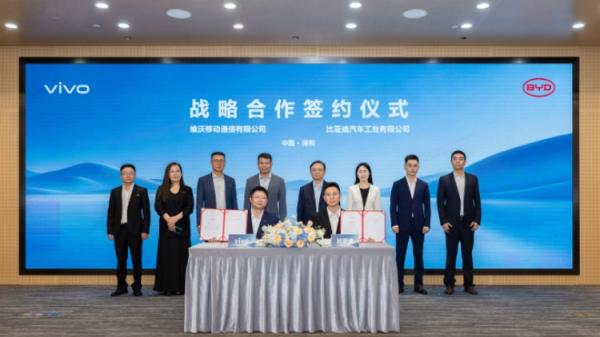
Cooperation between phone makers and automakers has long remained superficial—limited to digital car keys, Bluetooth pairing, and basic screen mirroring. But the recent strategic partnership between vivo and BYD has pushed the domestic phone-car ecosystem to an entirely new level, accelerating the industry into the deep waters of phone-car integration.
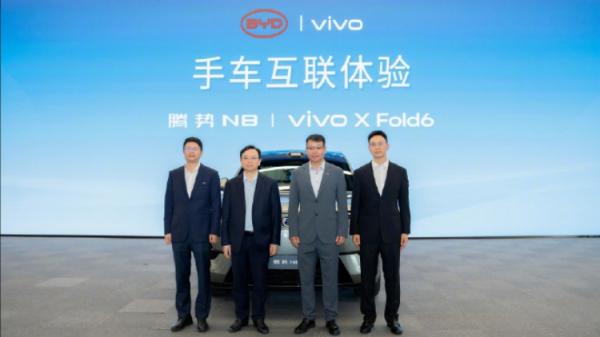
vivo President Hu Baishan and BYD founder Wang Chuanfu attended the signing ceremony. This is more than just another cross-industry branding exercise; it is a future-oriented AI cross-device integration solution, signaling that phone-car connectivity is evolving from a functional convenience into a deeply integrated intelligent ecosystem.
The two sides had already laid a solid foundation for cooperation. For a long time, the overlap between vivo and BYD consisted mostly of isolated point experiences: NFC car keys, basic screen mirroring, and simple device linkage—solving only a fraction of users' most essential pain points when getting into their cars. This model was also the mainstream paradigm for cooperation between domestic phone brands and automakers in the past: scattered, fragmented features that felt more like a bonus than a complete experience loop.
This strategic partnership, however, moves beyond stacking single-point features and targets system-level phone-car integration. Under the plan announced by both parties, the cooperation will center on AI cross-device integration, enabling services, data, and tasks to flow between phones and car systems.
Nearly 5 million BYD vehicles are already connected to this linkage system—an installed base large enough to support a scaled user experience. The two sides also plan to keep expanding, bringing more BYD models and more vivo devices into the ecosystem, with an expected coverage of selected models across all BYD brands by the end of 2026.
What is most anticipated about this solution is undoubtedly the arrival of phone Agents in cars. Unlike traditional voice assistants that each operate independently, cross-device Agents can seamlessly migrate schedules, navigation, communications, and local services from the phone to the car system. For example, routes being planned, to-do items, and food delivery pickup reminders on the phone automatically continue after getting into the car. Voice commands no longer need to distinguish whether they are directed at the phone or the car system—a unified intelligent agent handles the request and completes the task on the appropriate device. This imperceptible flow is precisely the core experience that phone-car integration aims to deliver.
Across the industry, alliances between phone makers and automakers have long become the new normal. Several leading domestic phone manufacturers have each chosen different routes. Xiaomi opted to develop complete vehicles on its own, personally entering car-making to connect the full chain of phones, cars, and IoT. OPPO has also been continuously deepening linkage with automakers to refine cross-device connectivity solutions. vivo, meanwhile, chose to team up with BYD, taking the route of deep strategic cooperation and relying on BYD's huge installed base to quickly implement its phone-car ecosystem.
In fact, none of these routes is absolutely superior or inferior, but they all point to the same conclusion: competition in smart cars is no longer limited to range, chassis, and cockpit hardware; cross-device intelligent services are becoming a new competitive track.
Behind the bustling alliances, however, lie a host of real-world challenges. First, deep integration means more data must be connected, and user privacy and data security are the red lines hanging over this cooperation. How to strike a balance between a smooth experience and data protection directly determines whether this ecosystem can win users' trust in the long run.
Second, the industry still lacks a unified connectivity standard, and barriers between different brands and models remain formidable. This also explains why the two sides will focus their efforts on ecosystem co-building and standard coordination going forward. But even if vivo and BYD achieve a closed loop, expanding outward will still face the dilemma of ecosystem fragmentation. Hardware differences, car system version iterations, and fragmentation at the underlying system level will all affect the actual experience ordinary car owners ultimately receive, making it easy for a gap to emerge between impressive launch events and insufficient stability in daily use.
By the way, the two sides also have an ambitious goal: joint overseas expansion. Domestic phone-car connectivity solutions are products refined based on local user habits and the mobile ecosystem. Leveraging BYD's pace of overseas expansion, vivo can bring this mature cross-device intelligent solution to overseas markets, allowing the domestic phone-car linkage model to establish differentiated advantages in the global smart mobility market. If implemented smoothly, this will become a smart mobility ecosystem sample belonging to China that is distinct from overseas giants.
From a virtual card that unlocks the vehicle to AI Agents flowing freely between phones and cars, phone-car connectivity is completing a qualitative transformation. The partnership between vivo and BYD is not a short-term marketing campaign, but a search for the entry point to the next generation of smart mobility. It is foreseeable that in the future, users will judge whether a car is good not only by the three major components, but also by whether it can naturally converse with the smart devices they carry.
Of course, building an ecosystem is never achieved overnight. Whether this deep integration solution can ultimately win over users does not depend on how grand the signing ceremony is, but on whether it can deliver a stable, smooth, and secure experience after mass production. As more and more phone manufacturers and automakers team up, a track competition centered on cross-device intelligence has only just begun. Who will have the last laugh? Let the bullets fly for a while!
-
![]()
More Than a Car Key: AI Agents Drive Into Cars as vivo Teams Up with BYD to Redefine the Smart Cockpit
-
![]()
A $500 Million Company Lasted Only Three Months: Former Feishu VP Shi Kaiwen Resigns and Joins StepFun
-
![]()
Automotive SiC Still in Adjustment Phase as ON Semiconductor Posts 23% Net Profit Growth to $314 Million, AI Data Center Revenue Up 175%
-
![]()
Keboda, the Single-Item Champion in Vehicle Lighting Control, Sees Lighting Control Revenue Drop by 479 Million Yuan in Q3, Net Profit Down 47.17%; Intelligent Driving Domain Controllers Up 72.29%
-
AI Marketing: The 10 Fastest-Growing and Most Profitable Companies
-
![]()
Chinese Companies Going Global: Don’t Put on a Stern “Strict Father” Face
-
![]()
The Sky Has Fallen on the Wait-and-See Crowd! Blogger Reveals Manufacturers Are Stockpiling and Locking Up Production Capacity—No Hope of Phone Price Drops for the Next Three Years
-
![]()
Tech Stocks Plunge Across the Board, but Industry Giants Say "Don't Panic"