When Young Leaders Like Yao Shunyu Start Steering the Tech Giant
 12/25 2025
 616
616
The explorers of the old continent have to step back, for this new world reshaped by algorithms opens its doors only to its native inhabitants.
If someone had told you these things five years ago, you would have dismissed them as fantasy.
Yet, when Meta (formerly Facebook) entrusted its AI leadership to a 28-year-old, Tencent offered nine-figure salaries to fresh PhD graduates and bestowed the title of Chief AI Scientist, and Xiaomi handed over command of its 'Human-Car-Home' mega-model to post-95s talents.
This is no longer fiction; it is reality.
Alexandr Wang of Meta, Yao Shunyu of Tencent AI Lab, Luo Fuli of Xiaomi's MiMo team... These names share not just youth but also critical capabilities that engineers from the old era lacked.
This is not merely the younger generation surpassing the older; it is a power restructuring triggered by technological discontinuity in the AI industry. Why does experience seem to lose out to intuition in AI? What happens within tech companies when young tech leaders guide seasoned engineers?
This article will dissect the underlying logic, conflicts, and future.
Why Has Experience Suddenly Lost Its Value?
To understand the legitimacy of 'young leaders rising,' we must first acknowledge a harsh technological reality: the AI industry has undergone a foundational paradigm shift, akin to how 'relativity theory replaced Newtonian mechanics' in physics.
Before Google's 2017 paper 'Attention Is All You Need,' the AI world resembled meticulous craftsmanship. It was the era of RNNs and LSTMs, where algorithm experts acted like seasoned watchmakers.
They meticulously designed rules, manually extracted features, and used profound linguistic knowledge to patch model vulnerabilities. In that world, the longer one deep cultivation (dug deep), the more bugs one encountered, and the higher one's value.
However, the emergence of the Transformer architecture and the explosion of GPT series shattered this old world. The new generation of generative AI no longer relies on complex artificial rules; instead, it believes in powerful computational capacity + massive data, with intelligence emerging naturally from chaos.
This paradigm shift brings disruptive consequences: experience from the old era becomes not just useless but potentially obstructive.
This generational divide lies at the deepest level of thinking:
Traditional Engineers: Faced with massive models, 50-year-old veterans subconsciously think, 'How to save computational power?' 'How to optimize performance through code pruning?'
This is the result of decades of training—in the early days of Moore's Law, resources were limited, and efficiency was paramount.
New Generation of AI Talents: From day one, 25-year-olds breathe the air of large models. They do not hesitate to use computational power, intuitively knowing when to scale parameters or clean data.
They firmly believe that machines' self-learning abilities surpass human micro-management.
This technological generational gap creates cognitive isolation, akin to the dawn of the firearm era: even the finest archery instructors cannot guide soldiers wielding machine guns.
When the logic of technological evolution changes, the authority to interpret technology naturally shifts from the experienced to those more sensitive to new paradigms.
The Restructuring of Power Landscapes
Surveying the AI landscape in 2025, three young leaders occupy three critical links: 'data infrastructure,' 'core algorithms,' and 'terminal applications.'
In Silicon Valley, Meta's Zuckerberg broke conventions by bringing in Scale AI founder Alexandr Wang as Chief AI Officer.

The reason is simple: this 'Silicon Valley pirate' recognized earlier than Turing Award veterans that while code can be open-sourced in the era of large models, high-quality data cleaned through RLHF is an irreplicable barrier.
Wang adheres to engineering pragmatism and meritocracy, ruthlessly eliminating corporate political correctness and retirement cultures, serving only efficiency.
This suffocates old-guard executives accustomed to academic atmospheres, but his control over data valves indeed injects wild growth into Meta.
He proves with action: in the AI battlefield, whoever controls data cleaning defines the upper limit of intelligence.
To outsiders, training large models seems to require only stacking GPUs, but insiders know that many critical skills are unwritten dark knowledge.
For example, how to set learning rates, how to clean data, how to prevent models from 'going stupid.'
While Tencent's T13 and T14 senior architects feel lost facing large model black boxes, Yao Shunyu provides answers.
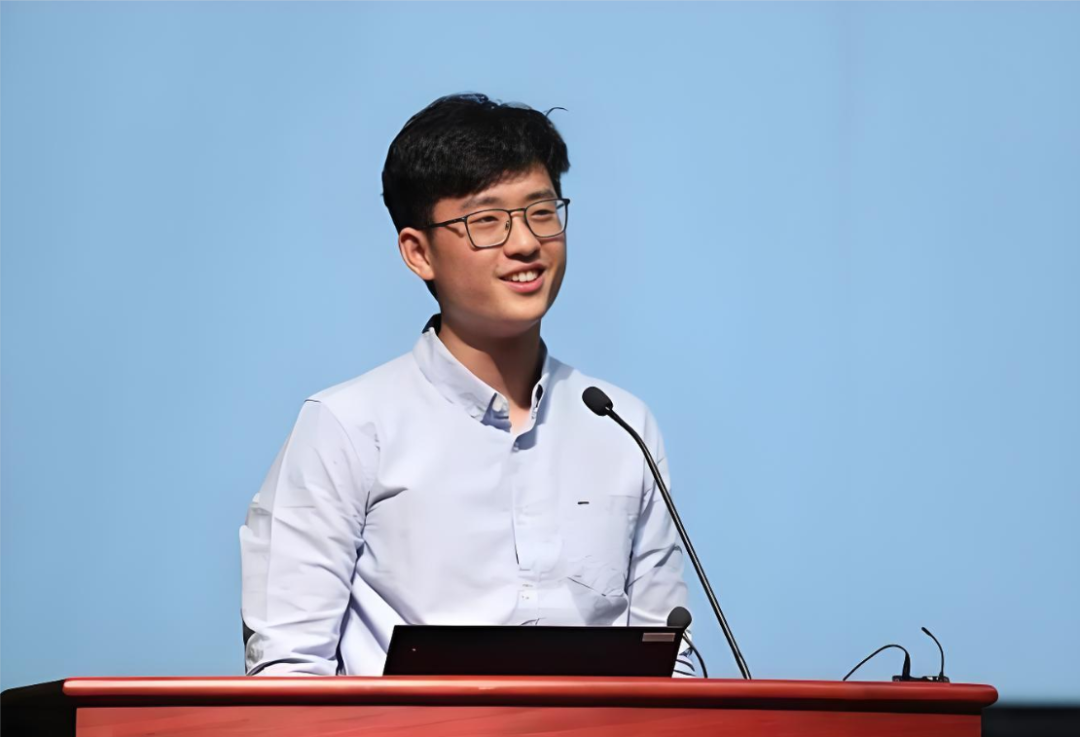
During his time at Princeton and OpenAI, he was a core researcher of the 'Tree of Thoughts' and 'ReAct' frameworks, holding a precise map to AGI.
While old-generation architects are used to writing rules to fix errors, Yao knows that to enable models to solve complex problems, they must be taught self-reflection and chain-of-thought reasoning.
His authority comes not from administrative rank but from the absolute information gap: 'I know the path works; you can only guess.'
Tencent is willing to overlook age and qualification inversions precisely to purchase this navigation map unique to the young.
The heavy responsibility of Xiaomi's 'Human-Car-Home' mega-model ultimately falls on the shoulders of post-95s Luo Fuli.
Unlike the previous two, her challenge is more specific: how to run large models on resource-constrained mobile phones and automotive endpoints.
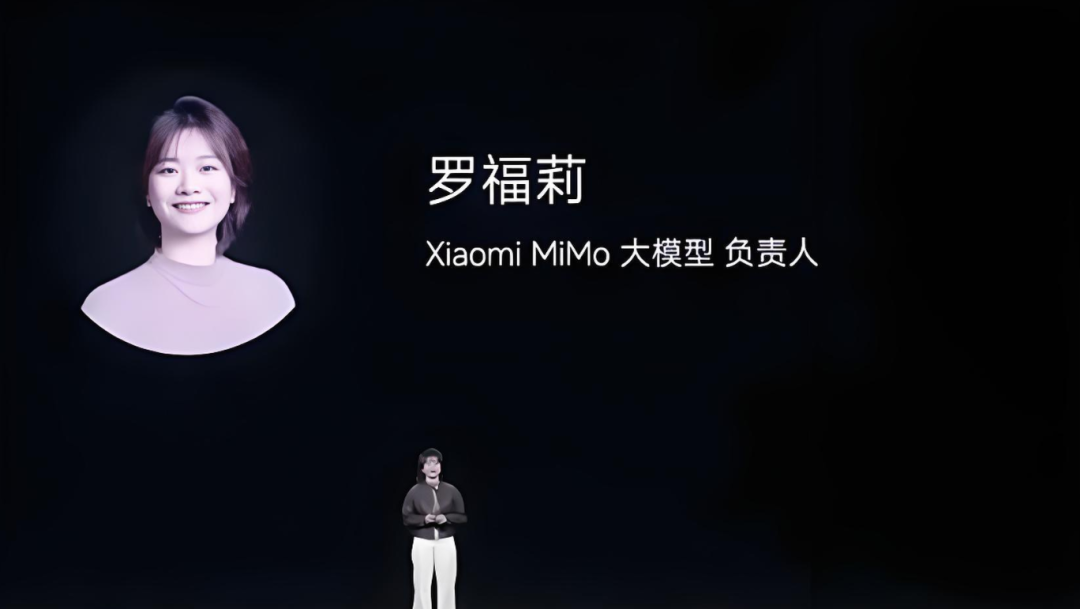
Luo Fuli proved herself at DeepSeek, where she deeply participated in the DeepSeek-V2 model, shocking the open-source community with its extremely low cost.
Her developed intuition for 'small parameters, high performance' models makes her the new world's bridge-builder within Xiaomi.
She commands old engineers accustomed to hardware stacking, establishing a new strategy of 'algorithms guiding hardware.'
From Wang's data hegemony to Yao's algorithmic recipes to Luo's endpoint implementations, these young talents do not operate in isolation.
They jointly construct a power closed loop (closed loop)—one that can only be played within the new technological paradigm.
When Managers Can't Understand Instructions
The young leadership driven by technological discontinuity has caused significant turbulence within companies, testing traditional hierarchical management structures.
For old mid-level managers, this induces cognitive dissonance panic.
Imagine a 45-year-old technical director managing a 500-person team suddenly unable to understand the logic behind instructions from a 28-year-old superior.
The old director is used to asking, 'How is the ROI of this project calculated? Where is the logical closed loop (closed loop)?'
The young leader replies, 'Logic in large models emerges; it cannot be preset (preset). It can only be discovered through scaling.'
Terms like Embedding, Token, and Latent Space constantly used by young leaders are incomprehensible to finance, legal, and HR departments.
These departments still operate under old world rules, leading to high communication costs, distorted actions, and even internal passive resistance.
Traditional software engineering is built on rigorous logic, like a skyscraper where every brick is traceable.
But large model development resembles biological experiments, filled with uncertainty.
Old engineers demand 'explainability,' wanting to see code logic and understand why models say certain things.
Young leaders can only shrug: 'This is a probability distribution compressed from hundreds of billions of parameters. Although it's a black box, experimental data shows it's currently the best.'
This unexplainability induces extreme insecurity in traditional managers accustomed to rigorous planning and step-by-step execution.
Cultural Clashes
Young leaders like Alexandr Wang often adhere to geek culture.
This clashes sharply with the 'hierarchy, face, and process-oriented' culture cultivated in large corporations over the years.
The younger generation prefers GitHub-style open-source collaboration, scoffing at lengthy report PPTs.
They dislike verbose (prolonged) meetings, preferring to solve problems directly in code repositories.
This cultural collision has led many traditional mid-level managers to either become passively marginalized or choose to leave, making internal personnel turbulence inevitable.
The Future Model of Coexistence Between Generations
Despite constant friction, the trend of managerial youthification is irreversible.
However, young talents are not omnipotent.
Accustomed to rapid trial-and-error, they may lack the reverence needed to avoid breaking user privacy or touching societal safety boundaries in the AI era.
Moreover, having pursued technical metrics without cost constraints in laboratories, can they withstand the financial reporting pressures of public companies?
When model training burns billions but cannot launch due to regulations, do they possess the ability to navigate complex social relationships?
Thus, in 2025, a healthiest coexistence model is emerging—'young captains + seasoned navigators.'
This is not about elders being eliminated but about their roles fundamentally transforming.
Lei Jun provides Business sense (business acumen), supply chain control, and brand moats but lets Luo Fuli define technological routes.
Pony Ma offers a vast social ecosystem and financial ammunition but lets Yao Shunyu decide algorithmic architectures.
Senior managers are transforming into resource integrators and protectors.
They handle regulations, budgets, and interdepartmental conflicts.
Using decades of accumulated business wisdom and networks, they create pure, undisturbed innovation environments for young minds.
This is a great collaboration: young captains search for new continents on the technological sea map.
Seasoned navigators ensure the ship remains sturdy, provisions are sufficient, and hidden reefs are avoided.
Cognitive Iteration, Not Age Warfare
The AI industry in 2025 demonstrates a truth: this is not merely 'cleaning house' but a rare cognitive inversion in human history.
The rise of 90s talents like Alexandr Wang, Yao Shunyu, and Luo Fuli stems not from youth but from their knowledge structures naturally aligning with the new AI era.
Their success is the most acute response to the new paradigm.
For ordinary readers, this is not just tech gossip but profound inspiration:
In an era of exponential technological explosion, seniority is no longer a talisman; maintaining learning ability and sensitivity to new paradigms is.
We are witnessing the old continent's explorers relinquishing the helm to children born in the deep sea.
For only they can hear the ocean's voice.
And only by relying on the old captains' ballast stones can this technological giant navigate through turbulent waves toward unknown shores.
-
![]()
Wu Yongming: Have No Fear, Capex Will Yield Returns in Three Years
-
![]()
After Cursor and OpenRouter Were Acquired, Has the Wave of AI Mergers and Acquisitions Arrived?
-
![]()
Revenue of 11.6 Billion and Loss of 200 Million: Can iFLYTEK Overcome the AI Profitability Dilemma?
-
![]()
CHN Energy Teams Up with Chery, Further Strengthening Green Power Alliance Between Power Generation and Auto Companies
-
![]()
Insights from the Chengdu Motor Show: Overseas Brands Step Up Their Game
-
![]()
Chengdu Auto Show: Some Brands Opt Out, While Others Go All-In with 'Pavilion Dominance'
-
![]()
8.2 Billion Yuan Invested to Launch a New Entity: Dongfeng Peugeot Citroen Automobile Reboots After Years of Inactivity
-
![]()
Why Are Once-Prominent 'Honored Guests' Now Mostly Missing from the Chengdu Motor Show?