Holding 13.8 Billion! Tianjin's Pharmaceutical Powerhouse Achieves Breakthrough Through Diversified Investment Strategies
 01/07 2026
 593
593
The new era for the medical device industry has yet to dawn, with 'resilience' emerging as the industry's guiding principle.
In response to the current industry landscape, leading firms are not idly waiting but are proactively adapting. Beyond adjusting their product portfolios, many medical device companies, including industry leader Mindray Medical, have embraced globalization as a strategic imperative.
Over recent years, Mindray Medical has steadily increased the share of in vitro diagnostic (IVD) products in its overall revenue, while the proportions of life information and support products, as well as medical imaging products, have seen a decline. To achieve rapid breakthroughs, Mindray Medical must also reduce its reliance on 'one-time sale' medical equipment and pivot towards IVD products, a typical 'consumable'-driven, high-volume business model.
This shift in product mix positions the company to lead in performance recovery when the industry rebounds. Additionally, Mindray Medical has accelerated its global footprint. Financial reports reveal that in mid-2022, overseas revenue accounted for 39.59% of its total, rising to 49.77% by mid-2025.
It's worth noting that in China, the IVD sector is one of the most policy-intensive and price-competitive areas. However, during the process of globalization, IVD has indeed proven to be a shortcut, as demonstrated by Jiuan Medical's trajectory.
Five years ago, Jiuan Medical soared to prominence as a major 'speculative stock' in the A-share market, thanks to a substantial overseas order. Financial reports indicate that in 2022, Jiuan Medical achieved a net profit of 16.03 billion yuan. The short-term performance surge highlighted the allure of the IVD sector and propelled the company to fame.
However, with the end of the pandemic, the industry entered a downturn, making sustained high growth challenging. How to 'break through' became Jiuan Medical's most pressing issue. Faced with growth 'dilemmas,' Jiuan Medical, which had already established a global presence, chose not to adjust its product mix or increase mergers and acquisitions but instead to ramp up VC/PE investments.
Leading the Charge in Internationalization
Jiuan Medical embarked on its internationalization journey much earlier than its domestic counterparts.
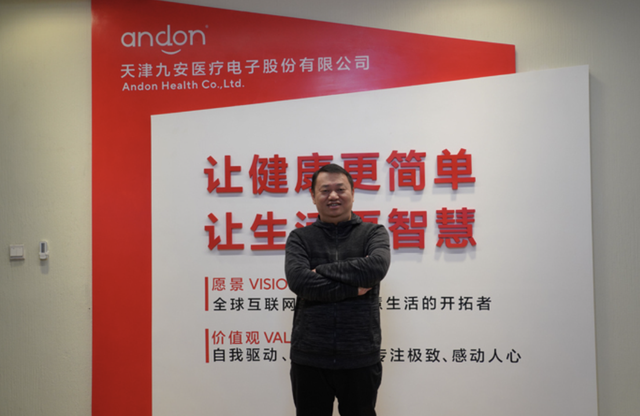
In 1995, Liu Yi, a graduate of Tianjin University, founded Tianjin Kedon and successfully developed the country's first KD-322 Jiuan electronic blood pressure monitor that same year.
After the product entered the market, it quickly gained validation, opening up opportunities for the company.
By 2002, Liu Yi had already recognized the potential of overseas markets ahead of his peers and began actively expanding internationally. Unlike its domestic market strategy, the company's overseas business adopted an ODM (Original Design Manufacturing) model, successfully maintaining a competitive edge through differentiation.
In 2007, Liu Yi oversaw the completion of the company's shareholding reform. Subsequently, he keenly seized the opportunity presented by the mobile internet and interconnected the company's products with smart hardware devices. By 2009, Jiuan's products were exported to over 60 countries, truly achieving product internationalization.
In 2010, Jiuan Medical successfully listed on the Shenzhen Stock Exchange. A year later, it established iHealth in Silicon Valley, launching a mobile-connected blood pressure monitor compatible with iPhone and iPad, receiving strong support from Apple. The product was included in Apple's online store and offline direct sales channels as part of the smart wearable concept stocks.
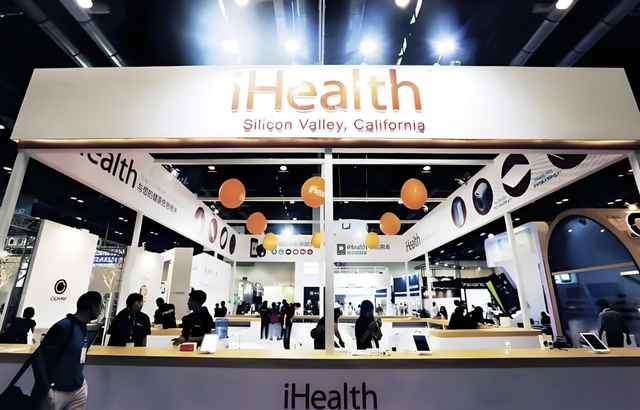
It is reported that iHealth's product range spans multiple medical device fields, including blood pressure monitoring, blood glucose monitoring, IVD test kits, temperature measurement, pulse oximetry, and weight and body fat measurement. The company has obtained registration certificates in numerous countries and regions, including the Americas, EU, Asia, and Australia, laying the groundwork for future product breakthroughs.
Financially, from 2011 to 2019, Jiuan Medical's performance remained relatively unremarkable, with frequent net profit losses. Despite these challenges, Jiuan remained committed to globalization opportunities. Liu Yi once stated, 'The industrial revolution brought by mobile internet, IoT, and big data will create opportunities for industry reshuffling. By taking a global perspective early on, we can certainly achieve a breakthrough.'
Until 2021, when iHealth's antigen test kits received emergency use authorization from the U.S. FDA, Jiuan Medical's performance began to surge, and Liu Yi's persistence paid off handsomely. It should be noted that the IVD industry does not have high barriers to entry and cannot establish an effective moat.
Therefore, ensuring stable performance after the pandemic became Jiuan Medical's subsequent challenge. Faced with substantial cash reserves, Jiuan Medical did not engage in blind mergers and acquisitions but instead opted for stable cash management. Additionally, Jiuan Medical increased its VC/PE investments. Its public market allocations include Xiaomi, XPeng, Tencent, NVIDIA, Nasdaq 100 ETF, and U.S. Treasury bonds. In the private equity sector, by participating in large-scale science and technology innovation mother funds, Jiuan Medical has been able to invest in cutting-edge fields such as hard technology and artificial intelligence, laying the groundwork for future growth opportunities.
Financially, in the first three quarters of 2025, Jiuan Medical's total revenue declined by 48.89% to 1.069 billion yuan, but net profit increased by 16.11% to 1.589 billion yuan. Over 1.1 billion yuan in investment income and fair value changes served as the anchor for stable performance.
Reflected in the capital market, despite the industry downturn in the medical device sector over the past two years, Jiuan Medical's stock price has not significantly declined. From 2024 to 2025, the company's stock price increased by 9.17% and decreased by 1.33%, respectively, outperforming its peers.
Jiuan's 'Dilemma'
The challenges facing the IVD industry are apparent.
According to statistics, in the first three quarters of 2025, the A-share in vitro diagnostic sector achieved a total operating revenue of 27.62 billion yuan, down 14.5% year-on-year, with a net profit attributable to shareholders of 4.49 billion yuan, down 26.4% year-on-year, marking a third consecutive year of decline. Jiuan Medical has not been immune to these trends.
From a revenue structure perspective, as of the first half of 2025, overseas revenue accounted for 85.47% of Jiuan Medical's total revenue, while domestic revenue accounted for only 14.53%. Compared to its peers, Jiuan Medical has successfully gone global. Therefore, the challenges in its core business are more daunting than those faced by its peers.
In fact, Liu Yi has long recognized that 'success in a specific environment cannot be replicated.' Therefore, after 2023, Jiuan Medical began increasing its investments in the capital market, attempting to pursue a development path of 'supporting the main business through investments and buying time for growth.'
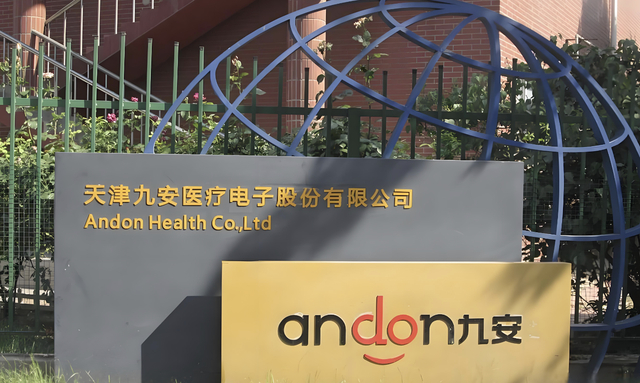
Financial reports show that by mid-2023, Jiuan Medical had already invested in companies such as XPeng Motors, Li Auto, and NIO. Furthermore, the company announced, 'The company and its subsidiaries plan to use up to 17 billion yuan or its equivalent in foreign currency of own funds (proprietary funds) for entrusted wealth management.'
Currently, Jiuan Medical's capital market investments exhibit professionalism, diversification, and globalization, covering not only U.S. stocks, U.S. bonds, but also private equity and large-scale science and technology innovation mother funds. However, the challenge lies in the fact that while investment strategies ensure performance stability, they also lead to changes in the market's valuation of the company.
Reflected in valuation, Jiuan Medical's current dynamic price-to-earnings ratio is only 8.98 times, significantly lower than its peers.
Notably, Jiuan Medical's net asset value per share is 47.73 yuan, while its current stock price is 40.93 yuan, indicating that the stock price has fallen below the company's net asset value.
Jiuan Medical's management believes that the current secondary market stock price does not reflect the company's value and has therefore increased its repurchase efforts.
On October 13, 2025, Jiuan Medical announced a new share repurchase program, proposing to use 300 million to 600 million yuan of proprietary funds and special loans to repurchase company shares through centralized bidding transactions, with a repurchase price not exceeding 53.5 yuan per share. Previously, Jiuan Medical had already completed repurchases worth approximately 370 million yuan and canceled 29.95 million shares.
On December 14, Jiuan Medical announced that its U.S. subsidiary had received pre-market notification (510(K)) from the U.S. FDA for its quadruple and triple test products, including home test kits for influenza A, influenza B, COVID-19, and RSV (respiratory syncytial virus).
Jiuan Medical also stated that receiving the U.S. FDA 510(K) pre-market notification represents a further expansion of the company's core strategic businesses, enriching its product line in the IVD field and enhancing its core competitiveness.
Kanjian Finance believes that there is currently no good solution to Jiuan Medical's core business challenges, which require overall industry recovery to drive. However, Jiuan Medical's 'medical device + investment' model is one of the optimal solutions for its current dilemma. Financial reports show that as of the end of the third quarter of 2025, the company had a total cash balance of 13.867 billion yuan on its books, a substantial reserve sufficient to support Jiuan Medical through the industry downturn.
Therefore, amid the industry downturn, Jiuan Medical appears quite composed. According to equity analysis, the company's actual controller, Liu Yi, holds a 23.69% stake in the company. Based on the latest closing price, the market value of this stake is approximately 4.5 billion yuan.
-
![]()
Registered Capital Slashed to 372 Million Yuan! Yutong Optical Finalizes Industrial and Commercial Change Registration
-
![]()
Zhuque-3 Successfully Lands, and 'Time Traveler' Secures Another ¥100 Million in Funding: China's Commercial Space Industry Experiences a 'Dynamic August'
-
![]()
Autohome Faces a Shrinking Window of Opportunity
-
![]()
Even a Titan Like Musk Has Faced Setbacks in Fulfilling Promises
-
![]()
AI Office: The End of the Racing Era, Context Becomes the Key to Success
-
![]()
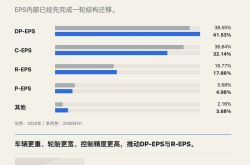
Domestic Vehicle Chassis Revolution ②: The Steering Wheel Remains, But Mechanical Connections in the Steering System Are Decreasing
-
![]()
Exploring MiniMax Design: Can Video Editing Be as Simple as Speaking?
-
![]()
Why Can SenseTime Achieve Profitability While CloudWalk Still Faces Challenges, Despite Both Adopting Large Models?