Prospects for 2026: Will the Robot Bubble Burst?
 01/07 2026
 703
703
Editor's Note:
"Every era is marked by its own technological fervor, often eclipsed by the looming threat of a bubble."
As terms like "embodied intelligence" and "trillion-dollar market" dominate public conversations, the robotics sector has seen a surge of capital inflows over the past two years. From record-breaking startup financing rounds to soaring stock prices of listed companies, it appears the industry's golden age has arrived prematurely. However, the news of Unitree Technology's halted A-share IPO green channel has cast a shadow over this enthusiasm—regulatory precision adjustments are forcing a confrontation with a previously overlooked question: Is this seemingly thriving sector rally a sign of technological breakthroughs or merely a capital-fueled bubble? When we cut through the conceptual haze and assess reality with data, the answer may be clearer than we think.
The Reality Gap Amidst Valuation Exuberance
300% Premium vs. 17% Growth: A Stark Divergence
Warren Buffett famously remarked, "Only when the tide goes out do you discover who's been swimming naked." In the robotics sector's capital craze, even before the tide recedes, some "naked swimmers" are already exposed. Dubbed the "first year of embodied intelligence mass production" by the industry in 2025, this was expected to be a watershed moment for technological implementation and market expansion. Yet, the data reveals a stark contradiction: global humanoid robot companies' average valuations surged by 300% from 2024, while actual shipment volumes grew by just 17%. This highlights an insurmountable gap between capital's assessment of industry value and genuine market demand.
This valuation-reality disconnect is particularly evident among leading firms. Unitree Technology, a pioneer in quadrupedal robots, saw its pre-IPO valuation reach eight times the industry average—far exceeding its peers and even surpassing the premium Boston Dynamics commanded when acquired by Hyundai Group. Notably, Boston Dynamics, once a global robotics benchmark with its Atlas robot's backflip stunts, faced commercialization struggles that led to three corporate takeovers. If even such a tech giant struggled to sustain inflated valuations, the fragility of Unitree's valuation bubble becomes apparent.
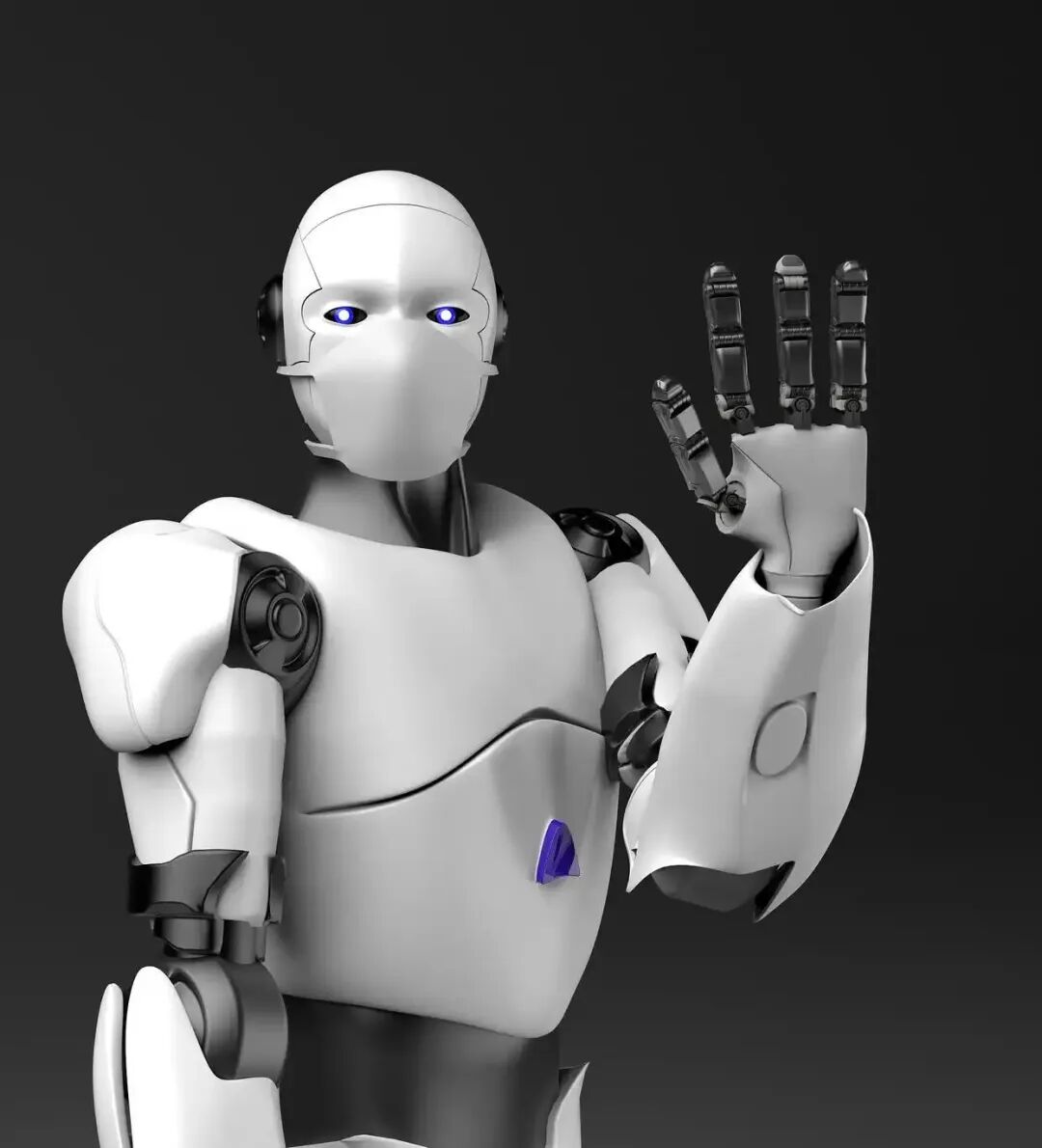
More alarmingly, the valuation frenzy masks a severely diluted technological value. A mid-tier domestic robotics firm, during its Series B funding last year, listed 62% of its "core technology patents" as design or utility models. In the industry, design patents focus on aesthetics like product shape and color, while utility models have lower technical thresholds. Such a high proportion underscores a lack of core R&D strength. Yet, capital remains enthusiastic, driven by the "robotics + AI" narrative—where imagination often trumps tangible technological progress.
Irrational capital pursuit is distorting industry logic. Over the past two years, funding rounds in the robotics sector have shifted earlier, with startups securing hundreds of millions in funding and soaring valuations based solely on concepts or prototypes. This "valuation-over-implementation" trend traps firms in a "funding-burning-refunding" cycle, neglecting product development, technological breakthroughs, and commercialization—the sector's true priorities. As one analyst noted, "When valuation growth outpaces technological progress and funding exceeds revenue by tens of fold, the bubble is already formed, awaiting only a trigger to burst."
Technological Gaps and Commercialization Deadlocks
The Chasm from Lab to Market
"Technology's value lies not in lab stunts but in market adoption," Steve Jobs famously said—a reality painfully evident in the robotics sector. The industry's greatest contradiction is the gap between lab "black technologies" and commercial "hard demands." Lab robots may perform backflips or make pancakes, but in real-world applications, they struggle with basic stability and utility.
This technological gap first manifests in core component performance. Experts note that humanoid robots' joint motors average just 200 hours between failures, far below the 8,000-hour industrial standard. A humanoid robot working continuously in an industrial setting would fail within 10 days—unacceptable for production needs. Boston Dynamics' Atlas robot gained global fame with backflip videos but failed to solve mass production and reliability issues, leading to three corporate takeovers (Google to SoftBank to Hyundai) without ever turning a profit. A domestic "pancake-making robot" showcased as a breakthrough still requires three engineers on-site to operate—rendering it a mere "demo prop" incapable of reducing labor costs or scaling.
Technological gaps directly hinder commercialization, reflected starkly in financials. Among 15 listed domestic robotics firms, 11 allocate over 40% of revenue to R&D, with some exceeding 60%. Yet, patent conversion rates languish below 5%—most R&D spending yields only paper patents, not product competitiveness. Worse, high R&D and component costs keep robot prices prohibitive. One agency estimates that mass-producing humanoid robots at current tech levels would cost 2.3 million yuan per unit—equivalent to two apartments in a first-tier city. Such costs are unsustainable for both industrial and consumer markets, making commercialization unattainable.
In truth, robotics breakthroughs require decades of accumulation, not capital-driven shortcuts. From industrial to service to humanoid robots, each field matured through decades of iteration. International giants like Fanuc and Yaskawa dominate globally due to decades of technical refinement in motors, reducers, and controllers—a process no amount of capital can rush. Domestic firms, mostly under a decade old and lacking core technological barriers, rush to capitalize prematurely, risking technical and market backlash.
Conclusion
Regulatory halts to Unitree's IPO green channel do not reject the robotics industry but install a "cooling system" for an overheated sector. This precision regulation mirrors past policies like new energy vehicle subsidy cuts—creating space for technologically sound firms while deflating story-driven bubble players. The robotics industry's future is bright, with AI and sensor advancements promising broad industrial, consumer, and medical applications. However, this does not justify skipping technical refinement and commercial validation for capital exuberance.
Bubble bursts are not detrimental; they restore rationality, focusing capital on valuable technologies and firms. When the frenzy subsides, concept-driven firms will fade, while those deeply cultivating core technologies and commercialization will emerge victorious. Robotics maturity demands not capital "ripening" but technological "refinement" and market "validation." Only by abandoning hype and embracing pragmatism can robots transition from labs to reality, becoming a true force for change—this, perhaps, is the bubble's most valuable lesson.
-
![]()
Registered Capital Slashed to 372 Million Yuan! Yutong Optical Finalizes Industrial and Commercial Change Registration
-
![]()
Zhuque-3 Successfully Lands, and 'Time Traveler' Secures Another ¥100 Million in Funding: China's Commercial Space Industry Experiences a 'Dynamic August'
-
![]()
Autohome Faces a Shrinking Window of Opportunity
-
![]()
Even a Titan Like Musk Has Faced Setbacks in Fulfilling Promises
-
![]()
AI Office: The End of the Racing Era, Context Becomes the Key to Success
-
![]()
Domestic Vehicle Chassis Revolution ②: The Steering Wheel Remains, But Mechanical Connections in the Steering System Are Decreasing
-
![]()
Exploring MiniMax Design: Can Video Editing Be as Simple as Speaking?
-
![]()
Why Can SenseTime Achieve Profitability While CloudWalk Still Faces Challenges, Despite Both Adopting Large Models?