Commentary | Currently, Earphones Outshine Glasses as AI's Prime Medium
 02/02 2026
 548
548
Within the tech industry, there's a prevailing belief that 'AI glasses represent the ultimate medium for artificial intelligence.' This notion stems from the fact that glasses are in close proximity to our senses, and AI-equipped glasses with cameras can essentially 'see through your eyes.' When juxtaposed with products like earphones, AI glasses appear more adept at capturing visual data from the real world, considering that 80% of human information intake is through sight.
At first glance, this rationale seems flawless. However, it's intriguing to note that OpenAI, the world's largest AI entity by user count, has initially set its sights on earphones rather than glasses.
According to a leak from 'Smart Pikachu,' OpenAI is currently in the process of developing a product codenamed 'Sweetpea' (OPENAI's smart hardware unveiled: an audio device with a projected shipment of at least 40 million units) as a potential AirPods successor. This product will take the form of two capsule-shaped earplugs (resembling pills) that can be comfortably worn behind the ears. OpenAI is also in the midst of creating a bespoke chip to empower the device to 'execute iPhone operations through voice commands via Siri.' Admittedly, the concept initially puzzled the author until foreign media revealed that Apple had acquired Q.ai (Dream no more; the camera AirPods will incorporate is merely an infrared one). Then, it clicked that both Apple and OpenAI are steering towards a smart hardware revolution—'silent interaction.'
▲ Leaked image of OpenAI's earphones by Smart Pikachu
As an AI-centric manufacturer, OpenAI's rationale for venturing into hardware is straightforward. It's not about diversifying to rake in hardware profits but about identifying the optimal medium and entry point for OpenAI's AI technology. From this product blueprint, it's evident that OpenAI currently views earphones, not glasses, as the premier AI medium. While the earphone market is already well-established and validated, it's also fiercely competitive and saturated. For a newcomer to make a mark, it must possess a compelling differentiator and a game-changing feature to achieve sales in the 40-50 million range. Clearly, this differentiator is the groundbreaking experience of silent interaction and its seamless integration with AI.
Now, let's consider Apple's moves. There have been industry rumors that 'Apple is developing AirPods with cameras.' This has misled numerous companies, and I suspect ByteDance's foray into camera-equipped earphones was influenced by this information. We believe the camera Apple intends to incorporate into AirPods will be an infrared one, designed for 'silent interaction.' The silent interaction experience is incredibly innovative, as we highlighted in our AI Vision article (OpenAI's AI hardware and AirPods are set to revolutionize 'silent thought' interaction, a surefire hit!). It enables silent voice commands, significantly enhancing 'voice pickup' accuracy and, consequently, the precision of voice commands. This will dramatically elevate the Siri user experience, broaden AI application scenarios, and even pave the way for numerous intriguing experiences.
Recently, Google also forged a partnership with Google Gemini (Google clinches a major AI deal with Apple!). This year, the focus will be on upgrading Siri. All these developments underscore Apple's AI endeavors, positioning AirPods as the largest AI medium.
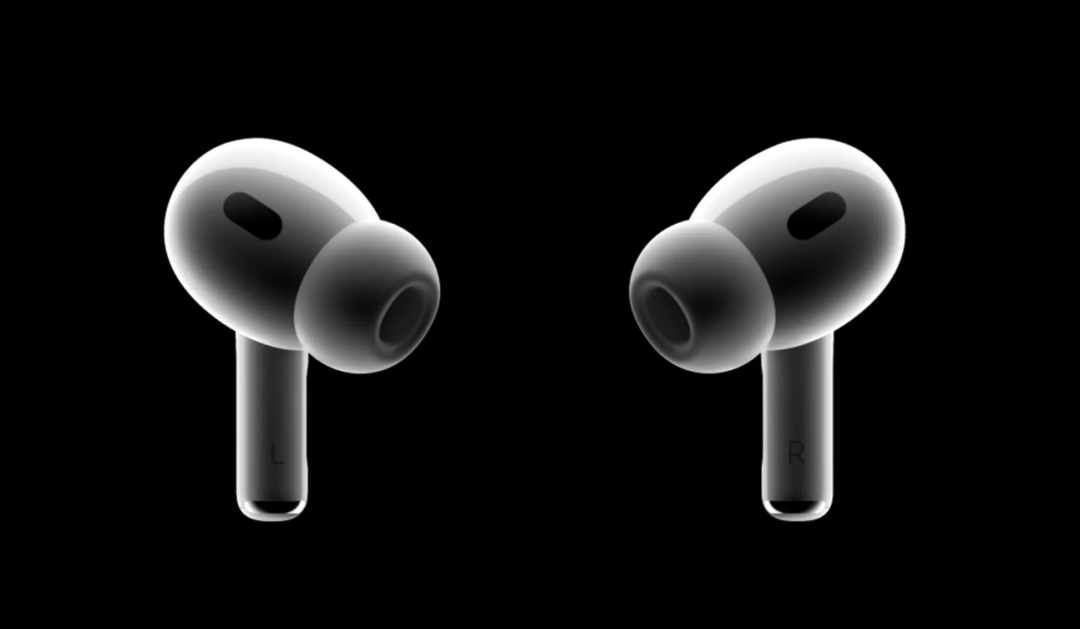
Since their debut in late 2016, AirPods' cumulative shipments have surpassed 900 million units, with peak annual shipments occurring in 2021 (approximately 100-120 million units) and stabilizing at 58-62 million units per year in recent times.

Each AirPods iteration has been driven by a core feature that spurs user upgrades: ecosystem synergy (integration with iPhone/Mac/Watch), audio experience (spatial audio), and health monitoring (heart rate/hearing health) to continually drive replacements and new demand.
Undoubtedly, the impetus for the next AirPods generation will stem from silent interaction and AI integration. This could instantly bestow Apple with tens or even hundreds of millions of AI users, establishing it as the largest AI wearable entry company—a feat unparalleled by the annual sales of a few million AI glasses.
Finally, let's delve into the distinctions between AI glasses and AI earphones. AI glasses excel in acquiring visual information, achieving visual AI—a capability currently absent in AI earphones. However, in practical terms, most visual AI applications are confined to scanning codes, identifying flora, and reading text. In essence, the current application scenarios for visual AI remain limited and infrequent. The visual information that humans rely on for 80% of their information acquisition hasn't been fully harnessed by AI yet—implying that, at present, AI glasses don't possess a significant edge over AI earphones as an AI medium. Hence, Apple's decision to concentrate on AirPods rather than hastily launching AI glasses aligns perfectly with its consistent approach.
Of course, some foreign media outlets have reported that Apple is expediting the development of AI glasses, but we currently lack confirmation. Nevertheless, from a technological perspective, AI glasses and AI earphones share numerous similarities, and many technologies can be repurposed for AI glasses. For Apple, leveraging many of the technologies from AirPods would suffice to outperform numerous products on the market.
Based on the preceding analysis, we believe that AI glasses will eventually emerge as the premier medium and entry point for AI, but only if visual AI advances sufficiently and application scenarios mature. Currently, AI earphones might still reign supreme as the best AI medium. The above represents my personal perspective, and I encourage everyone to share their thoughts in the comments section.
-
![]()
DJI Osmo 360 II In-Depth Review: How Does It Achieve Significant Image Quality Enhancements Without Sensor Changes or Excessive Spec Stacking?
-
![]()
Samsung’s Latest Foldable Phone Skips S Pen Again! Is AI Ushering in the End of Styluses?
-
![]()
Registered Capital Slashed to 372 Million Yuan! Yutong Optical Finalizes Industrial and Commercial Change Registration
-
![]()
Zhuque-3 Successfully Lands, and 'Time Traveler' Secures Another ¥100 Million in Funding: China's Commercial Space Industry Experiences a 'Dynamic August'
-
![]()
Autohome Faces a Shrinking Window of Opportunity
-
![]()
Even a Titan Like Musk Has Faced Setbacks in Fulfilling Promises
-
![]()
AI Office: The End of the Racing Era, Context Becomes the Key to Success
-
![]()
Domestic Vehicle Chassis Revolution ②: The Steering Wheel Remains, But Mechanical Connections in the Steering System Are Decreasing