Dissecting xAI's Organizational Chart: Rewriting the AI Evolution Theory for Automotive and Robotics Industries
 02/14 2026
 741
741
If you had asked the CEO of an automotive or robotics company a few years ago about their organizational structure for intelligent assisted driving, you might have seen a vast, function-based grid diagram: perception team, planning team, control team, hardware team, software team, cloud team... hierarchical yet heavily siloed.
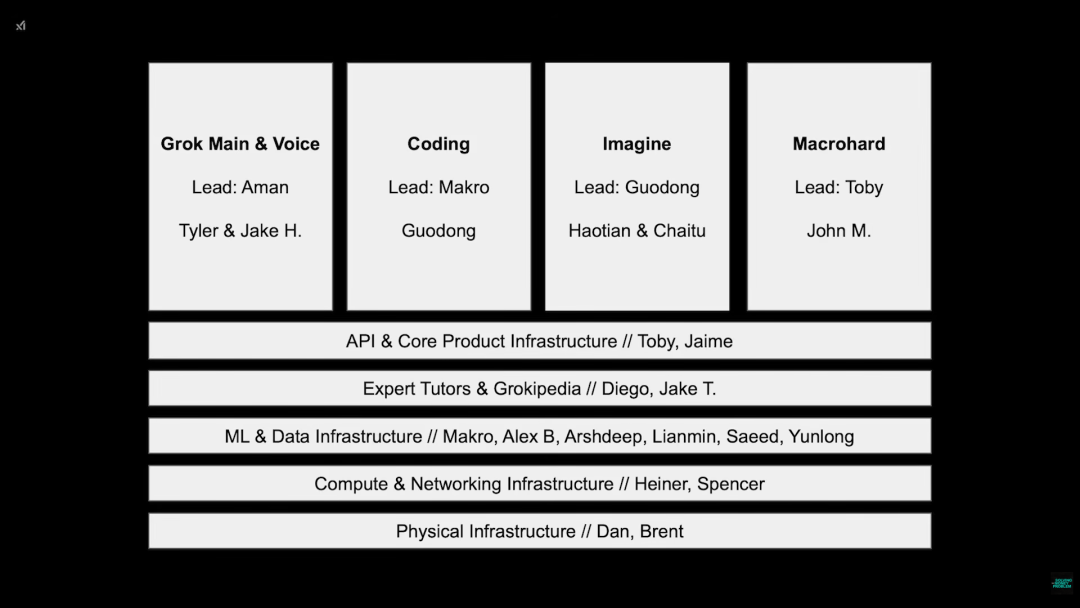
However, at the recently concluded xAI all-hands meeting, Elon Musk unveiled an extremely streamlined, even seemingly 'primitive' PPT (see above). This chart is not only xAI's secret weapon for achieving computational supremacy in just 2.5 years but also resembles a 'treasure map of evolution' left for the automotive and humanoid robotics industries.
Let's focus on this chart, peel away its outer layer, and see what astonishing revelations it holds for those of us struggling to explore 'embodied intelligence.'
I. Top-Level Four Pillars: From 'Feature Stacking' to 'Human-Like Organs'
Look at the topmost layer of the organizational chart. xAI did not divide it along traditional lines of 'R&D-Product-Testing' but instead established four independent battle groups oriented around core capabilities. This represents a massive conceptual shift for industries building 'software-defined vehicles' and 'Optimus.'
1. Grok Main & Voice (Brain and Vocal Cords)
Large Language Models: The team merging voice and LLM Main model teams primarily focuses on creating cutting-edge large language models with advanced reasoning capabilities. For example, integrating Grok into Tesla vehicles is a deliverable from this team.
Industry Insight: In the automotive industry, we're accustomed to outsourcing 'voice assistants' to suppliers while developing 'cockpit OS' in-house. But in xAI's logic, the language model is the interaction itself. For intelligent cockpits, future interactions won't be 'wake word + command' but intuitive exchanges based on large models. For robots, this means 'understanding human speech' and 'thinking' are functions of the same organ and shouldn't be separated.
2. Coding (Self-Evolving Engine)
Code Development: This isn't just a tool for writing code; it's an engine enabling AI to write, debug, and iterate its own code. This team develops AI-powered code-writing tools, following the approach of large model teams like OpenAI's Codex.
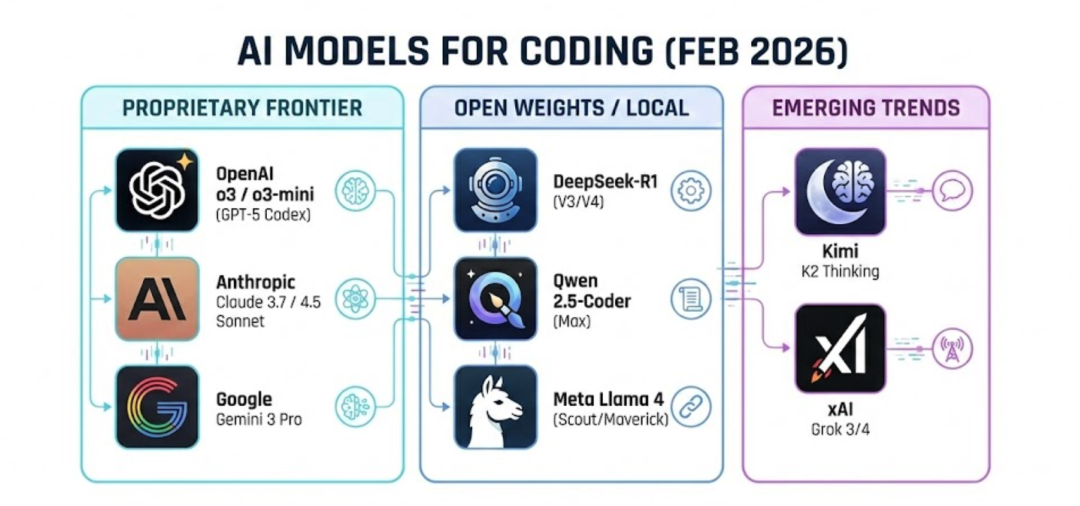
Industry Insight: The codebase for autonomous driving has long surpassed 100 million lines; the era of relying on manpower is over. Automotive and robotics companies need to establish their own 'Coding' departments, but the goal isn't to write business code but to train AI models capable of automatically generating and optimizing control algorithms. Musk's prediction of 'directly generating binary files' will be the endpoint of autonomous driving software iteration.
3. Imagine (Vision and World Models)
Image and World Models: This department doesn't just create images but also engages in video generation and world simulation. xAI's separation of large language models from image and world models suggests that while LLM architectures may be stabilized, image and world models still offer diverse methodological approaches.
Industry Insight: This serves as the 'training ground' for autonomous driving and robotics. Previously, we relied on collecting real-world testing data, which was costly and struggled with corner cases. xAI's Imagine department demonstrates that generative video is the simulator. If your vehicle or robot can train in an AI-generated, physically plausible 'metaverse' (World Model), the gap between Sim-to-Real will be bridged.
4. Macrohard (Action and Execution)
Currently best described as an Agent: The name playfully contrasts with Microsoft ('Macrohard' vs 'Microsoft') but harbors the greatest ambition—Agent (intelligent entity). It operates computers, simulating human work.
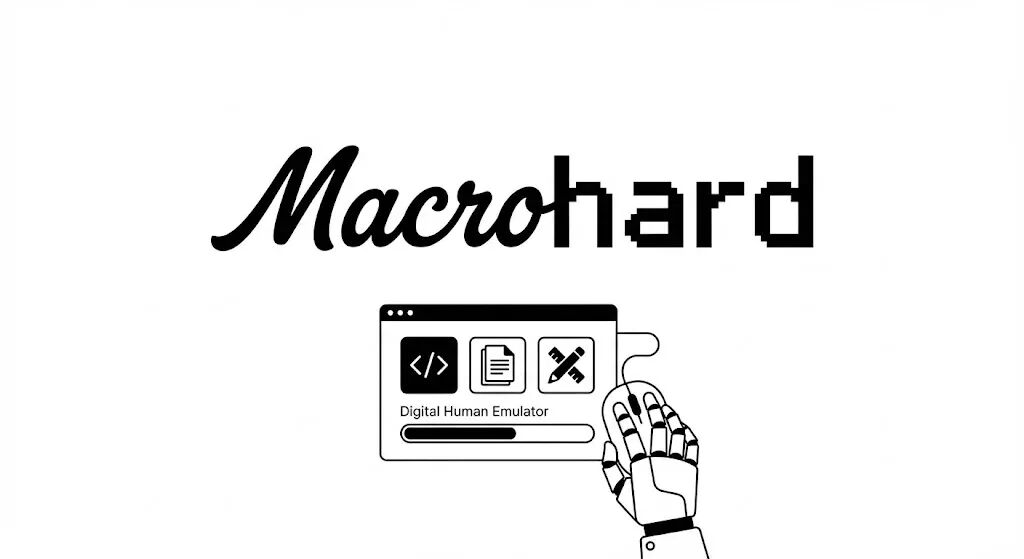
Industry Insight: This represents the digital humanoid robot. If AI can operate computer software (tools of the digital world) like humans, the next step is operating coffee machines, drills, and steering wheels (tools of the physical world). For the robotics industry, Macrohard serves as the cerebral cortex responsible for 'hand-eye coordination' and 'task planning.'
II. Middle Layer: Data Isn't Oil—It's 'Private Tutoring'
Looking further down, the 'Expert Tutors & Grokipedia' (Expert Tutors and Encyclopedia) section stands out prominently.
In traditional automotive and robotics companies, data annotation is often viewed as low-end labor and outsourced to annotation firms. xAI elevates this to a core architectural layer. They don't call them 'annotators' but 'expert tutors.'
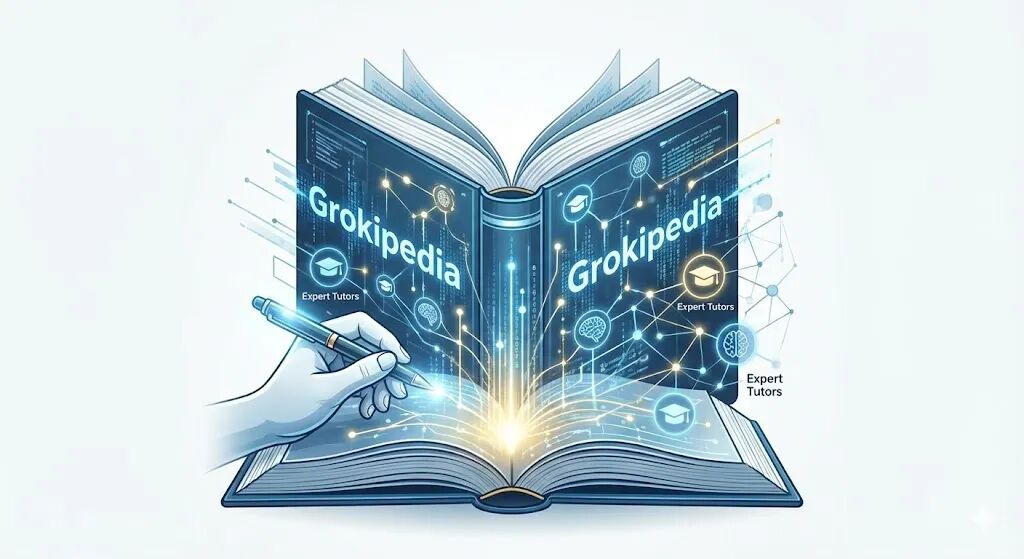
Industry Insight: For end-to-end autonomous driving (End-to-End AD) and robotic imitation learning, data quality far outweighs quantity. We need veteran drivers teaching AI to drive and skilled workers teaching robots to weld, not cheap labor drawing boxes on images. Establishing a high-caliber 'human tutor team' to transfer tacit knowledge from humans to models is key to next-stage competition.
III. Bottom Layer: 'System Hackers' Breaking Down Software-Hardware Barriers
Notice the bottommost layer of the organizational chart—here lies xAI's most hardcore secret.
Did you spot it? The name 'Makro' appears twice. He leads both top-level Coding and bottom-level ML & Data Infrastructure. Similarly, Toby manages both Macrohard and API & Core Infra.
In traditional manufacturing, application developers don't handle infrastructure, and data center managers don't understand algorithms. This separation leads to massive computational waste. At xAI, application layer leaders directly intervene in infrastructure.
Why? Because when training clusters of 100,000 or even 1 million cards, those unaware of algorithms cannot design efficient architectures; those ignorant of underlying hardware will write model code riddled with bugs.
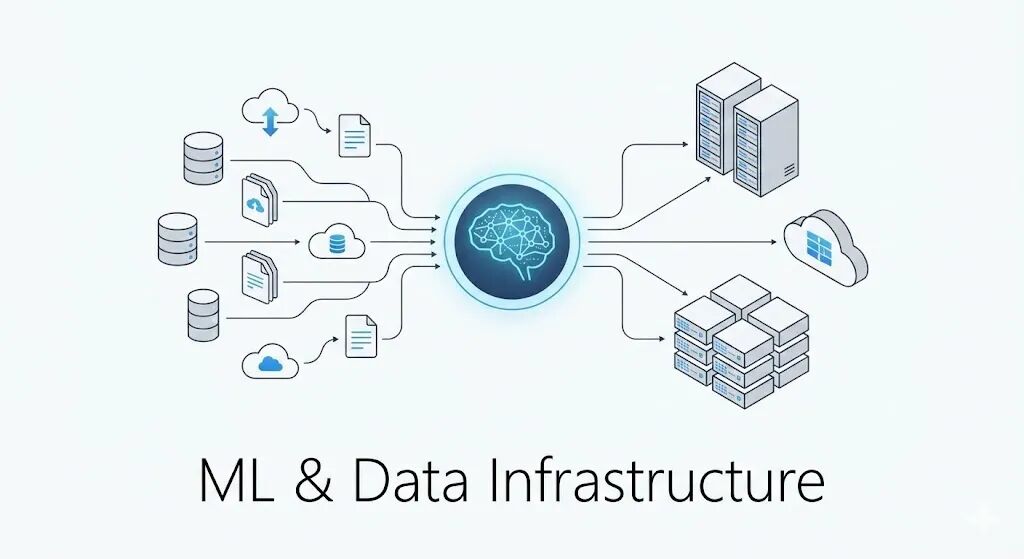
Industry Insight: The automotive and robotics industries face computational hunger. We can no longer simply buy GPUs or rent cloud services. We need to cultivate 'full-stack system hackers' who understand both Transformer architectures and GPU kernel optimization, even data center liquid cooling. Only by bridging the gap from atoms (physical infrastructure) to bits (model applications) can we survive the computational arms race.
Conclusion: Growing Like a Biological Organism
Looking at this chart, it no longer seems primitive but evokes a biological elegance.
Traditional automotive companies resemble precision mechanical clocks—gears interlock flawlessly, but any environmental change requires disassembly and reassembly.
xAI's organizational chart, however, resembles a biological organism:
Infrastructure forms the skeleton and blood vessels, delivering energy (computational power);
Expert Tutors act as senses, absorbing nutrients (high-quality data);
Imagine serves as dreams, rehearsing the future in virtuality;
Macrohard functions as limbs, executing will;
Grok represents the brain, overseeing all.
For all practitioners dedicated to infusing intelligence into steel bodies (vehicles or robots), the challenge now lies not just in technology but in organization. Do we dare, like Musk, to dismantle function-based silos and establish a biological organization with 'intelligent evolution' as its sole purpose?
This may be the path to achieving 'Optimus' and fully autonomous driving.
References and Images
Full text of Elon Musk's speech at the 2026 xAI all-hands meeting and notebooklm summary PPT
*Unauthorized reproduction or excerpting strictly prohibited
-
![]()
Who’s Sounding the Alarm on ‘Rushed Vehicles’?
-
![]()
Over 5.3 Billion Yuan in Losses Over Three and a Half Years! Can Yonyou Reverse Its Fortunes Through Streamlining and AI Transformation?
-
![]()
Baidu AI Adopts Free Model: A Strategic Maneuver in Traffic and Monetization
-
![]()
Silicon-Based OLED Pioneer Unveils Financial Results: H1 Shipments Outpace Entire 2025 Volume
-
![]()
AI's First "Lost Summer"
-
![]()
Zeiss Makes Another €2.2 Million Bet: Will Eye Tracking Be the Next Big Thing in the Smart Glasses Industry?
-
![]()
RUNTO Ranking | Global Top TV ODM Factories' Shipment Figures for July 2026
-
![]()
Dealer Service Operational Prowess | How After-Sales Managers Can Harness Efficiency and Expertise to Secure Trust in the New Energy Era