Nissan, Grappling with Massive Q3 Losses, Faces 'Red Light' in Its New Energy Transition?
 02/14 2026
 564
564
Recently, Nissan Motor unveiled its financial forecast for the fiscal year 2025 (spanning from April 2025 to March 2026), predicting a net loss of 650 billion yen. While this marks a reduction in losses compared to the fiscal year 2024, when the net loss stood at 670.9 billion yen, it still constitutes a significant deficit. After enduring two consecutive years of substantial losses, Nissan's current predicament is far from encouraging. Besides the repercussions of dwindling global sales and U.S. tariff policies, substantial layoffs have also inflicted enormous costs, severely compressing Nissan's profit margins. In light of recent developments, in March 2025, Nissan reshuffled its executive team, and merely two months later, in May, it shuttered seven factories worldwide and laid off 20,000 employees.
According to foreign media reports, two Chinese automakers, BYD and Geely, have set their sights on the Nissan-Mercedes factory in Mexico, with both making it to the final shortlist for its acquisition. The factory, a joint venture between Mercedes and Nissan established in 2015 and officially launched in 2017, is situated in Aguascalientes, central Mexico. With an initial investment of roughly 1 billion euros, it boasts an annual production capacity of 230,000 vehicles. Nissan primarily utilizes the factory to manufacture the Infiniti QX50 and QX55 models, while Mercedes mainly produces the GLB. However, due to a myriad of factors, the factory is now slated for closure. This implies that Nissan will shutter another factory shortly after the dawn of 2026.
Shifting focus to the domestic front, although Nissan accelerated its transition to new energy vehicles in 2025, introducing two new models—the Nissan N7 and Nissan N6—its best-selling model in China remains the fuel-powered Sylphy. The Sylphy's robust sales are not attributed to its outstanding product strength but primarily to its affordability. In 2025, Nissan's total domestic sales (encompassing both passenger and commercial vehicles) reached 653,000 units, marking a year-on-year decline of 6.26%. Among these, the Sylphy accounted for 320,000 units, representing 49% of Nissan's domestic sales. This underscores the precariousness of Nissan's situation in China without the Sylphy, which explains the model's aggressive price cuts. Should the Sylphy's sales dwindle, it would be nearly impossible for Nissan to sustain annual sales exceeding 600,000 units in China. 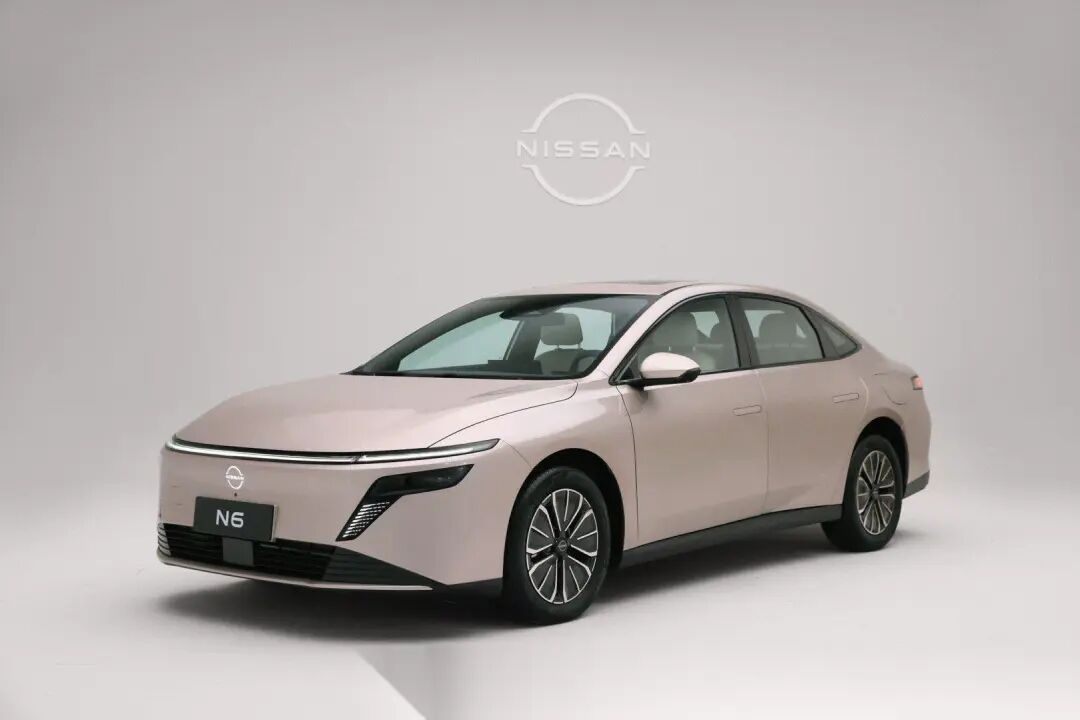
Since 2025 signifies Nissan's full-fledged foray into new energy vehicles in China, with the launch of the Nissan N7 and N6 electric sedans, the Nissan N7 once achieved monthly sales surpassing 10,000 units, becoming the best-selling joint-venture electric vehicle. Regrettably, despite the Nissan N7's starting price of less than 120,000 yuan for a mid-to-large all-electric sedan—offering exceptional value—sales have continuously declined for several months following the initial surge. In January of this year, monthly sales of the Nissan N7 plummeted to just 978 units, hitting a new low since its launch. Given the current circumstances, it appears almost unattainable for the Nissan N7 to reclaim its peak of over 10,000 monthly sales, as affordability alone does not ensure success. Faced with this reality, it remains to be seen whether the recently launched Nissan N6 and the forthcoming Nissan N8 can spearhead Nissan's efforts in China's new energy vehicle market. Copyright Notice: This article is original to Che Kuaiping. Reproduction requires authorization. Unauthorized reproduction and any form of plagiarism or misappropriation of text or images will result in legal action. Some images in the article are sourced from the internet, with copyright held by the original authors. If your work is used, please contact us for compensation or removal.
-
![]()
Luna Ultra Entangled in 'National Subsidy Fraud' Controversy, Insta360 Pushed to the Brink by DJI
-
![]()
People have long suffered from splash ads. Will the 'temporarily disappeared' traffic behemoth make a comeback?
-
![]()
GPT 5.6 Reclaims the Throne, Only to Face Strict Controls Again! Has AI Truly Reached a Turning Point?
-
![]()
When the Traffic Bubble Fades, AI Giants Start to Compete on 'Real Skills'
-
![]()
Wenxin Once Integrated Multiple Web Portals, but Its Impact Has Diminished
-
![]()
A 1.388 Million Yuan Answer Sheet: Insights into Huawei's Ultra-Luxury Car Strategy and Potential Concerns from the Debut of Zunjie S800 Grand Design and V800
-
![]()
Luna Ultra Mired in 'National Subsidy Fraud' Controversy, Insta360 Cornered by DJI
-
![]()
Legal Disputes, Share Unlock, and Pricing Controversies Converge: Insta360 Reaches a Pivotal Juncture