16 Blockbuster Models Make a Joint Debut: China’s Auto Industry Advances Toward Technological Autonomy
 02/14 2026
 526
526
Author: Li Qi
Published by: Zhujian Auto
The latest Ministry of Industry and Information Technology (MIIT) new vehicle filing catalog has set the stage for an annual “hardcore auto show,” with 16 high-profile models making their debut in rapid succession. These include the Xiaomi YU7 GT, AITO M6, and all-new Li Auto L9 Livis, covering a wide range of vehicle segments—from compact SUVs to large flagship models—and encompassing all powertrain types, from pure electric to internal combustion engines.
Key specifications, such as 738kW peak power, 3,150mm ultra-long wheelbases, 800V high-voltage platforms, and dual-LiDAR intelligent driving systems, have been unveiled en masse, highlighting a stark contrast: the proactive, innovation-driven rise of Chinese automakers versus the reactive strategies of joint-venture brands. 
Chinese Automakers’ Flagship Models Rise Collectively
Redefining Leadership in the Premium Market
The most notable trend in this filing is the comprehensive breakthrough of Chinese automakers in the premium segment, fueled by growing confidence in self-developed technologies.
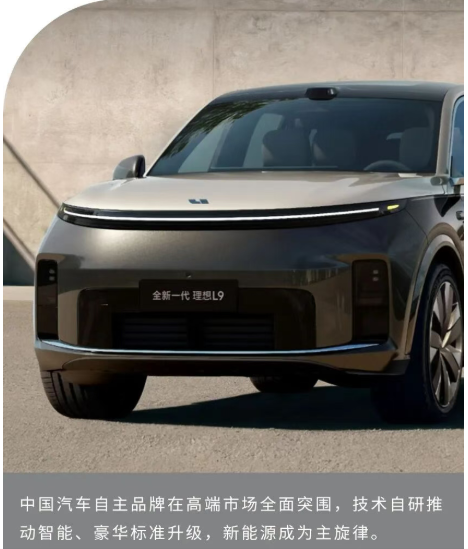
The all-new Li Auto L9 Livis, priced at RMB 559,800, features a 2,560TOPS computing chip and a 420km pure electric range, setting new benchmarks for intelligence and luxury in flagship SUVs. The XPENG GX, with its 3,115mm wheelbase, 5C ultra-fast charging, and rear-wheel steering system, directly challenges established benchmarks like the Li Auto L9 and NIO ES8 in the RMB 300,000–350,000 price range. The BYD Tang DM enters the large SUV arena with a 3,130mm wheelbase. 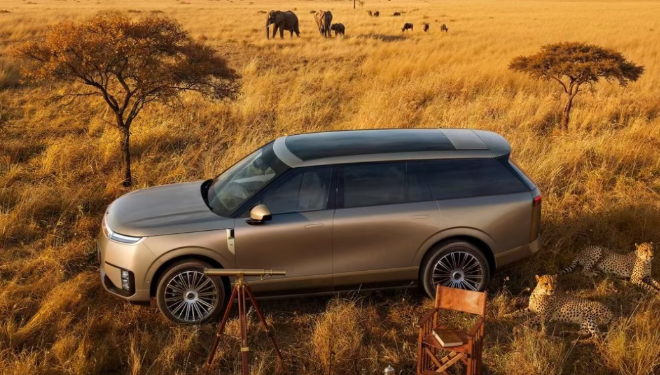
More importantly, Chinese automakers are demonstrating strategic cohesion. The AITO M6 comes equipped with front and rear dual-LiDAR systems, precisely targeting the mainstream premium market priced between RMB 250,000–300,000. The WEY V9X incorporates design elements inspired by the ZhiLi Governor's Office, setting cultural and technological benchmarks with its plug-in hybrid system, which achieves 0-100km/h in 4.4 seconds and offers a 363km pure electric range.
In contrast, joint-venture brands are on the defensive: the Mercedes-Benz CLAL hybrid has been pushed back into the RMB 200,000 segment, the Volkswagen Tiguan L ePro struggles to remain competitive with its 117km pure electric range, and the Volvo ES90, despite its 800V architecture, fails to overcome technological homogenization.
This divergence underscores China’s leadership in core areas such as three-electric systems (battery, motor, controller), intelligent chassis technology, and intelligent driving algorithms, officially ushering in an era where premium market standards are “self-defined.” 
Precision Targeting in Segmented Markets
New Energy Dominates the Landscape
While flagship models serve as strategic statements, precise market segmentation reflects automakers’ tactical acumen, with a shift from broad coverage to user-centric deep cultivation.
The Fangchengbao Titan 7 pure electric version retains its rugged boxy design, standardly equipped with LiDAR and the “Divine Eye B” assisted driving system, filling a market gap for rugged pure electric SUVs. The Avatr 06T enters a niche segment with its wagon variant, setting a new benchmark for premium station wagons with Huawei’s next-gen LiDAR and Qiankun intelligent driving system. 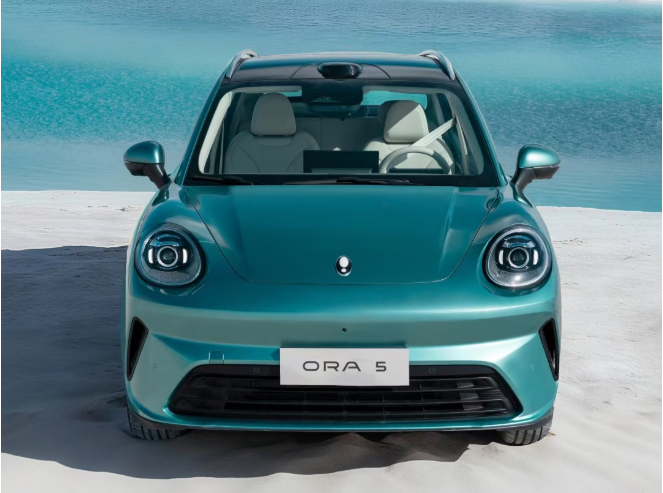
Diversified powertrains reflect industry maturity. The Ora 5 offers a triple powertrain matrix—pure electric, hybrid, and internal combustion—to cater to users with varying energy needs, starting at RMB 99,800. The Fengyun T9L, equipped with the Kunpeng ultra-hybrid CDM system, redefines value benchmarks for mid-size family SUVs with its 5-second-class acceleration and Falcon 700 intelligent driving system. The Haval Menglong PLUS balances rugged styling and family needs with a 7-seat layout and a 191km pure electric range.
Notably, dual powertrains (pure electric and extended-range) have become standard for mid-to-high-end models, while 800V high-voltage platform adoption has surged, directly addressing user concerns about range and charging efficiency.
The model distribution in the filing catalog makes it clear that automotive competition in 2026 has shifted from single-parameter comparisons to multi-dimensional contests of technological prowess, brand value, and user insights. Chinese automakers, leveraging self-developed technologies and precise positioning, are reshaping the global automotive competitive landscape. Joint-venture brands risk further marginalization if they fail to accelerate localized innovation.
This industry transformation, led by Chinese brands, not only propels the automotive sector from price wars to value-driven competition but also provides a critical blueprint for China’s manufacturing industry to transition from scale leadership to value leadership.
-
![]()
Luna Ultra Entangled in 'National Subsidy Fraud' Controversy, Insta360 Pushed to the Brink by DJI
-
![]()
People have long suffered from splash ads. Will the 'temporarily disappeared' traffic behemoth make a comeback?
-
![]()
GPT 5.6 Reclaims the Throne, Only to Face Strict Controls Again! Has AI Truly Reached a Turning Point?
-
![]()
When the Traffic Bubble Fades, AI Giants Start to Compete on 'Real Skills'
-
![]()
Wenxin Once Integrated Multiple Web Portals, but Its Impact Has Diminished
-
![]()
A 1.388 Million Yuan Answer Sheet: Insights into Huawei's Ultra-Luxury Car Strategy and Potential Concerns from the Debut of Zunjie S800 Grand Design and V800
-
![]()
Luna Ultra Mired in 'National Subsidy Fraud' Controversy, Insta360 Cornered by DJI
-
![]()
Legal Disputes, Share Unlock, and Pricing Controversies Converge: Insta360 Reaches a Pivotal Juncture