Five-Year Plunge of 500,000 Units: What Ails Dongfeng Honda?
 02/26 2026
 689
689
The Survival Struggle for Joint Venture Brands Reaches a Pivotal Point
At its zenith, Dongfeng Honda capitalized on the sporty essence of the Civic and the versatile allure of the CR-V, cementing its status as a frontrunner among joint venture brands and frequently gracing the wish lists of Chinese car buyers. Yet, in a mere half-decade, this erstwhile automotive luminary has encountered its 'Waterloo,' gradually fading from the mainstream limelight.
Data reveals that Dongfeng Honda's annual sales soared to 820,400 units in 2020, only to plummet to 325,800 units by 2025. This translates to a staggering decline of nearly 500,000 units in just five years.
Amid China's rapid electrification and intelligence transformation in the automotive sector, brands like Honda, renowned for 'selling engines alongside cars,' are witnessing their technological barriers and brand fortifications being gradually dismantled by Chinese automakers armed with 'three electric systems + intelligence' strategies. From Honda's global vantage point, its electrification journey has been sluggish. In its 2026 product blueprint, Dongfeng Honda has made minimal strides in the new energy domain.
How Did Joint Venture Brands, Dongfeng Honda Included, Gradually Lose Their Grip on the Chinese Market?
What Befell Dongfeng Honda?
Dongfeng Honda, once adored by Chinese consumers for iconic models like the Civic and CR-V, is now navigating its harshest winter in over two decades since its foray into China.
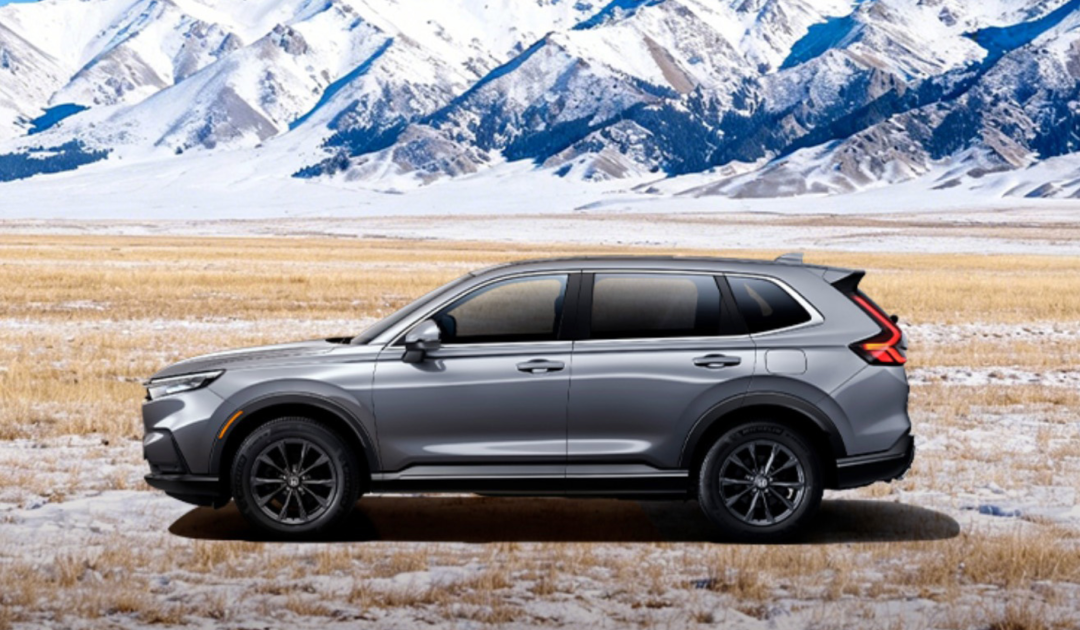
Image Source: Dongfeng Honda Official Website
In recent years, amid the automotive industry's pivot towards electrification and intelligence, joint venture brands, Honda among them, have witnessed a sales slump due to sluggish transformation and lackluster competitiveness in new energy offerings. Meanwhile, Chinese domestic brands have ascended, leveraging cost-effective products, swift iterations, and cutting-edge electric and intelligent technologies.
Indeed, Honda has ventured into electrification in China, but its product iteration pace and pricing strategies are misaligned with current market trends.
In 2022, Dongfeng Honda unveiled the pure electric model e:NS1, yet its monthly sales languished below 100 units post-launch, even plummeting to embarrassing 'single-digit' figures on multiple occasions. That year, Dongfeng Honda's sales tumbled to 650,000 units.
The persistent sales contraction compelled Dongfeng Honda to embark on a 'retrenchment adjustment.' In July 2024, Honda China announced capacity optimization and electrification transformation. By November 2024, Dongfeng Honda had halted production on its second line, boasting an annual capacity of 240,000 units, and laid off roughly 500 contract workers. By 2024, Dongfeng Honda's sales had dwindled to 430,000 units.
In March 2025, Dongfeng Honda introduced the pure electric SUV S7. Regrettably, this new model, developed over four years with substantial human and financial investments, met a tepid market response due to its initially exorbitant pricing. Data indicates the model sold 373 units in its March debut, dwindling to a mere 52 units by May, with cumulative three-month sales falling short of 500 units. Despite subsequently implementing a 'fixed price' policy ranging from 199,900 to 249,900 yuan and offering 23,800 yuan in usage benefits, the market remained unimpressed.
The shrinking market has taken a toll on its annual performance. Honda projects its operating profit for FY2026 (April 2025 to March 2026) at 700 billion yen (approximately 34.089 billion yuan), an upward revision from the prior estimate of 500 billion yen but still falling short of market expectations of 896.24 billion yen (approximately 43.648 billion yuan).
How Can Joint Venture Brands Reverse the Tide?
In truth, Dongfeng Honda's trajectory in the Chinese market mirrors that of numerous foreign and joint venture brands in recent years.
Data indicates that in 2025, Honda's global cumulative sales reached 3.5219 million units, ranking second among Japan's top three automakers but declining about 7.5% from 3.8091 million units the previous year. Honda's primary markets are North America, China, and Japan, with China's 'drag effect' becoming increasingly pronounced. In 2025, Honda's production and sales in China plummeted by 16.4% and 24.2%, respectively. Both of Honda's Chinese joint ventures, Dongfeng Honda and GAC Honda, experienced sales declines.
The root cause of Japanese brands' cooling in China lies in their severe lag in new energy transformation. During the fuel vehicle era, Japanese cars' core strengths of 'fuel efficiency, durability, and low maintenance costs' were deeply ingrained in consumers' minds, becoming pivotal selection criteria. However, in the new energy era, these attributes have become inherent advantages of electric vehicles (EVs). EVs boast lower energy costs, simpler structures, and lower failure rates, directly dismantling Japanese brands' core competitiveness.
According to the China Association of Automobile Manufacturers, in 2025, China's auto production and sales both surpassed 34 million units, setting new historical records. Among them, new energy vehicle (NEV) production and sales exceeded 16 million units, with NEVs accounting for over 50% of domestic new car sales. Market environment shifts also suggest that brands struggling to gain a foothold in the new energy sector will inevitably face market contraction.
For joint venture brands, an even more formidable challenge stems from shifts in consumer perceptions. With the rise of domestic brands and new EV makers, consumers have stereotyped joint venture EVs as 'lagging in intelligence, low in cost-effectiveness, and conservative in design.' These labels have become natural barriers for joint venture brands launching new models, and Dongfeng Honda's e:NS1, S7, and other models have clearly failed to break through this perception with sufficient product prowess.
According to previously disclosed plans, Dongfeng Honda aims to achieve a 50% electrification ratio by 2025, halt the launch of fuel vehicle models by 2027, and introduce over 10 pure electric models by 2030. However, realizing these goals currently appears daunting.
Facing these series of upheavals, Dongfeng Honda has also embarked on profound reforms. In September 2025, Cao Dongjie, former CEO of Dongfeng Mengshi Technology, was appointed Executive Vice President of Dongfeng Honda. At the 2025 Guangzhou Auto Show, he announced that deep localization reforms are underway, with the R&D team size set to double; efforts are being made to break away from traditional joint venture R&D models, actively seeking support from both shareholders, and integrating global resources with Chinese local needs.
Data reveals that in January 2026, Dongfeng Honda sold a cumulative 31,377 new vehicles, achieving a 4.4% year-on-year increase and a 1.8% month-on-month increase, becoming one of the few joint venture brands to achieve double growth in both metrics. This performance underscores that Dongfeng Honda still retains a certain brand foundation and market recognition. However, in a market environment where new energy vehicles account for over 50% of sales, single-month growth is insufficient to reverse long-term declines.
In 2026, competition in China's auto market will intensify further, with NEV penetration continuing to rise. Can Dongfeng Honda sustain its January growth momentum and reclaim lost market share? Can Japanese brands escape the predicament of lagging transformation? The answers to these questions hinge not only on corporate strategic decisions but also on their ability to keep pace with China's market transformation rhythm. The survival battle for joint venture brands has just entered its most critical phase.
-
![]()
Can the Brand-New Hongqi H7 Forge Its Own Identity in the Hybrid Vehicle Market?
-
![]()
Challenges in Redeeming Certificates for New Cars: Mercedes-Benz Dealership Group Grapples with Operational Hurdles Once Again
-
![]()
Porsche Returns to Volkswagen, Ending the 'Electric Ferrari' Story
-
![]()
"Chinese Version of Mythos": Can It Rise to the Challenge and Keep Pace?
-
![]()
Equity Changes Hands Three Times in Seven Years: JMCG Leans on Contract Manufacturing for Survival Amid Brand Deficits
-
![]()
Automotive Market News: Nine Departments Jointly Roll Out Aftermarket Consumption Initiatives
-
How Electronic Fabric Became the Critical Chokepoint for AI’s Trillion-Dollar Computing Infrastructure
-
![]()
Depreciation Rate on Par with Mobile Phones: Just 40% Value Retention After Three Years—Why Do Battery Electric Vehicles Lose Their Worth?