The AI Four Little Dragons Ride the Wave of Going Global Again: Kimi Gets Rich by 'Raising Lobsters', MiniMax Silently Earns Money from Foreigners
 02/27 2026
 665
665
Domestic market giants engage in fierce competition, while the AI Four Little Dragons set sail for overseas markets.
Last Spring Festival, with the 'Mysterious Eastern Power' DeepSeek R1, DeepSeek successfully established the reputation of Chinese AI startups in the global top-tier large model market.
For a long time thereafter, DeepSeek and DeepSeek became almost synonymous with Chinese AI startup platforms and enterprises.
Besides DeepSeek, this group of Chinese large model star startups also includes Moonshot AI (Kimi), Zhipu AI (GLM), and MiniMax. Among these three, Zhipu AI and MiniMax have already gone public, while Moonshot AI continues to undergo dual tests in the venture capital and user markets.
Since the second half of last year, there have been persistent doomsday predictions directed at Moonshot AI: Is Kimi falling behind?
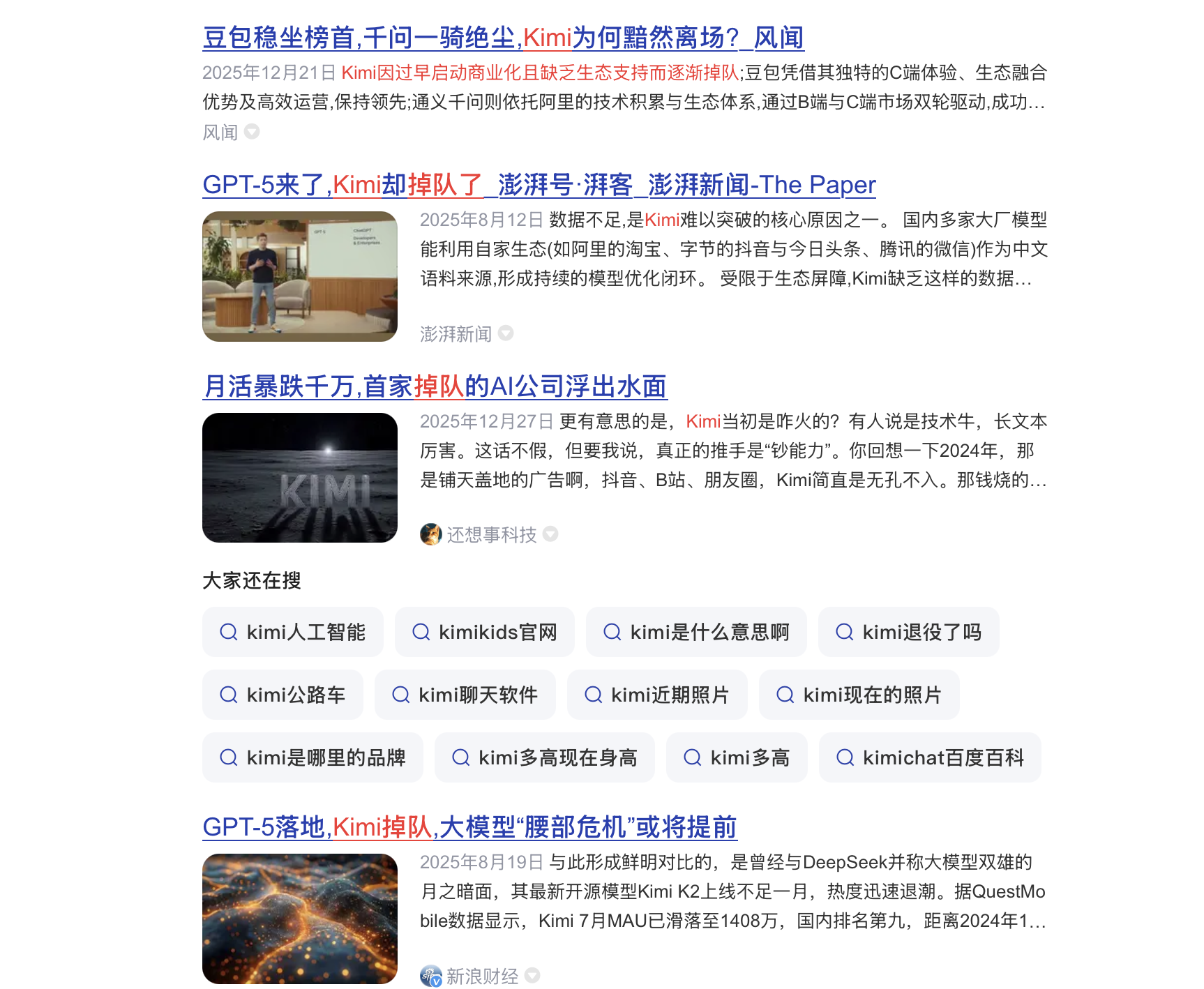
Amidst a chorus of doubts, Moonshot AI remained silent, sequentially launching the Kimi K2 series and the Kimi K2.5 large model, and leveraging Kimi K2.5 to stage a remarkable comeback this Spring Festival.
Kimi's Return to the Mainstream: OverClaw Players Overseas Take the Credit
According to The Paper, within less than 20 days of its release, the K2.5 large model generated more revenue for Kimi than its total revenue for the entire previous year.
At the same time, after securing over $1.2 billion in continuous financing, Moonshot AI achieved the highest funding amount in the large model industry in nearly a year, also setting the record for the fastest speed at which a domestic company advanced from inception to becoming a 'Decacorn' (note: a 'Unicorn' with a valuation exceeding $10 billion).
For domestic AI large models, especially those launched by startups, there are currently two clear paths to profitability (commercialization):
1. Focus on the vertical large model market, serving the needs of B-end industry client groups;
2. Fully expand beyond the domestic market to meet the specific needs of the 'global 1% of users.'
Kimi's return to the mainstream opted for the second path.
In fact, the Kimi K2 Thinking large model launched by Moonshot AI in November last year already sparked widespread discussion in domestic and international tech communities.
With a total of 1 trillion parameters, Kimi K2 Thinking was hailed as the 'largest and best open-source model to date,' ranking first in the 'Agentic Tool Use' test, surpassing 'closed-source' flagship models from OpenAI, Anthropic, and others.
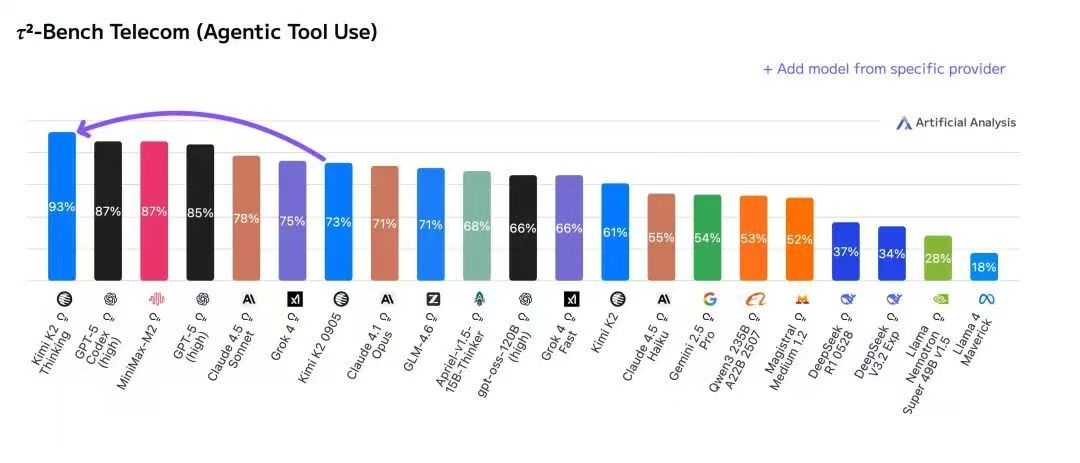
Continuing to forge ahead on the path of 'Agentic Tool Use,' Moonshot AI introduced the latest Kimi K2.5 large model at the end of January this year.
After experiencing Kimi K2.5 firsthand, Xiaolei believes that Kimi has pushed AI one step further towards being 'capable of getting work done': longer memory, stronger multimodal understanding, the ability to break down and execute complex tasks, and a new attempt at an Agent cluster for 'teamwork' point towards an experience closer to that of a 'digital assistant' rather than just a conversational chat window. This also sets Kimi on a completely different path of upgrading domestic large models compared to DeepSeek.
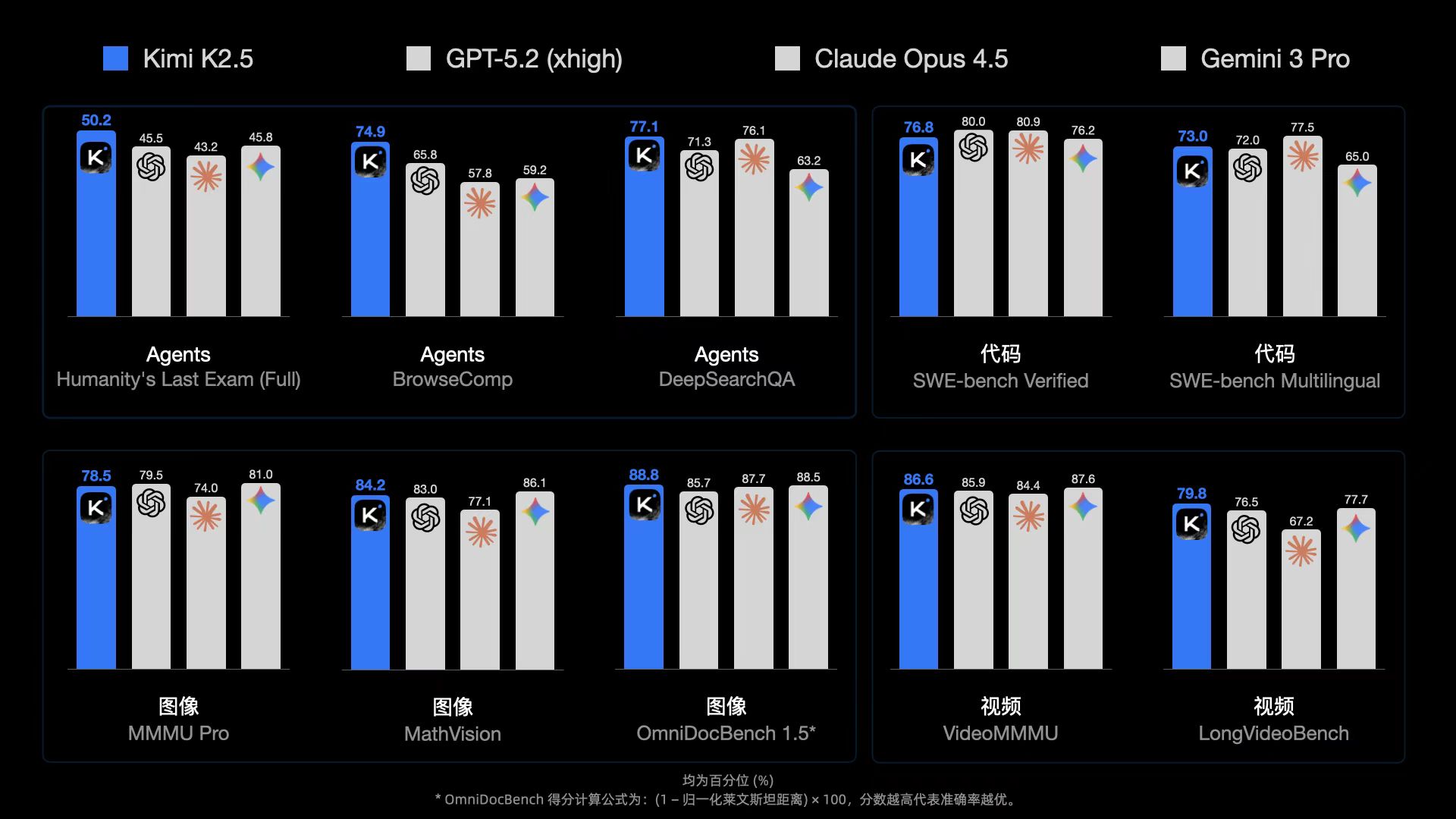
With a combination of 'long memory + multimodal + agent' capabilities, Kimi's current product focus and positioning have shifted from an AI that 'can answer' to an AI that 'can execute.' In the current landscape where domestic and international large models are competing on whether they 'can truly be used,' Kimi, with its new role, is just one spark away from 'exploding.'
Opportunity favors the prepared. At the beginning of 2026, OpenClaw became a sensation in domestic and international tech communities. Even for enthusiasts and geek communities, a simpler deployment process for 'crayfish' (a nickname for OpenClaw) is a major necessity.
And this became a skill of Kimi K2.5, which supports one-click deployment of OpenClaw without the need for additional hardware or servers, or inputting programming code. Even ordinary users can 'raise crayfish' 24/7.
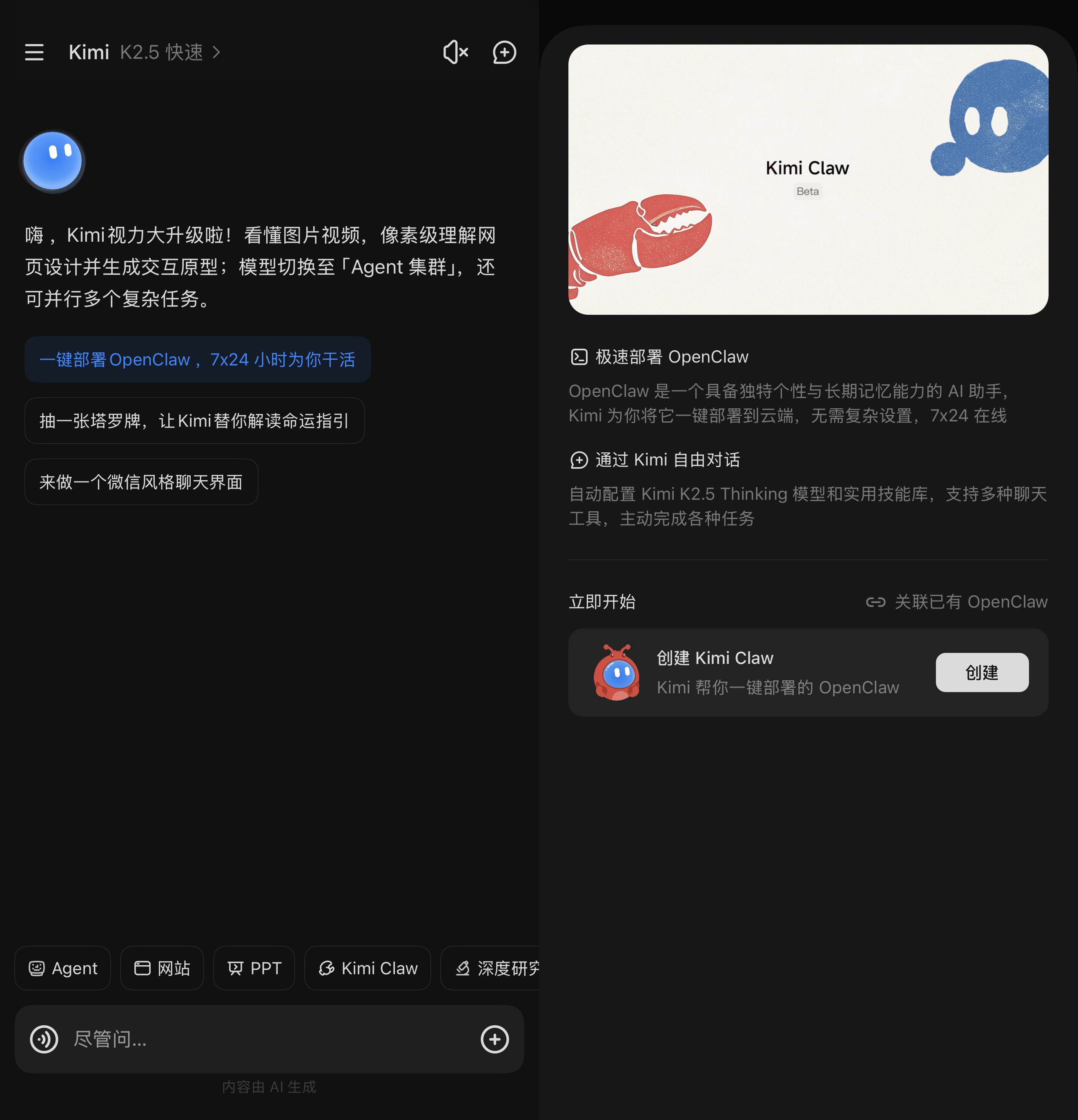
Lei Technology Screenshot
With a top-tier agent framework application paired with a well-matched open-source model, Kimi became a hit among tech enthusiasts.
In early February, the newly launched Kimi K2.5 became the champion of the OpenRouter Model Invocation Weekly Chart.
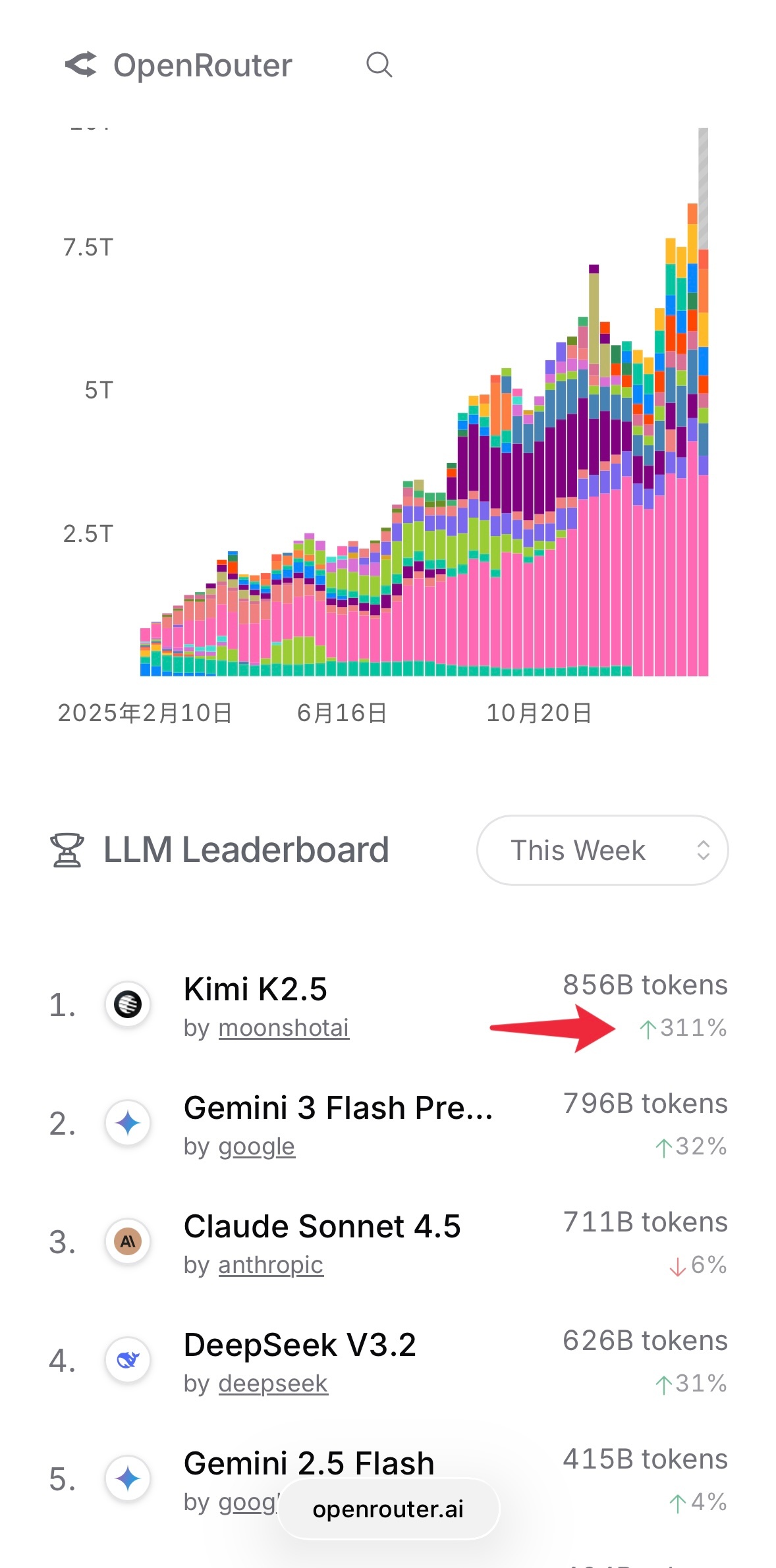
After receiving this wave of overwhelming traffic, Moonshot AI wasted no time, busy promoting itself to global mainstream AI tech exchange communities and global search engine platforms like Google, aiming to attract more overseas tech users and ordinary users interested in OpenClaw for paid subscriptions, thereby achieving faster revenue growth.
As of now, Kimi's large model's overseas market revenue has surpassed the domestic market, with revenue primarily coming from paid member subscriptions and API invocations (Tokens billed by volume).
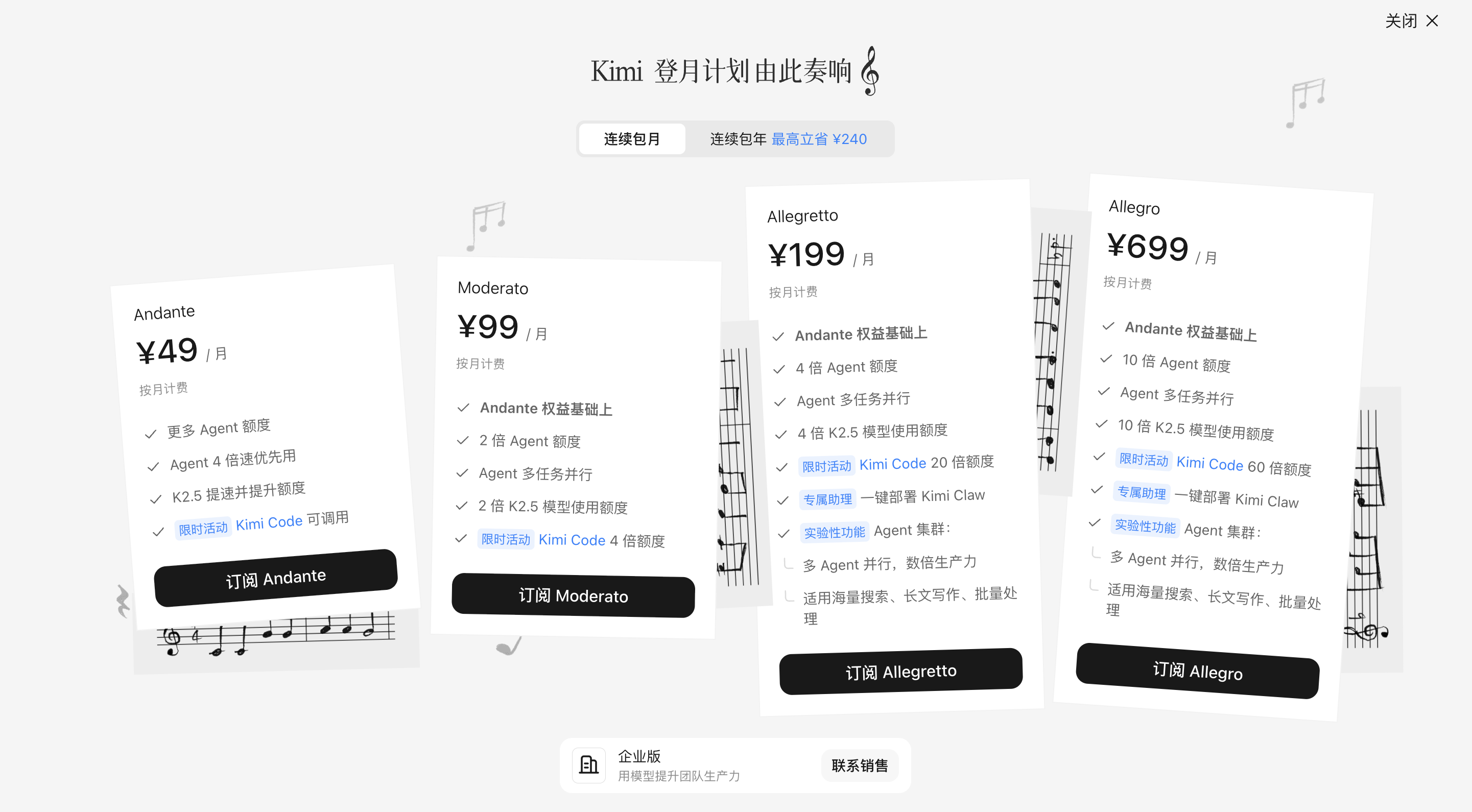
Blooming Inside the Walls, Smelling Fragrant Outside: AI Little Dragons Earn Money to Support Their Families
If Kimi K2.5's earnings from foreigners can be attributed to some 'luck,' then MiniMax, which ventured into overseas markets earlier, is undoubtedly more convincing.
In fact, just from the company's external publicity at the corporate level, it's evident that 'MiniMax' as a model and brand name is far more famous than the Chinese name of the enterprise, 'Xiyu.'
Official data shows that in the first three quarters of 2025, MiniMax's overseas market revenue accounted for over 70%, with C-end market revenue also exceeding 70%. By the end of September 2025, MiniMax's business covered more than 200 countries and regions worldwide, with 212 million individual users and 130,000 enterprise clients. In contrast, when MiniMax was first established in 2023, its overseas market revenue accounted for only 19%.
From a global market regional distribution perspective, in the first three quarters of 2025, MiniMax's revenue in the Asia-Pacific region was 61%, in the Americas 24%, and in Europe, the Middle East, and Africa 15%.
According to data from CIC, the global foundational model market size is expected to grow from $10.7 billion in 2024 to $206.5 billion in 2029.
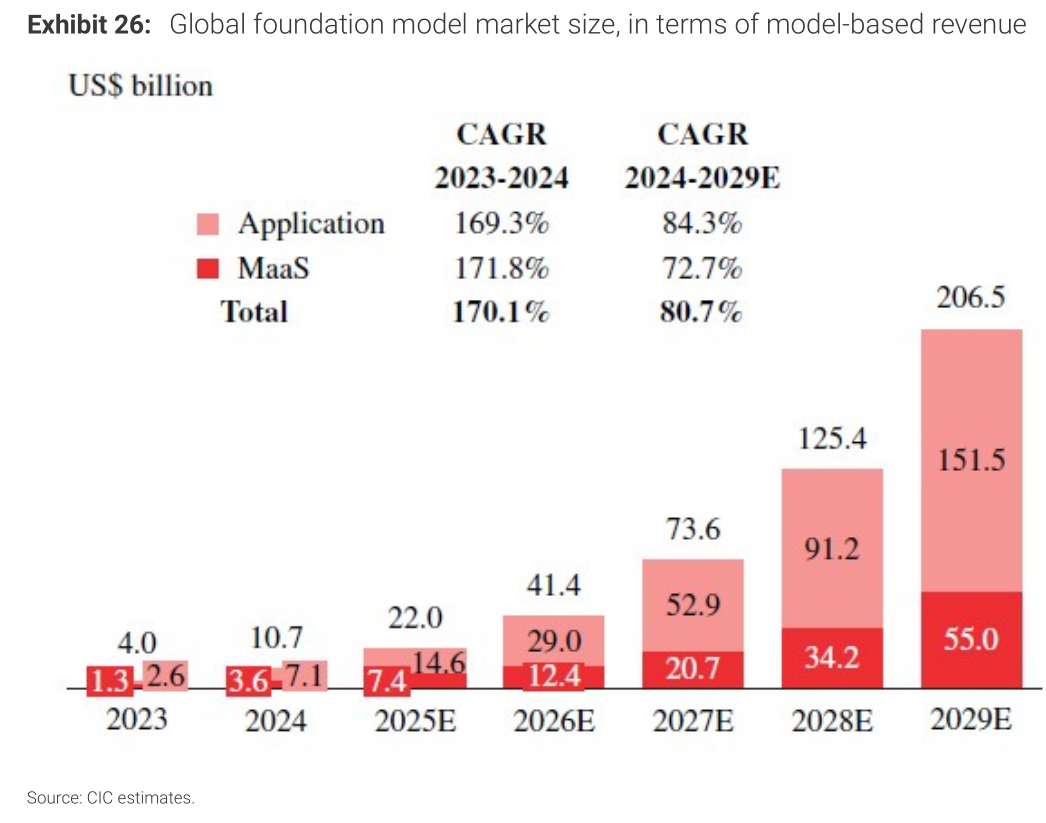
Based on this figure, if 1% of the global market share can be secured, the corresponding large model product revenue in 2029 would be $2.065 billion, currently equivalent to approximately 14.1 billion RMB.
For MiniMax, Kimi, and others, as the global large model market cake grows, how to maintain or even seize more shares becomes the top priority for the company's development in the coming years.
Compared to the domestic C-end user and B-end client markets, the overseas C-end user market, especially the overseas tech user market, is undoubtedly a stage where AI Little Dragons can more easily achieve 'maintaining 1%' or 'competing for 1%' of the market share cake.
Zhipu AI, another member of the AI Little Dragons, is also focusing on overseas markets, but still primarily targeting B-end client groups, such as its flagship 'Zhipu Sovereign AI' cooperation project.
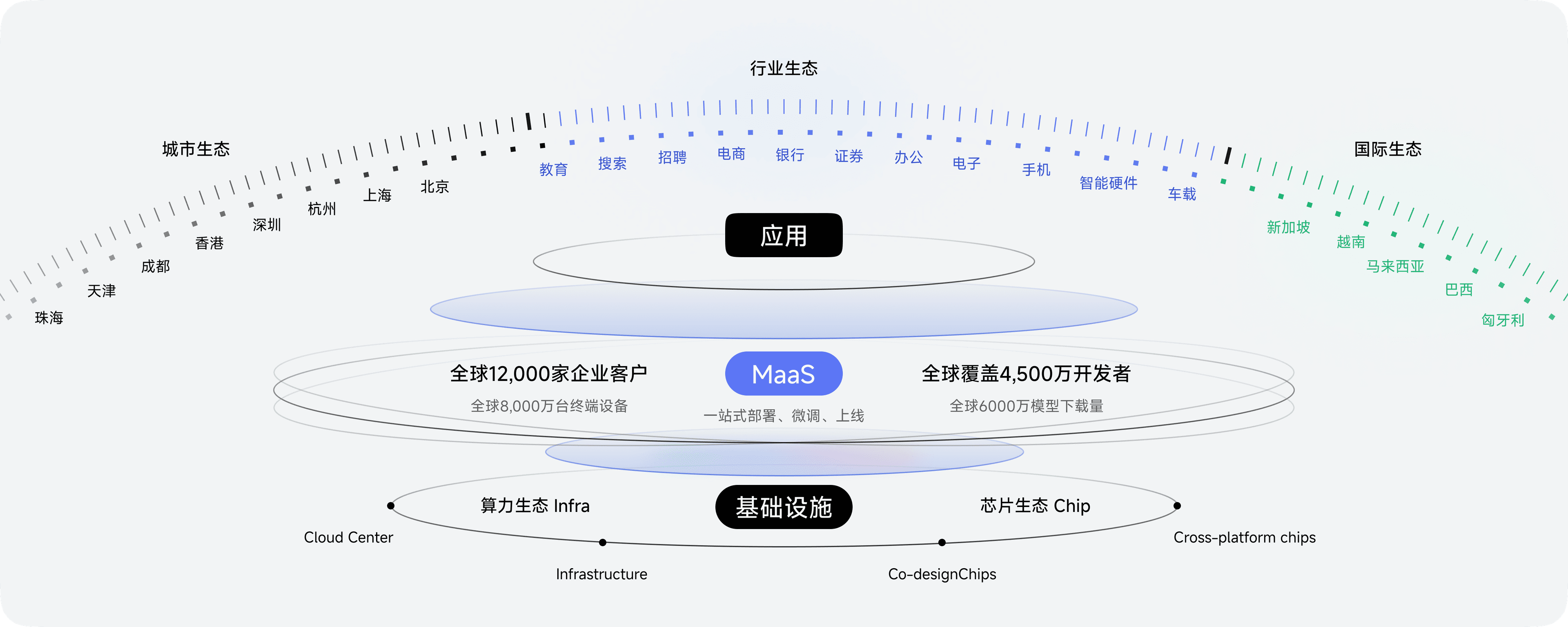
At the end of last year, the Malaysian national-level MaaS platform and the Malaysian National Sovereign AI Talent Cultivation Laboratory, Z·UM AI Lab, were established and operational.
The Malaysian national-level MaaS platform is built on Zhipu AI's open-source foundational model, optimized for Malaysia's multilingual environment (Malay, English, Chinese) and local culture, while maintaining a sovereignty-centric data security architecture and the autonomy of a national-level AI platform, empowering scenarios such as government, enterprises, scientific research, and student education.
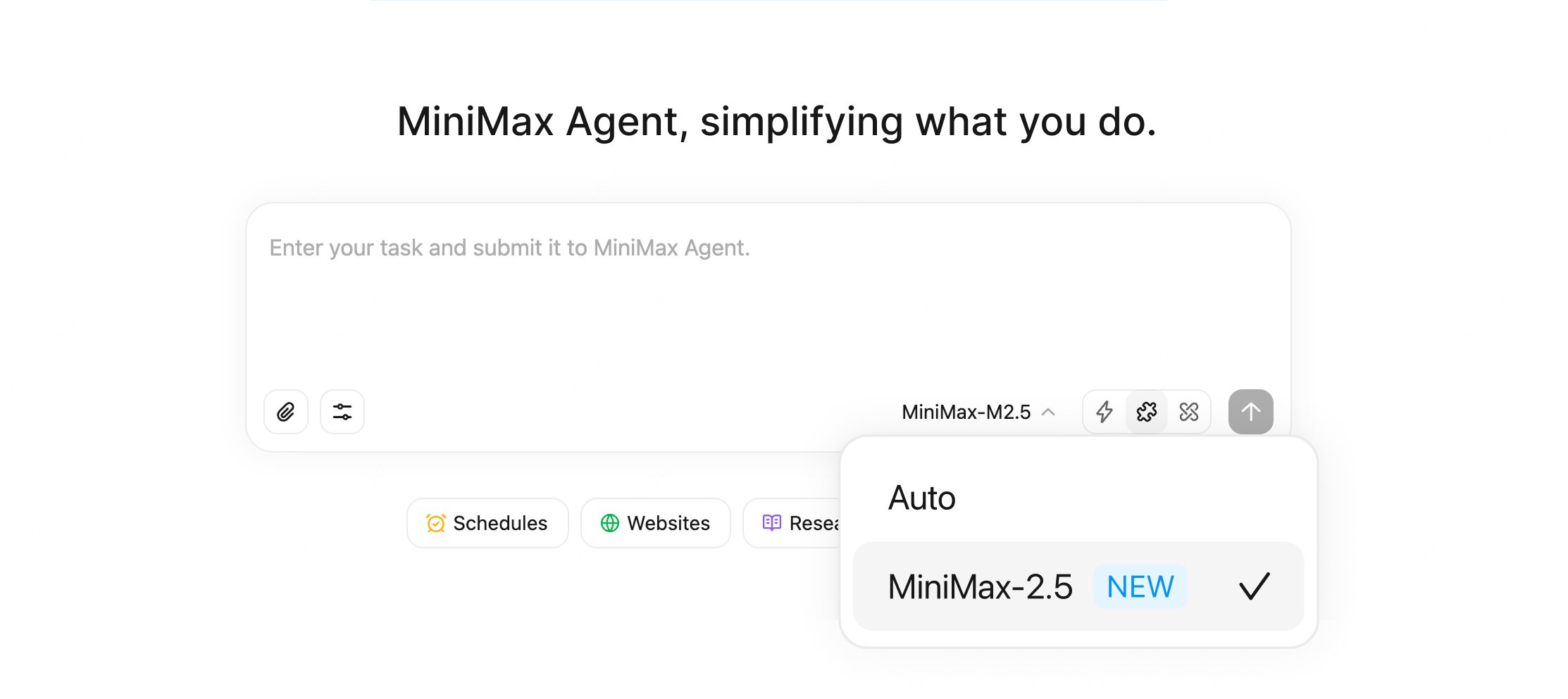
From a product perspective, MiniMax's latest MiniMax M2.5 continues the multimodal and application-oriented route, emphasizing the advancement of a comprehensive set of multimodal capabilities, including simultaneous improvements in speech generation, music generation, and text capabilities, and can directly enter the creative and product workflow.
Clearly, MiniMax's large model's core audience and paying groups lean towards overseas creators and productivity tool users.
Zhipu AI's latest GLM-5 is directly designed as an Agent model capable of executing tasks, emphasizing programming capabilities, tool invocation, and long-flow execution. In programming tests, it can already handle project-level code and debugging issues, with the model able to break down requirements, invoke interfaces, continuously execute tasks, and maintain goal consistency throughout multi-stage processes.
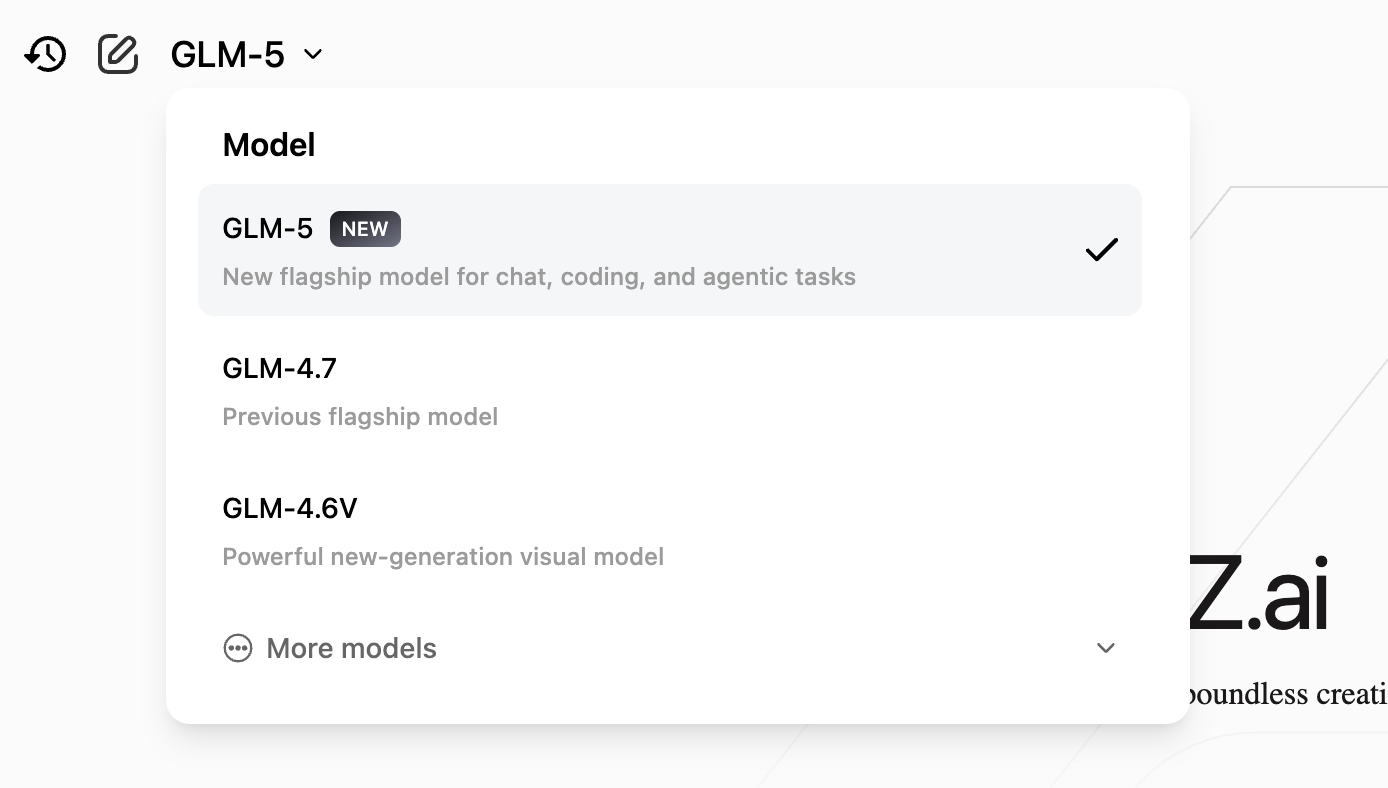
It's evident that even though GLM's large model primarily relies on B-end industry clients for revenue, it still keeps the C-end user market in mind.
Domestic Market Giants Engage in Fierce Competition, Going Global Becomes the Only Choice for AI Little Dragons
At the beginning of this year, Chinese AI giant platforms such as the Alibaba ecosystem (Alibaba/Ant Group), ByteDance, Tencent, and Baidu launched an unprecedented wave of accelerated AI application promotion in the domestic market, with 'monthly active users exceeding 100 million' potentially becoming a standard feature for top domestic AI applications.
Under this new situation, even the strongest among the AI Little Dragons, DeepSeek, cannot guarantee that it will continue to hold a significant position in the future domestic C-end user market.
Even in the B-end industry client market, Baichuan Intelligence, which focuses on the medical large model sector, has yet to achieve profitability. When giant platforms finish competing in the general large model arena and then focus on vertical large model fields, how should these large model startups respond? Moreover, the domestic vertical large model market already has early-bird giant platforms like iFlytek Spark.
For AI Little Dragons like MiniMax, Moonshot AI, Zhipu AI, and even DeepSeek, the domestic market will only face fiercer competition from giant vendors.
Instead of engaging in 'completely unequal' market competition with AI giant platforms in the domestic market, it's better to venture overseas, especially into developed markets, to carve out a niche, while comprehensively promoting the commercialization of AI technology applications among C-end user groups. After all, Chinese people have never been inferior to foreigners when it comes to applying new technologies.
Fully expanding beyond the domestic market, even taking overseas markets as the primary focus, is not only a more realistic operational strategy for now but also a wiser future development strategy.
Meeting the specific needs of the 'global 1% of users' and satisfying the particular demands of overseas users will become the only choice for Chinese AI Little Dragons and startups.

AI Large Models, Moonshot AI, Kimi, MiniMax, Zhipu AI, Going Global
Source: Lei Technology
All images in this article are from the 123RF licensed image library
-
![]()
Doubao Work Unveiled! Domestic AI Leaders Fully Commit to the 'Work' Sector
-
![]()
Who’s Sounding the Alarm on ‘Rushed Vehicles’?
-
![]()
Over 5.3 Billion Yuan in Losses Over Three and a Half Years! Can Yonyou Reverse Its Fortunes Through Streamlining and AI Transformation?
-
![]()
Baidu AI Adopts Free Model: A Strategic Maneuver in Traffic and Monetization
-
![]()
Silicon-Based OLED Pioneer Unveils Financial Results: H1 Shipments Outpace Entire 2025 Volume
-
![]()
AI's First "Lost Summer"
-
![]()
Zeiss Makes Another €2.2 Million Bet: Will Eye Tracking Be the Next Big Thing in the Smart Glasses Industry?
-
![]()
RUNTO Ranking | Global Top TV ODM Factories' Shipment Figures for July 2026