Jarvis and Doraemon Represent Humanity's Ultimate Vision for AI
 03/16 2026
 683
683


The ultimate battle in the AI era is not about outperforming in parameters but about who can first descend from the realm of computational deities to become a relatable cyber companion with a distinct persona by users' sides.

Original Content by Xinshang AI Tech Team
Many have likely seen this Wechat Moments (moment post): 
The industry earthquake triggered by a single lobster (OpenClaw) has finally caught the attention of the giants. And it all began during the Spring Festival.
On one side, tech giants investing billions in user acquisition—Qianwen, Yuanbao, Wenxin—are trapped in a traffic bottleneck with stagnant DAU and retention growth. On the other, the lobster sparked a nationwide craze at breakneck speed, with even non-coders lining up outside Tencent's headquarters to deploy it.
The innocent lobsters mercilessly exposed the emperor's new clothes in China's LLM circle, revealing a harsh truth: the era of mere parameter stacking has ended. Victory in the AI age hinges not on marginal advantages in benchmark scores but on emotional connection and companionship.
This clash between computational deities and cyber pets has only just begun. 
Psychological Projection: From Cold Software to Cyber Pet 
Before discussing technology, we must clarify a crucial yet often overlooked business truth: What do users truly want?
Over the past two years, tech giants have be caught in (fallen into) severe engineer-thinking delusions, boasting at launches about trillion-parameter models, trillion-token training, and logical reasoning surpassing GPT-4 by X percentage points. They ignore that for 99% of users, these cold numbers mean nothing.
Why do big firms' AI products suffer from abysmal user stickiness? Because they're mere tools. Tools are meant to be used and discarded. You open them to write reports or search info, then close them immediately afterward. No one forms emotional attachments to screwdrivers. Yet humanity's ultimate desire has never been sharper tools—but partners that resonate emotionally.
OpenClaw's viral success perfectly demonstrates the psychological personification effect.
Across social platforms, geeks and novices share an unspoken understanding: they don't say "I deployed an open-source model" but "I raised a lobster." This simple verb swap—from installation to nurturing—instantly transforms cold software into a cyber pet through psychological projection. In an atomized society, this represents a substitute for intimate relationships, with Cultivation system (nurturing-style) bonds drastically boosting user tolerance and retention.
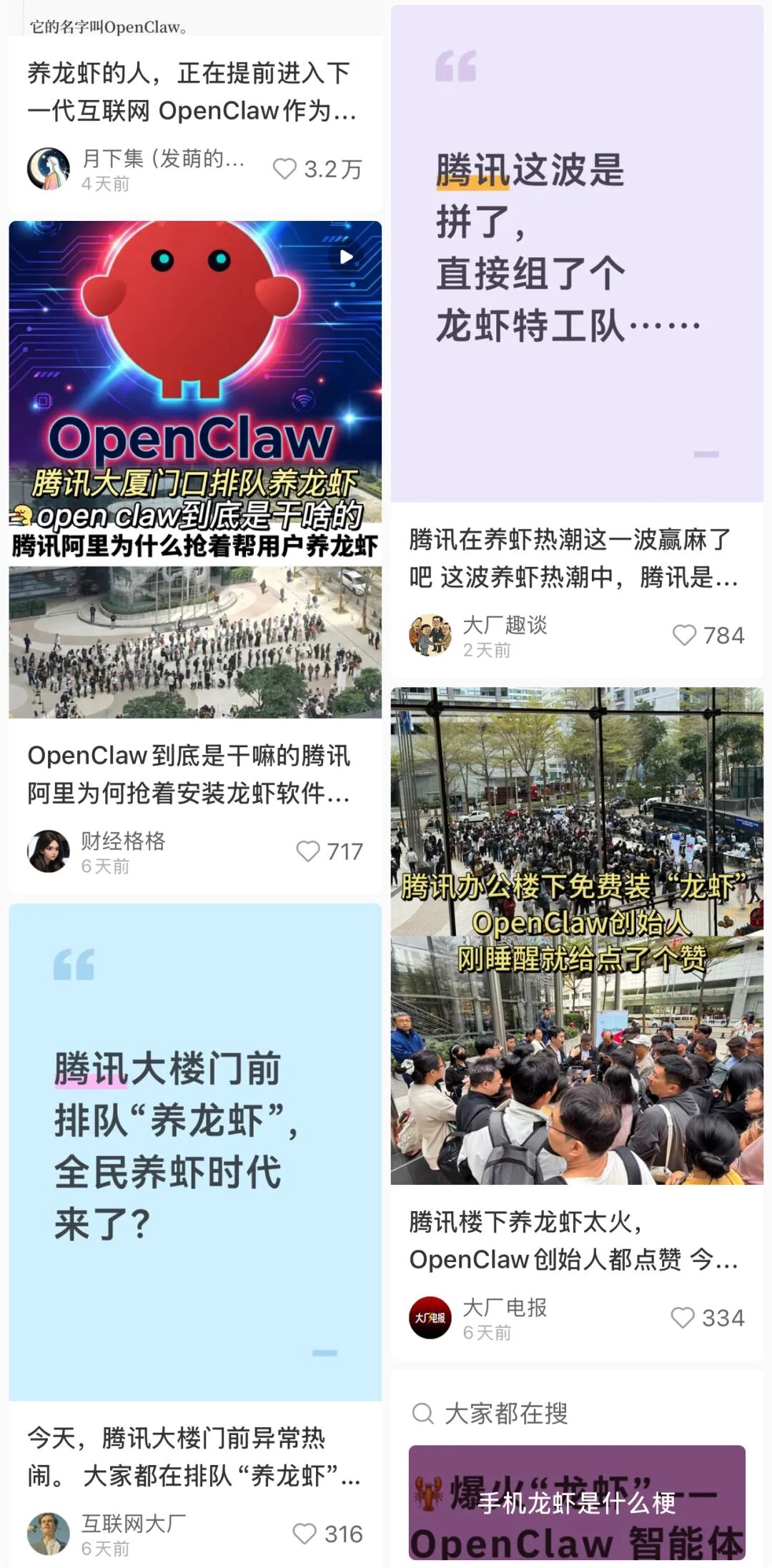 ▲Figure/Screenshot from Xiaohongshu
This persona-driven extreme tolerance is vividly embodied in ByteDance's Doubao.
Among current AI contenders, Doubao dominates daily active users by a wide margin. Why? Because Doubao never puts on airs. It features a natural human-like voice and clear virtual female persona—an electronic best friend always ready to listen to your rants.
On Douyin, tens of thousands of AI-generated images of Doubao's digital avatar circulate, with even Doubao covering its mouth laughing becoming a popular meme.
 ▲Figure/Screenshot
This creates a fascinating phenomenon: double standards toward hallucinations.
When traditional Q&A LLMs expose privacy flaws, it becomes a material safety accident (security incident) reported in financial statements. DeepSeek faces mass ridicule on Zhihu for every update's hallucinations; Yuanbao trended during Spring Festival over a poster controversy.
Yet with OpenClaw, users eagerly "coax" the lobster into sending red envelopes or consuming tokens. When Doubao wrongly accuses your cat of stealing food due to a hallucination—even analyzing the "crime motive" with solemnity—users respond by crazy (frantically) sharing it on social media with captions like: "Things without ID cards just talk nonsense!"
This is the dimensional reduction attack of persona. When AI is seen as a tool, any error becomes an unforgivable bug. But when viewed as a companion, flaws become proof of its humanity. 
Interaction Disruption: From Passive Search Box to Contact List Friend

While psychological projection solves "willingness to use," interaction disruption determines "duration of use."
Current domestic LLMs, regardless of model iterations, all make the same fatal mistake in frontend interaction: they're essentially search engines dressed in chat interfaces.
Recall your traditional AI workflow: encounter problem → unlock phone → find and open standalone app → stare at blank input box → craft perfect prompt → wait for lengthy output.
This interaction is passively demanding, requiring users to possess clear goals and strong expressive abilities. The blank input box acts like an invisible exam paper, creating prompt anxiety about what to ask.
OpenClaw's dimensional reduction attack against giants stems from its complete overhaul of interaction paradigms: it resides directly in your contact list.
Underestimate not this step. When an AI doesn't require separate app downloads but integrates with your social apps, its product nature fundamentally changes. 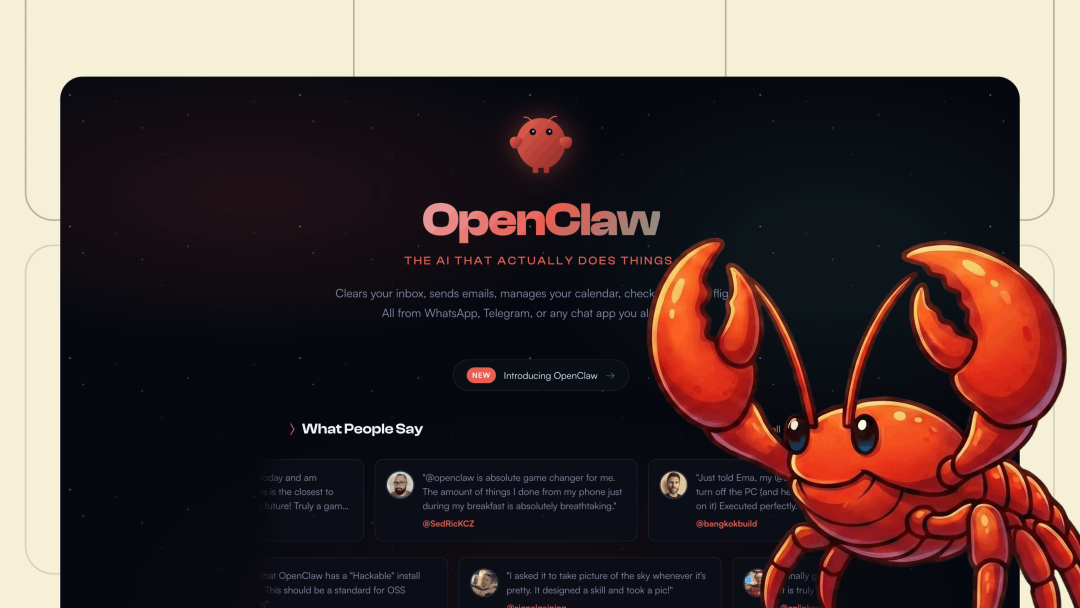
First comes social identity awakening. A standalone app remains an outsider. But when existing in your contact list, it subconsciously ranks alongside parents, bosses, and friends—gaining legitimate digital social status. You no longer feel like activating an app but instructing an assistant. This mental imprinting forms a moat no billion-dollar marketing spend can replicate.
Moreover, OpenClaw transforms from Q&A to proactive intervention. Traditional AI remains passive until prompted. But workflow/social-integrated OpenClaw gains Agent capabilities—lurking in groups, offering nearby food recommendations when you complain about overtime hunger, or summarizing hundreds of unread group messages. 
Most crucially, it offers frictionless interaction. Users needn't craft perfect prompts—they can send fragmented voice messages like: "Hey lobster, outline the document Mr. Wang just sent. I'm off to shower."
From passive search box to contact list friend marks an epochal leap, transforming AI from an inspected tool station to a living assistant who understands your emotions and blends into your daily life. Occupying your contact list means commanding your digital existence. 
Magical Turn: From GPU Worship to Persona Race
The canary in the coal mine, tech giants feel the pain and pivot faster than anyone.
If the past two years saw domestic LLM wars Crazy involution (frantically rolling) benchmark scores, context lengths, and trillion-parameter milestones, recent industry shifts reveal a complete reversal. Tencent's executive anxiety and strategic U-turn epitomize this trend.
Recently, Pony Ma's Wechat Moments (moment post) sent a strong signal: Tencent can no longer tolerate Yuanbao's stagnant engagement.
Despite controlling WeChat's 1.4 billion DAUs and China's largest social graph, Tencent finds itself marginalized in pure AI-to-C markets. To reverse traffic decline, it abandoned chasing marginal parameter improvements and launched at least five Agent-based products.
Examining Tencent's strategy reveals how giants awoke from technological fundamentalism:
They realized that unless billion-dollar models become social contacts, unless AI capabilities embed into 1.4 billion users' daily workflows, even the smartest models remain niche calculators.
This Cognitive reshuffle (cognitive reshuffle) spans Silicon Valley to Zhongguancun.
AI valuation models once followed: compute scale + parameters = technical moat = commercial value. But today, Meta's Llama series and domestic open-source forces like Qianwen are raising baseline intelligence for free. Your $1 billion, 10,000-A100-trained reasoning may get matched by open-source optimizations on consumer GPUs within months. When high IQ becomes commodity infrastructure, parameter racing becomes a never-ending arms race without C-end moats. 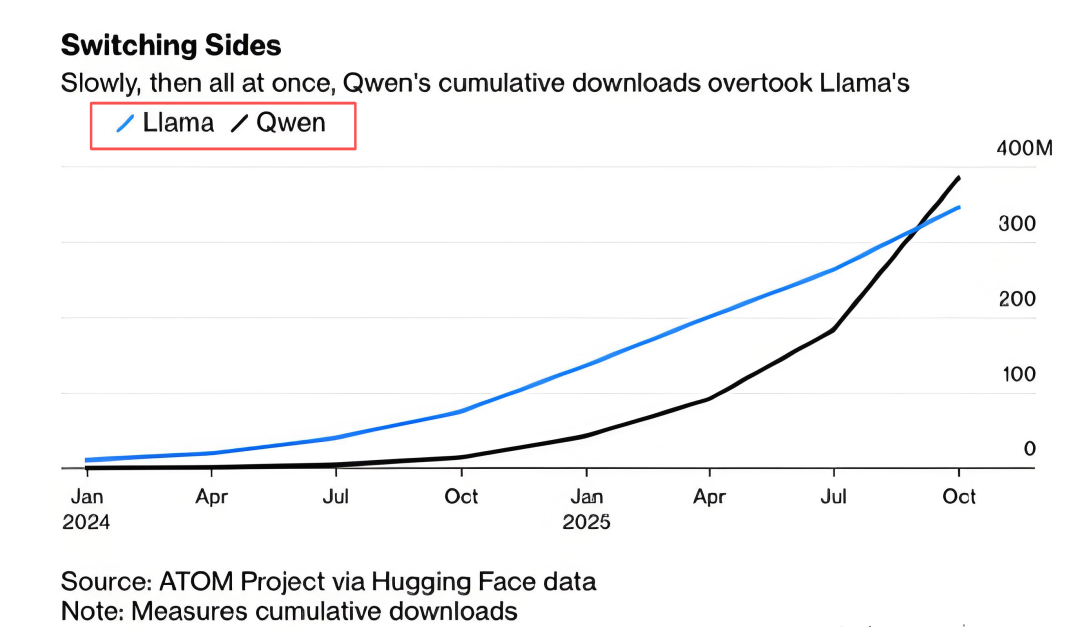
Thus, Doubao's success, OpenClaw's viral explosion, and Tencent's counterattack collectively prove an iron law for the next decade: AI persona > AI parameters.
Technical moats erode rapidly through open-source collaboration. Your billion-dollar reasoning may get freely replicated next month. When IQ (parameters) ceases being scarce, EQ (persona), emotional value, interaction naturalness, and life integration granularity become the sole moats.
While all chase computational deity status, whoever first sheds divine pretense and dons human the aroma of street food (worldly charm) will truly stay in users' phones.
History shows all tech revolutions ultimately serve humanity better. This held true in PC era, mobile internet, and especially AI age. Those lofty computational deities spending billions on acquisition yet remaining deserted must humbly adopt equal, slightly flawed personification to avoid marginalization.
Spending billions can indeed create an omniscient deity; but sometimes, what humans need in the middle of the night is just a cyber lobster that can say goodnight to you and respond to jokes in group chats.
The great AI companies of the future may not necessarily be the ones with the strongest computing power, but they will certainly be the ones that best understand human nature.
- END -
-
![]()
Doubao Work Unveiled! Domestic AI Leaders Fully Commit to the 'Work' Sector
-
![]()
Who’s Sounding the Alarm on ‘Rushed Vehicles’?
-
![]()
Over 5.3 Billion Yuan in Losses Over Three and a Half Years! Can Yonyou Reverse Its Fortunes Through Streamlining and AI Transformation?
-
![]()
Baidu AI Adopts Free Model: A Strategic Maneuver in Traffic and Monetization
-
![]()
Silicon-Based OLED Pioneer Unveils Financial Results: H1 Shipments Outpace Entire 2025 Volume
-
![]()
AI's First "Lost Summer"
-
![]()
Zeiss Makes Another €2.2 Million Bet: Will Eye Tracking Be the Next Big Thing in the Smart Glasses Industry?
-
![]()
RUNTO Ranking | Global Top TV ODM Factories' Shipment Figures for July 2026