Who’s Sounding the Alarm on ‘Rushed Vehicles’?
 08/25 2026
 349
349
By 2026, China’s automotive sector is grappling with a contentious label: “rushed vehicles.”
From the China Automotive Chongqing Forum in June to the 2026 China Automotive Forum in July, and culminating at the Chengdu Auto Show in August, industry leaders have taken the stage to voice their concerns, sparking intense debate.
This industry-wide clash over “speed versus prudence” and “efficiency versus safety” is reverberating through China’s automotive circles, eroding consumer confidence in current offerings.
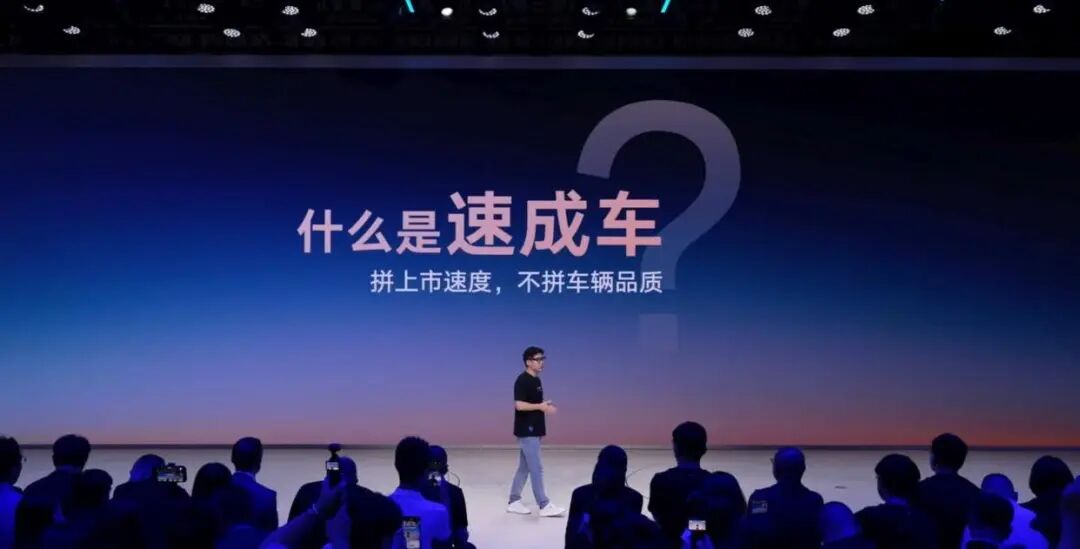
Echoing recent high-profile scandals like “formaldehyde-tainted Chinese cabbage,” questions arise: Is this a systemic issue, or are some automakers cutting corners, disregarding ethical standards? What’s driving this conversation? Most critically, can consumers still trust today’s models?

‘Rushed Vehicles’: More Than Just ‘18-Month Models’
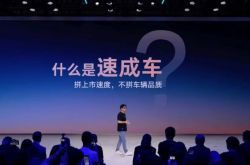
The term “rushed vehicles” lacks a formal academic definition but broadly refers to immature models rushed to market by automakers who drastically shorten R&D and testing cycles to seize market share.
Traditionally, developing a new internal combustion engine vehicle—from project kickoff to mass production—took over 36 months. Today, many new energy vehicle (NEV) models are compressed to just 18 months. In the first half of 2026, 542 new models flooded the domestic market, averaging 3.6 launches per day.
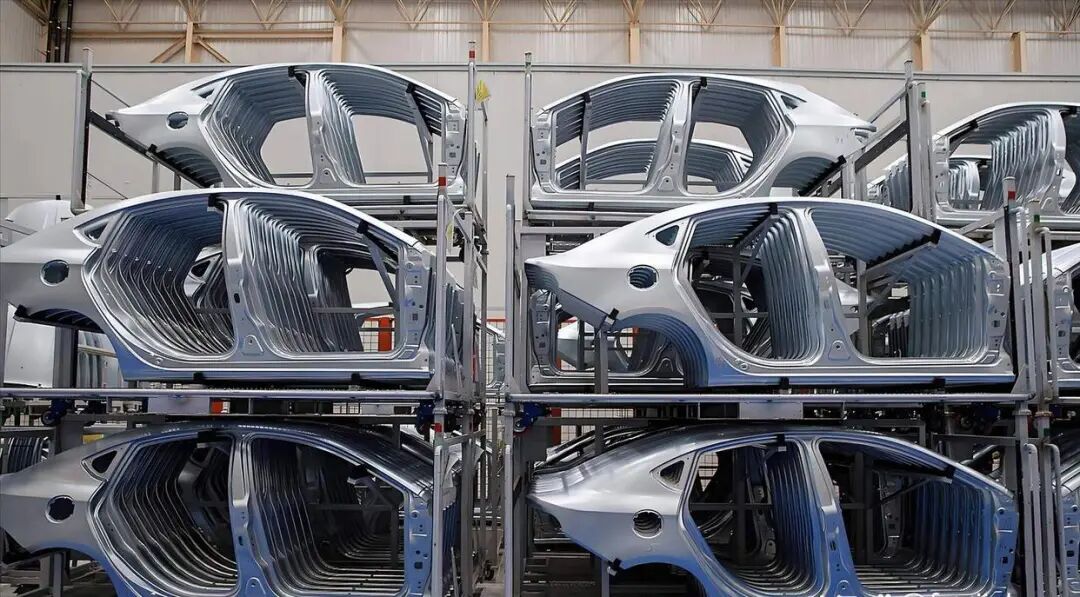
Yet, the issue transcends speed alone. A short R&D cycle doesn’t automatically mean a “rushed vehicle”—nor does a three- to five-year timeline guarantee quality. The industry currently lacks a scientifically rigorous definition. Vehicle development falls into three tiers:
- Major redesigns (complete powertrain and chassis overhauls): 36-month standard cycle.
- Moderate redesigns (lower body modifications): 24-month cycle.
- Minor redesigns (interior/exterior tweaks): Minimum 18-month compliant cycle.
Breaching these baselines makes real-world testing and calibration impossible—a practice that must be resisted.
The Debate Over ‘Rushed Vehicles’
The core controversy isn’t whether speed is achievable but where to draw the line. Executives’ stances generally fall into three camps:
The Criticizing Camp argues that verification time is non-negotiable. This group is the most vocal. Li Fenggang, General Manager of Beijing Hyundai, noted at the 2026 China Automotive Forum that some brands have merged critical development stages—Design Verification (DV) and Production Verification (PV)—into one, rushing models to market. The result? “Some new car owners returned their vehicles to 4S shops for repairs within days of purchase. The fastest record? Just three hours post-purchase—including meal breaks and traffic jams.”
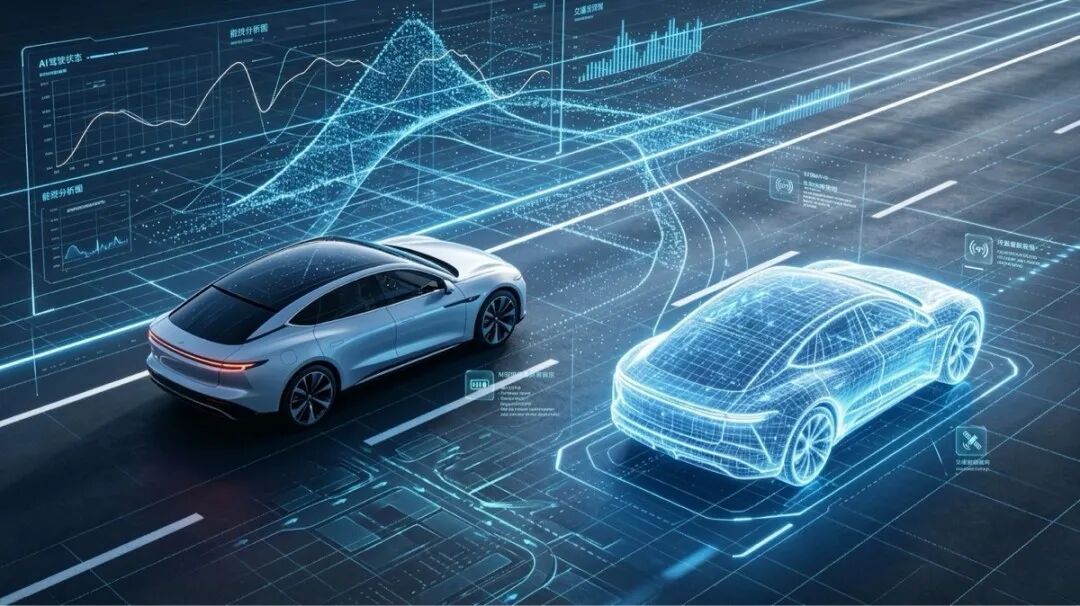
Li Jun, Executive Director of Marketing for Volkswagen Brand at SAIC Volkswagen, stated at the Chengdu Auto Show: “R&D can be accelerated, but verification cannot. Metal fatigue, rubber aging, battery cycling, and vehicle durability all require time. AI simulations can’t replace this. Otherwise, in three to five years, we’ll see rusted chassis, broken suspensions, and rattling interiors.” He emphasized, “SAIC Volkswagen has never built, does not build, and will never build rushed vehicles.”
The Rational Camp, led by Lu Fang, Chairman of VOYAH Automotive, contends that time isn’t the sole metric. “Technological advancements and improved management allow faster development,” Lu argued. He compared it to cooking: “Wood-fired stoves took hours, but rice cookers are faster. We don’t call that ‘rushed cooking’—the food tastes just as good.”
Lu attributed NEVs’ accelerated pace to systemic innovations. Platformization and modularization enable efficient reuse of mature architectures, while simulation testing can replicate millions of kilometers of extreme conditions virtually. “It’s like switching from walking to high-speed trains,” he said. “Methods are more advanced, and cross-disciplinary engineering synchronization is stronger.”
However, he stressed, “Time isn’t the only metric. The completeness of verification—including all R&D and production stages—is crucial.”
Notably, some automakers have remained silent or vague amid this debate. Industry observers noted, “Everyone criticizes rushed vehicles, yet everyone seems to be making them.” With 3.6 new models launching daily, no automaker dares to slow down.
How to Combat ‘Rush Culture’?
Despite differing views, consensus exists on the dangers of rushed vehicles.
Safety risks top the list. Ultra-short R&D cycles, skipped verification steps, and treating consumers as beta testers create hazards. Some models undergo multiple facelifts within a year, with core components iterated frequently. Issues like battery swelling, high-temperature failures, and severe range reductions have surged.

Simultaneously, industry innovation momentum is weakened. When speed trumps quality, genuine technological accumulation suffers.
The crux lies in distinguishing what can be fast from what must be slow. A key question emerges: To what extent can simulation testing replace real-world road tests?
Simulation tools like LS-DYNA and Abaqus can compress physical testing cycles, completing 300,000-kilometer equivalent load and fatigue tests in days or hours. For intelligent driving systems, AI can conduct extensive virtual testing, supplemented by real-world trials.
However, the “boundaries” for simulation must be clear. A senior hardware engineer, speaking anonymously, revealed that simulation’s primary role is early-stage design checks. “If a design passes simulation, it’s likely problem-free, allowing A-sample production for functional testing.” But, he cautioned, “Simulation can’t replicate the physical world’s complexity.”
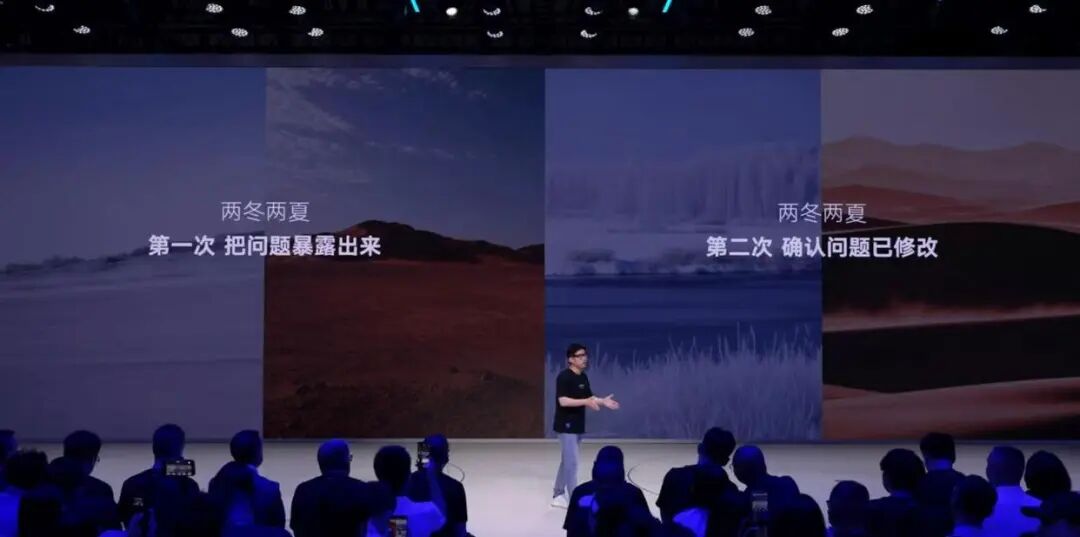
Thus, verification shouldn’t be rushed or replaced by AI. Automakers must adhere to “two winters and two summers” of testing, fully exposing issues in the first round and retesting after corrections in the second.
The solution? Establish scientific criteria for judging rushed vehicles. Admission standards should focus on verification completeness, not just R&D duration. The industry must collaborate on quantifiable benchmarks.
Meanwhile, regulators should adopt a “multi-pronged” approach. In January 2026, the Ministry of Industry and Information Technology (MIIT) revised the “Road Motor Vehicle Production Enterprise and Product Admission Review Requirements,” mandating reliability testing: ≥30,000 km for fuel vehicles, ≥15,000 km for NEVs. In July, MIIT inspected five automakers on product safety and production consistency. It also urged stronger testing, verification, and safety assessments, upholding production and quality standards.
Conclusion:
The debate over rushed vehicles is superficially about R&D cycles but fundamentally reflects collective anxiety in China’s automotive sector during the “New Four Modernizations” era: How to balance efficiency and safety?
Speed is a survival imperative; stability is a moral底线 (bottom line). When automakers treat consumers as “test drivers,” they risk not just months but decades of industry credibility. And rebuilding that trust may take just one vehicle, one accident, and one viral hashtag.
-
![]()
Who’s Sounding the Alarm on ‘Rushed Vehicles’?
-
![]()
Over 5.3 Billion Yuan in Losses Over Three and a Half Years! Can Yonyou Reverse Its Fortunes Through Streamlining and AI Transformation?
-
![]()
Baidu AI Adopts Free Model: A Strategic Maneuver in Traffic and Monetization
-
![]()
Silicon-Based OLED Pioneer Unveils Financial Results: H1 Shipments Outpace Entire 2025 Volume
-
![]()
AI's First "Lost Summer"
-
![]()
Zeiss Makes Another €2.2 Million Bet: Will Eye Tracking Be the Next Big Thing in the Smart Glasses Industry?
-
![]()
RUNTO Ranking | Global Top TV ODM Factories' Shipment Figures for July 2026
-
![]()
Dealer Service Operational Prowess | How After-Sales Managers Can Harness Efficiency and Expertise to Secure Trust in the New Energy Era