Baidu AI Adopts Free Model: A Strategic Maneuver in Traffic and Monetization
 08/25 2026
 494
494
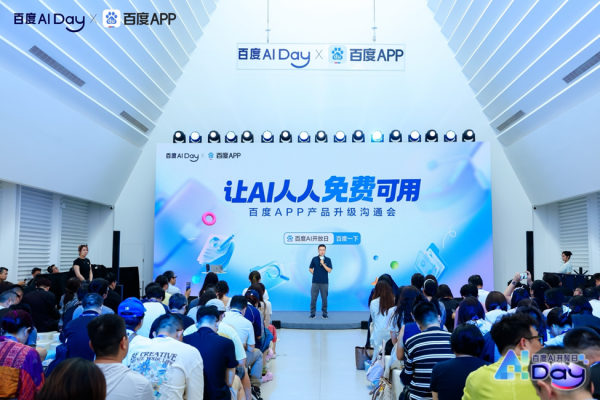
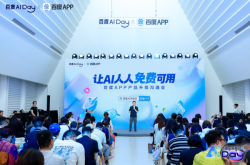
On August 20th, at Baidu AI Day, Baidu unveiled the Wenxin Assistant Task Engine 2.0. This engine is capable of autonomous planning, execution, and delivery, marking an upgrade from merely "helping you find" to "helping you accomplish." Concurrently, Baidu officially declared that this functionality would be provided entirely free of charge.
The timing of this announcement is quite intriguing. Just two months prior, Doubao, a ByteDance subsidiary, officially rolled out three tiers of paid subscription services. The standard version was priced at 68 yuan per month, while the premium version cost 500 yuan per month. In the same AI assistant sector, some companies are opting for a paid model, while Baidu is going the free route. So, what prompted Baidu to make this choice?
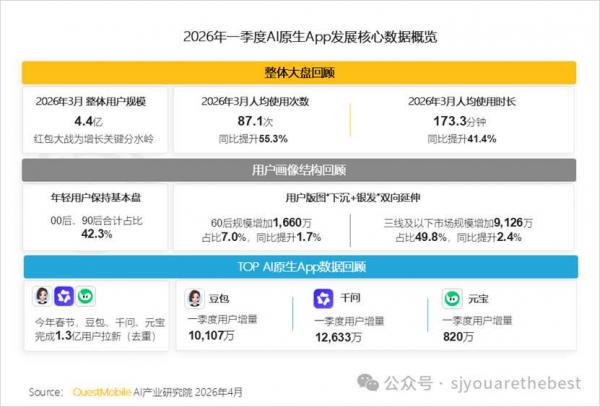
A Counterintuitive Decision - The prevailing industry trend leans towards charging users. In the first half of 2026, companies like Tongyi, Hunyuan, Zhipu, Kimi, and MiniMax either reduced their free quotas or introduced paid subscription plans. According to QuestMobile data, as of March 2026, domestic AI-native apps had amassed 440 million monthly active users, with Doubao alone boasting 345 million. As the user base expands, so does the pressure on computational costs. Leading AI assistants face monthly computational expenses running into the hundreds of millions, making charging users almost the only viable option to curb losses.
Against this backdrop, Baidu's decision to make its task engine freely available seems counterintuitive. From a cost perspective, Task Engine 2.0 is capable of handling long-term goals spanning weeks or even months. It can generate comprehensive industry research reports from scratch and even directly create operational quantitative trading systems. Such complex tasks consume computational power tens or even hundreds of times greater than ordinary chat interactions. Offering such a powerful engine for free appears to be a financially unsound move.
So, What Does Baidu Stand to Gain? - Baidu possesses a unique advantage not shared by other AI products. Most AI products face the common challenge of requiring users to download the app and gradually develop usage habits. Building a user base from scratch is a costly and time-consuming endeavor for AI products.
However, Baidu is in a different position. The Baidu APP boasts 640 million monthly active users, with hundreds of millions of daily searches. Users don't need to alter their habits; they can seamlessly utilize AI on the search results page. Search is a universal need, and AI serves as an added bonus, eliminating the need for users to take extra steps to access AI capabilities.
This is the confidence underpinning Baidu's decision to offer its services for free. While competitors need to invest heavily in traffic acquisition and patiently cultivate users, Baidu already has a ready-made entry point. According to QuestMobile data, as of the end of 2025, the overall monthly active users of AIGC apps in China had surpassed 100 million, whereas Baidu Search's daily active users numbered in the "billions."
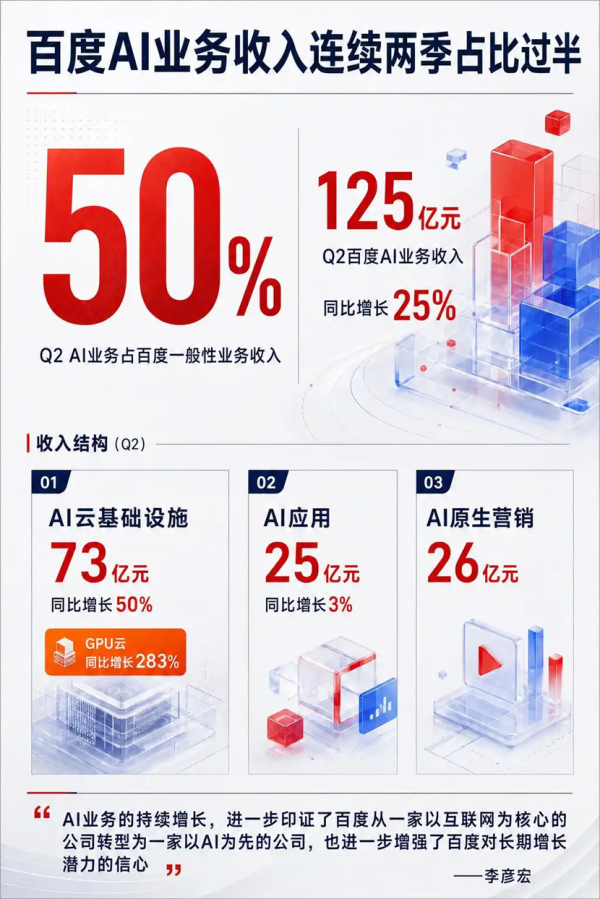
More significantly, Baidu's revenue structure is undergoing substantive changes. The Q2 2026 financial report, released on August 18th, revealed that Baidu's total quarterly revenue was 31.3 billion yuan, with AI business revenue accounting for 50%, surpassing the halfway mark for two consecutive quarters. Among these, AI cloud infrastructure revenue reached 7.3 billion yuan, up 50% year-on-year, while GPU cloud revenue soared by 283% year-on-year, achieving triple-digit growth for four consecutive quarters. AI application revenue was 2.5 billion yuan, and native marketing service revenue stood at 2.6 billion yuan. Behind these figures lies a noteworthy shift—Baidu's attitude towards open-source and free services has undergone a significant transformation over the past year.
In the summer of 2024, Li Yanhong, Baidu's CEO, once remarked, "Open-source is an IQ tax," believing that commercial closed-source models were "the most formidable." However, by February 2025, Baidu announced that Wenxin Yiyan would be fully free and the Wenxin Large Model 4.5 series would be open-sourced. During the earnings call, Li Yanhong explained this shift, stating, "From DeepSeek's success, we've learned that open-sourcing the best models can significantly promote applications." He also emphasized a core judgment: "Whether open-source or closed-source, foundational models only have real value when they solve real-world problems at scale." The decision to make the task engine free is merely a further implementation of this mindset.
Free Is Not Charity; It's a Business Logic - Baidu does not rely on monthly subscription fees from users to generate revenue. Its business model is predicated on the idea that once AI becomes the underlying capability of search, users will engage with it more frequently, stay longer, and generate more data. This, in turn, will drive growth in search advertising and ecosystem revenue, ultimately covering AI's computational costs. This approach is akin to how search engines themselves do not charge users but sustain a multi-billion-yuan market through advertising.
This logic is already supported by data. In the first half of 2026, the total bid-winning amount for large model-related projects among the top five domestic AI cloud providers was approximately 2.044 billion yuan, with Baidu Intelligent Cloud ranking first at 1.385 billion yuan, accounting for nearly 60%. Currently, 100% of systemically important banks and 80% of central state-owned enterprises have chosen Baidu Intelligent Cloud. In vertical industries such as finance, government affairs, and manufacturing, Baidu employs a combined approach of "models + scenarios + solutions." B-end projects boast high customer stickiness and generate sustained cash flow after implementation.
Nanfang Finance Quick Comment once pointed out that the essence of Baidu's recent strategic adjustment is "shifting from closed-source to open-source for traffic acquisition and monetizing through higher-threshold cloud services." Free C-end services serve as a massive customer acquisition channel, while the B-end is the true source of profit.
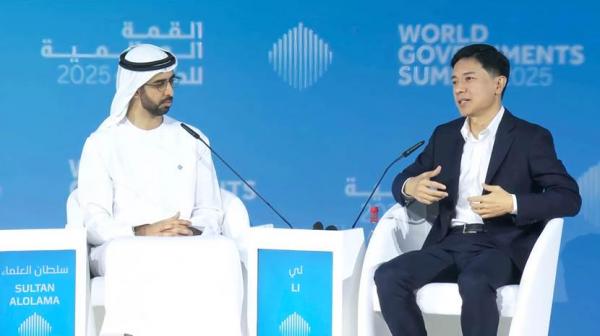
Li Yanhong said at the Dubai AI Summit, "The current pace of innovation is much faster than before, with large model inference costs able to be reduced by over 90% annually." As costs decrease, prices can follow, making free services sustainable. During the latest earnings call, he further confirmed, "The sustained growth of the AI business confirms Baidu's transformation from an internet-centric company to an AI-first company."
What Does This Mean for the Industry? - After Baidu adopts a free model, its peers on the paid track face an awkward question: Why should users pay for a "possibly similar" capability?
Doubao's decision to charge has its rationale. ByteDance lacks a search and cloud services ecosystem to monetize AI traffic through other businesses, making membership fees from ordinary users the most realistic option. The two companies are heading in different directions, essentially because they possess different resources and capabilities.
However, once Baidu's "free C-end acquisition + B-end monetization" model starts yielding results, the pressure on AI assistants that rely solely on subscription fees will be real. Why would users pay for other services when they're accustomed to getting things done for free with Baidu?
A noticeable change is that the AI industry has moved beyond merely focusing on "traffic-only" metrics. Competition has shifted from the number of entry points and traffic scale to who can truly help users accomplish tasks. With Task Engine 2.0 and its free strategy, Baidu aims to first attract more users with free services and then retain them with superior capabilities. From simplifying access with Wenxin's "three-in-one" platform in June to making Task Engine 2.0 fully free in August, Baidu intends to make high-end AI a basic service accessible to all. Li Yanhong put it bluntly during the earnings call: "The sustained growth of the AI business further confirms Baidu's transformation from an internet-centric company to an AI-first company."
Of course, issues like experience optimization, computational costs, and B-end commercial closed loops remain pressing challenges. The race is far from over, but free services have already rewritten the competitive rules in the domestic AI assistant sector. Industry competition is no longer solely about model capabilities; the ability to achieve a sustainable and viable profit model and truly serve users will determine the future. A new round of industry reshuffling has begun.
-
![]()
Who’s Sounding the Alarm on ‘Rushed Vehicles’?
-
![]()
Over 5.3 Billion Yuan in Losses Over Three and a Half Years! Can Yonyou Reverse Its Fortunes Through Streamlining and AI Transformation?
-
![]()
Baidu AI Adopts Free Model: A Strategic Maneuver in Traffic and Monetization
-
![]()
Silicon-Based OLED Pioneer Unveils Financial Results: H1 Shipments Outpace Entire 2025 Volume
-
![]()
AI's First "Lost Summer"
-
![]()
Zeiss Makes Another €2.2 Million Bet: Will Eye Tracking Be the Next Big Thing in the Smart Glasses Industry?
-
![]()
RUNTO Ranking | Global Top TV ODM Factories' Shipment Figures for July 2026
-
![]()
Dealer Service Operational Prowess | How After-Sales Managers Can Harness Efficiency and Expertise to Secure Trust in the New Energy Era