Over 5.3 Billion Yuan in Losses Over Three and a Half Years! Can Yonyou Reverse Its Fortunes Through Streamlining and AI Transformation?
 08/25 2026
 512
512
By Yang Jianyong
Since Yonyou embarked on a significant organizational overhaul in 2023, factors such as an expanded workforce and increased expenditures have resulted in its first loss since going public. Despite subsequent efforts to streamline operations, boost efficiency, and cut costs through workforce reductions, the company continues to face losses, with the cumulative total surpassing 5.3 billion yuan over the past three and a half years. In contrast, its longstanding competitor, Kingdee, has achieved remarkable revenue growth and successfully returned to profitability, while continuing to penetrate the large enterprise market, thereby exerting substantial competitive pressure on Yonyou.
Yonyou Grapples with Persistent Losses Amidst Transformation Challenges
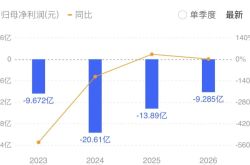
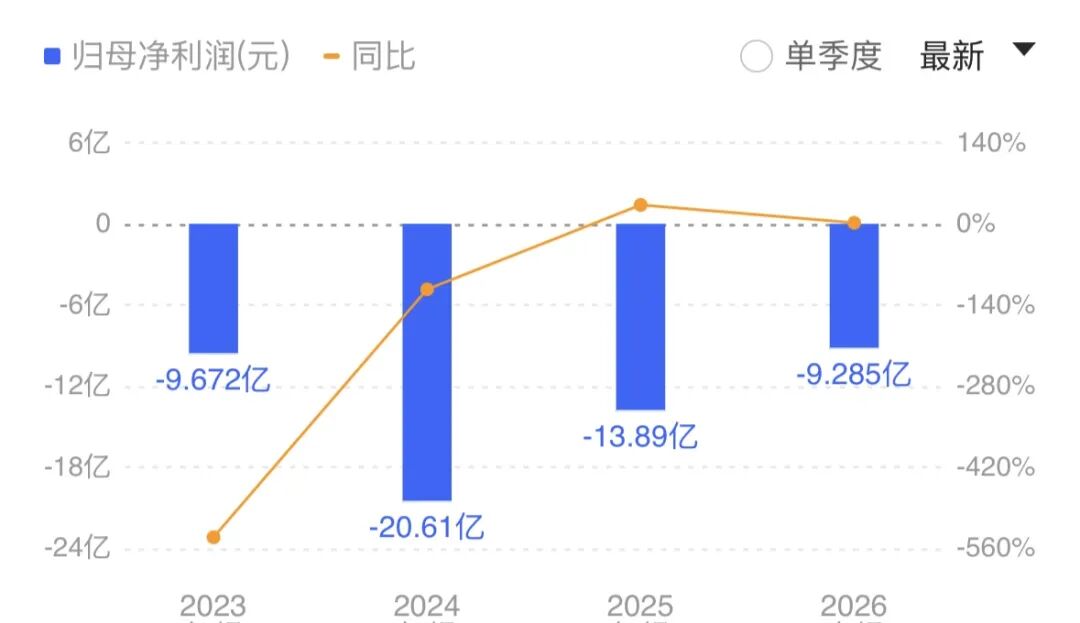
As a frontrunner in the enterprise service software industry, Yonyou has been actively pursuing transformation in recent years. However, since initiating its largest-ever business organizational model upgrade in 2023, factors such as workforce expansion and increased market promotion efforts have caused costs to skyrocket, adversely affecting profitability. The company reported a loss of 967 million yuan that year, marking its first annual loss in over two decades since its listing.
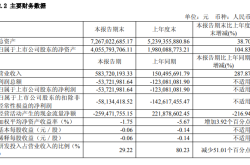
Notably, Yonyou's profitability has yet to witness significant improvement. In the first half of 2026, it reported a loss of 928 million yuan, with cumulative losses over the past three and a half years reaching 5.345 billion yuan, posing a significant challenge to its transformation efforts. Despite ongoing attempts to streamline operations and transition to AI in recent years, the company has yet to reverse its downward trajectory, indicating that it is currently navigating through the challenges of a transformation cycle.
It is worth mentioning that the 2023 business organizational upgrade resulted in a relatively large organizational structure. In December 2023, the company had 24,949 employees. As losses mounted, Yonyou was compelled to take drastic measures to streamline operations and enhance efficiency, thereby controlling personnel numbers and costs.
Against the backdrop of AI-driven efficiency enhancements and talent structure optimization, the current workforce stands at 17,498 employees, reflecting a reduction of 7,451 over two and a half years.
Significantly, optimizing the personnel structure and reducing the workforce have effectively curbed cost expenditures. Coupled with proactive efforts to advance AI+cloud transformation, Yonyou's revenue has exhibited signs of stabilization and improvement. In the first half of 2026, revenue reached 3.727 billion yuan, up 4.08% year-on-year, although the company remains entrenched in substantial losses.
In contrast, Kingdee not only took the lead in returning to profitability but also achieved double-digit revenue growth, with its revenue scale approaching that of Yonyou. In the first half of 2026, Kingdee reported revenue of 3.625 billion yuan, up approximately 13.6% year-on-year, and a net profit of 54.497 million yuan, compared to a loss of 97.738 million yuan in the same period last year, marking a return to profitability.
Overall, Kingdee, as a formidable competitor to Yonyou, has long been engaged in a competitive dynamic characterized by the "Yonyou in the North, Kingdee in the South" rivalry. Kingdee primarily focuses on the small and medium-sized enterprise (SME) market while also making inroads into the large enterprise market, thereby exerting significant competitive pressure on Yonyou. Through product lines such as Cosmic and Star Han Han, Kingdee is accelerating its penetration into the large enterprise market, gradually realizing economies of scale in its large enterprise business.
Yonyou Accelerates Its Enterprise AI Strategy, with AI Revenue Reaching 464 Million Yuan in the First Half
Of course, propelled by its AI strategy, Yonyou's large enterprise customer base has shown signs of stabilization and recovery. In the first half of 2026, revenue from large enterprise customers reached 2.382 billion yuan, up 2.8% year-on-year, accounting for 64% of total revenue and representing a crucial business segment.
As AI large models continue to iterate and evolve, their capabilities are becoming increasingly robust, transforming the enterprise technology market. Applications are transitioning from initial knowledge query modes to Agent AI intelligent agents. Consequently, the application of Agents is entering a new phase, with Agentic AI reshaping the fundamental logic underlying enterprise software.
Driven by the immense demand for dedicated Agents in the enterprise sector, the deployment of AI Agents is accelerating at an astonishing pace. IDC predicts that the number of active Agents will surge from approximately 28.6 million in 2025 to 2.216 billion in 2030. This implies that in five years, the number of Agents capable of assisting enterprises in executing tasks will be nearly 80 times the current level, with a compound annual growth rate of 139%.
Faced with the market opportunities presented by these models, Yonyou is actively embracing AI. It has not only introduced the enterprise service large model YonGPT but also launched the enterprise super intelligent agent YonClaw and the enterprise-grade AI coding platform YonCode. These initiatives ensure that AI is no longer merely a supplementary tool but is deeply integrated into enterprise operational scenarios and business processes, enabling AI to permeate not just enterprises but their entire operational management.
With the continuous advancement of its AI transformation strategy, Yonyou's AI business has achieved sustained breakthroughs, with AI-related contract amounts reaching 906 million yuan and AI business revenue hitting 464 million yuan in the first half of the year.
The sustained release of enterprise-level AI demand and the shift in cloud service market growth towards the large-scale deployment of enterprise-level AI applications indicate that AI is becoming a strategic engine for enterprises to reshape management, business, and growth. This foreshadows new opportunities under the empowerment of AI large models, with revenue recovery suggesting the potential for a performance resurgence throughout the year.
Finally, as AI large models continue to iterate, they are infusing innovative vitality into various industries, which are rapidly integrating large model services to enhance their intelligence levels, benefiting the entire AI ecosystem.
With the continuous maturation of intelligent agent development systems, the capabilities and value proposition of enterprise software are expected to expand. AI intelligent agents are transforming traditional management software from passive execution tools into intelligent entities and "digital employees" with perception, insight, predictive warning, intelligent decision-making, and even autonomous execution capabilities.
In this context, enterprise software providers must proactively deploy AI, leveraging new technologies, products, and models to drive industrial innovation. By seizing the window of opportunity for intelligent transformation, they can unlock larger incremental markets and reap the industrial dividends brought by the era of artificial intelligence.
Yang Jianyong is a contributor to Forbes China, and the views expressed herein are his own. He is dedicated to providing in-depth analysis of cutting-edge technologies such as AI large models, artificial intelligence, the Internet of Things, cloud computing, and smart home appliances.
-
![]()
Who’s Sounding the Alarm on ‘Rushed Vehicles’?
-
![]()
Over 5.3 Billion Yuan in Losses Over Three and a Half Years! Can Yonyou Reverse Its Fortunes Through Streamlining and AI Transformation?
-
![]()
Baidu AI Adopts Free Model: A Strategic Maneuver in Traffic and Monetization
-
![]()
Silicon-Based OLED Pioneer Unveils Financial Results: H1 Shipments Outpace Entire 2025 Volume
-
![]()
AI's First "Lost Summer"
-
![]()
Zeiss Makes Another €2.2 Million Bet: Will Eye Tracking Be the Next Big Thing in the Smart Glasses Industry?
-
![]()
RUNTO Ranking | Global Top TV ODM Factories' Shipment Figures for July 2026
-
![]()
Dealer Service Operational Prowess | How After-Sales Managers Can Harness Efficiency and Expertise to Secure Trust in the New Energy Era