First Wave of Individuals with AI ‘Organ’ Implants Encounter Rejection Responses
 03/16 2026
 708
708
Engaging in self-defeating behavior.
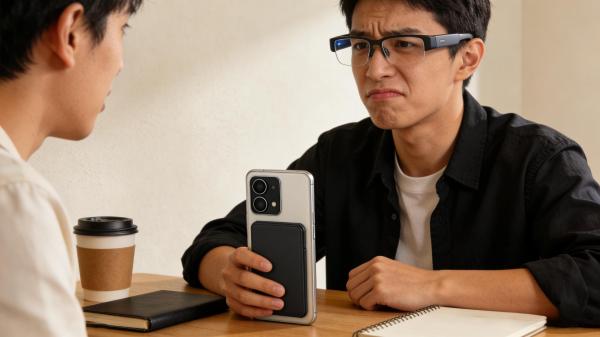
The 315 Gala's revelation of using GEO to 'corrupt' AI large models left many AI enthusiasts feeling disheartened.
In reality, certain AI hardware aficionados who outfit themselves with AI recording devices and smart glasses inadvertently become perceived as 'toxic' individuals.
This stems from the fact that users of these AI 'organ' enhancements frequently encounter prejudice and hostility from those around them, primarily due to privacy violations and other concerns associated with wearing these products.
As the vanguard of AI hardware adopters, they aimed to leverage cutting-edge technology to streamline their lives, only to inadvertently heighten mistrust and escalate social tensions.
Devices such as AI recording devices and smart glasses have transformed into a 'double-edged sword,' offering remarkable functional advancements like simultaneous interpretation and real-time recording, yet causing discomfort to others.
Consequently, brands like DingTalk, Xiaomi, iFlytek, Meta, and Qianwen have all ventured into the AI hardware market, with some even adopting a dual role as both innovators and protectors, effectively becoming purveyors of AI-era 'weaponry.'
Meanwhile, amidst the clashes between AI hardware users and those around them, manufacturers themselves appear to harbor various data security vulnerabilities.
Perhaps the rapid pace of technological advancement inevitably clashes with social ethics, and those who have embraced AI 'organ' implants, experiencing rejection, will continue to grapple with the disapproving and wary glances of others for some time.
Growing Divide
In the AI era, who is most susceptible to discrimination? Surprisingly, it's not those struggling with AI, but rather those who possess an abundance of AI devices.
This is because devices like AI recording devices and smart glasses, while boosting productivity, tend to erode trust and widen interpersonal gaps.
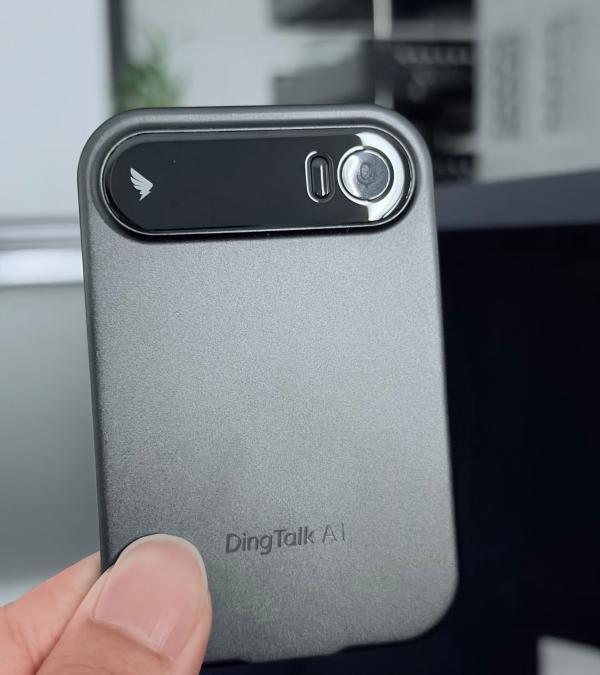
Recently, Xiaoma's family member fell ill. While accompanying the patient at the hospital, she struggled to comprehend many of the doctor's explanations, particularly the names of various organs. She discreetly attached a DingTalk AI recording device to the back of her phone, recorded the conversation, and shared it with her mother for clarification.
During one doctor's visit, Xiaoma continued her covert recording as usual. However, when the doctor instructed her to schedule an appointment with the outpatient director, she instinctively reached for her phone and was caught by the doctor, who noticed the recording device.
Xiaoma recounted, 'I assured the doctor I had no malicious intent, but I still felt incredibly embarrassed, wishing I could disappear into a hole.'
Some individuals secretly utilize AI devices and inadvertently get caught, while others flaunt their AI gadgets only to face backlash.
Once, while dining at a restaurant, Azhu spotted an attractive girl at a neighboring table. He discreetly snapped a photo of her with his Xiaomi AI glasses and then approached her, hoping to impress her with this 'cool' gesture.
Contrary to his expectations, the girl, instead of being flattered, sternly scolded him, demanding the immediate deletion of the photo. She even inspected his phone and AI glasses, drawing the attention of onlookers and creating an extremely awkward situation.
In the end, the girl left the restaurant abruptly, leaving Azhu alone and filled with regret.
Why does this tech-savvy behavior, characterized by augmenting one's capabilities with various AI devices, often attract discrimination?
Regarding this, some netizens commented, 'AI glasses can be perceived as an ever-present camera. Put yourself in the other person's shoes. If the person you're conversing with is constantly holding up a camera, wouldn't you feel uneasy?'
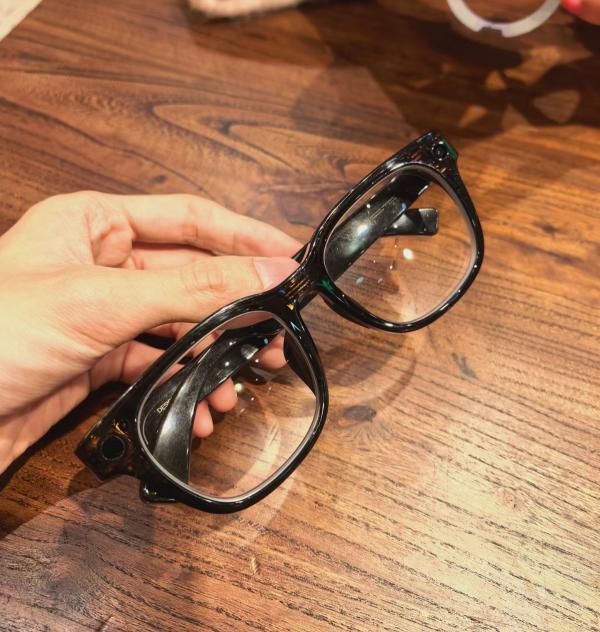
On the flip side, another netizen remarked, 'Nowadays, whenever I meet someone and notice a card on their phone, I remind myself to be extra cautious with my words.'
It's evident that although 'organs' like AI recording devices and smart glasses are being adopted by an increasing number of people, most individuals react with apprehension rather than awe when confronted with these devices. Upon spotting someone with AI enhancements, they become highly vigilant.
Xiaohua confided in Pang Ge, 'A colleague I don't get along with recently purchased a pair of AI glasses. Now, whenever we work together, she wears them and frequently points them in our direction, often adjusting the frame. I suspect she's secretly filming us, but I lack concrete evidence.'
Why Do People React Negatively to Them?
The reason devices like AI recording devices and smart glasses are met with widespread rejection is their formidable covert and real-time capabilities. Individuals wearing these devices can easily gain an upper hand in communication.
For instance, DingTalk's AI recording device can not only record continuously for up to 45 hours but also supports simultaneous interpretation in 21 languages. In certain communication scenarios, those attempting to conceal their conversations with obscure languages are exposed in the presence of AI.
Moreover, to enhance communication, the recording device also incorporates an AI assistant feature. AI assistants tailored for classrooms, diagnoses, legal matters, and other fields can provide professional services upon triggering specific keywords.
During awkward blind date sessions, utilizing the DingTalk AI recording device might even summon a blind date assistant to help you rationally screen potential partners.

On the other hand, Xiaomi's AI glasses, in addition to swift photo and video recording, offer features like intelligent face recognition, price comparison, virtual sticky notes, and subtitle translation, catering to individuals with face blindness, shopping enthusiasts, forgetful individuals, and moviegoers, respectively.

It's clear that although devices like AI recording devices and smart glasses often subject users to discrimination, they do offer convenience in users' lives.
Therefore, faced with tools that are a 'blessing in disguise,' many users become adept at disguising their devices to avoid detection.
Alan shared with Pang Ge, 'I attach the recording device to the back of my phone and claim it's a power bank when questioned. So far, no one around me has caught on.'
Regarding her motivation for using the recording device, Alan explained, 'I use an iPhone, which alerts the other party when recording calls, so I need an AI recording device. When communicating with business partners, there's too much information to remember, so I generally rely on this. When disputes arise at work, how can I provide evidence without recording? I can't just claim I did.'
It's evident that although AI devices can enhance efficiency, once discovered by others, the social cost escalates significantly. Meanwhile, some netizens without these devices become suspects simply due to the resemblance of their products.
Some netizens recounted, 'During an online interview, I was questioned by the interviewer about whether I was wearing AI glasses due to severe reflection. I had to place my glasses in front of the camera to prove my innocence, but once suspicion arises, it's hard to completely dispel.'
Another netizen shared, 'During a civil service exam, I wore a stylish pair of glasses and was subjected to a lengthy inspection by the proctor upon entry. The person next to me also wore glasses, but since theirs were very ordinary, they weren't inspected.'
AI Arms Dealers? Or the Puppet Masters?
Although users of AI devices often become targets, the robust functionality of these tools continues to expand their market.
Data released by ZAKER indicates that the global market size for AI audio tools was approximately $1.31 billion in 2024 and is projected to reach $2.668 billion by 2031, with a compound annual growth rate of 10% from 2025 to 2031.
On the other hand, according to IDC estimates, global shipments of AI glasses will reach 22.671 million units in 2026, representing a year-on-year increase of 56.3%. Among them, China's market is expected to reach 4.508 million units, a year-on-year increase of 77.7%.
It's apparent that devices like AI recording devices and smart glasses somehow adhere to the 'love-hate' principle. Consumers don't want others to possess them, yet they always desire one for themselves.
Meanwhile, due to various privacy controversies, some manufacturers have opted to play a dual role, enabling users to both attack and defend simultaneously.
For example, after introducing the AI recording device, DingTalk also launched an anti-recording magic box. Simply placing it on the table renders all recording devices ineffective.
On the official DingTalk flagship store on Tmall, this anti-recording magic box, priced at 1888 yuan, has been added to the shopping carts of over 300 individuals.

In response to concerns about covert filming with AI glasses, an app called 'Nearby Glasses' has emerged as a radar on people's phones, alerting users whenever AI glasses are detected nearby.
The privacy battle surrounding AI devices has sparked an arms race between attackers and defenders, with device manufacturers, acting as arms dealers, potentially also infringing on privacy.
Recently, some overseas media revealed that the user data collected by Meta AI glasses is not entirely processed by AI but is sent to outsourcing companies in Kenya, the Philippines, and other locations.
This implies that when users wear Meta AI glasses and engage in activities like changing clothes, bathing, or using the restroom, these actions have already been observed by others in a clear and true manner.
It's evident that the privacy controversies surrounding AI devices not only exist between users and non-users but also raise questions about how to regulate manufacturers, which warrants our deep consideration.
-
![]()
Doubao Work Unveiled! Domestic AI Leaders Fully Commit to the 'Work' Sector
-
![]()
Who’s Sounding the Alarm on ‘Rushed Vehicles’?
-
![]()
Over 5.3 Billion Yuan in Losses Over Three and a Half Years! Can Yonyou Reverse Its Fortunes Through Streamlining and AI Transformation?
-
![]()
Baidu AI Adopts Free Model: A Strategic Maneuver in Traffic and Monetization
-
![]()
Silicon-Based OLED Pioneer Unveils Financial Results: H1 Shipments Outpace Entire 2025 Volume
-
![]()
AI's First "Lost Summer"
-
![]()
Zeiss Makes Another €2.2 Million Bet: Will Eye Tracking Be the Next Big Thing in the Smart Glasses Industry?
-
![]()
RUNTO Ranking | Global Top TV ODM Factories' Shipment Figures for July 2026