Trend丨The 'Two Sessions' Set the Tone: Brain-Computer Interface Becomes a National Future Industry, Record-Breaking Investment Trends on the Horizon
 03/23 2026
 569
569
Preface:
In March 2026, as the National People's Congress and Chinese People's Political Consultative Conference concluded, a clear signal emerged from Beijing: brain-computer interfaces (BCIs) were officially included in the government work report and designated as one of the key future industries to be cultivated during the "15th Five-Year Plan" period. From top-level design to industrial implementation and capital market entry, BCIs are entering a true "breakthrough year."
From Research Topic to National Strategy
During this year's National People's Congress sessions, a revision to the government work report drew widespread attention. Based on delegates' review opinions, the phrase "cultivate and develop future industries such as future energy, quantum technology, embodied intelligence, brain-computer interfaces, and 6G" on page 19 of the report was supplemented with "biomanufacturing." This revision signals that BCIs, alongside biomanufacturing and other cutting-edge technologies, have been incorporated into China's national future industrial landscape. More importantly, the draft outline of the "15th Five-Year Plan" explicitly proposes forward-looking layout (layout) of future industries, including BCIs, quantum technology, and embodied intelligence, within the national development vision. During the "Ministers' Passage" session at the National People's Congress, Minister of Science and Technology Yin Hejun stated that during the "15th Five-Year Plan" period, China would accelerate the deployment of major national science and technology projects, particularly strengthening research in integrated circuits, artificial intelligence, and BCIs. From top-level design to ministerial-level implementation, BCIs are no longer confined to laboratory fantasies but have become a strategic emerging industry enshrined in national documents.
Global First Approval for Invasive BCI Product
Underpinned by policy support, industrial breakthroughs followed suit. On March 13, 2026, the National Medical Products Administration (NMPA) announced the approval of BrainRobotics Medical Technology (Shanghai) Co., Ltd.'s innovative product registration application for an implantable BCI hand motor function compensation system. Named NEO, the product consists of a BCI implant, implantable EEG electrode kit, EEG signal transceiver, and pneumatic glove device. Designed for patients with quadriplegia caused by cervical spinal cord injuries, it assists in hand grasping functions via the pneumatic glove device. Clinical trial results demonstrated significant improvement in hand grasping ability among participants, enhancing their quality of life. The NEO system's approval followed a lengthy R&D process: from the first human implantation at Xuanwu Hospital, Capital Medical University, in October 2023, to entering the NMPA's special review procedure for innovative medical devices ("green channel") in August 2024, and completing 32 spinal cord injury patient implantations with 100% clinical endpoint achievement by the end of 2025. The NMPA adhered to principles of "early intervention, tailored strategies for each enterprise, full-process guidance, and integrated research-review collaboration" during the approval process, providing pre-evaluation services to expedite market entry.
IPO Sprints and Record-Breaking Financing
Concurrent with industrial breakthroughs, capital market enthusiasm for BCIs reached new heights. At the IPO level, BrainRobotics signed an IPO counseling agreement with CITIC Securities on February 4, 2026, officially registering for Tutoring registration (counseling) with the Shanghai Securities Regulatory Bureau and aiming to become the "first Chinese BCI stock" on the STAR Market. Meanwhile, BrainCo, a representative of another technical route, was rumored to have confidentially submitted a Hong Kong IPO application. Specializing in non-invasive BCIs, BrainCo recently completed approximately RMB 2 billion in financing, the second-largest globally after Elon Musk's Neuralink.More notably, Chengdu-based startup Gestalt Technology announced the completion of RMB 150 million in angel-round financing on March 12, just over two months after its establishment, setting a new record for angel-round financing in China's BCI sector. Led by Guosheng Capital and Daotong Investment, with participation from multiple renowned institutions, Gestalt Technology was co-founded by Peng Lei and Chen Tianqiao, founder of Shanda Group and the Tianqiao and Chrissy Chen Institute. As China's first hard-tech company focused on ultrasonic BCIs, its inaugural product will target chronic pain management, with plans to commence production and initiate NMPA registration in Q3 2026. According to Precedence Research, China's BCI market size reached RMB 3.2 billion in 2024 and is projected to grow to RMB 6.14 billion by 2028. Driven by policy and capital, this figure is expected to surge rapidly.
Technological Differentiation and Regional Layout Acceleration
The key themes of the 2026 BCI industry can be summarized as "policy alignment, technological differentiation, and regional competition."
Following the National People's Congress sessions, local supporting policies were Intensive release (intensively introduced). On March 10, Jiangsu Province's Department of Industry and Information Technology and eight other departments issued the "Action Plan for Innovative Development of Jiangsu's BCI Industry," targeting the approval of at least 20 BCI products for medical device registration by 2030. On the same day, Guangdong Province released the "Action Plan for Accelerating the Cultivation of New Growth Tracks and Leading Modern Industrial System Construction (2026–2035)," emphasizing breakthroughs in key areas such as implantable electrodes, high-channel acquisition chips, and low-power processing chips.
A research report by China Merchants Securities noted that the BCI industry would enter a critical phase of "accelerated technological iteration and scenario-based differentiation" in 2026. Non-invasive technologies, characterized by "high safety, low cost, and ease of popularization," are rapidly transitioning from laboratories to consumer markets. In contrast, invasive/semi-invasive technologies, leveraging high-precision signal acquisition, are deepening their focus on high-value medical applications. Currently, there are at least 30 BCI application scenarios, with medical rehabilitation, consumer markets, and workplace safety emerging as hotspots. Medical rehabilitation remains the most practically significant sector, delivering clinical value by restoring motor functions for paralyzed patients and offering new treatments for neurological disorders.
The Critical Leap from "Science Fiction" to "Industry"
Just two weeks after the 2026 government work report first mentioned BCIs, the industry has shown signs of accelerated growth. BrainRobotics' product approval and IPO sprint are progressing in tandem, while Gestalt Technology's record-breaking financing signals new market entrants. Economic powerhouses like Jiangsu and Guangdong have initiated industrial layout competitions. However, an analysis by the State Council Development Research Center points out that achieving industrialization of this cutting-edge technology requires systemic breakthroughs in basic research, application scenarios, and industrial ecosystems. The core challenge of BCIs lies not only in device manufacturing but also in deepening our understanding of brain neural activity mechanisms—human knowledge of the operational patterns of hundreds of billions of neurons and their complex connections remains limited.
Conclusion:
On the BCI track, the race between BrainRobotics and BrainCo for the title of "first BCI stock" has begun, while regional competitions in Chengdu, Jiangsu, and Guangdong are just starting. A trillion-yuan emerging market is rapidly unfolding.
Online Sources:
Securities Daily: "Brain-Computer Interface Industry 'Accelerates Run' as Listed Companies Seize Opportunities"
China Youth Daily: "Behind a Four-Character Revision Lies a Trillion-Yuan Industrial Cluster"
Chuan Guan News: "Chengdu Enterprise Secures RMB 150 Million in Largest Angel-Round Financing for China's BCI Sector"
-
![]()
Baidu’s Profits Tumble by 68%! Where Has All the Money Gone?
-
![]()
Hynix’s Taobao Store Shuts Down Abruptly: What Should Customers Do About Warranty Services for Memory Modules?
-
![]()
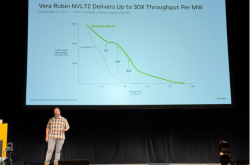
A Computing Power Titan Unveils a Revolutionary Product: Performance-to-Power Ratio Skyrockets by 450 Times!
-
![]()
Doubao Work Unveiled! Domestic AI Leaders Fully Commit to the 'Work' Sector
-
![]()
Who’s Sounding the Alarm on ‘Rushed Vehicles’?
-
![]()
Over 5.3 Billion Yuan in Losses Over Three and a Half Years! Can Yonyou Reverse Its Fortunes Through Streamlining and AI Transformation?
-
![]()
Baidu AI Adopts Free Model: A Strategic Maneuver in Traffic and Monetization
-
![]()
Silicon-Based OLED Pioneer Unveils Financial Results: H1 Shipments Outpace Entire 2025 Volume