In 2026, Embodied AI Initiates the First Year of Implementation in Single Industrial Scenarios
 04/16 2026
 586
586
Author | Mao Xinru
In 2025, the embodied AI industry achieved a significant leap by officially crossing the threshold of mass production.
Zhiyuan Robotics started the year with shipments of one thousand units, soaring to over 5,100 units by the end of the year; UBTECH delivered 1,079 full-sized humanoid robots throughout the year, with revenue from its humanoid robot business surging by over 22 times year-on-year.
From laboratory demos to bulk deployment on factory production lines and in service scenarios, a pathway from technological validation to large-scale mass production is being initially established.
As we enter 2026, the industry's main theme is undergoing a new round of transformation.
Early in the year, Peng Zhihui, co-founder of Zhiyuan Robotics, stated that the embodied AI industry has transitioned from showcasing laboratory skills and demos to the second half of the competition, which focuses on engineering and scenario-based applications.
If 2025 addressed the question of feasibility, then the core challenge of 2026 is to enable robots to accomplish tasks effectively.
Specifically, this means transitioning demos into real-world factories, converting mass production into large-scale deployment, and transforming proof-of-concept into reusable commercial value.
Meanwhile, a clear consensus is forming within the industry: 2026 marks the inaugural year for embodied AI to be implemented in single scenarios.
The primary focus for implementation will be industrial scenarios.
Closed or semi-closed environments such as logistics and manufacturing are becoming the first battlegrounds for large-scale breakthroughs in embodied AI and the main arena for realizing industrial value.

Industrial Scenarios: The Preferred Battleground for Realizing the Value of Embodied AI
In the field of high-end manufacturing, industries such as semiconductors, new energy, and 3C electronics have reached a critical point in their demands for flexible production, ultimate precision, sustained efficiency, and zero-tolerance safety.
Semiconductor manufacturing requires wafer handling and packaging testing to be completed in an ISO CLASS 3 cleanliness environment. New energy battery production necessitates millimeter-level precision in battery connector insertion, while 3C electronics manufacturing demands flexible operation capabilities to cope with frequent production line changes.
Traditional automated equipment relies on preset programs and fixed trajectories, making it unable to adapt to the flexible production needs of small-batch, multi-variety production. A significant amount of non-standardized operations on production lines still rely on human labor.
Meanwhile, the structural shortage of labor in the manufacturing industry is becoming increasingly prominent, and the replacement of high-risk positions and adaptation to capacity fluctuations are gradually becoming urgent industrial needs.
In other words, industrial scenarios urgently require an autonomous intelligent solution that can understand, reason, and act.
From a deeper perspective, the digital transformation of the manufacturing industry has been underway for over a decade, and the integration of information flows is nearing its ceiling. However, the material flows in the physical world remain isolated and rigid, lacking real-time intelligent interaction and collaboration among equipment, materials, and personnel.
Embodied AI, as a physical intelligent agent capable of autonomous perception, decision-making, and action, precisely serves as the crucial bridge connecting the digital and physical worlds, enabling the vast amounts of data accumulated within enterprises to be truly transformed into production efficiency and decision-making value.
When embodied AI technology enters factories, the changes it brings are comprehensive. Robots no longer rely on preset programs; instead, they form closed-loop capabilities through autonomous perception, real-time decision-making, and precise execution, enabling flexible task switching among complex workstations.
In high-precision scenarios such as semiconductor wafer handling and new energy battery assembly, it can achieve millimeter-level operations, low vibration, and highly stable operation, directly meeting the stringent standards of production lines.
From the perspective of practical results, the combined effects of efficiency improvements, reduced defect rates, and continuous 24/7 operation make embodied AI a new variable for cost reduction and efficiency enhancement in the manufacturing industry.
The underlying logic behind the Landing first (shǒuxiān luòdì, meaning "first implementation") of industrial scenarios is quite clear.
Firstly, the high degree of structuration in the scenarios.
Closed or semi-closed environments such as industrial workshops and logistics warehouses have clear rules, fixed obstacles, and standardized task processes. Compared to open environments, they reduce the training difficulty and environmental adaptation costs for models, ensuring greater success rates and stability in technology implementation.
Secondly, the maturity of the commercial closed loop.
Industrial enterprises possess clear cost accounting logic and strong willingness to pay, while policy support for intelligent manufacturing and new quality productive forces continues to increase.
Investments in embodied AI can generate clear returns on investment through dimensions such as efficiency improvements, labor savings, and quality optimization, with return periods typically controlled within 3-5 years, aligning with the investment expectations of the manufacturing industry.
Finally, the controllability of risks.
Closed industrial environments can effectively reduce external sudden disturbances, facilitating enterprises to conduct small-scale pilot validations and gradual large-scale promotions, while also enabling technology manufacturers to perform remote operation and maintenance and model iterations.
This Stable landing path (jiǎnwèn de luòdì lùjìng, meaning "steady implementation path") not only reduces customers' trial-and-error costs but also provides a safe testing ground for the continuous optimization of technologies.
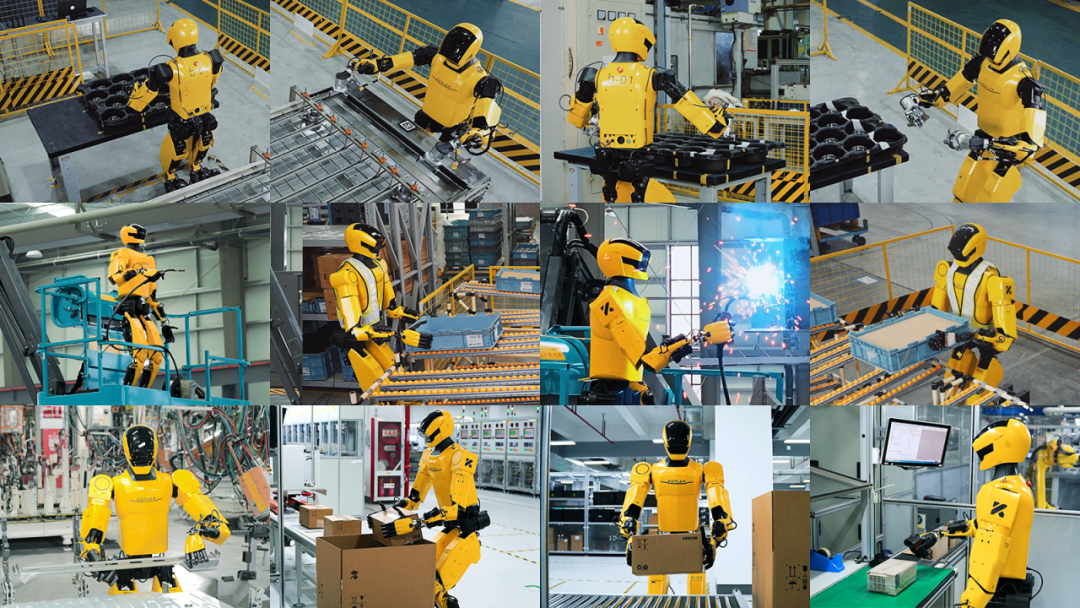
Currently, the best entry point for humanoid robots is to perform complex tasks in simple scenarios, such as executing high-degree-of-freedom, high-dimensional perception complex operations in structured factory environments.
Starting from industrial scenarios, accumulating data and experience through real production line validations, and gradually penetrating into more complex scenarios have become industry consensus.
Industrial scenarios will not only serve as testing grounds for embodied AI technologies but also represent the inevitable path to their maturity.

A Group of Robots Have Already Entered Factories
As the value of industrial scenarios gains widespread recognition, a competition regarding path selection and technological forms has also ensued.
Different companies are entering industrial scenarios in various ways, including humanoid, heavy-duty, and wheeled approaches.
Some companies opt for the humanoid route, leveraging flexible bipedal locomotion and dexterous operation capabilities to directly cut into complex manufacturing production lines such as those in the automotive industry.
UBTECH's Walker S series has been deployed in bulk on the production lines of leading manufacturing enterprises such as Foxconn, BYD, and Zeekr, undertaking core processes such as handling, loading/unloading, and sorting.
Currently, the operational success rate of a single robot has reached 99%, and the efficiency of intelligent handling has improved from 30% of manual efficiency in early 2025 to 60% currently.
Figure AI's F.02 robot has operated continuously for 11 months at a BMW factory, completing 10-hour shifts, accumulating over 1,250 hours of operation, loading more than 90,000 parts, and contributing to the production of over 30,000 X3 models.
Kepler Robotics' K2 " Bumblebee " (Dàhuángfēng, meaning "Bumblebee") has been deployed at SAIC General Motors' logistics factory, Zhefeng Co., Ltd.'s component workshop, and factories of Chunmi Technology and Luxshare Precision, achieving an operational success rate of 98% and completing the world's first human-robot collaborative high-altitude welding.
Another group of companies focuses on heavy-duty capabilities to address the challenges of handling large components in core industrial processes.
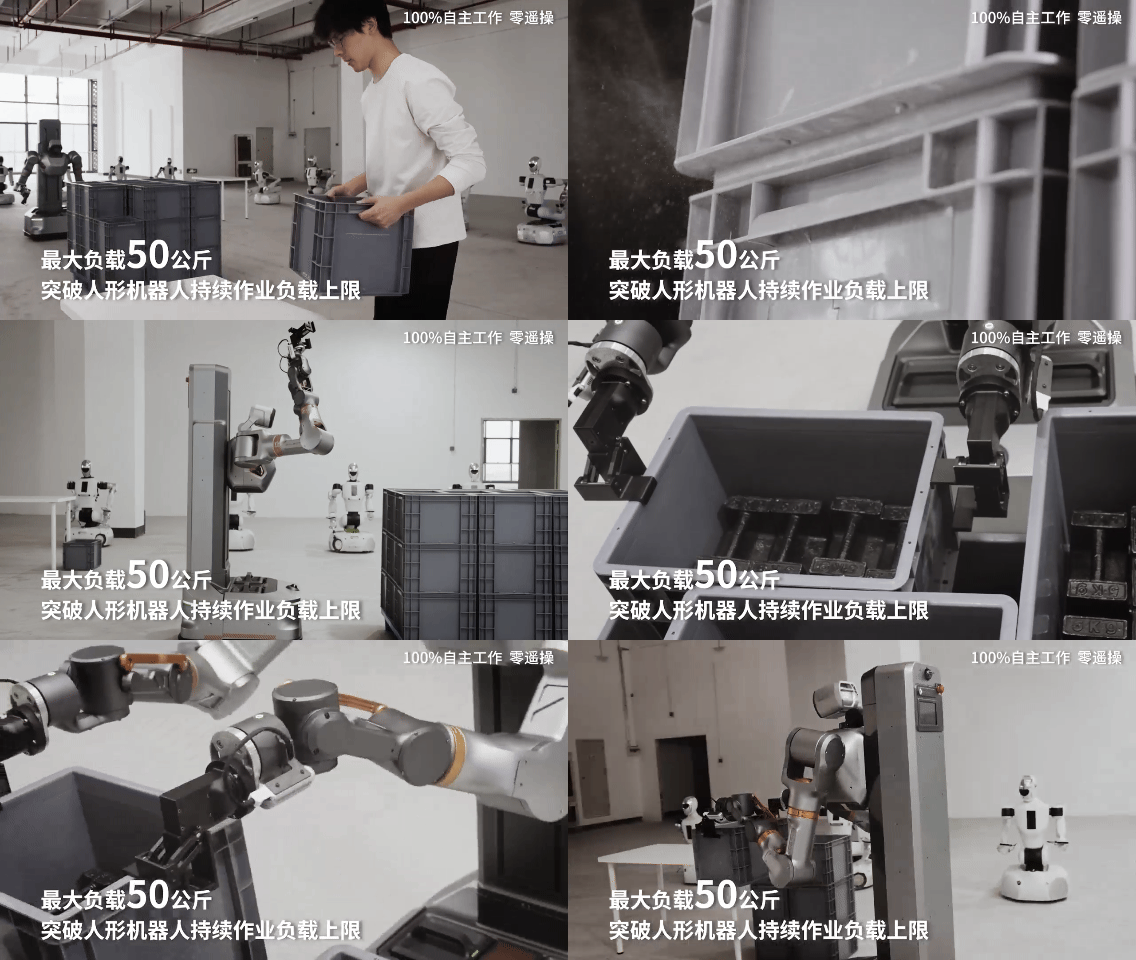
Yinhe General's Galbot S1 dual-arm robot has a maximum continuous load capacity of 50 kilograms and has achieved zero remote operation and fully autonomous operation on CATL's production lines, undertaking heavy-duty key tasks in advanced manufacturing.
Luming Robotics' MOS wheeled-arm embodied AI robot has also set a record for a 50-kilogram dual-arm load capacity and has initiated empirical testing at Mitsubishi Electric, with deployments at leading scenarios such as COSCO Shipping.
Other companies have entered specific high-value production lines using wheeled forms.
Qianxun Intelligence's humanoid robot "Xiaomo" has achieved the world's first large-scale implementation of embodied AI on CATL's PACK production line, with a single-day workload three times that of manual labor.
Zhipingfang's AlphaBot series has achieved multiple successes in automotive manufacturing, biotechnology, and semiconductor display panel fields.
A 500 million yuan major order signed with HKC Corporation covers the entire process from warehousing and logistics to loading/unloading, assembly, and quality inspection, becoming the first large-scale embodied AI application project in the semiconductor display industry.
Xingdong era (Xīngdòng Jìyuán, likely a brand name, kept as is) has collaborated deeply with SF Express, achieving full-process coverage of sorting, scanning, and piece feeding at logistics distribution centers, and promoting large-scale applications in warehousing and express transit through a joint development model.
At the model brain level, Skild AI's general-purpose embodied AI model has been deployed at Foxconn's Houston factory in the United States, providing intelligent support for the production of NVIDIA Blackwell GPU server racks.
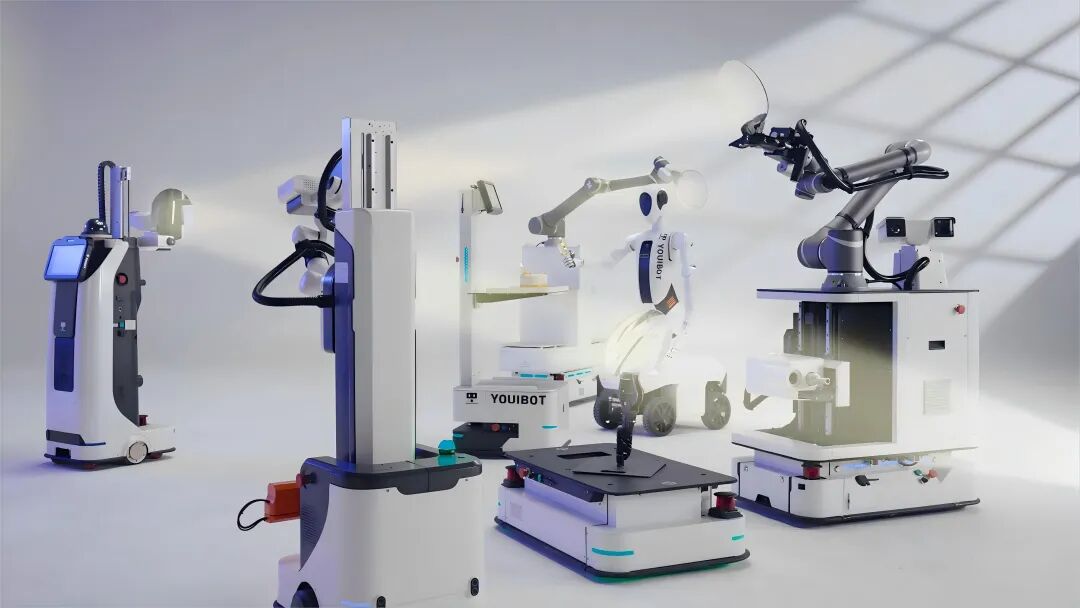
Within the diverse player matrix, Youibot represents robot companies originating from the industrial field. Through an embodied AI architecture featuring "one brain, multiple forms," it has forged a unique path for large-scale industrial implementation, creating a core barrier that is difficult to replicate.
As of now, Youibot has accumulated over 800 industrial embodied AI scenario implementation cases, covering multiple fields such as semiconductors, energy and chemicals, lithium batteries, 3C manufacturing, and utilities, serving over 400 leading industry clients globally.
Youibot is one of the few vendors in the industry to achieve cross-industry, cross-scenario, and large-scale clustered operations, with 2025 revenue reaching 340 million yuan. It has now submitted its IPO prospectus, planning to go public on the Hong Kong Stock Exchange.
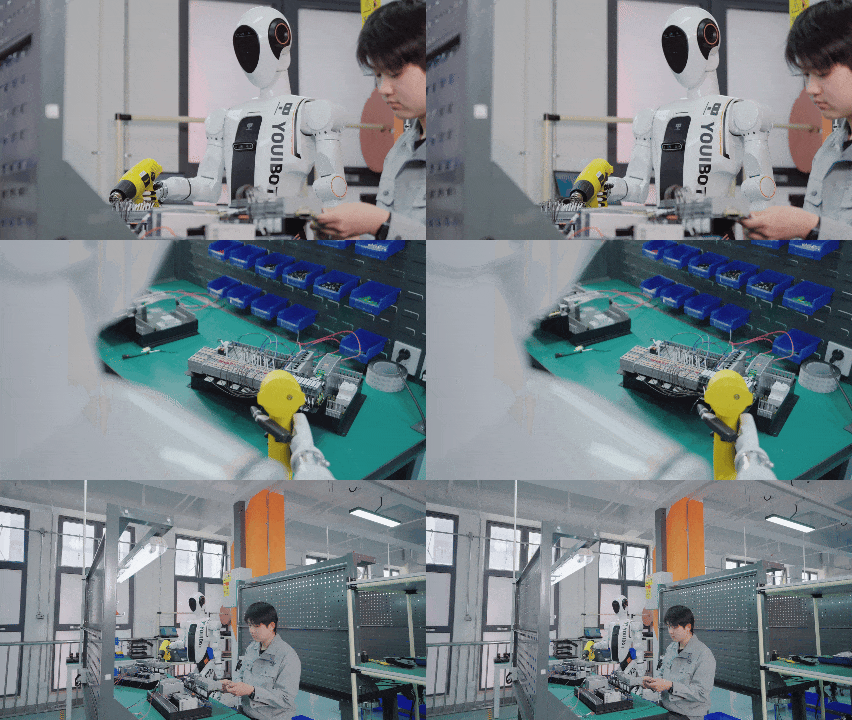
Addressing pain points such as low efficiency and insufficient reliability of embodied AI technologies in the industrial field, Youibot has developed, based on nine years of industrial accumulation, a large model with both industrial-grade generalization and engineering implementation capabilities. It proposes an architecture of "one brain, multiple forms," centered around the highly generalizable embodied AI control system MAIC, which commands robots of different forms to perform corresponding tasks, enabling intelligent logistics in factories and intelligent inspections in the energy industry.
Precisely because of the complementarity among different companies in terms of form, technology, and scenario, embodied AI in industrial scenarios is embarking on the fast track from isolated breakthroughs to large-scale replication.

Behind the Inaugural Year of Single-Scenario Implementation: From Technological Competition to Realization of Industrial Value
The true connotation of the inaugural year of single-scenario implementation in 2026 signifies the industry's departure from the preliminary stage of pilot projects and technological showcases, moving towards the deep water zone of large-scale, replicable, and profitable value realization.
This transition involves three dimensions of profound change.
The first is the leap in deployment scale, upgrading from past pilot validations of a dozen or tens of robots on individual production lines to large-scale deployments of hundreds or thousands of robots across entire factories or industrial parks, transforming from decorative applications to mainstream productive forces.
The second is the standardized replication of solutions, shifting from customized development for single projects to the extraction of standardized solutions that can be reused across industries and production lines, compressing long deployment cycles and reducing implementation thresholds and costs.
The third is the positive closed loop of business models, where companies no longer rely solely on financing and burning cash to sustain R&D but achieve revenue growth through real orders and customer repurchases. Some leading companies have already achieved positive cash flow in core scenarios, proving that the industrial application of embodied AI has established a mature business logic.
This qualitative transformation is the core indicator of the industry's maturity.
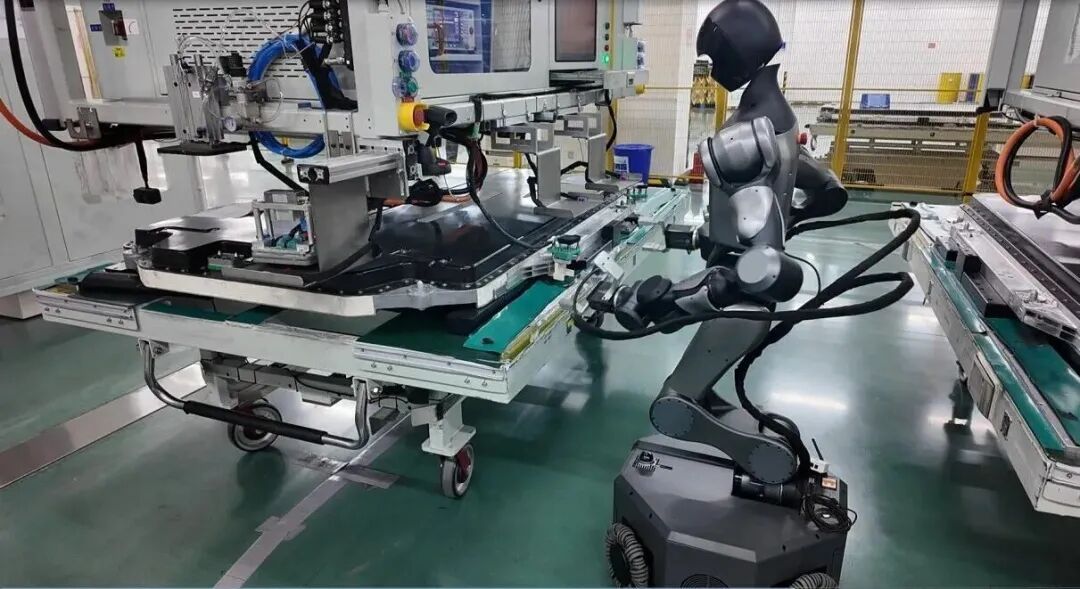
Meanwhile, the change (biànhé, meaning "transformation") of this inaugural implementation year is supported by the simultaneous maturation of three core elements: technology, scenarios, and ecosystems.
At the technological level, the paradigm of "one brain, multiple forms" will become a mainstream approach in the industry.
General-purpose intelligent hubs, exemplified by Youibot's MAIC system, achieve a single model adaptable to multiple forms.
This breaks the previous limitations of one-machine-one-use and dedicated hardware, enabling the same brain to drive different hardware such as wheeled, dual-arm, and humanoid robots, facilitating rapid migration across different industrial scenarios and significantly improving technology reuse rates and implementation efficiency.
At the scenario validation level, industrial scenarios have become the world's first embodied AI application market to achieve large-scale implementation and high ROI.
Leading companies in industries such as semiconductors, new energy vehicles, and lithium batteries have become the first beneficiaries of large-scale applications, using real production data to validate the value of embodied AI and forming a positive cycle of technological validation, customer recognition, large-scale procurement, data feedback, and technological iteration.
Ecologically, a synergistic effect is forming among the various links of the industrial chain, including core components, complete machine manufacturing, and scenario solutions.
From the cost reduction of upstream sensors and actuators to the breakthrough in large-scale manufacturing capabilities of complete machines in the midstream, and then to the large-scale replication of scenario applications in the downstream, the integration of the entire industrial chain has laid the foundation for the large-scale outbreak (bàofā, meaning "explosion") of embodied AI.
Looking ahead, the evolutionary path for the application of industrial scenarios is clearly visible.
In the short term (1-2 years), industrial single scenarios will continue to deepen, with semiconductor manufacturing, new energy batteries, and automotive components becoming the primary scenarios for the first large-scale implementation of embodied AI, and thousand-unit-level deliveries becoming standard for leading players.
In the medium term (3-5 years), multi-scenario collaboration will gradually be realized, involving the integration of entire factory processes, cross-factory logistics collaboration, and even system-level linkage between production lines and supply chains. Embodied AI will evolve from a standalone tool into the foundation of factory intelligent systems.
In the long run, benefiting from the first-mover advantage in industrial scenarios, a complete industrial chain, and a vast application market, Chinese embodied artificial intelligence enterprises will transition from domestic leadership to global outreach. They will not only export robotic products but also Chinese industrial embodied AI technical standards, solutions, and application paradigms.
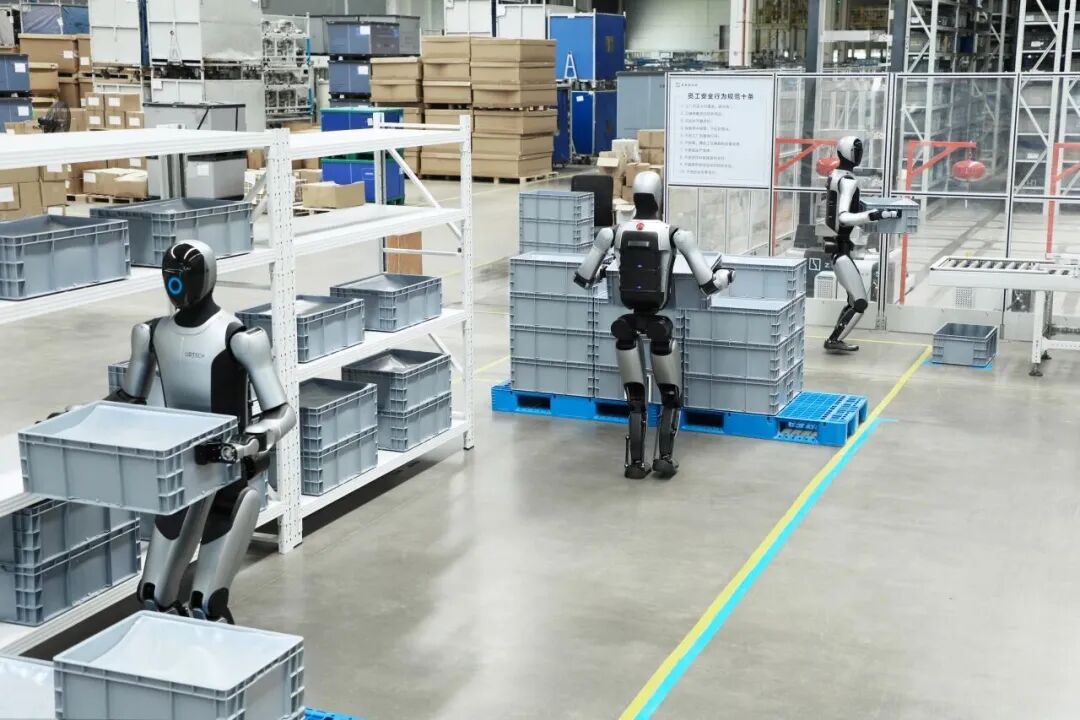
Consistent with the assessment given by Wang He, founder of Galaxy General, the entire industry is exploring the timing for machine substitution in 2026.
Looking back from 2026, the embodied AI industry has moved past its most tumultuous conceptual phase.
This transition from storytelling to delivering results is, in essence, a return to productivity.
The value of technology ultimately does not depend on how impressive its parameters are or how dazzling its financing is, but rather on whether it can operate stably on real production lines, be continuously repurchased by customers, and translate into healthy revenue in financial reports.
2026 marks not only the first year of single-scenario implementation but also the beginning of embodied AI truly becoming a productive force.
And the path beyond this inaugural year holds even greater promise than any PowerPoint presentation.
-
![]()
Wang Huiwen, Former Meituan Executive, Achieves 20-Fold ROI, Supports 24 AI Startups
-
![]()
Another AI Computing Power Unicorn Launches IPO! Founded by a Changjiang Scholar
-
![]()
OFILM Holdings Secures Zhongke Daojing, Marking a Significant Leap in the Optical Communication Industry!
-
What Will Be the Next Key Battleground for Large Models After AI Coding?
-
![]()
Leapmotor's Sales Soar, Yet Hidden Concerns Loom
-
![]()
China’s Action Camera Market Soars: 3.12 Million Units Sold in Six Months, DJI Secures 74% Dominance
-
![]()
Zhang Yiming: Strategic Retreat as a Path Forward
-
![]()
Exploring Charging for Some Features of QianWen App: Can It Follow the Path of Doubao?