"Computing Power Bank" Teams Up with "Computing Power Supermarket" to Usher in a New Era of Inclusive Computing Power
 04/16 2026
 517
517

Injecting New Momentum into the Digital Economy
Recently, the General Office of the MIIT issued the "Notice on Launching a Special Initiative to Empower SMEs with Inclusive Computing Power," officially opening the curtain on China's computing power industry transformation. Over this three-year initiative, the two innovative models of "Computing Power Bank" and "Computing Power Supermarket" have been proposed at the national level for the first time, drawing widespread attention from the financial, technology, and business sectors.
This policy signal not only marks China's computing power industry's shift from "scale expansion" to "efficiency enhancement" but also indicates that computing resources are rapidly becoming financialized and commoditized, poised to become inclusive public services akin to water and electricity, injecting new momentum into the high-quality development of the digital economy.

Idle Computing Power Can "Earn Interest"
Solving the Resource Waste Dilemma
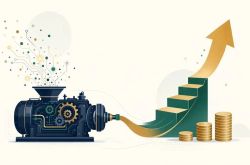
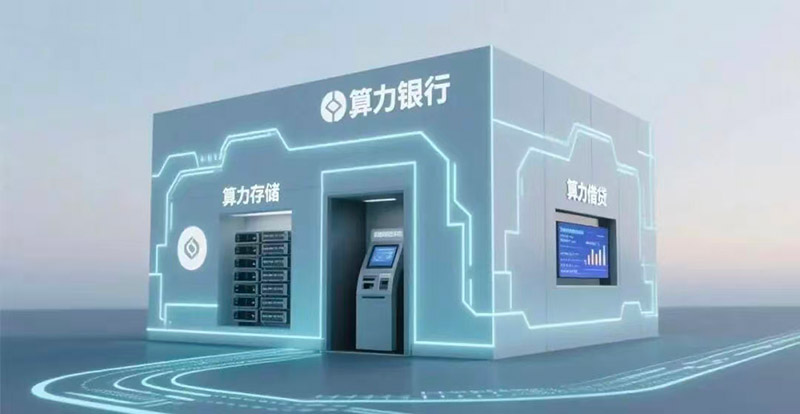
Simply put, a Computing Power Bank functions like a "piggy bank" for computing resources. Enterprises can deposit their idle GPU, CPU, and other computing resources and withdraw them as needed, with depositors earning returns similar to "interest."
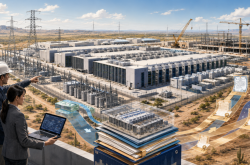
The operational logic of a Computing Power Bank closely resembles that of traditional banking's deposit and lending system, but the core asset has shifted from monetary funds to computing resources. Specifically, enterprises, data centers, or even individuals with idle computing power can "deposit" their excess capacity into a national unified platform, forming a distributed computing resource pool. The platform uses AI algorithms to analyze supply and demand, enabling intelligent cross-regional and cross-temporal scheduling.
For example, it can match the intense daytime computing demand in the east with the idle nighttime computing resources in the west, resolving the mismatch of computing power across time and space. Enterprises in need of computing power can "withdraw" it as required, paying only for actual usage, achieving minute-level activation and elastic scalability. Depositors earn "deposit returns," while the platform charges a small scheduling service fee, creating a win-win business model.
Currently, China faces significant computing resource waste. Even in the computing-hungry eastern coastal regions, the actual utilization rate of some established smart computing centers is below 40%, while enterprise-level general-purpose computing centers see utilization rates as low as 10% to 15%. With individual smart computing centers often requiring investments of billions of yuan, vast amounts of idle computing power not only waste resources but also reduce industry return on investment. The emergence of Computing Power Banks aims to revitalize this idle capacity through market-driven mechanisms.
Computing Power Can Be "Shopped Online"
SMEs Bid Farewell to "Computing Access Challenges"
While Computing Power Banks focus on "revitalizing existing resources," Computing Power Supermarkets aim to "optimize demand," making computing power acquisition as convenient as online shopping for SMEs.
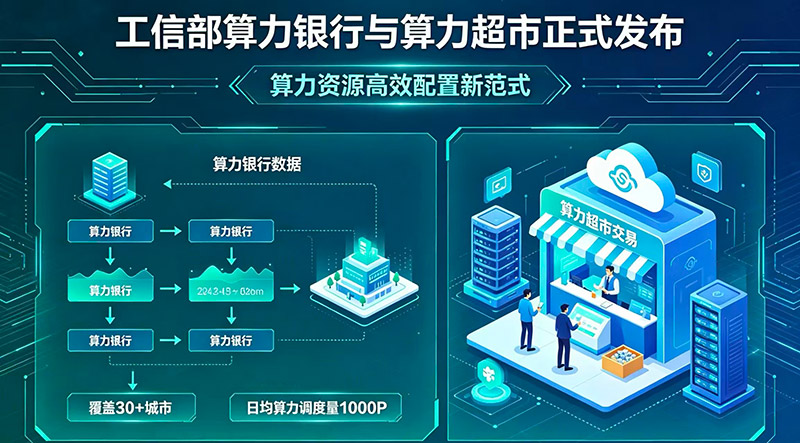
As a standardized retail platform aggregating various computing power products, Computing Power Supermarkets break down traditional barriers to computing services, enabling their "commodification" and "lightweighting." The most significant innovation compared to traditional services is "pay-as-you-go" pricing—minimum rental periods can start as low as a single card per hour, with flexible billing based on "card-hours," "core-hours," "tokens," etc., ensuring SMEs pay only for what they use, effectively addressing their pain points of "unaffordability" and "inaccessibility."
Surveys show that 85% of SMEs cite high computing costs as the primary obstacle to digital transformation, while 72% have abandoned or delayed AI projects due to insufficient computing power. Computing Power Supermarkets essentially turn computing power into a daily commodity, freeing SMEs from heavy asset investments, operational maintenance costs, and the risks of rapid equipment depreciation. They can now access top-tier computing resources through on-demand leasing.
Mismatch Between Supply and Demand Drives Reform
The Computing Power Revolution is Imminent
The MIIT's promotion of these two innovative models addresses long-standing structural contradictions in China's computing power industry. On one hand, with the explosive growth of AI large models, digital twins, metaverse, and other technologies, SMEs' demand for computing power is surging exponentially, with high-end resources becoming "hard to obtain." On the other hand, massive computing resources lie idle, with the overall utilization rate of operational smart computing centers nationwide standing at just 32%, indicating severe waste. Spatiotemporal mismatches, regional imbalances, technical barriers, and single (simplistic) business models are core reasons for low resource utilization.
More concerningly, high computing costs have become a critical bottleneck restricting SMEs' digital transformation. Building a basic computing platform requires investments ranging from millions to even billions of yuan, testing SMEs' financial capacity. Coupled with ongoing expenses for professional operations, maintenance, and power consumption, the burden further intensifies.
Meanwhile, global computing power competition is intensifying, with the U.S., EU, and others accelerating the deployment of inclusive computing systems. China urgently needs institutional innovations to enhance computing resource allocation efficiency and boost international competitiveness. The implementation of Computing Power Banks and Supermarkets will create a mutually beneficial ecosystem involving "SMEs, computing resource owners, financial institutions, and industry players," with far-reaching impacts gradually unfolding.
For SMEs, this represents a "cost revolution." After the initiative's implementation, their computing costs will drop by over 30%, with access times shortened from weeks to minutes. Freed from heavy asset investments, they can use top-tier resources for AI model training, product development, and other innovations, leveling the playing field with large enterprises.
For the computing power industry, these models will effectively revitalize existing resources and drive industrial transformation. They will also shift computing services from "hardware sales" to "service subscriptions," forming a sustainable value-growth model and promoting deep integration of computing power, algorithms, and data to build a diversified, collaborative computing ecosystem.
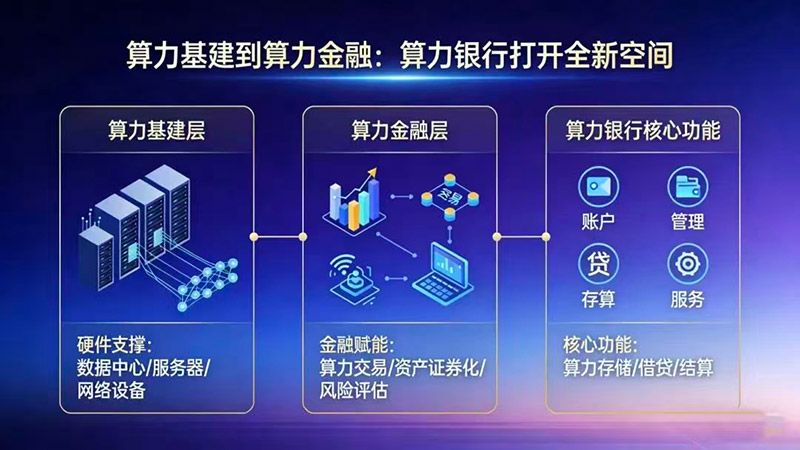
For the financial sector, this innovation opens up new tracks. The financial attributes of Computing Power Banks endow computing resources with complete asset characteristics—"storage, scheduling, trading, and monetization"—providing financial institutions with new asset targets and potentially spawning innovative products like "computing power asset securitization." Credit assessment models for SMEs can be built based on computing power usage data, addressing financing difficulties and forming a virtuous cycle of "computing power, credit, and financing."
From a broader perspective, inclusive computing power will become a core driver of digital economic growth. Cross-regional computing power scheduling can also promote balanced digital economic development between eastern and western regions, urban and rural areas, narrowing the digital divide and offering new solutions for global digital economy governance.
Building Computing Power Collaboration
Sharing an Industrial Ecosystem
Despite their promising prospects, the promotion (promotion) of Computing Power Banks and Supermarkets faces challenges. Real-time, secure, and stable computing power scheduling needs improvement, with significant difficulties in cross-platform and cross-vendor resource collaboration. Computing products lack standardization, with large performance variations across vendors, making it hard to establish unified pricing and quality assessment standards. Meanwhile, shared computing resources may introduce data leakage, network attacks, and other security risks, while high platform operational costs and imperfect revenue mechanisms require urgent solutions.
To address these challenges, relevant departments are accelerating research on computing power scheduling algorithms, establishing a national computing power scheduling center to enhance cross-regional and cross-platform capabilities. They are also expediting the formulation of industry standards for computing service quality, pricing, and security norms to provide institutional guarantees for computing power trading. Simultaneously, a security regulatory system for computing resources is being established, implementing measures like data encryption, access control, and security audits to ensure data and computing safety. Encouraging participation from computing service providers, equipment manufacturers, software developers, financial institutions, and other stakeholders will foster a collaborative, win-win industrial ecosystem.
From "isolated computing islands" to "collaborative sharing," and from "heavy asset investments" to "light asset leasing," the emergence of Computing Power Banks and Supermarkets represents not only an innovation in computing service models but also a major transformation in digital economy infrastructure, marking China's computing power industry's official entry into the "inclusive era." Led by the MIIT, this computing power revolution leverages financial deposit-lending logic and e-commerce retail models to break down barriers between computing supply and demand, realizing the core values of "earning interest on deposited computing power, on-demand access, and instant purchase and use." It provides new pathways for SMEs' digital transformation, injects new momentum into the high-quality development of the computing power industry, and expands new horizons for financial sector innovation.
END
-
![]()
AI Giants Start Borrowing to Fuel Computing Power Race
-
ByteDance Initiates Largest B2B Structural Adjustment, This Time It's Truly Different
-
![]()
Let's Talk About Kingsoft Office's Mid-Year Outlook and the True Strength of Its AI-Powered Office Solutions
-
Despite 150 Million Users, Struggles Persist: AIShige Faces Tough Competition from Seedance and Kling in AI Video Monetization
-
![]()
Ensuring Safe Gear Shifting in the Automotive Industry: Transitioning from 'Product Oversight' to 'Full-Chain Governance'
-
![]()
Net Profit Soars to $133.7 Billion! Azure Revenue Tops $100 Billion, with AI Fueling Microsoft's Growth
-
![]()
Before 6G Hits the Market, the U.S. Forges a 'Rules Alliance': What Challenges Await Chinese IoT Enterprises?
-
![]()
Intelligent Driving's 'Little Blue Light' Faces Ban: Night Glare and Cut-in Risks Prompt Official Action