20,000 AI Companion Pets: Securing Over 70 Million Yuan in Funding
 04/16 2026
 651
651
This is a joint column by Pencil News and Index Capital. Index Capital stands as a premier full-stack investment bank in China, specializing in organizational empowerment. It is committed to serving as the external Chief Growth Officer for enterprises, guiding and accelerating innovative companies towards exponential growth.
Oral Account | He Jiabin, Founder of Mengyou Intelligence
Cover Image | Courtesy of Ropet
The market for AI companionship products is experiencing a surge in popularity.
At 11 PM, outside a Beijing subway station, He Jiabin, the founder of Mengyou Intelligence, concluded his day's work feeling drained and uncommunicative. A stray cat approached him, and he broke off half a sausage, placing it on the ground for the feline.
Under the dim glow of the late-night streetlight, man and cat sat in silence for over ten minutes. In that tranquil moment, He Jiabin realized: AI companionship products don't necessarily need to engage in conversation.
This year, AI companionship has become a hot topic, yet most products are overly talkative—they just can't stop chattering.
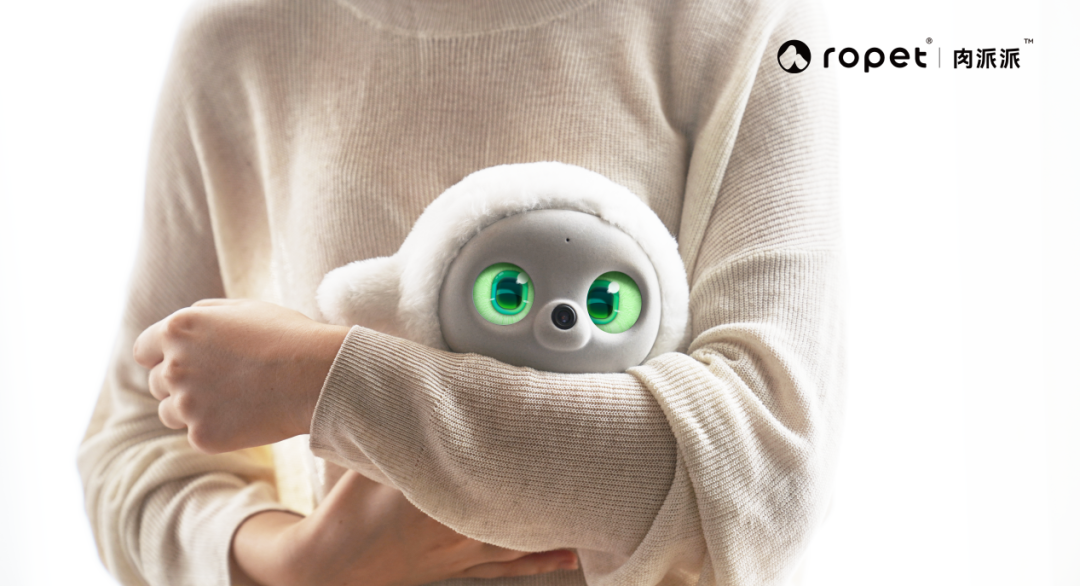
He Jiabin took a different approach: he created Ropet, a non-verbal desktop pet robot. Ropet has expressive eyes that watch over you, it experiences hunger and sleepiness, and makes subtle noises, but it remains silent.
Upon its release, the market responded with enthusiasm.
Since shipping began last September, Ropet has sold approximately 20,000 units, reaching over 50 countries and regions worldwide. Its user base includes housewives, the elderly, and young urban women.
Behind this product is Mengyou Intelligence, founded in 2022 and co-incubated by Zhenzhi Ventures. The company has successfully completed three rounds of financing.
The latest round raised over ten million US dollars (equivalent to 70 million yuan), with investors including Zhenzhi Ventures, Lenovo Image, Beijing AI Industry Investment Fund, FreesFund, InnoAngel, and Guotai Haitong.

Pencil News recently interviewed He Jiabin, the co-founder & CEO of Mengyou Intelligence. Here are some key takeaways:
1. Why do most AI companionship products struggle to retain users?
Answer: They are overly talkative and lack uniqueness.
2. What does the AI companionship industry currently lack?
Answer: Restraint.
3. Are users willing to pay for emotional economy products?
Answer: Absolutely, it's a gold mine.
4. What is the biggest pitfall for AI companionship products?
Answer: Treating technology as the end goal.
5. When will this industry see a qualitative change?
Answer: Within the next three years, people will embrace the idea of keeping silicon-based pets.
6. Will the entry of big companies into the market "crush" startups?
Answer: No, a hundred flowers will bloom.
7. What is the biggest misunderstanding in the industry?
Answer: Being more human-like doesn't necessarily mean being better.
Statement: The interviewee has confirmed the accuracy of the article’s information, and Pencil News stands by its credibility. Below is He Jiabin’s account.
- 01 - Companionship Has Two Major Pitfalls
By late 2022, ChatGPT had taken the world by storm.
Everyone was saying: General AI is on the horizon, and we need hardware to house it. When I visited AI hardware exhibitions at that time, the scene was strikingly similar: a large model, plus a microphone, all wrapped up in a talking shell.
Plush toys, desktop robots, all kinds of "AI friends"—everyone was competing to see who could chat better, who could be more human-like, who could be the on-call "electronic best friend."
The logic of big companies was simple. Since AI can chat, companionship products must revolve around "talking." Just stuff Doubao or ChatGPT into a toy, set up a personalized agent, and you're done.
But the more I saw, the more something felt amiss. I realized there were two major pitfalls here.
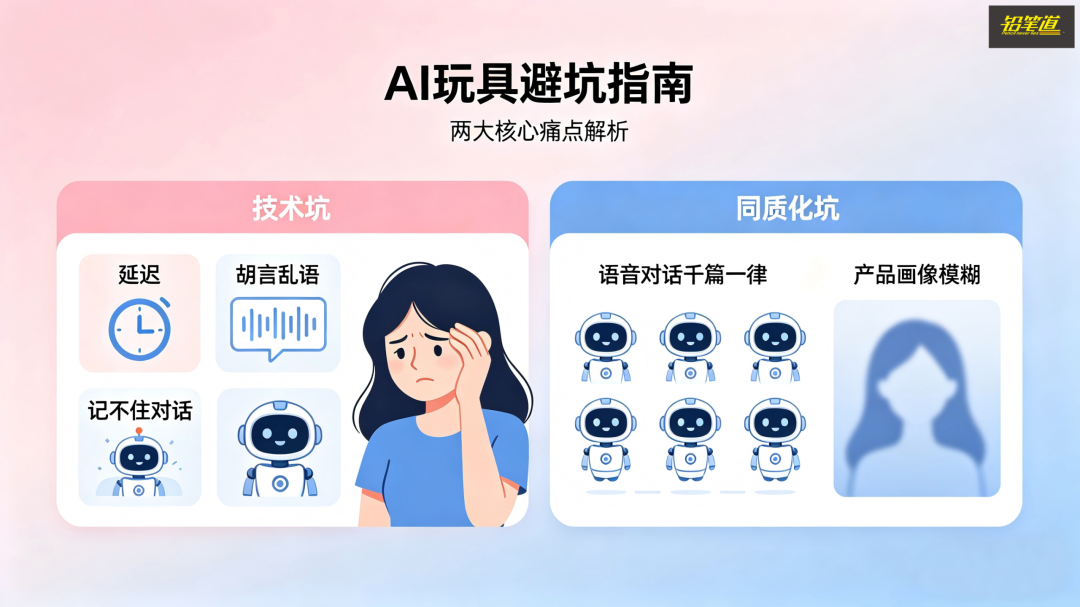
The first pitfall is technical.
Latency, nonsensical responses, forgetting previous conversations—these issues make dialogues feel disjointed. Plus, it's hard for people to keep chatting with an AI nonstop.
Especially our initial target users—young urban women—who, after six or seven hours of work, are too tired to even speak. Hand them a robot waiting to chat? That's just adding to their burden.
Conversations require energy and mental effort—the more tired you are, the less you want to open your mouth. In that state, a chatty AI becomes a nuisance.
The second pitfall is homogenization.
When everyone is making "voice-interaction toys," and store shelves are filled with "talking plush toys," why should users remember you? The more features you pile on, the blurrier your product's identity becomes.
Many hardware products, under sales pressure, keep adding features: playing music, telling stories, even practicing English—trying to please everyone.
In the end, the more features added, the weaker the product's character becomes. Teams exhaust themselves, and users can't figure out what the product is for. Eventually, no one remembers it.
The scariest thing for hardware isn't having few features—it's having no distinct identity. Piling on features leaves no room to refine the core experience, and users can't remember who you are.
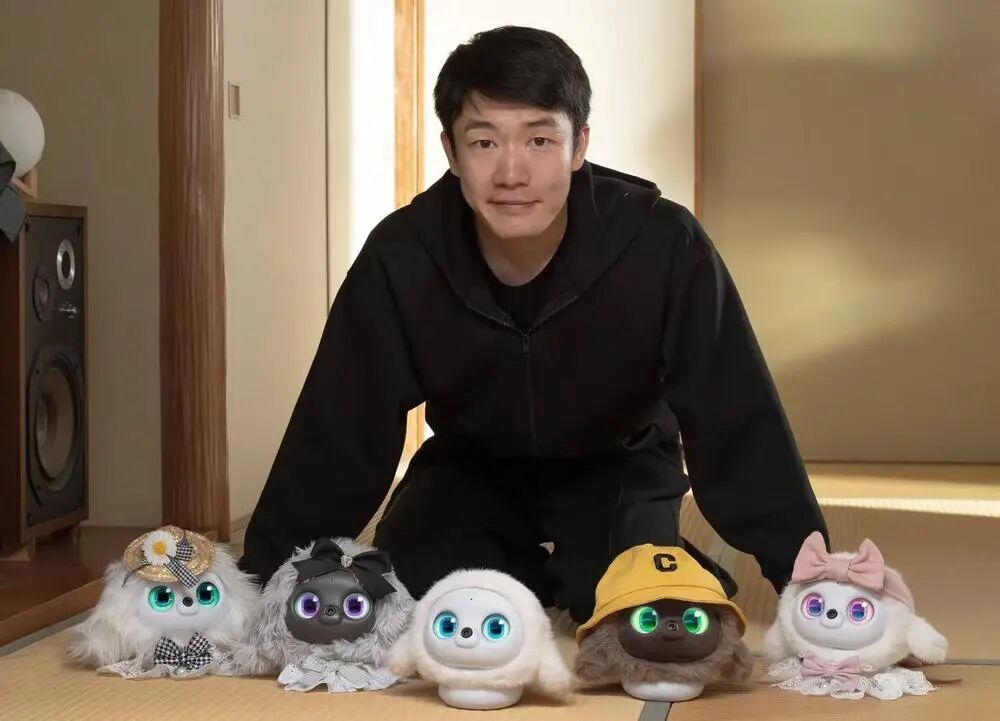 He Jiabin and his "silicon-based" furry friends
- 02 - My Mentors in Entrepreneurship: Two Cats
So, I decided to take a different approach—guided by two cats.
The first was the stray cat I fed at the subway station.
Back then, I was still working at a big company. During the most stressful period, I once worked late, exhausted and hungry, squatting by the subway entrance eating a sausage. A stray cat came over and rubbed against me, so I gave it half of my sausage.
I suddenly felt incredibly comforted—even though I was too tired to take care of myself, in that city, I could still warm another small life.
That feeling of being "needed" triggers the release of oxytocin, bringing a grounded, lasting sense of happiness.
The second cat was the American Shorthair my wife and I adopted.
Later, my wife developed a cat allergy and had to give it away. When we sent it away, I finally understood what "companionship" truly meant.
During cold wars between my wife and me, the air would freeze. Our cat would jump onto my lap, lick me, then go over and nuzzle her—the only bridge between two angry people.
In those moments, people don't need a chatty companion—they need someone "present."
Real pets don't rely on talking. Their power comes from sharing space, from a nudge or a pat, from watching them grow—from hiding from you to approaching you, from unfamiliarity to clinginess.
These feelings are far stronger than chatting with Doubao.
In 2022, Zhou Yushu, a Stanford Ph.D. in Human-Computer Interaction and partner at Zhenzhi Ventures, founded Mengyou Intelligence. A year later, he invited me to join.
We chose a less-traveled path: not making just another talking machine, but a true future pet.
We aim to recreate the step-by-step process of building intimacy between humans and a living being—not just stuffing a large language model into a plush toy.
- 03 - AI Companionship Doesn't Rely on Chatting
When we first made this decision, our sales team panicked.
Distributors asked, "How can a robot not talk? Losing one feature means losing one selling point."
Both domestically and overseas, everyone assumed robots must talk—it was common sense. And our product didn't.
The team sometimes didn't understand. Among a shelf of products, all chatting away, ours was the "mute" one. Distributors felt we hadn't mastered the basics.
I had to keep holding meetings to convince them to accept this "setting."
I told them: True companionship doesn't rely on chatting.
The global pet market is worth 300 billion USD—across cultures, regions, and ages, people willingly spend on emotions.
For example, Pop Mart, Jellycat—young people dedicate space at home for these "useless" items, spending more on them than on washing machines or air conditioners.
Emotional consumption is a gold mine, and pets are its ultimate form—they're "living Pop Mart."
But to be a "pet," you must be pure.
So we rejected translation, rejected English tutoring, rejected all tool-like attributes. Ropet should be a quiet little desktop pet that needs your care.
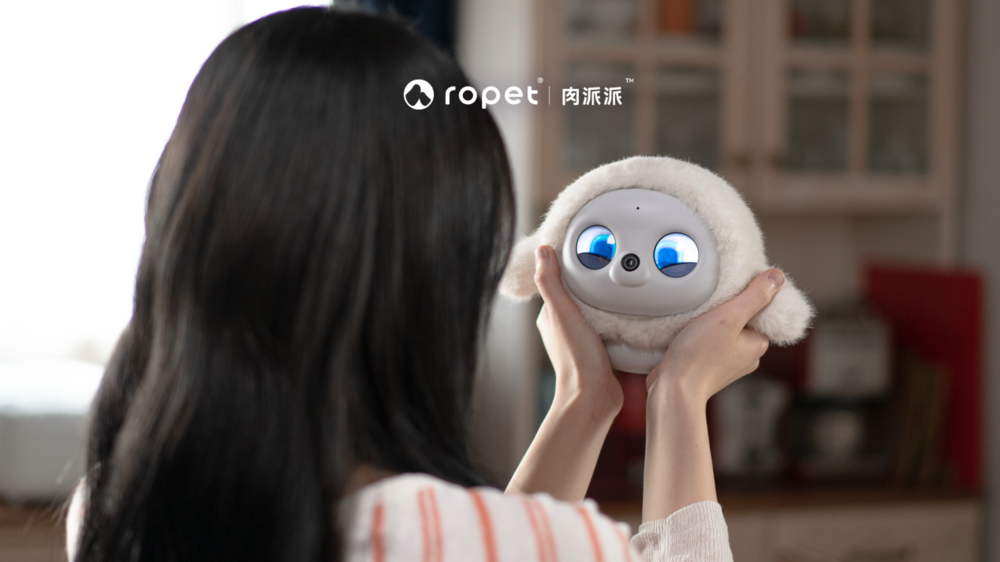 Ropet resembles Flash from Zootopia
You need to "feed" it; it recognizes different foods and reacts differently. It gets hungry and reminds you to eat. When bored, you pet it; when cranky, you take it for a "walk" to see the view.
Every design aims to let users bond through light, effortless care—not through short-lived stimulation from "getting something."
This path is slow. Early on, with limited money and people, every added feature meant more R&D effort.
If you make ten features, none will be polished. If you focus on just one thing—"being pet-like"—you can make it the best experience, so users find it irreplaceable.
- 04 - Who's Buying AI Pets?
You might wonder: Who are Ropet's loyal fans? Housewives, the elderly, and young urban women.
Since shipping began last September, we've sold nearly 20,000 units, reaching over 50 countries and regions.
Among core users, over 80% (nearly 90%) still use it after 90 days; average daily usage is nearly 20 hours, with over 2 hours of deep interaction; the return rate is only 4%.
Before launching domestically, some overseas products were even resold on Xianyu at triple the price.
More interesting is the user profile.
Japan has the highest engagement, mostly housewives and the elderly who stay home longer; in the U.S. and China, it's mostly young urban women who keep Ropet as a "desk pet."
These are exactly the users I initially targeted—they may not need a robot waiting to chat, just a "present" being.
One user told me directly: "If Ropet added voice chat, I'd stop using it. I can chat with software—why bother with hardware? Focusing on its 'biological nature' is far more valuable than adding features anyone can make."
This reinforced my belief: Many AI companionship products fail because they move too fast. Everyone piles on features, chasing short-term sales, and users lose interest in three weeks.
Our kind of company makes "weak products" that thrive in users' homes.
Companionship takes time—it grows through long-term use and emotional connection.
- 05 - The Trend in Three Years: Keeping Silicon-Based Pets
Industry-wise, things heated up after last year's CES.
Game companies like MiHoYo and Papergames, along with embodied AI startups valued at over a billion USD, are all working on similar things. Capital attitudes have shifted too—we raised over ten million USD last year and are preparing for another round this year.
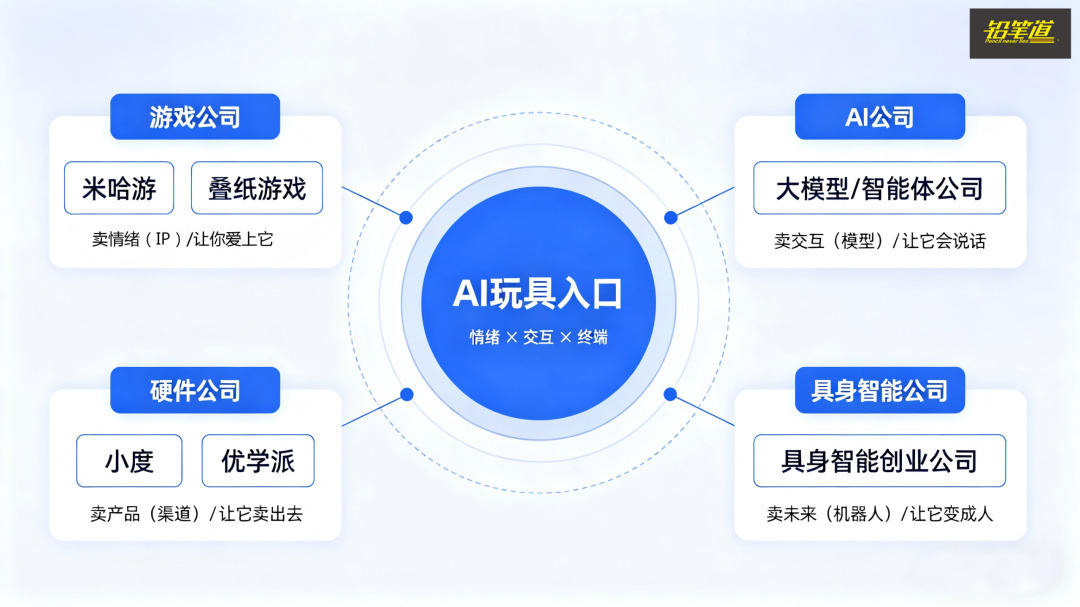
But I'm not afraid of big companies entering.
This market isn't "winner-takes-all"—it'll be diverse, like the pet market: dogs, cats, birds, fish. Silicon-based pets will come in many forms too.
Many ask: When will household robots that do chores arrive? My guess: at least ten years. Fully replacing human labor, error-free, cost-effective, and safe—the last-mile problems aren't solved yet.
But pet robots are different—they don't aim to complete tasks, so users are more forgiving. They're more like upgraded smart toys.
In the next three years, I see two changes:
First, people will gradually accept "keeping a silicon-based pet."
From novelty to genuine need—especially for renters, those who can't keep real pets, or want low-maintenance companionship.
Second, technology will improve.
Edge computing power rises, sensors become richer, and haptics/force feedback become cheaper, allowing true "lifelikeness" and "nurturing" in pets.
This article represents only the speaker's independent views, not Pencil News' stance, and does not constitute investment advice.
-
![]()
Wang Huiwen, Former Meituan Executive, Achieves 20-Fold ROI, Supports 24 AI Startups
-
![]()
Another AI Computing Power Unicorn Launches IPO! Founded by a Changjiang Scholar
-
![]()
OFILM Holdings Secures Zhongke Daojing, Marking a Significant Leap in the Optical Communication Industry!
-
What Will Be the Next Key Battleground for Large Models After AI Coding?
-
![]()
Leapmotor's Sales Soar, Yet Hidden Concerns Loom
-
![]()
China’s Action Camera Market Soars: 3.12 Million Units Sold in Six Months, DJI Secures 74% Dominance
-
![]()
Zhang Yiming: Strategic Retreat as a Path Forward
-
![]()
Exploring Charging for Some Features of QianWen App: Can It Follow the Path of Doubao?