In the AI Boom Era, Why Is the AI Server Business Such a Challenging Sector?
 04/16 2026
 737
737
In 2025, China's AI server market experienced an unprecedented surge.
That year, DeepSeek burst onto the scene, captivating the global tech community with its open-source large-scale model. Domestic internet behemoths, telecom operators, and financial institutions swiftly poured investments into AI infrastructure, propelling computing power demand to exponential heights. The scale of China's AI server market expanded by over 60% year-on-year, emerging as one of the most rapidly growing segments worldwide.
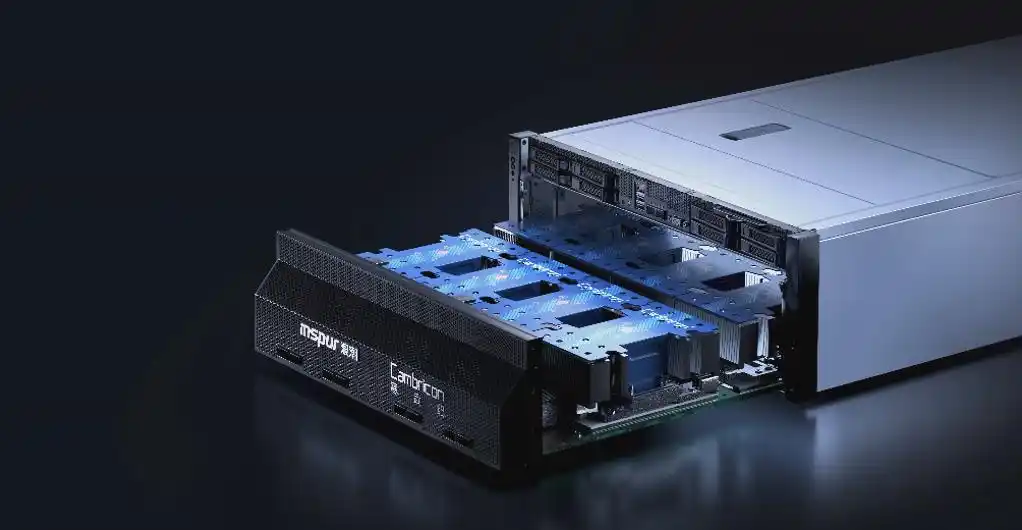
All these developments propelled Inspur Information to the forefront of this boom.
In April 2026, Inspur Information unveiled its 2025 annual report. The revenue figure was eye-catching—164.782 billion yuan for the full year, marking a staggering 43.25% year-on-year increase and setting a new all-time high since the company's listing.
However, what truly raised eyebrows was the net profit—only 2.413 billion yuan in net profit attributable to shareholders of the parent company for the full year, representing a mere 5.20% year-on-year increase.
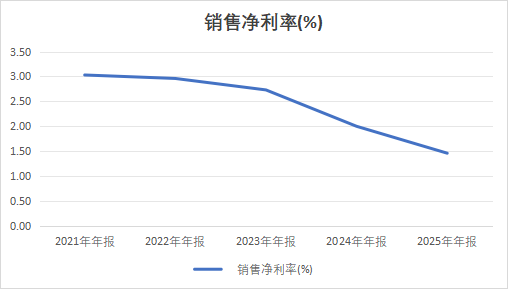
Yes, you read that correctly. With revenue of 164.7 billion yuan, net profit stood at just 2.4 billion yuan. The net profit margin was a slim 1.46%.
This raises the question: Where did all the money go for this undisputed leader in the AI server industry?
01
Revenue Doubled in Three Years, Yet Profits Stagnated
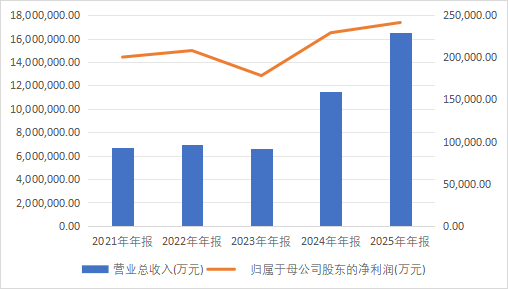
Let's first examine Inspur Information's recent performance trajectory with Xingkong Jun:
Data Source: iFind
Can you spot the pattern?
From 2022 to 2025, Inspur Information's revenue skyrocketed from 69.6 billion yuan to 164.7 billion yuan, more than doubling in three years with a 136% increase. However, net profit attributable to the parent company grew only from 2.086 billion yuan to 2.413 billion yuan, a mere 15.7% increase over the same period.
Even more concerning was the continuous decline in the net profit margin: from 3.00% in 2022 to 1.46% in 2025.
This is a classic case of "rising revenue without rising profits." Revenue is growing rapidly, but profit growth is lagging far behind.
What's behind this phenomenon?
Data Source: iFind
02
4.88% Gross Profit Margin: AI Servers Are a "Tough Business"
To understand Inspur Information's profit dilemma, we must first address a core question: Why is the gross profit margin in the server industry so low?
In 2025, Inspur Information achieved a gross profit of 8.047 billion yuan, with a gross profit margin of only 4.88%.
What does that mean? For every 100 yuan in server sales, only 4.88 yuan in gross profit is earned.
This is far from the impression of a tech company. Apple's gross profit margin exceeds 45%, NVIDIA's exceeds 70%, and even Huawei in China is striving to improve its gross profit margin. Yet Inspur Information stands at just 4.88%.
Why is this the case? Xingkong Jun believes it is closely tied to the server industry's business model.
Servers are essentially an "assembly industry" (of course, "assembly" here is a metaphor—the actual technological content is extremely high, and only a handful of companies globally can assemble servers). Inspur Information's core task is to assemble core components such as NVIDIA's GPUs, Intel/AMD's CPUs, Samsung/SK Hynix's memory, and various storage devices into a complete server, which is then sold to customers.
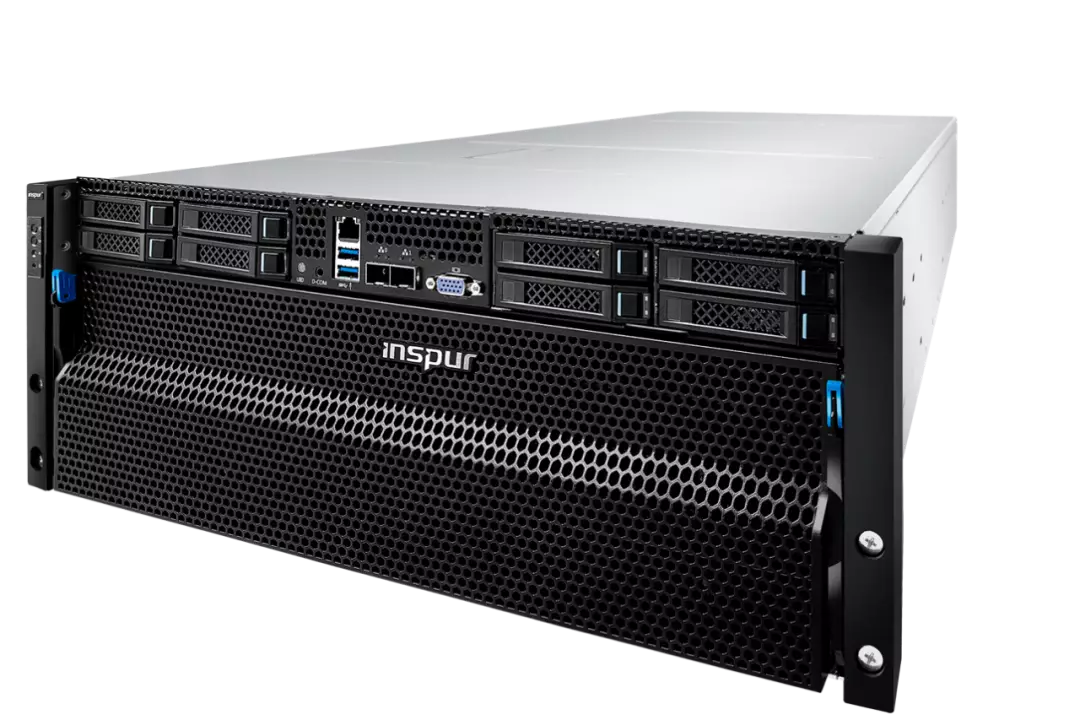
In this process, the cost of core components accounts for over 90% of the total cost. Inspur Information's "value-added" lies mainly in system integration, thermal design, software optimization, and other aspects.
More critically, Inspur Information's main customers are large enterprises such as internet giants, telecom operators, and financial institutions. These customers have large purchasing volumes and strong bargaining power, often driving prices down to extremely low levels.
This is the "fate" of the server industry: the larger the scale and the higher the revenue, the harder it is to improve the gross profit margin.
Notably, Inspur Information's gross profit margin in 2025 declined significantly from 6.8% in 2024. This was mainly due to changes in product mix: the proportion of AI servers increased significantly, and AI servers generally have lower gross profit margins than traditional servers.
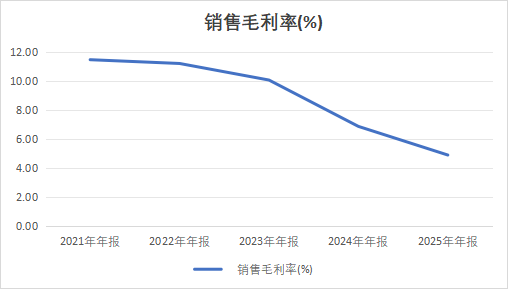
Data Source: iFind
03
AI Servers Account for 90% of Revenue
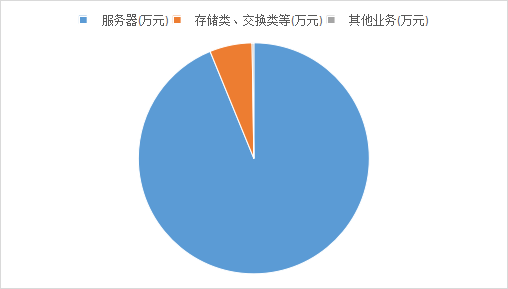
Inspur Information's business structure is very clear, with three main segments:
Data Source: iFind
Servers are the absolute mainstay for Inspur Information, contributing 93.82% of revenue.
Within the 154.6 billion yuan in server revenue, AI servers were the largest source of incremental growth. According to company disclosures and IDC/Gartner data, in 2025, Inspur Information ranked second globally and first in China in server shipments, with a market share of approximately 30%.
Even more noteworthy is the overseas market. In 2025, Inspur Information's overseas revenue was approximately 34.1 billion yuan, a 257% year-on-year increase, with overseas revenue accounting for nearly 30% of the total. This is a shocking figure—against the backdrop of U.S.-China tech competition, Inspur Information's overseas business not only did not decline but surged, indicating the strong competitiveness of its products in the global market.
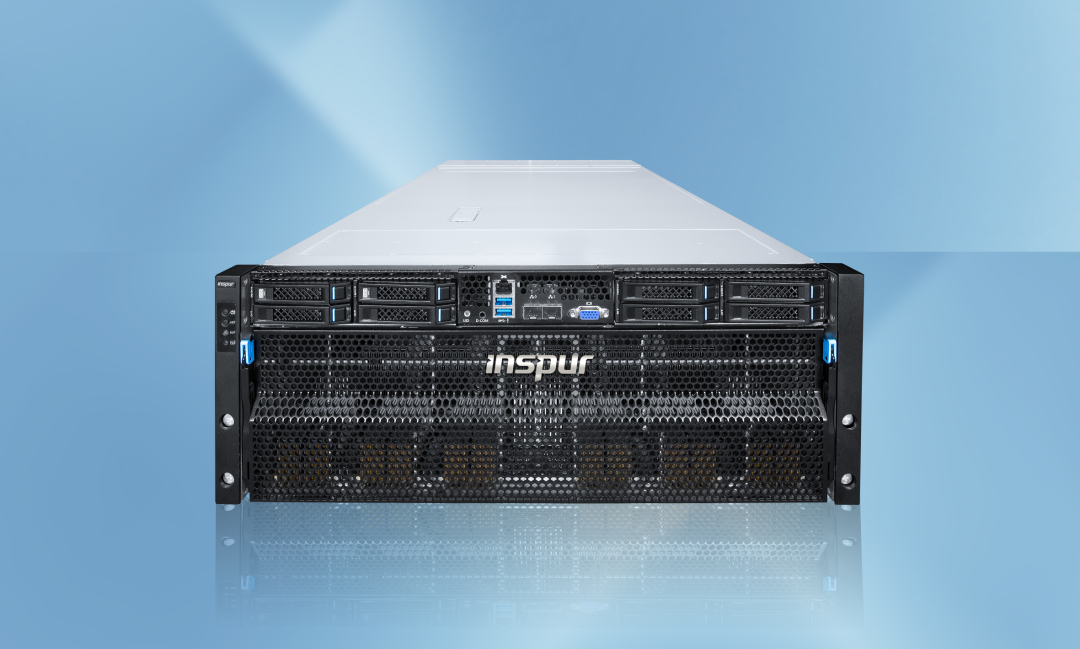
According to IDC data, China's liquid-cooled server market size grew by 67.0% year-on-year in 2024, reaching $2.37 billion, with Inspur Information leading the market. In 2025, the company launched the Yuanbrain R1 series servers, supporting 16 standard PCIe dual-width GPUs and capable of running the DeepSeek-671B model, further solidifying its technological leadership in the AI server field.
04
The "Advance Payment Game" Behind 5.45 Billion Yuan
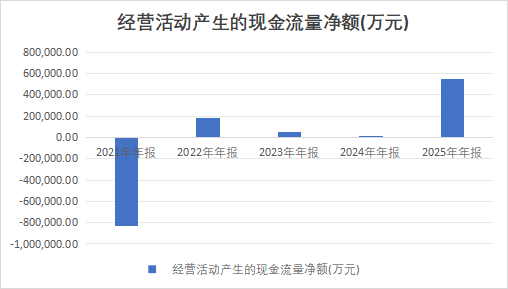
In 2025, Inspur Information's net cash flow from operating activities was approximately 5.453 billion yuan.
The net cash flow-to-net profit ratio (operating cash flow/net profit) was a very healthy 226%, indicating high-quality profits rather than just "paper wealth."
Data Source: iFind
But there's a detail worth delving into.
Xingkong Jun noticed that in Q1 2025, Inspur Information's net cash flow from operating activities was a whopping 5.803 billion yuan, a 265.5% year-on-year increase. This figure far exceeded Q1's net profit of 463 million yuan.
What's behind this?
According to company disclosures, the significant growth in Q1 operating cash flow was mainly due to "increased receipts of advance payments from customers, increased revenue, and increased cash received from sales of goods."
In simpler terms, customers paid in advance. Against the backdrop of insatiable demand for AI computing power, customers often needed to pay upfront to secure production capacity. This was a huge positive contribution to Inspur Information's cash flow.
When DeepSeek was at its peak, private deployment all-in-one machines were in short supply, even commanding premium prices.
But this is a double-edged sword. If future demand for AI servers slows down and customers reduce advance payments, Inspur Information's operating cash flow could see a significant decline.
Data Source: iFind
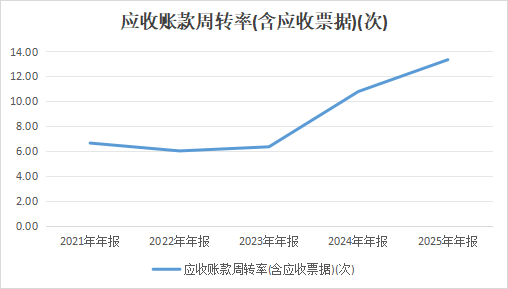
Another noteworthy figure is accounts receivable. At the end of 2025, Inspur Information's accounts receivable turnover was 13.35 times, relatively high compared to the industry average, indicating strong collection capabilities.
05
AI Server Industry: The "Arms Race" of 2025
To understand Inspur Information's 2025, we must first understand what happened in the AI server industry that year.
2025 was a year of "great leap forward" in China's AI infrastructure construction.
That year, the release of DeepSeek-R1 showcased China's AI strength to the world and made domestic companies realize: AI is no longer a distant future but a tangible present.
That year, Alibaba, Tencent, Baidu, ByteDance, and other internet giants announced significant increases in AI infrastructure investment. According to public data, in 2025, domestic internet giants' combined AI capital expenditures exceeded 380 billion yuan, a more than 100% year-on-year increase.
That year, the three major telecom operators—China Mobile, China Unicom, and China Telecom—also joined the AI computing power construction race, with combined AI-related capital expenditures exceeding 160 billion yuan.
That year, financial institutions, government departments, and manufacturing companies also began large-scale deploying AI infrastructure.
All this demand ultimately translated into purchase orders for AI servers. And Inspur Information, as China's largest server manufacturer, naturally became the biggest beneficiary.
According to IDC data, in 2025, China's AI server market size grew by over 60% year-on-year, with AI accelerator card (GPU/AI chip) shipments exceeding 4 million units, and AI accelerator card penetration in servers reaching 41%.
In this "arms race," Inspur Information leveraged its deep expertise in the server field to quickly respond to customer needs, achieving explosive revenue growth.
But at the same time, competition intensified. Domestic players like Huawei, New H3C, and Lenovo were ramping up their AI server investments, while international players like Dell and HP were also actively targeting the Chinese market.
06
The "Bittersweet" 160 Billion Yuan Revenue
Reviewing Inspur Information's 2025 annual report, Xingkong Jun sees a "contradictory" company.
On one hand, revenue surpassed 160 billion yuan, hitting a new all-time high, with AI server market share firmly at No. 1 in China and No. 2 globally, explosive growth in overseas business, healthy operating cash flow, and ROE above the industry average.
On the other hand, the net profit margin was a mere 1.46%, the gross profit margin only 4.88%, high debt levels loomed, and supply chain risks persisted.
This is the "bittersweet" reality of the server industry: the larger the scale and the higher the revenue, the farther profit growth lags behind.
But Xingkong Jun believes this does not mean Inspur Information lacks value. On the contrary, amid the wave of AI infrastructure construction, Inspur Information is playing an indispensable role—it is the "builder" of China's AI computing power infrastructure and a key hub connecting chip manufacturers and end-users.
-END-
Disclaimer: This article is based on the public company attributes of listed companies and relies primarily on information disclosed by the listed company in accordance with its legal obligations (including but not limited to interim announcements, periodic reports, and official interaction platforms) as the core basis for analysis and research. Shiyu Xingkong strives to ensure the fairness of the content and views presented in the article but does not guarantee their accuracy, completeness, or timeliness. The information or opinions expressed in this article do not constitute any investment advice, and Shiyu Xingkong assumes no responsibility for any actions taken based on this article. Copyright Notice: The content of this article is original to Shiyu Xingkong and may not be reproduced without authorization.
-
![]()
Wang Huiwen, Former Meituan Executive, Achieves 20-Fold ROI, Supports 24 AI Startups
-
![]()
Another AI Computing Power Unicorn Launches IPO! Founded by a Changjiang Scholar
-
![]()
OFILM Holdings Secures Zhongke Daojing, Marking a Significant Leap in the Optical Communication Industry!
-
What Will Be the Next Key Battleground for Large Models After AI Coding?
-
![]()
Leapmotor's Sales Soar, Yet Hidden Concerns Loom
-
![]()
China’s Action Camera Market Soars: 3.12 Million Units Sold in Six Months, DJI Secures 74% Dominance
-
![]()
Zhang Yiming: Strategic Retreat as a Path Forward
-
![]()
Exploring Charging for Some Features of QianWen App: Can It Follow the Path of Doubao?