Rebuffing Apple’s Order Hike! The Optical Leader’s Strategic Pivot and the Industry’s Pivotal Moment
 04/16 2026
 503
503
In the consumer electronics supply chain, Apple has long held sway with its immense purchasing power and stringent standards, compelling suppliers to typically accommodate its every request.
However, when Apple recently asked its longstanding lens supplier, Largan Precision, to ramp up orders for variable-aperture lenses for the iPhone 18 Pro series, the response was a surprising refusal. Largan Precision stated that it currently has no intention of blindly expanding production and instead prefers to channel its resources into the research and development of Co-Packaged Optics (CPO) technology.
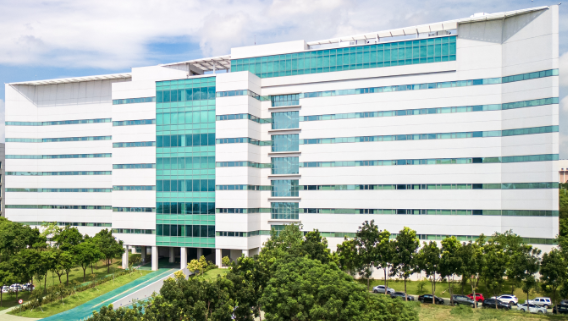
This move, though seemingly out of the ordinary, underscores the significant shifts underway in the optical industry. Judging from Largan Precision's operating performance over the past two years, it's clear that the growth momentum of its traditional smartphone lens business is waning. In 2025, the company's annual revenue hit a record NT$61.148 billion, marking a 3% year-on-year increase. However, its gross margin shrank by 2.05 percentage points, and its net profit after tax plummeted by 18% year-on-year, showcasing the classic dilemma of "revenue growth without corresponding profit growth."
As 2026 unfolds, the pressure hasn't abated significantly. The company's Q1 financial report, released on April 16, revealed a gross margin of 49.41%, down 5.22 percentage points year-on-year, and a net profit after tax of NT$6.123 billion, still experiencing a single-digit decline year-on-year.
The smartphone market has entered an era of inventory competition. Although lens specifications continue to evolve towards higher pixels, periscope lenses, and other advancements, the overall market's pull effect remains limited. Coupled with fierce industry competition and the looming threat of overcapacity, the allure of blindly expanding production is no longer as compelling as before. In this context, Largan Precision's decision to decline Apple's order increase isn't whimsical but a carefully considered strategic move.
Notably, Largan Precision has chosen to allocate its resources towards CPO technology. CPO, or Co-Packaged Optics, integrates optical transceivers directly within the SoC package, significantly reducing the electrical signal transmission path and thereby cutting latency and power consumption. Against the backdrop of the explosive growth in AI computing power and the soaring demand for high-speed interconnectivity in data centers, CPO is widely regarded as a pivotal direction for the next-generation optical communication architecture.
Some consulting firms forecast that the penetration rate of CPO in AI data center optical communication modules will continue to climb, potentially reaching 35% by 2030. Computing power behemoths like NVIDIA are actively pushing for CPO mass production, which can achieve energy savings of approximately 70% compared to traditional solutions.
Leveraging its deep expertise in precision plastic lenses and micro-prism technology, Largan Precision has ventured into the CPO realm and developed optical components tailored for high-performance computing. Although CPO technology is still in its nascent stages of development, and mass production yields remain a challenge, from a strategic standpoint, stepping onto the AI infrastructure expansion node at this juncture undoubtedly holds more long-term value than clinging to smartphone lens production expansion.
Furthermore, this incident sheds light on subtle shifts in the power dynamics within Apple's supply chain. For the supply of variable-aperture lenses for the iPhone 18 Pro, Sunny Optical has stepped in to replace Largan Precision as the primary supplier, creating a dual-supplier scenario. Apple's multi-supplier strategy ensures supply stability, while Largan Precision's voluntary move to a secondary position affords it greater strategic autonomy.
Largan Precision's refusal of Apple's order increase transcends a mere rejection of an order; it's a strategic declaration at the crossroads of transitioning from old to new growth drivers in the optical industry. As the certainty of dividends from consumer electronics diminishes, the potential dividends from AI infrastructure are accelerating their release. The competitive landscape in the optical industry is shifting from a focus on production capacity to a race for technological leadership and securing positions in future markets.
When the winds of change blow, only enterprises daring enough to say "no" to the old order and heavily invest in new markets have the opportunity to shape the industrial landscape of the next era. Largan Precision's decision may just be the harbinger of a profound transformation in the optical industry.
-
On the Eve of Its IPO, Avatr Finds Itself Embroiled in a 'Farce of Controversy and Belittlement'
-
![]()
Yutong Optics' Japanese Subsidiary Unveiled in Tokyo, Shifting Strategic Focus to Technology-Driven Growth
-
![]()
Half-Year Revenue Outstrips Last Year’s Total! Zhongrun Optics Forecasts 80.2% H1 Revenue Growth
-
![]()
Why Does AI Competition Start with Computing Power?
-
![]()
Apple AI Finally Makes Its Debut in China, Yet iPhone's 'AI Autonomy' Faces Uncertainty
-
![]()
Apple AI and QianWen Make Up Lessons: Alibaba Has Its Own 'Doubao Phone'
-
![]()
QianWen Joins Apple, Signal for Large Models to ‘Fade into the Background’
-
![]()
The ‘Anchor’ Strategy of Google Hidden Behind the Bleeding Financial Report